Red Yeast Rice and Cholesterol: What You Need to Know
Red yeast rice for cholesterol support: learn how it works, what monacolin K is, safety considerations, and how it compares to statins.

Red yeast rice is one of the most fascinating—and sometimes misunderstood—natural supplements for cholesterol support. It's a traditional Chinese food and medicine that dates back to at least 800 AD, and modern science has revealed that it contains a compound naturally identical to a prescription cholesterol medication.
This makes red yeast rice uniquely positioned in the world of natural cholesterol support: it's a food-based product with pharmaceutical-grade active compounds. But this dual nature also means it requires understanding and respect.
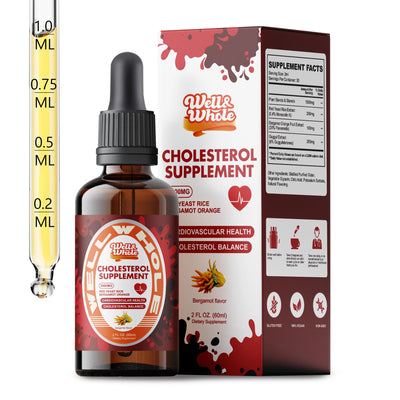
In this article, we'll explore what red yeast rice is, how it works, what the research shows, safety considerations, and why it's combined with plant sterols in well&whole Cholesterol Support Liquid Drops.

What Is Red Yeast Rice?
The Basics
Red yeast rice is made by fermenting white rice with a specific type of yeast called **Monascus purpureus**. The fermentation process turns the rice deep red and produces several bioactive compounds, including:
- **Monacolins**: Cholesterol-lowering compounds (especially monacolin K)
- **Sterols**: Plant-based compounds that block cholesterol absorption
- **Isoflavones**: Compounds with antioxidant properties
- **Unsaturated fatty acids**: May support cardiovascular health
- **Pigments**: Natural food colorants with antioxidant properties
Historical Use
Red yeast rice has been used in Chinese cuisine and medicine for over 1,000 years:
- **Culinary**: As a food coloring and flavoring agent (red fermented tofu, Peking duck, char siu)
- **Medicinal**: To improve digestion, invigorate blood circulation, and support heart health
In Traditional Chinese Medicine, red yeast rice (hong qu) was used to "invigorate blood, resolve stasis, and strengthen the spleen." Modern research has validated its cardiovascular relevance.
The Key Compound: Monacolin K
What Is Monacolin K?
Monacolin K is the primary active compound in red yeast rice—and it is **chemically identical to lovastatin**, the active ingredient in Mevacor, a prescription cholesterol medication.
This means that red yeast rice essentially contains a naturally occurring statin. When you consume monacolin K, it works the same way as prescription statins:
1. **Inhibits HMG-CoA reductase**: This enzyme is the rate-limiting step in cholesterol synthesis in the liver
2. **Reduces cholesterol production**: Less cholesterol is manufactured by the liver
3. **Increases LDL receptors**: The liver pulls more LDL cholesterol from the bloodstream to compensate for reduced production
4. **Lowers circulating LDL**: Blood levels of LDL cholesterol decrease
A 2017 review in the *Journal of Clinical Lipidology* confirmed that "monacolin K from red yeast rice exerts identical HMG-CoA reductase inhibition to synthetic lovastatin."
Monacolin K Content Varies
The amount of monacolin K in red yeast rice products varies significantly:
| Product Type | Typical Monacolin K Content |
|---|---|
| Traditional culinary red yeast rice | Very low (<0.1%) |
| Dietary supplements | Variable (0.1-0.4% or higher) |
| Pharmaceutical-grade extracts | Standardized to specific levels |
This variability is why it's important to choose red yeast rice products from reputable manufacturers that test and standardize their monacolin K content.
Clinical Evidence
LDL Cholesterol Reduction
The clinical evidence for red yeast rice is substantial:
A landmark meta-analysis published in the *Journal of the American College of Cardiology* (2017) reviewed 26 randomized controlled trials involving over 5,000 participants. Key findings:
- **Average LDL reduction**: 15-25% (dose-dependent)
- **Total cholesterol reduction**: 10-20%
- **Triglyceride reduction**: 5-15%
- **HDL cholesterol**: Small increase (2-5%)
A 2019 study in the *European Journal of Preventive Cardiology* compared red yeast rice to low-dose pravastatin in 1,445 patients with elevated cholesterol. After 4 weeks, both groups showed similar LDL reductions (red yeast rice: -17.4%; pravastatin: -17.7%), with the red yeast rice group reporting fewer side effects.
Comparison to Prescription Statins
| Parameter | Red Yeast Rice (monacolin K) | Prescription Statins |
|---|---|---|
| Active compound | Monacolin K (= lovastatin) | Various (lovastatin, atorvastatin, etc.) |
| LDL reduction | 15-25% | 20-55% (dose-dependent) |
| Side effect rate | Lower in studies | Higher, especially at high doses |
| Regulation | Dietary supplement | FDA-regulated medication |
| Dose standardization | Variable | Precise |
| Cost | Generally lower | Generally higher |
Red yeast rice provides moderate LDL reduction with potentially fewer side effects than prescription statins, but with less dose precision.
Long-Term Safety Study
A 5-year study published in *Nutrition, Metabolism and Cardiovascular Diseases* (2018) followed 1,000 patients taking red yeast rice supplements. The study found:
- Sustained LDL reduction over the 5-year period
- Low rates of side effects (less than 3% reported any adverse events)
- No significant liver enzyme elevations in the majority of participants
- Good tolerability for long-term use
Red Yeast Rice in the well&whole Formula
well&whole Cholesterol Support Liquid Drops combine red yeast rice with **plant sterols** for a dual-action approach:
| Ingredient | Target | Mechanism |
|---|---|---|
| Red yeast rice (monacolin K) | Cholesterol production | Inhibits HMG-CoA reductase in the liver |
| Plant sterols | Cholesterol absorption | Blocks cholesterol uptake in the intestine |
This dual-action approach is significant because it addresses both sources of cholesterol in your body:
- **The cholesterol your body makes** (liver production) → Red yeast rice
- **The cholesterol you absorb** (from diet and bile) → Plant sterols
By targeting both pathways simultaneously, the formula provides more comprehensive cholesterol support than either ingredient alone.
Why Liquid Drops?
The liquid format offers specific advantages for red yeast rice:
- **Flexible dosing**: Easy to adjust based on your healthcare provider's guidance
- **Better absorption**: Liquid format allows for rapid uptake
- **Convenience**: No need to swallow large capsules
- **Easy to combine with meals**: Can be added to water or juice
Safety Considerations
General Safety
Red yeast rice has been used safely as both a food and supplement for centuries. However, because it contains a naturally occurring statin, the same precautions apply as with statin medications:
1. Liver Function
Like statins, monacolin K is metabolized by the liver. People with liver disease should not take red yeast rice without medical supervision. If you take red yeast rice long-term, periodic liver function tests are advisable.
2. Muscle Effects
In rare cases, statins (including monacolin K) can cause muscle pain or weakness. If you experience unexplained muscle pain while taking red yeast rice, discontinue use and consult your healthcare provider.
3. Drug Interactions
Red yeast rice should not be combined with:
- **Prescription statins**: Taking both doubles the statin dose and increases side effect risk
- **Blood thinners** (warfarin): May interact with clotting
- **Cyclosporine**: An immunosuppressant that can increase monacolin K levels
- **Certain antibiotics**: May interact with monacolin K metabolism
4. Pregnancy
Red yeast rice is **not recommended during pregnancy or breastfeeding** due to the potential effects of monacolin K on fetal development.
5. Citrinin Concerns
Some red yeast rice products may contain **citrinin**, a potentially harmful byproduct of fermentation. Quality manufacturers test their products to ensure citrinin levels are below safety thresholds. Always choose products from reputable brands.
How to Use Red Yeast Rice Effectively
Dosage
The effective dose of red yeast rice depends on its monacolin K content. Studies typically use doses providing 5-10 mg of monacolin K per day, which corresponds to approximately 1,200-2,400 mg of red yeast rice extract (standardized).
Timing
Red yeast rice is typically taken with the evening meal, as the liver produces most cholesterol at night. However, the liquid drop format allows for flexible dosing throughout the day.
Monitoring
If you take red yeast rice long-term, consider:
- **Lipid panel**: Check cholesterol levels every 3-6 months
- **Liver enzymes**: Check annually (AST, ALT)
- **Muscle symptoms**: Report any unexplained muscle pain to your healthcare provider
Lifestyle Support
Red yeast rice works best as part of a comprehensive cholesterol management approach:
| Strategy | How It Complements Red Yeast Rice |
|---|---|
| Heart-healthy diet | Reduces dietary cholesterol and saturated fat |
| Regular exercise | Raises HDL and supports overall cardiovascular health |
| Weight management | Improves lipid profile and metabolic health |
| Stress management | Chronic stress can raise cholesterol |
| Adequate sleep | Poor sleep affects lipid metabolism |
| Plant sterols | Block cholesterol absorption (complementary mechanism) |
FAQ
Q: Is red yeast rice a natural statin?
A: Yes. Red yeast rice contains monacolin K, which is chemically identical to lovastatin, a prescription statin. It works through the same mechanism.
Q: How much LDL reduction can I expect from red yeast rice?
A: Clinical studies show 15-25% LDL reduction, depending on the dose of monacolin K and individual factors.
Q: Can I take red yeast rice instead of my prescription statin?
A: Never stop or replace prescription medications without consulting your healthcare provider. Red yeast rice may be an option for people seeking natural alternatives, but this decision should be made with medical guidance.
Q: Does red yeast rice have the same side effects as statins?
A: It can, since it contains the same active compound. However, studies suggest red yeast rice may have a lower side effect rate, possibly due to lower monacolin K doses and the presence of other beneficial compounds.
Q: How long does it take for red yeast rice to lower cholesterol?
A: LDL reduction typically begins within 2-4 weeks and reaches maximum effect at 6-8 weeks of consistent use.
Q: Should I take red yeast rice with food?
A: Yes. Taking it with the evening meal is traditionally recommended, as the liver produces most cholesterol at night.
Q: Is red yeast rice safe for long-term use?
A: A 5-year study showed good safety with long-term use, but periodic liver function monitoring is recommended. Always inform your healthcare provider about all supplements you take.
Q: Why is red yeast rice combined with plant sterols in well&whole drops?
A: Red yeast rice reduces cholesterol production in the liver; plant sterols block cholesterol absorption in the gut. Together, they address both sides of the cholesterol equation for more comprehensive support.
Conclusion
Red yeast rice is a remarkable natural product—centuries of traditional use validated by modern science, with a mechanism of action identical to prescription statins. Its ability to reduce LDL cholesterol by 15-25% makes it one of the most effective natural cholesterol support options available.
When combined with plant sterols in well&whole Cholesterol Support Liquid Drops, red yeast rice becomes part of a dual-action formula that addresses both cholesterol production and absorption—providing more comprehensive support than either approach alone.
If you're seeking a natural approach to cholesterol management, red yeast rice offers proven, science-backed benefits. Just remember: because it contains a naturally occurring statin, it deserves the same respect and medical guidance as any cholesterol management approach.
Related supplements
If you're ready to put this into practice, our well&whole Horse Chestnut Extract Gummies, Circulation Supplements for Legs and Cayenne Pepper Heart Health Gummies with Hawthorn & CoQ10 & Turmeric are formulated with this in mind. You can also compare the Heart Health and CoQ10 ranges to find the format that suits you.
These statements have not been evaluated by the Food and Drug Administration. This product is not intended to diagnose, treat, cure, or prevent any disease.