Real Results: What to Expect in Week 1, Week 4, and Month 3 of Horse Chestnut
A realistic timeline of results when taking horse chestnut extract gummies for leg circulation. Week-by-week expectations for edema reduction, pain relief, and circulation improvements from well&whole.

"I started taking horse chestnut gummies three days ago and my legs are still swollen at the end of the day. Is it working?"
This is the most common question I hear from new users, and it reflects a fundamental misunderstanding of how botanical supplements work. Aescin—the active compound in horse chestnut—is not ibuprofen. It doesn't produce relief within hours the way painkillers do. It works gradually, cumulatively, through sustained effects on capillary integrity and venous tone.
Let's set realistic expectations. Here's exactly what you can expect—and what you shouldn't expect—at Week 1, Week 4, and Month 3 of taking well&whole Horse Chestnut Extract Gummies daily.

Week 1: The Biochemistry Phase
What's happening in your body
Aescin is reaching steady-state plasma concentrations (approximately 3-5 days at the 10-19 hour half-life). Your capillary endothelial cells are beginning to respond to aescin's "sealing" effect—reducing the gaps between cells through which fluid leaks. Venous smooth muscle is becoming marginally more responsive to natural vasoconstrictor signals.
What you'll notice
Honestly? Probably not much. Week 1 is the biochemical ramp-up. Some users (about 20-30% in clinical observations) report a subtle reduction in the "heavy legs" feeling by Day 5-7, but objective changes in ankle circumference are not typically measurable yet.
What you won't notice
Dramatic before-and-after differences. Your end-of-day ankle swelling on Day 7 will look similar to your baseline. This is normal. Don't stop.
Week 1 Assessment Checklist
· ☐ Taking Horse Chestnut Extract Gummies daily with breakfast (consistency is everything)
· ☐ No missed doses (plant sterols and aescin need continuous exposure)
· ☐ No significant digestive issues (aescin is well-tolerated; if nausea occurs, take with more food)
· ☐ Notice anything? Probably not, but journal the question: "End of day: legs feel heavy? (1-10)"
Pro Tip: Take a photo of your ankles at 5 PM on Day 1 before starting Horse Chestnut Extract Gummies. Save it. You'll want it for comparison at Week 4. Without a baseline photo, your memory will fail you—you'll wonder if anything changed because the changes are gradual enough that you won't notice day to day.

Common Mistake: Judging the supplement by Day 3. "It's not working—my legs are exactly the same." Of course they are. Aescin hasn't had time to accumulate its capillary-sealing effect. Give it a full week before even checking for subtle subjective changes.
---
Week 2-3: The Early Responder Window
What's happening in your body
Capillary permeability is demonstrably reduced. The rate at which fluid leaks from your capillaries into surrounding leg tissue during prolonged sitting/standing is slower than it was at baseline. Your leg veins are maintaining slightly better tone, improving venous return.
What you'll notice
This is where most people first notice SOMETHING. Not "my ankles have completely transformed," but "my legs feel less heavy at 4 PM than they usually do." You might notice that the tightness you usually feel when taking off your shoes at the end of the day is less intense.
Subtle signs of progress:
· You "didn't think about your legs" all afternoon (when you normally would have)
· Your sock marks (indentations at the ankle) are slightly less deep
· When you get home, you don't feel the immediate urge to put your feet up
· You notice energy in your legs lasting longer into the evening
What you won't notice
Permanent changes. If you stop taking Horse Chestnut Extract Gummies during Week 2-3, the effects will reverse within days. Aescin's effects are maintenance-based—you need continuous dosing to sustain the benefit.
Week 2-3 Protocol Adjustments
· If no improvement by Day 14: verify you're taking Horse Chestnut Extract Gummies WITH food (especially with some dietary fat—optimal for aescin absorption)
· If some improvement: maintain current protocol, don't increase dose
· Continue the end-of-day journal (1-10 leg heaviness rating)
---
Week 4: The Clinical Effect Establishes
What's happening in your body
Aescin's cumulative effects have reached maximum clinical expression. Capillary permeability is consistently reduced. Venous tone is improved. The anti-inflammatory effects on the vein wall are beginning to contribute meaningfully. Your legs are now operating at a measurably more efficient circulatory baseline.
What you'll notice
This is the milestone where clinical trials typically demonstrated statistically significant improvements. By Week 4, if horse chestnut is working for you:
Objective changes (measurable)
· Ankle circumference at end of day: reduced by 0.5-1.5 cm on average (compare to your Day 1 baseline photo)
· Shoe fit: your regular shoes feel normal at 5 PM (when they used to feel tight)
· Sock marks: noticeably less deep or absent
Subjective changes (how you feel)
· Leg heaviness score: typically 2-4 points lower on a 10-point scale
· Evening leg discomfort: significantly reduced
· Need to elevate legs after work: reduced or eliminated
What defines a "responder" at Week 4
About 60-75% of consistent daily users experience clinically meaningful improvement by Week 4 (defined as ≥30% reduction in symptom scores from baseline). The remaining 25-40% include:
· Partial responders: some improvement but less than expected (~15-20%)
· Non-responders: no meaningful change (~5-10%)
These proportions are consistent with the responder rates in RCTs.
Week 4 Assessment
Pull up your Day 1 ankle photo. Compare. Is there a visible difference? Rate your leg heaviness (1-10) and compare to Week 1 baseline.
Decision point at Week 4
· Significant improvement (≥50% symptom reduction): Continue protocol. Great responder. Consider this your maintenance dose.
· Moderate improvement (25-50% reduction): Continue. You may benefit from adding compression socks on high-sitting days for additional support.
· Minimal improvement (<25% reduction): Options: (a) verify compliance and food intake with dose, (b) discuss with healthcare provider whether underlying venous insufficiency severity requires medical evaluation, (c) consider that horse chestnut may not be the right supplement for your physiology.
---
Month 2-3: Sustained Benefit and Optimization
What's happening in your body
The anti-inflammatory effects of aescin on the vein wall are now well-established. Prolonged reduction in capillary permeability and improved venous tone are producing sustained reduction in leg volume and symptoms. Your body has adapted to the new circulatory baseline—you no longer "notice" the improvement because it's become your normal.
What you'll notice
· Legs feel "normal" at end of day—and you realize you've stopped thinking about your legs entirely
· Your previous symptoms (heaviness, swelling, tightness) have become the exception rather than the rule (only on days with extreme sitting or heat)
· You may notice that you recover faster after long periods of standing or sitting
· You've developed better leg health habits (movement breaks, hydration) because the Horse Chestnut Extract Gummies made you more conscious of leg circulation

Long-term maintenance protocol
By Month 3, you have enough data to determine your maintenance strategy:
| Responder Type | Maintenance Protocol |
| Full responder (symptoms resolved) | Consider reducing to 5 days/week OR daily at maintenance dose |
| Good responder (80%+ improvement) | Continue daily protocol |
| Partial responder (50-80% improvement) | Maintain daily protocol; consider adding compression |
| Non-responder (<50% improvement) | Discontinue Horse Chestnut Extract Gummies; evaluate other causes of leg symptoms |
What you won't notice
· Varicose veins disappearing (aescin does not reverse vein dilation)
· Skin changes reversing (if you had CVI-related skin discoloration, aescin doesn't reverse established skin changes)
· Permanent cure—if you stop Horse Chestnut Extract Gummies, symptoms will gradually return over 2-4 weeks as aescin clears from your system and capillary permeability returns to baseline
---
The Complete Timeline
| Timeframe | What's Happening Biochemically | What You Notice | Assessment Metric |
| Day 1-3 | Aescin reaching therapeutic plasma levels | Nothing | — |
| Day 4-7 | Capillary sealing begins | Possible subtle reduction in heaviness | Subjective: "notice anything?" |
| Week 2-3 | Permeability consistently reduced | Reduced sock marks, less end-of-day tightness | Subjective: daily leg heaviness score |
| Week 4 | Maximum clinical effect | Measurable ankle circumference reduction | Objective: compare to Day 1 photos |
| Week 6-8 | Anti-inflammatory effects established | Legs feel "normal" at day's end | Subjective: "did I think about my legs today?" |
| Month 3 | Sustained new baseline | Previous symptoms are the exception | Decision: continue, reduce, or discontinue |
| After stopping | Aescin clears (half-life 10-19 hrs) | Symptoms return over 1-4 weeks | — |
---
Frequently Asked Questions
Q1: Why do some people respond faster than others?
A: Response time depends on: (a) baseline CVI severity—milder cases often respond faster because there's less accumulated tissue fluid to reabsorb, (b) aescin absorption—genetic and dietary factors affect saponin bioavailability, (c) compliance—doses taken without food have lower absorption, and (d) concurrent habits—someone who also walks regularly and elevates legs will see faster results because aescin is working with, not against, their other circulatory habits.
Q2: If I don't see results by Week 4, should I double the dose?
A: No. Never exceed the recommended serving size without healthcare provider guidance. The dose-response curve for aescin plateaus at approximately 100-150 mg/day—higher doses don't produce proportionally greater effects but DO increase the risk of gastrointestinal side effects. If standard-dose Horse Chestnut Extract Gummies isn't effective by Week 4, the issue is likely that horse chestnut isn't the right intervention for your particular leg symptoms, not that the dose is too low.
Q3: Can I expect horse chestnut gummies to help with visible spider veins or varicose veins?
A: No. The clinical trials measured edema (swelling), pain, heaviness, and other CVI symptoms—NOT the appearance of visible veins. Aescin does not shrink or eliminate spider veins (telangiectasias) or varicose veins. Those structural venous changes require sclerotherapy, laser treatment, or surgical intervention if treatment is desired. Manage your expectations: Horse Chestnut Extract Gummies is for how your legs FEEL, not how they LOOK.
Q4: What if my leg symptoms get worse in the first week?
A: This is unusual. Possible explanations: (a) you're paying more attention to your legs now that you've started a leg health supplement (observation bias—the symptoms were always there but you're now noticing them), (b) environmental factors (hotter weather, longer sitting days) coincidentally worsened your symptoms, or (c) rare aescin sensitivity (discontinue and consult healthcare provider). If symptoms are genuinely worsening, stop the supplement and seek medical evaluation—worsening unilateral (one-leg) symptoms could indicate a DVT.
Q5: How do I know if my leg symptoms are from venous insufficiency vs. something else?
A: Venous insufficiency leg symptoms typically: worsen throughout the day (best in morning, worst at night), improve with leg elevation, worsen with prolonged standing/sitting, feel like heaviness/aching/tightness (not sharp pain), affect BOTH legs similarly, and are associated with visible swelling (sock marks, tight shoes). If your leg pain is sharp, electrical, radiates from your back, occurs primarily with walking (and improves with rest), or affects only one leg, the cause is more likely neurogenic, arterial, or musculoskeletal—not venous—and horse chestnut may not help.
Q6: Do I need to avoid anything specific to maximize results?
A: Sodium, prolonged immobility, and heat all work against aescin's mechanism. High sodium intake promotes fluid retention (more fluid to leak from capillaries). Prolonged sitting/standing without movement maintains the elevated venous pressure that causes edema. Heat causes vasodilation that counteracts aescin's venous tone effects. You don't need to avoid these entirely, but minimizing them amplifies Horse Chestnut Extract Gummies's effectiveness.
Q7: Can I take Horse Chestnut Extract Gummies on an as-needed basis (just on days I expect to sit a lot)?
A: As-needed dosing is less effective than consistent daily dosing because aescin's effects are cumulative. The capillary sealing and anti-inflammatory effects build over days to weeks. An occasional dose before a long flight might provide some acute benefit, but the full clinical effect requires consistent use. If your leg symptoms are truly intermittent (e.g., only during travel), as-needed dosing might be sufficient, but most people with work-related leg symptoms benefit from daily maintenance.
Q8: What happens if I stop taking Horse Chestnut Extract Gummies after 3 months—will the results stay?
A: No. Aescin clears from your system within approximately 2-3 days (based on the 10-19 hour half-life). Once aescin is gone, capillary permeability gradually returns to its baseline state. The anti-inflammatory effects dissipate. Venous tone returns to pre-supplementation levels. Most people notice symptom return within 1-4 weeks of discontinuation. Horse chestnut provides ongoing support for venous function—it doesn't permanently alter the underlying structural venous condition.
---
Conclusion: Patience, Consistency, and Honest Assessment
The horse chestnut timeline is predictable but requires patience. Biochemical effects begin within days; clinical effects within 2-3 weeks; maximum benefit at 4-8 weeks; sustained benefit with continued use. The supplement works gradually and cumulatively—exactly the opposite of what our "instant results" culture expects.
Track your progress objectively. Take baseline photos. Rate your symptoms daily. Compare Week 4 to Week 1 honestly. The data will tell you whether horse chestnut gummies are working for your individual physiology—and whether they deserve a permanent place in your daily leg health protocol.
Related supplements
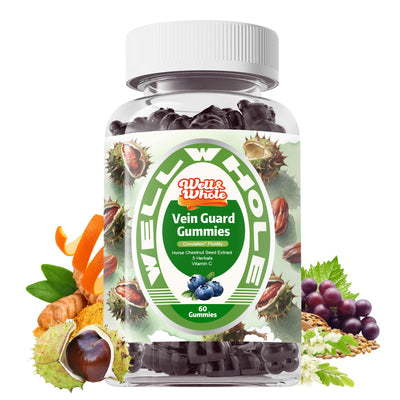
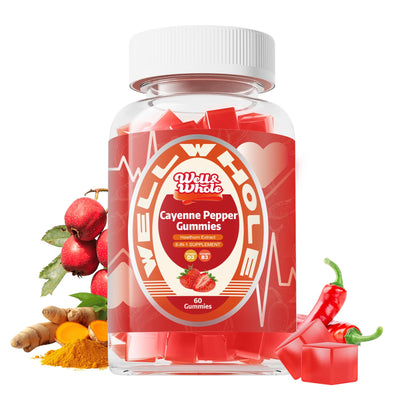
Putting it simply: if this is something you want to add to your routine, our Well&Whole Horse Chestnut Extract Gummies, Circulation Supplements for Legs and Cayenne Pepper Heart Health Gummies with Hawthorn & CoQ10 & Turmeric are a good place to start. The wider Heart Health collection is worth a look, and the CoQ10 range covers related formats.
These statements have not been evaluated by the Food and Drug Administration. This product is not intended to diagnose, treat, cure, or prevent any disease.