Quercetin and Allergy Season: What the Studies Show

Quercetin has a real biochemical case for allergy support: in laboratory and animal studies it stabilizes mast cells and blunts histamine release, which is exactly the pathway allergy medicines target. But the human trial record is small and mostly dated, so the honest summary is that quercetin is biologically plausible and clinically unproven, and anyone entering allergy season with high hopes should pair it with levers that have stronger human evidence.
Key takeaways
- Lab and animal studies show quercetin stabilizes mast cells and reduces histamine release.
- Controlled human trials for allergy symptoms are few, small, and mostly older.
- Food doses, from onions or apples, are hundreds of times below supplemental doses.
- Nasal saline rinses and well-timed antihistamines remain the evidence-backed first moves.
- Supplemental quercetin is generally well tolerated short term but can interact with several medications.
What quercetin actually is
Quercetin is a flavonoid, the same broad family of plant compounds as the polyphenols in green tea. It concentrates in onions, especially red onions, apples, berries, capers, and buckwheat. In food, it arrives with fiber and other phytochemicals; in supplement form, it is usually sold as isolated quercetin or paired with vitamin C, sometimes with bromelain on the theory that the enzyme improves absorption. That pairing matters because quercetin alone is poorly absorbed, a genuine limitation that several of the human trials flag explicitly.
What the laboratory evidence shows
The mechanistic work is consistent and reasonably strong. Quercetin inhibits the release of histamine and other inflammatory mediators from mast cells in cell studies, and it dampens allergic responses in several animal models. It also shows antioxidant activity in vitro. This is why quercetin keeps appearing in reviews of natural antihistamine candidates; the mechanism is not speculative. The gap sits one level up: cells in a dish do not prove that an oral dose, fought through digestion and gut absorption, reaches nasal tissue at concentrations that change mast cell behavior in a living person with hay fever.
What the human trials show, and do not
The best-known human trial, conducted in Japan, gave around sixty people with seasonal allergy symptoms either a quercetin-rich supplement or placebo and found a modest improvement in eye symptoms and overall symptom scores. It was small, short, and used a specially enriched form. Other trials are older, use varied doses, or examine related outcomes rather than allergy directly. Systematic reviews conclude that the evidence is promising but insufficient. Contrast that with intranasal corticosteroids and second-generation antihistamines, which carry hundreds of trials; the gap in certainty is enormous. Quercetin may help some people at the margin, but it is not a substitute for the established tools, particularly for moderate to severe symptoms.
Food sources versus supplement doses
A typical mixed diet delivers perhaps five to forty milligrams of quercetin a day; a heavy onion eater may reach a hundred. Supplemental studies use roughly five hundred to a thousand milligrams daily, so food alone cannot reproduce trial doses, and that is fine. Eating onions and apples is still worthwhile for overall immune and vascular health, but expecting symptom relief from dietary quercetin alone misreads the dose gap by an order of magnitude.
The levers with stronger evidence
Before or alongside quercetin, use the moves with established human data. A saline nasal rinse physically removes pollen from the nasal lining and has decent trial support for symptom relief. Second-generation antihistamines are effective, fast, and well characterized. Showering after high-pollen days, keeping windows closed on dry windy afternoons, and tracking local pollen counts all reduce exposure, which no supplement can match. If you want to try quercetin on top of these, short-term use of five hundred milligrams once or twice daily is the pattern in studies, taken with food to aid absorption.
Timing inside the season
Allergy symptoms follow a threshold pattern: mast cells sit quiet until pollen exposure crosses a personal line, then the reaction amplifies itself. That shape argues for starting support early rather than chasing symptoms. Saline rinses and antihistamines work best when begun one to two weeks before your usual season peak, and the same logic would apply to quercetin if you choose to try it; the Japanese trial dosed participants through the season rather than after symptoms flared. Track your local pollen forecast, note which months have historically hit you hardest, and front-load the low-risk measures. Waiting until the sinus pressure is already full is the most common timing mistake, and no supplement or drug works as well from behind as it does from ahead.

Safety and interactions
Quercetin is generally well tolerated at trial doses for up to twelve weeks, with headache or mild digestive upset the most common complaints. It inhibits certain drug transporters, including CYP3A4, so it can interact with blood pressure medicines, some antibiotics, cyclosporine, and anticoagulants. People with kidney disease and those who are pregnant or breastfeeding should not use it without medical advice. High-dose, long-term use without supervision is not supported by the evidence.
Frequently asked questions
How long does quercetin take to work for allergies?
Trials that reported benefit ran several weeks, so judge any effect after three to four weeks of consistent use, not after two days.
Is quercetin better than an antihistamine?
No direct comparison supports that. Antihistamines have far stronger human evidence; treat quercetin as an add-on at most.
Can I get enough quercetin from food?
For general health, food sources like onions, apples, and berries are excellent. For trial-level doses used in studies, food alone falls far short.
Does quercetin have side effects?
Mostly mild ones such as headache or stomach upset, plus meaningful drug interactions. Check with a pharmacist if you take regular medication.
Related supplements
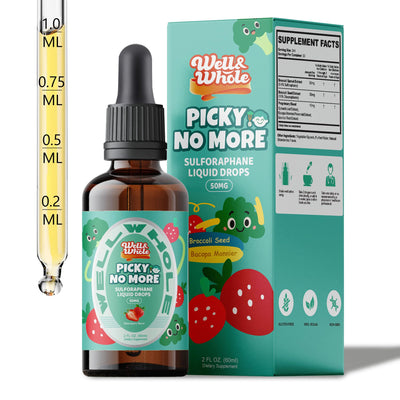
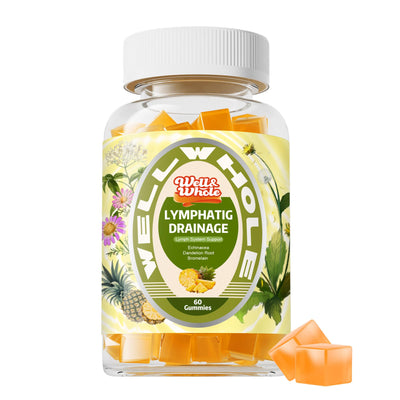
Should you decide to supplement, Lymphatic Drainage Supplements Gummies with Echinacea Dandelion Burdock for Adults with Immune and Energy Support and Sulforaphane Broccoli Supplement Liquid Drops for Kids with Sulforaphane, Glucoraphanin, Bacopa Monnieri are our formulation for this purpose. For a broader comparison, see the Immune Support and Health Benefits collections.
These statements have not been evaluated by the Food and Drug Administration. This product is not intended to diagnose, treat, cure, or prevent any disease. Talk to a healthcare professional before starting any new supplement, especially if you are pregnant, nursing, taking medication, or managing a health condition.
These statements have not been evaluated by the Food and Drug Administration. This product is not intended to diagnose, treat, cure, or prevent any disease.