Probiotic Supplements: A Complete Buyer's Guide
Probiotic supplements buyer's guide — strains, CFUs, refrigeration, and what actually works for gut health. Evidence-based selection.

The probiotic supplement market is enormous and confusing. Walk into any health store and you'll find dozens of products with different strains, CFU counts, claims, and prices.
Most of them won't help you.
This guide cuts through the marketing to help you choose a probiotic that's actually effective for your goals.
The Probiotic Basics
What is a probiotic?
Live microorganisms that, when taken in adequate amounts, confer a health benefit on the host. That's the official definition.
What are CFUs?
Colony-Forming Units — the number of viable bacteria per dose. Higher isn't always better; strain-specificity matters more.
What is a strain?
The most specific classification. A probiotic labeled "Lactobacillus rhamnosus GG" specifies:
· Genus: Lactobacillus
· Species: rhamnosus
· Strain: GG (the specific strain with research)
Different strains of the same species can have very different effects.
The Three Critical Selection Criteria
1. Strain-Specificity (Most Important)
Match the strain to your goal:
Bottom line: Generic "probiotic" labels without strain names are red flags.
2. CFU Count (Important but Secondary)
General guidelines:
· **Maintenance:** 1–10 billion CFU/day
· **Therapeutic:** 10–100 billion CFU/day
· **Acute conditions:** Up to 100+ billion CFU/day short-term
Key points:
· More isn't always better
· Quality matters more than quantity
· Higher CFUs are appropriate for specific conditions
· Some strains are effective at lower doses; others need higher
A note on "100 billion CFU" marketing: Often unnecessary. The dose-response relationship isn't linear.
3. Delivery System (Critical for Survival)
The problem: Many probiotics die in the stomach acid before reaching the gut.
Solutions:
· **Delayed-release capsules** (acid-resistant)
· **Enteric coating**
· **Spore-based probiotics** (Bacillus strains — naturally resistant)
· **Refrigeration** (for some strains)
· **Desiccation** (freeze-dried forms)
The CFU at expiration matters more than at manufacture — make sure the label guarantees potency through expiration, not just at production.
The Strain Deep-Dive
Lactobacillus Species
Lactobacillus rhamnosus GG (LGG):
· Most studied strain
· Effective for diarrhea, immunity, antibiotic recovery
· Robust survival through GI tract
· 10–20 billion CFU typical dose
Lactobacillus acidophilus:
· Common in dairy and supplements
· Generally beneficial
· Often combined with other strains
Lactobacillus plantarum 299v:
· Studied specifically for IBS
· Good survival and adhesion
· 10–20 billion CFU typical
Lactobacillus helveticus + Bifidobacterium longum:
· Studied for mood and anxiety
· Combined in a specific formulation
· Modulates gut-brain axis
Lactobacillus reuteri:
· Supports immune function
· Specific strains for oral, gut, vaginal health
· 1–10 billion CFU often sufficient
Bifidobacterium Species
Bifidobacterium longum:
· Common in healthy adults
· Supports mood, immunity
· Often combined with other strains
Bifidobacterium lactis HN019:
· Studied for digestive function and immunity
· 1–10 billion CFU effective
· Good transit time improvement
Bifidobacterium infantis 35624:
· Specifically studied for IBS
· Reduces IBS symptoms significantly
· Higher doses (10+ billion CFU)
Bifidobacterium breve:
· Common in breastfed infants
· Supports gut barrier function
· Often in multi-strain formulas
Other Important Strains
Saccharomyces boulardii:
· Actually a beneficial YEAST, not bacteria
· Excellent for antibiotic-associated diarrhea
· Survives antibiotics (because it's yeast)
· 5–10 billion CFU typical
· Take during and after antibiotics
Bacillus coagulans (spore-based):
· Naturally resistant to stomach acid
· Shelf-stable (no refrigeration)
· Good for general gut support
· Often more affordable
Bacillus subtilis:
· Spore-based
· Robust survival
· Emerging research
Form Considerations
Capsules
· Most common form
· Look for delayed-release or acid-resistant
· Convenient and tasteless
Powders
· Versatile (can be added to drinks, food)
· Often higher CFU per dose
· Good for those who can't swallow pills
Gummies
· Convenient
· Often lower CFU
· Heat and moisture can damage probiotics
· May have added sugars
Liquids
· Fastest absorption
· Need refrigeration
· Often expensive per CFU
Spore-based
· Naturally resistant
· No refrigeration needed
· Survive stomach acid easily
· Can be taken with food
Refrigeration: Does It Matter?
It depends on the strain:
Requires refrigeration:
· Most Lactobacillus strains
· Most Bifidobacterium strains
· Multi-strain formulas with these
Generally stable at room temperature:
· Saccharomyces boulardii
· Bacillus species (spore-based)
· Heat-killed probiotics (different category)
Check the label: It should specify storage requirements.
If a product says refrigeration needed but you don't refrigerate it, you're likely losing significant potency.
Prebiotics: Don't Forget Them
Probiotics are living organisms — they need food. Prebiotics are fibers that feed beneficial bacteria.
Best prebiotic fibers:
· Inulin
· FOS (fructo-oligosaccharides)
· GOS (galacto-oligosaccharides)
· Partially hydrolyzed guar gum (PHGG)
· Resistant starch
Many quality probiotics include prebiotics in the formula (called "synbiotics").
Common Mistakes
1. Taking probiotics without prebiotics
You may be starving the bacteria you're trying to introduce.
2. Buying the cheapest option
Quality varies dramatically. Generic store brands often have poor survival.
3. Taking too high a dose immediately
Start with a moderate dose (5–10 billion CFU) and work up. Too much too fast can cause bloating.
4. Not taking them consistently
Probiotics work best with regular use, not occasional doses.
5. Stopping when you feel better
For ongoing gut health, continued use is often beneficial.
6. Taking antibiotics simultaneously
Take probiotics 2+ hours apart from antibiotics (except S. boulardii).
Choosing the Right Probiotic for Your Goal
For general health:
· Multi-strain formula
· 10–25 billion CFU
· Refrigerated preferred
· Look for strains: LGG, B. lactis, L. plantarum
For antibiotic support:
· Saccharomyces boulardii (5–10 billion)
· Plus multi-strain formula
· Take 2+ hours after antibiotic
· Continue for 4–8 weeks after antibiotics
For IBS:
· B. infantis 35624 (10+ billion)
· Or L. plantarum 299v (10+ billion)
· Often combined with low-FODMAP diet
· 8+ weeks to see effects
For mood:
· L. helveticus + B. longum combination
· 10 billion CFU
· 4–8 weeks
· Part of comprehensive approach
For children:
· LGG or B. lactis
· Lower doses (1–5 billion)
· Specific pediatric formulas
The well&whole Probiotic
Our Daily Probiotic combines 10 evidence-based strains at clinically relevant doses (50 billion CFU), with delayed-release capsules for survival. Formulated for general gut health, antibiotic recovery, and immune support.
When to Use Other Approaches
Sometimes probiotics aren't the answer:
· **SIBO** (small intestinal bacterial overgrowth) — Probiotics can worsen this
· **Histamine intolerance** — Some strains produce histamine
· **Fungal overgrowth** — Probiotics alone won't fix this
· **Severe dysbiosis** — May need more comprehensive treatment
Consider a comprehensive stool test (GI MAP, Genova Diagnostics) for chronic gut issues.
FAQ
Are refrigerated probiotics better?
Not necessarily, but they're more likely to have higher viable counts. Spore-based and S. boulardii don't need refrigeration.
How long should I take probiotics?
Depends on the goal. Acute (antibiotic recovery): 4–8 weeks. Chronic: ongoing. Cycling (8 weeks on, 4 weeks off) is also valid.
Can probiotics cause side effects?
Initial bloating and gas are common (especially with high doses). Usually resolves within 1–2 weeks. Reduce dose if severe.
Do probiotics need to be taken with food?
Some benefit from food (buffer stomach acid); others are fine on empty stomach. Follow product instructions.
Are probiotics safe for everyone?
Generally yes, but caution with:
· Severely immunocompromised individuals
· Short bowel syndrome
· Central venous catheters (theoretical infection risk)
· Recent major surgery
Do women need different probiotics?
For vaginal health, specific strains (L. rhamnosus GR-1, L. reuteri RC-14) are more targeted.
Can I take probiotics long-term?
Yes, long-term use is generally considered safe.
Conclusion
Choosing a probiotic doesn't have to be confusing. Focus on the three critical factors:
1. **Strain specificity** — Match strains to your goal
2. **CFU count** — 1–50 billion typically sufficient
3. **Delivery system** — Ensure survival to the gut
For most people: A quality multi-strain formula with 10–25 billion CFU and well-researched strains is appropriate. Add prebiotics for best results.
For specific conditions: Choose targeted strains with research for your goal.
For a well-formulated, evidence-based daily probiotic, our Daily Probiotic combines 10 research-backed strains in a delayed-release capsule.
Related supplements
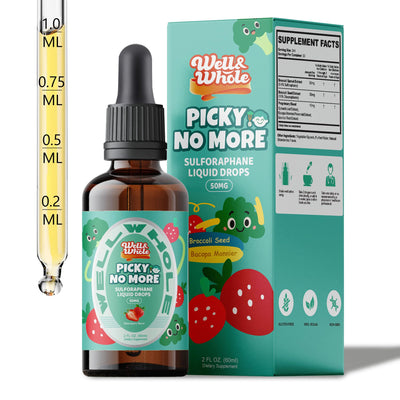
If you're ready to put this into practice, our Kids’ Black Walnut Digestive Support Drops, 14-in-1 Herbal Formula, Mixed Berry, Ages 1+, 2 fl oz and Sulforaphane Broccoli Supplement Liquid Drops for Kids with Sulforaphane, Glucoraphanin, Bacopa Monnieri are formulated with this in mind. You can also compare the Immune Support and Digestive Support ranges to find the format that suits you.
These statements have not been evaluated by the Food and Drug Administration. This product is not intended to diagnose, treat, cure, or prevent any disease.