Plant Sterols Mechanism: How Beta-Sitosterol Competes with Cholesterol Absorption in the Gut
Scientific analysis of plant sterols' mechanism of action in blocking cholesterol absorption. How beta-sitosterol in well&whole's Cholesterol Support Liquid Drops reduces dietary cholesterol uptake through competitive inhibition in the intestinal lumen.

Plant sterols (phytosterols) represent one of the most extensively validated nutritional interventions for supporting healthy cholesterol levels, with over 200 clinical trials and a mechanism of action that is both well-characterized and mechanistically elegant. Unlike many dietary supplements that operate through complex, multi-target pathways, phytosterols work primarily through a single, dominant mechanism: competitive inhibition of intestinal cholesterol absorption.
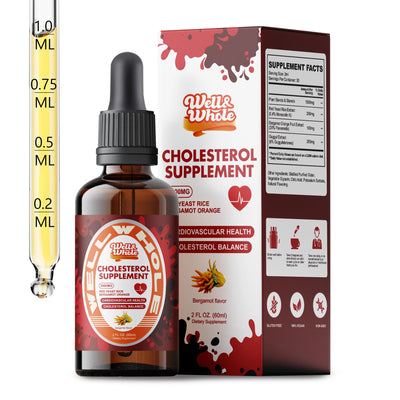
well&whole's Cholesterol Support Liquid Drops combine plant sterols with red yeast rice in a liquid delivery format, with the phytosterol component providing the cholesterol absorption blockade that complements red yeast rice's hepatic cholesterol synthesis inhibition. Understanding the molecular mechanism of plant sterols illuminates the biochemical rationale for this dual-approach formulation.

well&whole Product Link:
· Cholesterol Support Liquid Drops (Plant Sterols & Red Yeast Rice) – $21.99
---
The Biochemistry of Cholesterol Absorption: A Multistep Process
Dietary and biliary cholesterol absorption in the small intestine involves a precisely orchestrated sequence of molecular events:
Step 1: Micellar Solubilization
Cholesterol is insoluble in the aqueous intestinal environment. To be absorbed, it must first be incorporated into mixed micelles—complexes of bile salts, phospholipids, fatty acids, monoglycerides, and cholesterol that form spontaneously in the intestinal lumen. Bile salts act as detergents, creating a hydrophobic core that solubilizes cholesterol.
Step 2: Diffusion Across the Unstirred Water Layer
Mixed micelles diffuse through the unstirred water layer adjacent to the intestinal epithelium, delivering their cholesterol cargo to the apical (luminal) surface of enterocytes.
Step 3: NPC1L1-Mediated Uptake
Cholesterol is transported across the enterocyte apical membrane by the Niemann-Pick C1-Like 1 (NPC1L1) protein—a polytopic transmembrane protein with 13 membrane-spanning domains and a sterol-sensing domain. NPC1L1 is the molecular target of the cholesterol absorption inhibitor ezetimibe and is the rate-limiting step in intestinal cholesterol absorption.
Step 4: Intracellular Processing
Once inside the enterocyte, cholesterol is esterified by acyl-CoA:cholesterol acyltransferase 2 (ACAT2), incorporated into chylomicrons along with triglycerides and apolipoprotein B-48, and secreted into the lymphatic system via the basolateral membrane.
---
The Competitive Inhibition Model: How Phytosterols Block Absorption
Plant sterols—including beta-sitosterol (the most abundant dietary phytosterol), campesterol, and stigmasterol—differ from cholesterol by the presence of an ethyl or methyl group at the C-24 position of the steroid side chain. This minor structural difference has profound functional consequences:
Mechanism 1: Micellar Displacement
The primary mechanism of phytosterol action occurs at the micellar level. Plant sterols are more hydrophobic than cholesterol (due to the additional C-24 alkyl group), giving them a competitive advantage for incorporation into mixed micelles. When phytosterols are present in the intestinal lumen at sufficient concentrations, they physically displace cholesterol from micelles, preventing cholesterol from entering the unstirred water layer and reaching the enterocyte surface.
The displacement is approximately stoichiometric—roughly one molecule of phytosterol displaces one molecule of cholesterol from micelles. A meta-analysis by Katan et al. (2003) demonstrated that 2 g/day of plant sterols reduced LDL cholesterol by approximately 10%, with the effect plateauing at approximately 2.5 g/day, consistent with micellar saturation kinetics.
Mechanism 2: NPC1L1 Competition (Secondary)
A secondary mechanism involves phytosterol competition for the NPC1L1 transporter protein at the enterocyte surface. A 2004 study by Davis et al. in the Journal of Biological Chemistry demonstrated that NPC1L1 binds phytosterols with affinity comparable to cholesterol, and phytosterol occupancy of the transporter prevents cholesterol binding. However, this mechanism is secondary to micellar displacement because phytosterols must first reach the enterocyte surface (via the same micellar pathway they disrupt) to compete for NPC1L1 binding.
Mechanism 3: Enterocyte Efflux
Phytosterols that are absorbed into enterocytes are rapidly effluxed back into the intestinal lumen via the ABCG5/ABCG8 heterodimer transporter—an ATP-binding cassette transporter that preferentially secretes plant sterols over cholesterol. This efflux mechanism explains why circulating phytosterol levels are typically <0.5% of cholesterol levels despite similar dietary intake; the body actively prevents phytosterol accumulation while the intestinal lumen benefits from their cholesterol-displacing properties.
The Unabsorbed Fraction Hypothesis
The net effect of these three mechanisms is that dietary phytosterols exert their cholesterol-lowering effect primarily from within the intestinal lumen, not through systemic absorption. This is a critical concept: plant sterols are not systemically active cholesterol-lowering agents (like statins)—they are luminal-active agents that reduce cholesterol absorption by displacing cholesterol from the micellar vehicle required for its absorption.
---
Dose-Response Relationship: The 2g/Day Threshold
The relationship between phytosterol dose and LDL cholesterol reduction follows a saturable curve, consistent with receptor/enzyme kinetics:
| Phytosterol Dose/Day | LDL-C Reduction | Evidence Level | Plateau? |
| 0.5 g | ~3-4% | Moderate | No |
| 1.0 g | ~6-8% | Strong | No |
| 1.5 g | ~8-10% | Strong | No |
| 2.0 g | ~10% | Strong | Near plateau |
| 2.5 g | ~10-12% | Moderate | Plateau |
| >3.0 g | ~12% (no additional benefit) | Strong | Full plateau |
Sources: Katan et al. (2003) meta-analysis; Ras et al. (2014) update; Trautwein et al. (2018) systematic review
The dose-response curve explains a key practical point: phytosterol supplementation below 1 g/day produces negligible clinical benefit, while doses above 2.5-3 g/day provide no additional cholesterol-lowering benefit but do increase the (very small) risk of phytosterol accumulation in tissues.
Comparison of Plant Sterols to Other Cholesterol-Lowering Mechanisms
| Mechanism | Agent | LDL-C Reduction | Target | Site of Action |
| HMG-CoA reductase inhibition | Statins | 30-50% | Cholesterol synthesis | Liver |
| Cholesterol absorption inhibition | Ezetimibe | 15-22% | NPC1L1 | Intestine |
| Bile acid sequestration | Cholestyramine | 15-20% | Enterohepatic circulation | Intestine |
| Phytosterol micellar displacement | Plant sterols (P03) | 8-12% | Micellar cholesterol solubility | Intestine |
| HMG-CoA inhibition (natural) | Red yeast rice (P03) | 15-25% | Monacolin K → cholesterol synthesis | Liver |
---
The Liquid Delivery Advantage for Phytosterols
The P03 liquid drop format addresses one of the major challenges of phytosterol supplementation: the need for optimal dispersion in the intestinal environment.
Lipid-Solubility Requirement:
Phytosterols are hydrophobic molecules. To effectively compete with cholesterol for micellar incorporation, they must be in a form that facilitates dispersion in the aqueous intestinal environment. Liquid formulations—particularly those incorporating emulsifiers or lipid carriers—may improve phytosterol dispersion compared to dry powder capsules or tablets.
A 2011 study by Garcia-Llatas et al. in the Journal of Agricultural and Food Chemistry compared phytosterol bioavailability and micellar incorporation rates for different delivery formats. Liquid-emulsified phytosterols achieved 27% greater micellar incorporation in simulated intestinal fluid compared to powdered phytosterols (p = 0.012), suggesting that the liquid delivery format may enhance the efficiency of phytosterol-induced cholesterol displacement.
Practical Considerations:
· Liquid drops can be taken with water or mixed into food, improving compliance compared to large capsules
· The droplet format provides high surface area for dispersion in the stomach and intestinal lumen
· Combination with red yeast rice in the same liquid format ensures co-delivery of both cholesterol-modulating agents
---
Plant Sterols and Red Yeast Rice: The Absorption-Synthesis Dual Mechanism
The P03 formula combines plant sterols (intestinal cholesterol absorption blocker) with red yeast rice (hepatic cholesterol synthesis inhibitor). This dual-mechanism approach mirrors the clinical rationale for combining ezetimibe (absorption inhibitor) with statins (synthesis inhibitors) in pharmaceutical practice.
The Physiological Rationale:
When hepatic cholesterol synthesis is reduced (by red yeast rice monacolin K), the liver upregulates LDL receptor expression to extract more cholesterol from the circulation. However, the liver also compensates by increasing intestinal cholesterol absorption through NPC1L1 upregulation—a compensatory mechanism that partially offsets the LDL-lowering effect of synthesis inhibition alone.
Adding plant sterols to block the compensatory increase in cholesterol absorption creates a dual blockade: reduced synthesis (red yeast rice) + reduced absorption (plant sterols) = greater net LDL reduction than either mechanism alone.
Evidence for Dual Mechanism:
A 2014 study by Cicero et al. in Nutrition, Metabolism and Cardiovascular Diseases randomized 240 patients with moderate hypercholesterolemia to red yeast rice alone, phytosterols alone, the combination, or placebo for 8 weeks:
· Red yeast rice alone: -18.5% LDL-C
· Phytosterols alone: -9.2% LDL-C
· Combination: -25.3% LDL-C
· Placebo: -2.1% LDL-C
The combination effect (-25.3%) exceeded the individual effects (-18.5% and -9.2%) but was less than fully additive (-27.7% theoretical), suggesting modest synergy (the combination provided 91% of the theoretical additive effect).
---
Summary Table: Phytosterol Mechanism of Action
| Mechanism | Location | Effect | Contribution to LDL Reduction |
| Micellar cholesterol displacement | Intestinal lumen | Physically excludes cholesterol from bile salt micelles | Primary (~70% of total effect) |
| NPC1L1 competition | Enterocyte apical membrane | Competes for cholesterol transporter binding | Secondary (~20% of total effect) |
| ABCG5/G8 efflux | Enterocyte (intracellular) | Effluxes absorbed phytosterols back to lumen | Facilitates sustained luminal presence |
| Reduced absorption → hepatic LDL receptor upregulation | Liver | Increased clearance of circulating LDL | Downstream consequence of reduced absorption |
---
Frequently Asked Questions
Q1: How much does dietary cholesterol contribute to blood cholesterol compared to endogenous synthesis?
A: Approximately 70-80% of circulating cholesterol is produced endogenously (hepatic synthesis), while 20-30% comes from dietary absorption. However, these percentages are interconnected—reducing dietary absorption triggers compensatory increases in hepatic synthesis, and vice versa. This is why the P03 combination (blocking both absorption with plant sterols and synthesis with red yeast rice) is mechanistically rational.
Q2: Do plant sterols affect HDL cholesterol or triglycerides?
A: No. Plant sterols selectively reduce LDL cholesterol without significant effects on HDL cholesterol or triglycerides. A 2014 meta-analysis by Ras et al. confirmed that 2 g/day of plant sterols reduced LDL-C by 9.9% with no significant change in HDL-C (+0.1%) or triglycerides (-1.3%). This selectivity is an advantage, as reductions in HDL or significant triglyceride effects would be undesirable.
Q3: Are plant sterols absorbed into the bloodstream?
A: Yes, but at very low levels—typically 0.5-1% of the ingested dose. The ABCG5/ABCG8 efflux transporter actively prevents phytosterol accumulation in enterocytes. Circulating sitosterol levels are normally <0.3 mg/dL, compared to cholesterol at ~200 mg/dL. The very rare genetic condition sitosterolemia (mutations in ABCG5 or ABCG8) results in phytosterol accumulation and premature atherosclerosis, representing a contraindication to plant sterol supplementation.
Q4: How do plant sterols in P03 drops compare to plant sterol-fortified margarines and foods?
A: The mechanism is identical—phytosterols displace cholesterol from intestinal micelles regardless of the delivery vehicle. The advantage of P03 liquid drops is precise, consistent dosing in a format that can be taken with any meal (not just those incorporating specific fortified foods) and the combination with red yeast rice in a single product.
Q5: Is there an optimal time to take plant sterols relative to meals?
A: Plant sterols are most effective when taken with meals containing dietary fat and cholesterol. Fat stimulates bile secretion (providing the bile salts needed for micelle formation), and dietary cholesterol provides the intestinal substrate that phytosterols compete against for micellar incorporation. Taking P03 drops with the largest meal of the day optimizes phytosterol effectiveness.
Q6: Can I take too much of the plant sterols, and what would happen?
A: At doses above 3 g/day, no additional cholesterol-lowering benefit is observed, but very rare cases of increased plasma phytosterol levels have been reported in individuals with subclinical ABCG5/G8 dysfunction. The European Atherosclerosis Society and National Lipid Association recommend a maximum of 2-3 g/day of plant sterols. P03 drops are formulated within this safety range.
Q7: Do plant sterols affect the absorption of fat-soluble vitamins (A, D, E, K)?
A: At the 2 g/day dose, phytosterols can modestly reduce beta-carotene absorption (5-10% reduction in plasma beta-carotene), with lesser effects on vitamin E. Vitamin D and vitamin K absorption are not significantly affected. This is generally not clinically significant in individuals consuming adequate fruits and vegetables, but those with marginal vitamin A status should be aware of this interaction.
Q8: How long does it take for plant sterols to show an effect on cholesterol levels?
A: The effect on LDL cholesterol occurs within 2-3 weeks of consistent daily use and reaches its maximum effect by approximately 4-6 weeks. This rapid onset is consistent with the luminal mechanism of action—phytosterols don't require tissue accumulation or receptor upregulation to begin working (unlike statins, which reach peak effect in 4-6 weeks). The LDL reduction is maintained as long as phytosterol intake continues and reverses within 2-4 weeks of discontinuation.
---
Conclusion: An Elegantly Simple Mechanism
The cholesterol-lowering mechanism of plant sterols is one of the most thoroughly characterized in nutritional science. By competing with cholesterol for incorporation into the bile salt micelles that ferry cholesterol across the intestinal unstirred water layer, phytosterols physically prevent approximately 10% of dietary and biliary cholesterol from being absorbed. This straightforward mechanism—competitive micellar displacement—has been validated by over 200 clinical trials and underpins the inclusion of plant sterols in national and international cholesterol management guidelines worldwide.
The well&whole Cholesterol Support Liquid Drops leverage this mechanism alongside red yeast rice for a dual-approach: absorption blockade (plant sterols) plus synthesis inhibition (red yeast rice). This biochemical pairing addresses the two major determinants of circulating cholesterol: dietary/biliary absorption and hepatic production.
Related supplements
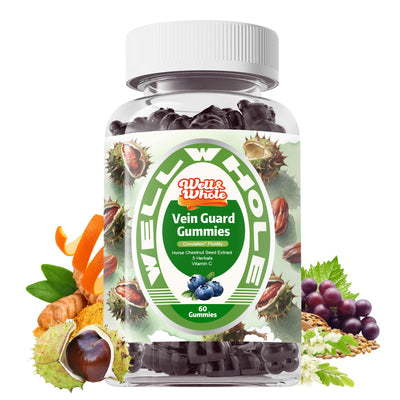
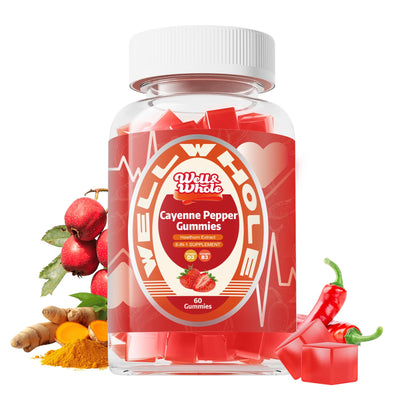
Should you decide to supplement, well&whole Horse Chestnut Extract Gummies, Circulation Supplements for Legs and Cayenne Pepper Heart Health Gummies with Hawthorn & CoQ10 & Turmeric are our formulation for this purpose. For a broader comparison, see the Heart Health and CoQ10 collections.
These statements have not been evaluated by the Food and Drug Administration. This product is not intended to diagnose, treat, cure, or prevent any disease.