Plant Sterols for Cholesterol: How They Block Absorption
How do plant sterols lower cholesterol? Discover the science of phytosterols, how they block cholesterol absorption in the gut, and what research shows.

If you've been told your cholesterol is higher than you'd like, you're not alone. Nearly 94 million American adults have cholesterol levels above healthy ranges, according to the CDC. While statins are the most common medical approach, many people seek natural, dietary strategies to support healthy cholesterol levels—and plant sterols are at the top of that list.
Plant sterols, also called **phytosterols**, are one of the most thoroughly researched natural compounds for cholesterol management. The FDA has even authorized a health claim stating that foods containing plant sterols may reduce the risk of heart disease when consumed as part of a diet low in saturated fat and cholesterol.
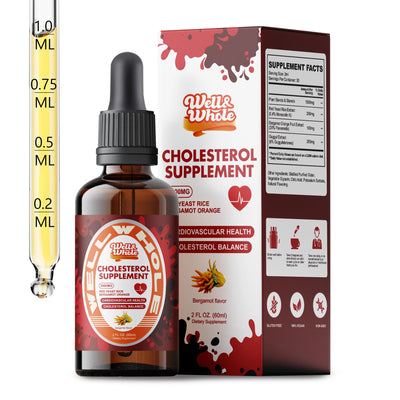
In this article, we'll explore exactly what plant sterols are, how they work to block cholesterol absorption, what the clinical research shows, and why they're a key ingredient in well&whole Cholesterol Support Liquid Drops.
What Are Plant Sterols?
The Basics
Plant sterols are cholesterol-like compounds found naturally in plants. Their molecular structure is remarkably similar to cholesterol—so similar that your body can't easily tell them apart. This structural similarity is the key to how they work.
There are two main types of plant sterols:
1. **Sterols**: Have a double bond in their chemical structure (e.g., beta-sitosterol, campesterol, stigmasterol)
2. **Stanols**: Are the saturated form of sterols, with no double bond (e.g., sitostanol, campestanol)
Both types work similarly, though stanols may be slightly more effective at blocking cholesterol absorption.
Natural Sources
Plant sterols are found in small amounts in many plant foods:
| Food Source | Plant Sterol Content (mg/100g) |
|---|---|
| Vegetable oils (corn, soybean, sesame) | 200-500 |
| Nuts and seeds (pistachio, sunflower) | 150-300 |
| Legumes | 100-200 |
| Whole grains | 50-100 |
| Fruits and vegetables | 10-50 |
The average Western diet provides only about 200-400 mg of plant sterols per day—far below the 1,500-3,000 mg per day that research shows is effective for cholesterol support. This is why supplementation is often necessary to achieve therapeutic doses.
How Plant Sterols Block Cholesterol Absorption
The Mechanism: Competitive Inhibition
The way plant sterols lower cholesterol is elegantly simple: **they compete with cholesterol for absorption in the digestive tract**.
Here's the step-by-step process:
Step 1: Dietary and Biliary Cholesterol Enter the Intestine
Cholesterol in your digestive tract comes from two sources:
- **Dietary cholesterol**: From animal foods (eggs, meat, dairy)—about 300-500 mg/day
- **Biliary cholesterol**: Secreted by your liver into bile as part of digestion—about 800-1,400 mg/day
This means most of the cholesterol in your gut is actually produced by your own body, not from food.
Step 2: Plant Sterols Compete for Micelle Formation
Before cholesterol can be absorbed by intestinal cells, it must be packaged into **micelles**—tiny spheres of bile salts and lipids that transport fat-soluble molecules to the intestinal wall.
Because plant sterols have a similar structure to cholesterol, they compete for inclusion in micelles. When plant sterols are present in sufficient quantities, they displace cholesterol from micelles, leaving the cholesterol in the intestinal lumen rather than being absorbed.
Step 3: Reduced Cholesterol Absorption
A 2018 study in the *Journal of Lipid Research* demonstrated that plant sterols at doses of 2 grams per day reduced intestinal cholesterol absorption by 30-40%. The unabsorbed cholesterol is then excreted in feces.
Step 4: Compensatory Mechanisms
When less cholesterol is absorbed, the body responds by:
- **Increasing cholesterol synthesis** in the liver (but not enough to fully compensate)
- **Increasing LDL receptor expression** on liver cells, which pulls more LDL cholesterol from the bloodstream
The net result is a reduction in circulating LDL cholesterol levels.
A 2019 review in the *European Journal of Clinical Nutrition* summarized the mechanism: "Plant sterols reduce intestinal cholesterol absorption through competitive displacement from mixed micelles, leading to increased fecal cholesterol excretion and compensatory upregulation of hepatic LDL receptors."
The Clinical Evidence
LDL Cholesterol Reduction
The evidence for plant sterols and cholesterol is extensive:
A landmark meta-analysis published in the *Journal of the American College of Nutrition* (2018) analyzed 124 clinical trials involving over 9,000 participants. Key findings:
- **Average LDL reduction**: 8-12% with 2 grams/day of plant sterols
- **Dose-response relationship**: Benefits increase with dose up to about 3 grams/day
- **Consistency**: Effects were consistent across different populations, ages, and baseline cholesterol levels
- **Additive effects**: Plant sterols worked both alone and in combination with statin therapy
A 2020 meta-analysis in *Cochrane Database of Systematic Reviews* confirmed these findings, concluding that "plant sterols and stanols reduce LDL cholesterol by approximately 10% when consumed at doses of 2 grams per day."
Timeline for Results
Unlike some supplements that take months to show effects, plant sterols work relatively quickly:
- **2 weeks**: Measurable LDL reduction begins
- **4-6 weeks**: Near-maximal effect (8-12% LDL reduction)
- **Ongoing**: Benefits maintained with consistent daily use
A 2017 study in *Atherosclerosis* found that LDL reduction was statistically significant within 14 days of starting plant sterol supplementation, with maximum effect at 4 weeks.
Total Cholesterol and HDL
Plant sterols primarily affect LDL ("bad") cholesterol. Their effects on other lipid markers:
| Lipid Marker | Effect of Plant Sterols |
|---|---|
| LDL cholesterol | ↓ 8-12% |
| Total cholesterol | ↓ 5-10% |
| HDL ("good") cholesterol | No significant change |
| Triglycerides | Mild reduction (3-5%) |
Plant Sterols + Statins: Additive Benefits
If you take a statin, plant sterols can provide additional cholesterol-lowering benefits. A 2019 study in the *Journal of Clinical Lipidology* found that adding 2 grams of plant sterols to statin therapy reduced LDL cholesterol an additional 6-10% beyond statin therapy alone.
This additive effect makes sense: statins reduce cholesterol production in the liver, while plant sterols reduce cholesterol absorption in the gut—two different mechanisms working together.
Plant Sterols in well&whole Cholesterol Support Drops
well&whole Cholesterol Support Liquid Drops combine plant sterols with **red yeast rice** for a dual-action cholesterol support formula:
| Ingredient | Mechanism | Complementary Effect |
|---|---|---|
| Plant sterols | Blocks cholesterol absorption in the gut | Reduces how much cholesterol enters your system |
| Red yeast rice | Supports cholesterol production in the liver | Reduces how much cholesterol your body makes |
Together, these two ingredients address both sides of the cholesterol equation—absorption and production—for more comprehensive support than either ingredient alone.
Why Liquid Drops?
The liquid format offers several advantages for plant sterol supplementation:
- **Better dispersion**: Liquid drops disperse more evenly in the digestive tract, maximizing contact with cholesterol in the gut
- **Flexible dosing**: Easy to adjust the number of drops based on your needs
- **No swallowing pills**: Ideal for people who have difficulty with capsules or tablets
- **Fast absorption**: Liquid format begins working quickly
Dosage Recommendations
Effective Dose
Research consistently shows that **1.5-3 grams per day** of plant sterols is effective for cholesterol support. The most studied dose is 2 grams per day, which provides the 8-12% LDL reduction seen in clinical trials.
Timing
Plant sterols work best when taken with meals, as they need to be present in the digestive tract at the same time as cholesterol. Taking them with your largest meals of the day maximizes their cholesterol-blocking effect.
Consistency
Like any cholesterol management approach, plant sterols require consistent daily use. The LDL reduction disappears within 2-3 weeks of stopping supplementation.
Safety and Side Effects
Excellent Safety Profile
Plant sterols have an exceptional safety record. A 2019 safety review in *Regulatory Toxicology and Pharmacology* concluded that "plant sterols and stanols have been consumed safely at doses of up to 9 grams per day in clinical trials without significant adverse effects."
The FDA has authorized a health claim for plant sterols and heart disease risk reduction, and the European Food Safety Authority (EFSA) has confirmed their safety and efficacy.
Considerations
- **Beta-sitosterolemia**: A rare genetic condition where plant sterols accumulate in the body. People with this condition should avoid plant sterol supplements.
- **Fat-soluble vitamin absorption**: Plant sterols may slightly reduce absorption of fat-soluble vitamins (A, D, E, K). This is typically not clinically significant but consider taking a multivitamin at a different time of day.
- **Pregnancy**: Safety during pregnancy has not been specifically studied. Consult your healthcare provider.
Plant Sterols vs. Other Cholesterol Approaches
| Approach | LDL Reduction | Mechanism | Safety |
|---|---|---|---|
| Plant sterols (2g/day) | 8-12% | Blocks absorption | Excellent |
| Red yeast rice | 10-20% | Reduces synthesis | Good (monitor liver) |
| Statins | 20-55% | Reduces synthesis | Good (monitor liver/muscles) |
| Soluble fiber (10g/day) | 3-5% | Binds bile acids | Excellent |
| Omega-3 fatty acids | Minimal on LDL | Reduces triglycerides | Excellent |
Plant sterols offer moderate, consistent LDL reduction with excellent safety—making them ideal for people seeking natural cholesterol support or as an add-on to other approaches.
FAQ
Q: How much do plant sterols lower cholesterol?
A: Clinical studies show an average LDL cholesterol reduction of 8-12% with 2 grams per day of plant sterols.
Q: How long does it take for plant sterols to work?
A: LDL reduction begins within 2 weeks and reaches near-maximal effect at 4-6 weeks of consistent daily use.
Q: Should I take plant sterols with food?
A: Yes. Plant sterols work in the digestive tract by competing with cholesterol for absorption, so they must be present during meals.
Q: Can I take plant sterols with statins?
A: Yes. Plant sterols and statins work through different mechanisms (absorption vs. production), and combining them provides additive benefits. Always inform your healthcare provider about all supplements.
Q: Are plant sterols safe for long-term use?
A: Yes. Clinical studies have used plant sterols safely for periods of several years. They have an excellent safety profile.
Q: Can I get enough plant sterols from food?
A: The average diet provides only 200-400 mg/day of plant sterols. Therapeutic doses (1,500-3,000 mg/day) are difficult to achieve without supplementation or fortified foods.
Q: Do plant sterols affect HDL or triglycerides?
A: Plant sterols primarily reduce LDL cholesterol. They have minimal effect on HDL and may cause a slight reduction in triglycerides (3-5%).
Q: Can pregnant women take plant sterols?
A: Safety during pregnancy has not been specifically studied. Consult your healthcare provider before using any supplement during pregnancy.
Conclusion
Plant sterols represent one of the most well-researched, effective, and safe natural approaches to cholesterol management. By competing with cholesterol for absorption in the digestive tract, they reduce the amount of cholesterol that enters your bloodstream—leading to a consistent 8-12% reduction in LDL cholesterol with daily use.
When combined with red yeast rice in well&whole Cholesterol Support Liquid Drops, plant sterols become part of a dual-action formula that addresses both cholesterol absorption and production—providing more comprehensive support than either approach alone.
If you're looking for a natural, science-backed way to support healthy cholesterol levels, plant sterols are an excellent place to start.
Related supplements
Should you decide to supplement, well&whole Horse Chestnut Extract Gummies, Circulation Supplements for Legs and Cayenne Pepper Heart Health Gummies with Hawthorn & CoQ10 & Turmeric are our formulation for this purpose. For a broader comparison, see the Heart Health and CoQ10 collections.
These statements have not been evaluated by the Food and Drug Administration. This product is not intended to diagnose, treat, cure, or prevent any disease.