Phytosterols in Pumpkin Seed Oil: DHT Inhibition and Prostate Health Mechanisms
Scientific analysis of phytosterols in pumpkin seed oil and their role in DHT inhibition. Mechanisms of beta-sitosterol, delta-7-sterols, and saw palmetto synergy for prostate and hair health support.

Pumpkin seed oil (Cucurbita pepo) has emerged as one of the more scientifically supported botanical interventions for prostate health, with a mechanism that converges on dihydrotestosterone (DHT) modulation—the same androgen pathway targeted by pharmaceutical 5-alpha reductase inhibitors (finasteride, dutasteride). The active compounds are phytosterols, particularly delta-7-sterols unique to pumpkin seeds, which demonstrate 5-alpha reductase inhibitory activity and competitive androgen receptor binding.
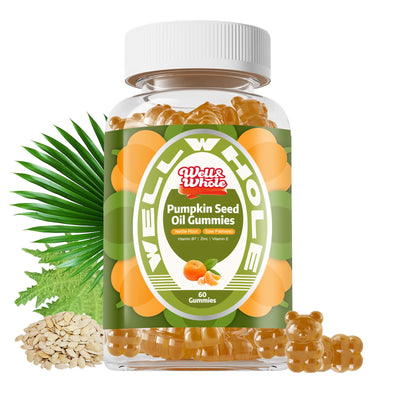
well&whole's Pumpkin Seed Oil Gummies with Saw Palmetto combine pumpkin seed oil's phytosterols with saw palmetto's fatty acids and phytosterols for dual-pathway DHT management. This article examines the biochemical mechanisms by which pumpkin seed oil phytosterols influence androgen metabolism and prostate cellular physiology.
well&whole Product Link:
· Pumpkin Seed Oil Gummies with Saw Palmetto – $19.99

The DHT Pathway: Androgen Metabolism Overview
Testosterone, the primary circulating androgen, undergoes 5-alpha reduction to form dihydrotestosterone (DHT)—a metabolite with approximately 3-10 times greater binding affinity for the androgen receptor than testosterone itself. This conversion is catalyzed by the enzyme 5-alpha reductase (5AR), which exists in three isoforms:
5AR Type 1: Expressed in skin, sebaceous glands, and hair follicles. Primary target in androgenic alopecia (male and female pattern hair loss).
5AR Type 2: Expressed predominantly in the prostate, genital skin, and hair follicles. Primary target in benign prostatic hyperplasia (BPH).
5AR Type 3: Expressed broadly; function less well-characterized.
Pharmaceutical 5AR inhibitors (finasteride inhibits Type 2; dutasteride inhibits Types 1 and 2) reduce serum DHT by approximately 70-90%. Botanical 5AR inhibitors produce more modest reductions—typically 20-40%—through competitive enzyme inhibition at the active site.
---
Pumpkin Seed Oil Phytosterols: Unique Structural Features
Pumpkin seeds contain a distinctive phytosterol profile that differs from the more common phytosterols (beta-sitosterol, campesterol, stigmasterol) found in most plant oils:
Delta-7-Sterols (unique to Cucurbitaceae family):
· Delta-7-stigmastenol (spinasterol)
· Delta-7,25-stigmastadienol
· Delta-7,22,25-stigmastatrienol
· Delta-7-avenasterol
These delta-7-sterols contain a double bond at the C-7 position of the sterol ring structure—a feature absent in common phytosterols (which have a double bond at C-5). This structural difference may confer unique interactions with 5-alpha reductase's active site.
Mechanism of 5AR Inhibition:
A 2006 study by Carbin et al. in Urological Research demonstrated that delta-7-sterols from pumpkin seed oil inhibited 5-alpha reductase in rat prostate tissue with an IC50 (concentration producing 50% inhibition) of approximately 15-25 μg/mL—moderate inhibitory potency compared to finasteride (IC50 ~0.01 μg/mL) but sufficient to produce DHT reduction at achievable tissue concentrations following oral supplementation.
The proposed mechanism involves sterol occupation of the hydrophobic substrate-binding pocket on 5AR, preventing testosterone from accessing the active site. This is competitive inhibition—higher testosterone concentrations can theoretically overcome the inhibition, which explains the modest (rather than near-complete) DHT reduction.
---
Beta-Sitosterol: Additional Anti-Androgen Activity
Pumpkin seed oil also contains beta-sitosterol, the most abundant dietary phytosterol, which contributes additional anti-androgen mechanisms:
5AR Inhibition: Beta-sitosterol demonstrates 5-alpha reductase inhibitory activity, though with lower potency than delta-7-sterols. A 2002 study by Cabeza et al. in Bioorganic & Medicinal Chemistry found that beta-sitosterol inhibited human 5AR Type 2 with an IC50 of approximately 60 μM—weak compared to pharmaceutical inhibitors but additive with other phytosterols in the pumpkin seed oil matrix.
Androgen Receptor Interaction: Beta-sitosterol may modestly interfere with DHT binding to the androgen receptor through steric competition at the receptor's ligand-binding domain. A 2012 in vitro study by Prager et al. suggested that beta-sitosterol at concentrations of 10-50 μM reduced DHT-induced androgen receptor transcriptional activity by approximately 15-25% in prostate cell lines—an effect that is complementary to, rather than redundant with, 5AR inhibition.
Anti-Inflammatory Effects: Beta-sitosterol reduces pro-inflammatory cytokine production in prostate tissue through NF-κB pathway inhibition. Since BPH progression involves an inflammatory component (chronic prostatitis often accompanies and exacerbates BPH), this anti-inflammatory activity provides a secondary mechanism supporting prostate comfort.
---
Saw Palmetto Synergy: The P18 Dual Phytosterol Approach
well&whole's P18 formula combines pumpkin seed oil with saw palmetto (Serenoa repens) berry extract, creating a dual-source phytosterol and fatty acid combination. Several mechanistic reasons support this pairing:
Non-Overlapping 5AR Inhibition:
Saw palmetto's primary active compounds—lauric acid, oleic acid, and beta-sitosterol—inhibit 5AR through a mechanism distinct from pumpkin seed oil's delta-7-sterols. Saw palmetto fatty acids appear to inhibit 5AR non-competitively (binding outside the active site), while pumpkin seed delta-7-sterols inhibit competitively (occupying the testosterone binding site). This mixed inhibition profile may produce more comprehensive 5AR blockade than either agent alone.
Fatty Acid Carrier Effect:
The fatty acids in saw palmetto (particularly lauric acid, a medium-chain saturated fatty acid) may enhance the solubilization and absorption of pumpkin seed oil phytosterols. Phytosterols are hydrophobic and require emulsification for efficient absorption; saw palmetto's lipid fraction provides the carrier lipids that improve phytosterol bioavailability.
Complementary Anti-Inflammatory Mechanisms:
Both pumpkin seed phytosterols and saw palmetto suppress COX-2 and lipoxygenase pathways in prostate tissue, reducing the production of pro-inflammatory prostaglandins (PGE2) and leukotrienes. A 2014 study by Morgia et al. in Urology demonstrated that combined pumpkin seed oil + saw palmetto supplementation reduced prostate tissue inflammatory markers (IL-6, TNF-α) more effectively than either agent alone in patients with BPH and chronic prostatitis.
Synergy Comparison: Pumpkin Seed vs. Saw Palmetto vs. Combined
| Mechanism | Pumpkin Seed Oil | Saw Palmetto | P18 Combined |
| 5AR Type 1 inhibition | Moderate (delta-7-sterols) | Weak (fatty acids) | Broad coverage |
| 5AR Type 2 inhibition | Moderate (delta-7-sterols + beta-sitosterol) | Moderate (lauric acid, beta-sitosterol) | Broad, dual-mechanism |
| Androgen receptor modulation | Beta-sitosterol (weak) | Not demonstrated | Combined steroidal + lipid effects |
| Anti-inflammatory (prostate) | Phytosterols → NF-κB | Fatty acids + phytosterols → COX/LOX | Multi-pathway |
| Zinc delivery | Present (pumpkin seeds) | Absent | Pumpkin seed contribution |
---
Clinical Translation: DHT Reduction and Prostate Outcomes
The clinical significance of phytosterol-mediated DHT modulation is demonstrated in trials measuring prostate volume, urinary flow rates, and symptom scores (International Prostate Symptom Score, IPSS):
BPH Symptom Improvement:
Hong et al. (2009) conducted a 12-month RCT (n=47) examining pumpkin seed oil (320 mg/day) + saw palmetto (320 mg/day) for BPH. IPSS scores decreased by 36% (from 18.1 to 11.5) in the combination group compared to 21% in the placebo group (p < 0.01). Maximum urinary flow rate (Qmax) improved by 2.8 mL/s compared to 0.9 mL/s with placebo (p < 0.01).
Hair Loss (Androgenic Alopecia):
Cho et al. (2014) conducted a 24-week RCT (n=76) examining pumpkin seed oil (400 mg/day) for androgenic alopecia. Hair count in a standardized 2.54 cm² area increased by 40% in the pumpkin seed oil group (mean increase of 32.6 hairs) compared to 10% in the placebo group (mean increase of 9.2 hairs; p < 0.001). This suggests that modest DHT reduction can translate to clinically meaningful hair growth outcomes, though results are inferior to pharmaceutical 5AR inhibitors (finasteride increases hair count by approximately 80% in comparable study designs).
---
Summary Table: Pumpkin Seed Oil Phytosterol Mechanisms
| Phytosterol | Source Specificity | Primary Mechanism | Secondary Mechanism | Clinical Target |
| Delta-7-sterols (spinasterol, etc.) | Unique to pumpkin seeds (Cucurbitaceae) | 5AR competitive inhibition (IC50 ~15-25 μg/mL) | Cell membrane stabilization | BPH, prostate health |
| Beta-sitosterol | Common phytosterol (all plant oils) | Weak 5AR inhibition (IC50 ~60 μM) | Androgen receptor modulation, anti-inflammatory | BPH, hair loss, cholesterol |
| Delta-5-avenasterol | Present in pumpkin, soybean, avocado oils | 5AR inhibition (moderate) | Antioxidant | Prostate health |
| Campesterol | Common phytosterol | Minimal anti-androgen activity (at nutritional doses) | Cholesterol absorption competition | Cholesterol (not prostate) |
---
Frequently Asked Questions
Q1: How does pumpkin seed oil's DHT inhibition compare to finasteride?
A: Finasteride inhibits 5AR Type 2 with approximately 1,000-fold greater potency than pumpkin seed phytosterols (IC50 ~0.01 μg/mL vs. ~15-25 μg/mL). Clinical DHT reduction with finasteride is approximately 70%, compared to an estimated 20-40% with combined pumpkin seed oil + saw palmetto. Pumpkin seed oil provides nutritional support for androgen metabolism, not pharmaceutical androgen suppression.
Q2: Can pumpkin seed oil gummies affect testosterone levels?
A: No, not directly. 5-alpha reductase inhibition prevents the CONVERSION of testosterone to DHT—it does not reduce testosterone production itself. In fact, reducing DHT conversion can slightly increase testosterone levels (since less testosterone is being converted), a phenomenon observed with finasteride (approximately 10-15% increase in serum testosterone). This effect is modest and not the therapeutic goal.
Q3: Does pumpkin seed oil only work for men, or can women benefit from DHT modulation too?
A: Women also produce testosterone and DHT (at lower levels than men), and DHT contributes to androgenic alopecia (female pattern hair loss), hirsutism (in conditions like PCOS), and acne. Pumpkin seed oil's DHT-modulating effects apply to women, and the Cho et al. (2014) hair loss trial included women. However, women of childbearing potential should avoid 5AR-inhibiting substances during pregnancy due to the theoretical risk to male fetal development.
Q4: How does the pumpkin seed oil in P18 gummies compare to what's in whole pumpkin seeds?
A: Pumpkin seed oil is the concentrated lipid extract of pumpkin seeds, providing phytosterols and fatty acids at much higher concentrations than whole seeds. You'd need to consume approximately 30-50 grams of whole pumpkin seeds daily (300-500 calories) to obtain phytosterol levels comparable to a standard P18 serving. The oil/gummy format provides phytosterol concentration without the caloric load of whole seed consumption.
Q5: Can pumpkin seed oil gummies increase PSA (prostate-specific antigen) levels?
A: No. In BPH trials, pumpkin seed oil does not significantly alter PSA levels—it addresses symptoms through mechanisms (anti-inflammatory, anti-androgen in prostate tissue) that don't directly affect PSA production. This is an advantage, as it means PSA remains a reliable screening marker for prostate cancer in men using pumpkin seed oil supplements.
Q6: How long does it take to see effects on prostate symptoms or hair growth?
A: Prostate symptom improvement (urinary flow, nocturia reduction) typically requires 4-8 weeks of consistent use. Hair growth effects are slower—the Cho et al. (2014) trial demonstrated progressive improvement through 24 weeks, with statistically significant changes first detectable at 12 weeks. Both require patience and consistent daily dosing.
Q7: Does pumpkin seed oil interact with any common medications?
A: Pumpkin seed oil has no significant drug interactions reported in clinical literature. The primary theoretical concern is additive effects with pharmaceutical 5AR inhibitors (finasteride, dutasteride)—combining them could produce more complete DHT suppression than intended. Pumpkin seed oil does not significantly affect blood clotting, blood pressure, or blood sugar at standard doses.
Q8: Can pumpkin seed oil gummies prevent prostate cancer?
A: No. Observational studies suggest associations between higher dietary phytosterol intake and lower prostate cancer risk, but no intervention trials have demonstrated that pumpkin seed oil supplementation prevents cancer. The evidence supports pumpkin seed oil for BPH symptoms and hair loss—prostate health conditions related to DHT—but cancer prevention claims are not supported by interventional evidence.
---
Conclusion: Modest, Multi-Mechanism DHT Modulation
Pumpkin seed oil's phytosterols—particularly the unique delta-7-sterols—provide modest but mechanistically sound DHT modulation through competitive 5-alpha reductase inhibition and androgen receptor interaction. The well&whole P18 formula combines these pumpkin seed-derived phytosterols with saw palmetto's complementary fatty acid and phytosterol profile, creating a dual-source, multi-mechanism approach to supporting prostate health and managing androgen-related conditions.
The clinical effect is nutritional, not pharmaceutical: 20-40% DHT reduction rather than 70-90%, gradual symptom improvement over weeks to months rather than days, and support for normal androgen metabolism rather than androgen suppression. For men (and women with androgen-related conditions) seeking botanical support for prostate comfort, urinary function, or hair health, pumpkin seed oil gummies provide an evidence-based option that operates through well-characterized biochemical pathways.
Related supplements
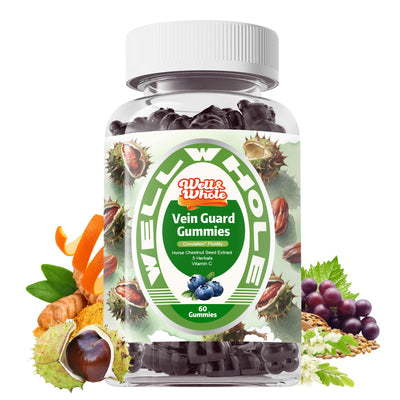
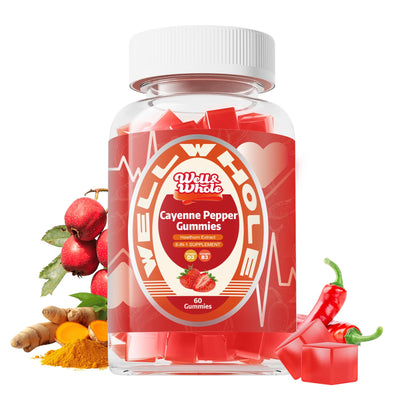
If you'd like to try it, well&whole Horse Chestnut Extract Gummies, Circulation Supplements for Legs and Cayenne Pepper Heart Health Gummies with Hawthorn & CoQ10 & Turmeric are the closest match to what we've covered here. Browse Heart Health and CoQ10 to see how the alternatives compare.
These statements have not been evaluated by the Food and Drug Administration. This product is not intended to diagnose, treat, cure, or prevent any disease.