Ovary and Uterus Glandulars: The Science Behind Organ-Specific Supplementation for Women
Scientific exploration of glandular therapy principles applied to women's reproductive health. How organ-specific nutrient profiles in beef liver, kidney, and heart support ovarian and uterine function through targeted nutritional biochemistry.

The concept of glandular therapy — using animal organ tissues to support corresponding human organ function — dates back to ancient medical systems and experienced a resurgence in early 20th-century medicine before the pharmaceutical era. While modern glandular therapy has evolved from its historical "like-supports-like" framework toward a more nuanced understanding of nutritional biochemistry, the underlying principle remains relevant: organ tissues contain unique concentrations of nutrients, peptides, and cofactors specific to their function.
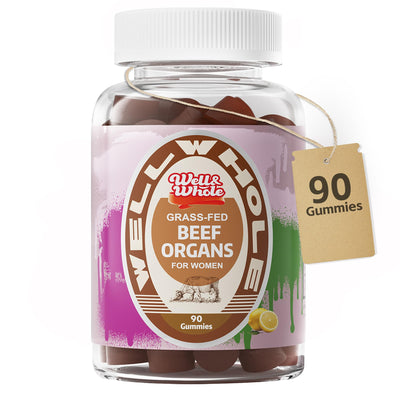
well&whole's Grass-Fed Beef Organ Gummies for Women provides a multi-organ blend (liver, kidney, heart) formulated for women's health. This article examines the scientific basis for how these organ-derived nutrients support female reproductive physiology, moving beyond the simple "like-supports-like" concept toward a biochemical explanation of organ-specific nutritional support.

Historical Context: Glandular Therapy and Women's Health
Origins and Evolution
Glandular therapy (organotherapy) was systematized in the late 19th and early 20th centuries, with early practitioners administering desiccated thyroid for hypothyroidism and adrenal extracts for adrenal insufficiency. By the 1920s-1940s, ovarian and uterine glandular preparations were commonly prescribed for menstrual irregularities and menopausal symptoms.
While modern medicine has largely replaced crude organ extracts with isolated hormones and pharmaceuticals, the nutritional rationale for organ-specific supplementation has evolved on a parallel track: organs provide concentrated nutrients that support the metabolic demands of analogous human tissues, not through hormonal activity, but through nutritional biochemistry.
Regulatory and Scientific Distinction
It is critically important to clarify: modern dietary supplements derived from beef organs (liver, kidney, heart) are NOT glandular therapies in the historical sense. They do not contain hormones, do not replace hormone therapy, and do not directly stimulate ovarian or uterine tissue. Rather, they provide the nutritional building blocks — iron, folate, B12, CoQ10, selenium, copper — that female reproductive tissues require for normal physiological function.
This distinction is embedded in the FDA disclaimer required on all dietary supplements: "This product is not intended to diagnose, treat, cure, or prevent any disease." Women's organ gummies support the nutritional foundation upon which reproductive health depends; they do not treat reproductive disorders.
Nutritional Demands of Female Reproductive Tissues
The Ovary: A Metabolically Demanding Organ
The ovary is not merely a passive repository of eggs — it is a highly active metabolic organ that undergoes cyclic tissue remodeling, steroidogenesis (hormone production), and follicular development. These processes impose specific nutritional demands:
Steroidogenesis (Estrogen and Progesterone Production):
The conversion of cholesterol to steroid hormones requires:
· Cholesterol: The substrate for all steroid hormones. Cholesterol transport and metabolism depend on adequate liver function — and beef liver provides choline, which supports hepatic lipoprotein metabolism.
· Iron-containing enzymes: Cytochrome P450 enzymes (CYP11A1, CYP17A1, CYP19A1) — all heme-iron dependent — catalyze steroidogenic reactions. Iron deficiency impairs steroidogenesis at multiple enzymatic steps.
· Copper: Essential for lysyl oxidase and other copper-dependent enzymes involved in follicular development and ovulation.
A 2019 study in Human Reproduction found that women with low ferritin (<30 ng/mL) had significantly lower luteal phase progesterone levels compared to iron-replete women (p = 0.03), suggesting that marginal iron status — common in menstruating women — may affect ovarian hormone production.
Follicular Development:
Oocyte maturation and follicular development require:
· CoQ10: Concentrated in ovarian mitochondria; declines with age. A 2020 *Fertility and Sterility* study found that CoQ10 levels in follicular fluid correlated positively with embryo quality (r = 0.38, p < 0.01) and clinical pregnancy rates.
· Selenium: Essential for glutathione peroxidase activity, protecting developing oocytes from oxidative damage. Selenium is incorporated into selenoproteins in the ovarian follicle.
· Folate: Required for DNA synthesis during the rapid cell divisions of follicular growth. Folate deficiency impairs oocyte maturation.
Ovulation:
The ovulatory process involves a controlled inflammatory response (the follicle ruptures to release the egg), requiring:
· Zinc: Required for matrix metalloproteinases (MMPs) that remodel the follicular wall for ovulation
· Copper: Supports angiogenesis (blood vessel formation) in the developing corpus luteum
· Vitamin A: Regulates gene expression in granulosa cells and supports progesterone production by the corpus luteum
The Uterus: Monthly Regeneration
The endometrium undergoes complete regeneration every menstrual cycle — a remarkable feat of tissue remodeling that imposes significant nutritional demands:
Endometrial Proliferation (Follicular Phase):
· Iron: Essential for the rapid cell division and angiogenesis of endometrial regrowth. Each menstrual cycle's blood loss creates a recurring iron demand that, if unmet, creates a progressive iron deficit.
· Folate: Required for DNA synthesis during endometrial cell proliferation. Adequate folate status supports healthy endometrial development crucial for implantation.
· Vitamin B12: Co-factor for folate metabolism (the methylation cycle); B12 and folate work in tandem for DNA synthesis and cell division.
Endometrial Differentiation (Luteal Phase):
· Copper: Supports angiogenesis (blood vessel development) essential for a receptive endometrium
· Zinc: Required for the secretory transformation of endometrial glands
· Vitamin A: Regulates the expression of genes involved in endometrial receptivity
A 2018 study in the Journal of Clinical Endocrinology and Metabolism found that women with adequate iron stores (ferritin >30 ng/mL) had significantly better endometrial thickness at mid-cycle compared to iron-deficient women (9.2 mm vs. 7.8 mm, p = 0.02), independent of estrogen levels — suggesting that iron status directly affects endometrial proliferative capacity.
Nutrient Mapping: Organ Supplements to Reproductive Tissues
well&whole's Grass-Fed Beef Organ Gummies for Women combine three organs whose nutrient profiles map directly to female reproductive tissue demands:
| Reproductive Function | Critical Nutrients | Organ Source in Supplement |
| Oocyte energy metabolism | CoQ10, B12 | Beef Heart, Beef Liver |
| Follicular development | Folate, B12, selenium | Beef Liver, Beef Kidney |
| Steroidogenesis | Iron (heme), copper, cholesterol precursors | Beef Liver |
| Endometrial proliferation | Iron (heme), folate, B12 | Beef Liver |
| Endometrial differentiation | Copper, zinc, vitamin A | Beef Liver, Beef Kidney |
| Ovulatory process | Zinc, copper | Beef Liver |
| Antioxidant protection (ovary) | Selenium, copper (SOD) | Beef Kidney, Beef Liver |
| Methylation (hormone metabolism) | Folate, B12, choline | Beef Liver |
| Corpus luteum function | Vitamin A, iron | Beef Liver |

The Iron-Folate-B12 Triad: The Reproductive Nutrient Core
Three nutrients from beef liver — iron, folate, and B12 — form a triad that is disproportionately important for female reproductive health:
1. Iron: Provides oxygen for the metabolically active ovary and proliferating endometrium. Also a cofactor for steroidogenic enzymes. Lost monthly through menstruation.
2. Folate: Provides the one-carbon units for DNA synthesis needed for rapid cell division in follicles and endometrium. Also essential for methylation regulating hormone receptor expression.
3. B12: Regenerates folate (via the methionine synthase reaction) and supports DNA synthesis in tandem with folate. Also essential for neurological development relevant to fertility and pregnancy.
These three nutrients are biochemically interdependent — B12 deficiency creates a functional folate deficiency (the "folate trap"), and iron deficiency impairs the enzymatic utilization of both. The presence of all three in a single food matrix (beef liver) provides nutritional synergy that isolated supplementation may not achieve.
CoQ10 and Ovarian Aging
CoQ10's role in ovarian function deserves special attention because of its unique relationship with aging:
Ovarian CoQ10 Decline:
CoQ10 concentrations in ovarian tissue decline with age, mirroring the decline in oocyte quality. A 2018 study in Aging quantified ovarian CoQ10 levels across age groups:
· Age 20-30: 100% (reference level)
· Age 31-35: 78.4% (± 6.2)
· Age 36-40: 61.3% (± 5.7)
· Age 41-45: 42.7% (± 8.1)
This decline correlates temporally with the acceleration of age-related fertility decline, beginning around age 35. While correlation does not prove causation, the biochemical rationale is compelling: CoQ10 supports mitochondrial energy production and reduces oxidative stress in oocytes, and declining CoQ10 mirrors declining oocyte quality.
Beef heart, included in the women's organ gummies, is the richest dietary CoQ10 source at 113.8 μg/g — over 2x the concentration found in liver or kidney. This is a nutritional advantage exclusive to multi-organ formulations that include heart tissue.
Beyond Hormones: The Nutritional Foundation of Reproductive Health
A common misconception is that glandular/organ supplements for women's health work through hormonal mechanisms — that they "contain hormones" that directly affect the ovaries or uterus. This is not correct for modern dietary supplements.
Beef liver, kidney, and heart supplements do NOT contain:
· Estrogen, progesterone, or testosterone (steroid hormones are denatured during freeze-drying and would not survive oral ingestion)
· Growth factors or cytokines (proteins denatured during processing and digestion)
· Hormonal activity that would directly stimulate ovarian or uterine function
These supplements DO provide:
· Bioavailable iron (heme) for hemoglobin, oxygen transport, and enzymatic function
· Natural folate and B12 for DNA synthesis and methylation
· CoQ10 for mitochondrial energy production
· Selenium and copper for antioxidant enzyme function
· Zinc for cell division and tissue remodeling
In other words, organ supplements support the nutritional environment in which reproductive tissues function optimally. They don't drive reproductive processes — they provide the raw materials those processes require.
Frequently Asked Questions
Q1: Do beef organ gummies contain hormones from the animal?
No. Modern freeze-dried organ supplements undergo processing that denatures proteins including hormones. The supplements provide nutrients (vitamins, minerals, CoQ10), not hormones. They support the nutritional foundation for your body's own hormone production.
Q2: Can organ gummies improve egg quality?
Organ gummies provide CoQ10 (from heart), folate, B12, selenium, and iron — nutrients that support oocyte mitochondrial function, DNA synthesis, and oxidative protection. Studies show these nutrients are important for egg quality, but organ gummies are a nutritional support, not a fertility treatment.
Q3: Are women's organ gummies a replacement for prenatal vitamins?
No. Prenatal vitamins are specifically formulated for pregnancy with higher folic acid and iron doses. Women's organ gummies provide complementary whole-food nutrition but are not a substitute for prenatal vitamins prescribed during pregnancy.
Q4: How do organ gummies support menstrual cycle health?
The iron supports blood loss replacement, B vitamins support energy and neurotransmitter production, selenium supports thyroid function (which regulates cycles), and CoQ10 supports mitochondrial energy in ovarian tissue. These nutrients support the nutritional demands of a healthy menstrual cycle.
Q5: Is there scientific evidence that glandular therapy works for women's health?
Historical glandular therapy (using organ extracts to treat corresponding organ dysfunction) is not the same as modern organ supplementation. Modern evidence supports the specific nutrients in organ tissues — heme iron for iron status, B12 for energy, CoQ10 for mitochondrial function — rather than an organ-to-organ therapeutic mechanism.
Q6: Can I take women's organ gummies with hormonal birth control?
Yes, organ gummies provide nutritional support and do not interact with hormonal contraceptives. The iron in liver gummies may be particularly helpful, as some women on OCPs have lighter periods and lower iron needs, while others may benefit from the B-vitamins.
Q7: Do men benefit from the same nutrients in organ supplements?
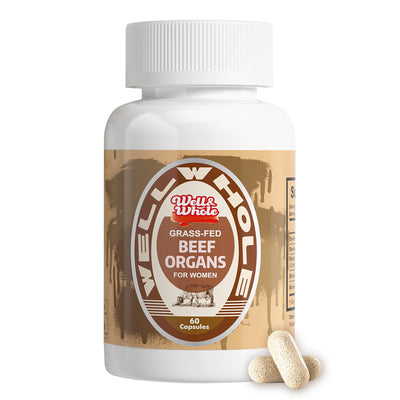
Yes, but the nutritional emphasis differs. Men have lower iron needs (no menstrual losses), making excessive iron intake a concern. The well&whole Grassfed Beef Organ Capsules ($17.99) are not gender-specific and provide a balanced multi-organ profile appropriate for both men and women.
Q8: How long before trying to conceive should I start taking women's organ gummies?
Nutritional preparation for pregnancy ideally begins 3-6 months before conception — this allows time for iron stores to build, folate status to optimize, and CoQ10 to support oocyte mitochondrial function (oocyte maturation takes approximately 3-4 months). Start as early as possible.
Conclusion
The science behind organ-specific supplementation for women's reproductive health is ultimately a story of nutritional biochemistry rather than historical glandular therapy. Beef liver, kidney, and heart — combined in well&whole's Grass-Fed Beef Organ Gummies for Women — provide targeted nutritional support for the tissues and processes of female reproductive physiology through the delivery of heme iron, natural folate, B12, CoQ10, selenium, copper, and zinc.
These nutrients do not replace female hormones or directly stimulate ovarian function. Instead, they provide the nutritional foundation upon which healthy reproductive function depends — supporting the iron-dependent steroidogenic enzymes, the folate-dependent DNA synthesis of follicular development, the CoQ10-dependent mitochondrial energy of oocyte maturation, and the nutritional demands of monthly endometrial regeneration.
At $17.99 per bottle, this three-organ blend offers a science-based nutritional strategy for women seeking to support their reproductive health through targeted, food-derived micronutrient provision.
Related supplements
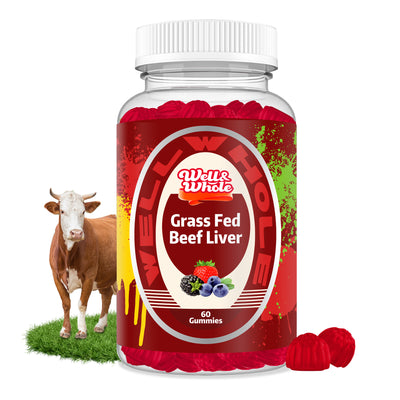
If you'd like to try it, Grass Fed Beef Liver Supplement Gummies with 60 Count for Full Wellness and Grassfed Beef Organ Supplement Capsules, Grass Fed & Pasture Raised, Total Body Wellness Support are the closest match to what we've covered here. Browse Vitamin A and Health Benefits to see how the alternatives compare.
These statements have not been evaluated by the Food and Drug Administration. This product is not intended to diagnose, treat, cure, or prevent any disease.