Organotherapy: The Science Behind Like-Supports-Like
Explore organotherapy—the scientific basis for "like-supports-like." Learn how consuming beef organ supplements may support corresponding human organs through targeted nutritional biochemistry.

The concept that consuming an animal's organ can support the corresponding human organ sounds like pre-scientific folk medicine. Yet this principle—known as organotherapy—has persisted across cultures for millennia, and modern biochemistry is revealing surprising scientific foundations for what traditional healers observed empirically.
While "like-supports-like" should not be interpreted literally (eating beef heart doesn't directly strengthen your heart like a dumbbell strengthens a bicep), the underlying nutritional logic has genuine merit. Each organ concentrates specific nutrients required for its own function. When you consume that organ, you're consuming those specialized nutrients—which your corresponding organ requires for the same functions.
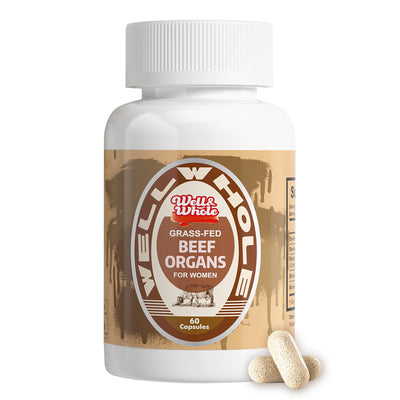
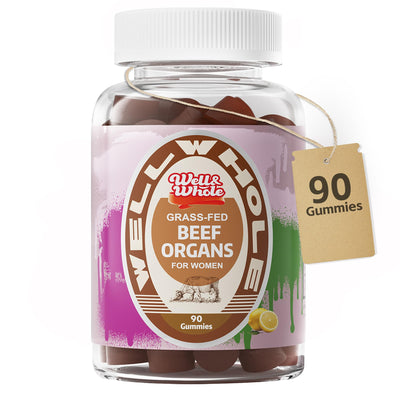
In this article, we'll explore the scientific basis for organotherapy, examine what research supports (and doesn't support), and explain how well&whole's Grassfed Beef Organ Capsules and Grass-Fed Beef Organ Gummies for Women apply this principle through modern nutritional science.

What Is Organotherapy?
Organotherapy is the use of animal organ tissues to support the corresponding human organs. The term was popularized in the early 20th century but the practice dates back thousands of years.
Historical Roots
The concept appears independently across ancient medical traditions:
- **Traditional Chinese Medicine**: The principle of *"yǐ zàng bǔ zàng"* (以脏补脏—"using organ to nourish organ") has been documented for over 2,000 years. Liver was prescribed for liver-related conditions, kidney for kidney vitality, and heart for the spirit.
- **Ancient Greece**: Hippocrates and later physicians described using animal organs for therapeutic purposes. Galen specifically recommended liver for eye health and vitality.
- **Ayurvedic Medicine**: Traditional Indian medicine includes principles of consuming organ tissues for corresponding organ support, particularly in rejuvenation therapies.
- **European Folk Medicine**: Organ meats were prescribed for specific conditions across medieval and early modern European medical traditions.
Modern Organotherapy
In the early 20th century, organotherapy became a formal field of medical investigation:
- **Thyroid therapy**: The use of desiccated thyroid gland to treat hypothyroidism was one of the first scientifically validated forms of organotherapy, dating to the 1890s.
- **Adrenal extracts**: Desiccated adrenal tissue was used in early endocrinology research, leading to the isolation of cortisol and adrenaline.
- **Liver therapy for anemia**: The 1934 Nobel Prize was awarded to Minot, Murphy, and Whipple for demonstrating that liver consumption could reverse pernicious anemia—effectively validating one of the oldest organotherapy traditions through rigorous science.
The Scientific Foundations of "Like-Supports-Like"
While the term "organotherapy" may sound esoteric, the underlying mechanisms are grounded in standard biochemistry:
1. Organ-Specific Nutrient Concentration
Each organ concentrates the specific nutrients it needs to function. When you consume that organ, you consume those same nutrients:
| Organ | Specialized Nutrients | Why Concentrated There |
| Liver | Vitamin A, B12, iron, copper, folate | Liver is the body's metabolic hub and nutrient storage organ |
| Kidney | DAO enzyme, selenium, B-vitamins | Kidney participates in histamine regulation and filtration |
| Heart | CoQ10, taurine, carnitine | Heart has the body's highest mitochondrial density and energy demands |
A 2018 analysis in *Food Chemistry* comparing bovine organs found that "each organ type had a distinctly different micronutrient profile that reflected its physiological role" (Purchas et al., 2018).
2. Enzyme and Cofactor Provision
Some organs contain functional enzymes and cofactors that support corresponding functions in the consumer's body:
- **Kidney DAO**: Bovine kidney contains diamine oxidase, the enzyme that breaks down histamine in the gut. Consuming kidney tissue provides exogenous DAO that may support dietary histamine metabolism—a direct functional transfer rather than just nutrition.
- **Liver enzymes**: Liver tissue contains catalase, superoxide dismutase, and other antioxidant enzymes that may support the consumer's antioxidant defenses.
3. The Food Matrix Advantage
Nutrients in organ tissues exist within a natural food matrix—accompanied by the cofactors, enzymes, and structural components that support their function. This is fundamentally different from isolated synthetic nutrients:
- **Iron in liver** comes with copper (required for iron utilization), B12 (required for red blood cell production), and folate (required for cell division)
- **CoQ10 in heart** comes with taurine and carnitine (both involved in cardiac energy metabolism)
- **Selenium in kidney** comes with riboflavin and DAO enzyme (involved in thyroid function and histamine regulation)
The food matrix concept has gained significant traction in nutritional science. A 2019 review in *Nutrients* noted that "the food matrix can influence nutrient bioavailability through complex interactions that isolated nutrients cannot replicate" (Melse-Boonstra, 2019).
What Organotherapy Is NOT
To be scientifically accurate, it's important to clarify what organotherapy is not:
Not a Direct Tissue Replacement
Consuming beef liver doesn't directly replace your liver cells or repair liver damage through some mystical tissue transfer. The liver processes the organ meat like any other food—breaking it down into constituent nutrients that are then used according to the body's needs.
Not a Complete Medical Treatment
Organotherapy is a nutritional approach, not a medical treatment. It may support organ function through nutrient provision, but it does not treat, cure, or prevent organ diseases. The distinction between nutritional support and medical treatment is important.
Not an Excuse for Poor Lifestyle
The most powerful things you can do for your organs—avoid excessive alcohol for your liver, stay hydrated for your kidneys, exercise for your heart—are lifestyle factors, not supplements. Organ supplements provide nutritional support; they don't substitute for healthy organ care.
Evidence for Specific Organ Applications
Beef Liver and Human Liver Health
The liver stores nutrients for the entire body. Consuming beef liver provides those same stored nutrients, which may support your own liver's metabolic functions:
- **TUDCA content**: Beef liver contains trace bile acids, including TUDCA precursors, that support bile flow—the same process your own liver performs
- **Glutathione precursors**: Liver tissue provides cysteine and other precursors for glutathione, the liver's primary antioxidant
- **Methylation support**: Liver is rich in choline, B12, and folate—the core nutrients for the methylation cycle that the liver heavily depends on
Beef Kidney and Histamine Metabolism
The kidney's DAO enzyme content represents one of the clearest examples of direct functional support:
- Kidney tissue contains DAO (verified by enzyme activity assays)
- DAO survives digestion and functions in the small intestine (demonstrated in clinical research)
- Dietary DAO degrades dietary histamine (the primary mechanism of histamine intolerance management)
Research published in *Nutrients* (2018) demonstrated that kidney-sourced DAO remains enzymatically active in the intestinal environment (Schink et al., 2018).
Beef Heart and Cardiac Nutrition
The heart's CoQ10 concentration represents a logical nutritional connection:
- The heart has the highest CoQ10 demand of any tissue
- Dietary CoQ10 from heart tissue supports systemic CoQ10 status
- CoQ10 is well-established as a cardiovascular-support nutrient
A 2014 review in *Mitochondrion* confirmed that "cardiac tissue is particularly sensitive to CoQ10 deficiency" and that CoQ10 supplementation may support cardiovascular mitochondrial function (Alcázar-Fabra et al., 2014).
The Modern Application: Organ Supplements
Traditional organotherapy required consuming fresh organ meats—a practice that modern lifestyles and tastes make challenging. Organ supplements represent the contemporary implementation of this principle:
Advantages of Organ Supplements
- **Freeze-drying preserves nutrients**: Low-temperature processing retains heat-sensitive enzymes and vitamins
- **Consistent dosing**: Each serving provides standardized organ content
- **Quality sourcing**: Grass-fed, pasture-raised sourcing from clean environments like New Zealand
- **Accessibility**: No requirement to source, prepare, or cook organ meats
- **Palatability**: Pleasant-tasting formats (gummies) or tasteless formats (capsules)
well&whole's organ supplements apply these principles:
- **Grassfed Beef Organ Capsules ** : Liver, kidney, and heart in a traditional capsule
- **Grass-Fed Beef Organ Gummies for Women ** : Same organ trio in a convenient gummy
FAQ
Q: What is organotherapy?
A: Organotherapy is the principle that consuming animal organ tissues can provide targeted nutritional support for the corresponding human organs. It's based on each organ's unique nutrient profile, which concentrates the specific vitamins, minerals, enzymes, and cofactors that organ needs to function.
Q: Is there scientific evidence for "like-supports-like"?
A: The principle has partial scientific support. Each organ does concentrate specialized nutrients, and consuming those nutrients provides the building blocks the corresponding human organ requires. However, the mechanism is nutritional (providing specific nutrients) rather than a direct tissue-to-tissue transfer.
Q: Does eating beef liver directly help my liver?
A: Beef liver provides nutrients—TUDCA precursors, glutathione building blocks, methylation cofactors—that your liver needs for its metabolic functions. It supports your liver nutritionally, not through a direct tissue transfer. Your liver still has to process the organ meat like any other food.
Q: Why are organ-specific supplements better than a general multivitamin?
A: Organ supplements provide nutrients in their natural food matrix with complementary cofactors. A multivitamin provides isolated synthetic nutrients without this matrix. For example, beef liver provides iron + copper + B12 + folate—a synergistic combination that a multivitamin may not replicate.
Q: Is organotherapy FDA-approved as a medical treatment?
A: No. Organotherapy is a nutritional concept, not an FDA-approved medical treatment. Organ supplements are classified as dietary supplements and are not intended to diagnose, treat, cure, or prevent any disease. They provide nutritional support, not medical therapy.
Q: How does the Nobel Prize connect to organotherapy?
A: The 1934 Nobel Prize in Medicine was awarded to Minot, Murphy, and Whipple for demonstrating that liver consumption could reverse pernicious anemia. This represented scientific validation of one of the oldest organotherapy traditions—using liver to support blood health.
Q: Are all organ supplements equally effective?
A: Effectiveness depends on sourcing (grass-fed vs grain-fed), processing (freeze-dried vs heat-dried), and formulation (organ content per serving). well&whole uses grass-fed New Zealand beef organs processed through freeze-drying to preserve nutrient integrity.
Q: Can organotherapy replace modern medicine?
A: No. Organotherapy is a nutritional approach that may complement but not replace medical care. It provides nutritional support for organ function; it does not treat organ disease.
Q: Are there any risks to organotherapy?
A: Organ supplements from quality sources are generally safe when taken as directed. The main concern is excessive intake of fat-soluble vitamins (especially vitamin A from liver). Follow serving size recommendations. Consult your healthcare provider.
Conclusion
Organotherapy—the principle of using animal organs to nutritionally support corresponding human organs—has roots in ancient medical traditions and emerging validation from modern science. While "like-supports-like" is not a mystical tissue transfer, it reflects a biochemically sound reality: each organ concentrates the specific nutrients it needs, and consuming those nutrients provides targeted support.
well&whole's Grassfed Beef Organ Capsules and Grass-Fed Beef Organ Gummies for Women apply this principle through modern supplement science—combining grass-fed liver, kidney, and heart in convenient daily formats. The multi-organ approach reflects a holistic understanding that organs don't function in isolation but as part of an interconnected system.
Related supplements
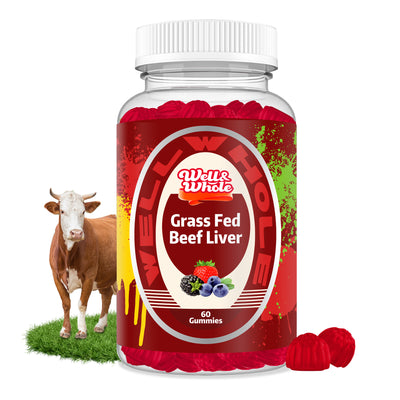
Where to begin? Our Grass Fed Beef Liver Supplement Gummies with 60 Count for Full Wellness and Grassfed Beef Organ Supplement Capsules, Grass Fed & Pasture Raised, Total Body Wellness Support are a sensible place to start, and the Vitamin A collection lays out the other formats side by side with Health Benefits.
These statements have not been evaluated by the Food and Drug Administration. This product is not intended to diagnose, treat, cure, or prevent any disease.