Natural Ways to Lower Cholesterol: Evidence-Based Diet, Supplement, and Lifestyle Strategies
Discover evidence-based natural approaches to support healthy cholesterol levels. From dietary changes to clinically-studied supplements, learn what actually works.

High cholesterol affects approximately 94 million American adults — nearly 40% of the population — according to the Centers for Disease Control and Prevention. While statin medications remain the standard first-line treatment for clinically elevated levels, many people seek natural approaches to support healthy cholesterol before or alongside pharmaceutical interventions.
The good news: science supports a variety of natural strategies that can meaningfully impact your lipid profile. The challenge: separating evidence-based approaches from marketing hype, old myths, and oversimplified dietary advice.
This guide examines what the research actually says about natural cholesterol management — what works, what probably doesn't, and how to build a sustainable, effective strategy that you can implement today.
Understanding Your Cholesterol Numbers
Before discussing interventions, it is important to understand what we are targeting:
The Lipid Panel Breakdown
LDL particle size and number (measured by advanced lipid testing) are increasingly recognized as more predictive of cardiovascular risk than LDL cholesterol alone. Not all LDL is created equal — small, dense LDL particles are more atherogenic than large, buoyant ones.
What Causes High Cholesterol?
Cholesterol levels are influenced by a combination of:
· **Genetics**: Familial hypercholesterolemia affects ~1 in 250 people
· **Diet**: Saturated fat, trans fat, and excessive dietary cholesterol
· **Body weight**: Excess body fat, particularly visceral fat, impacts lipid metabolism
· **Physical activity**: Sedentary lifestyle is an independent risk factor
· **Metabolic health**: Insulin resistance drives triglyceride production
· **Age and hormones**: Cholesterol tends to rise post-menopause
Diet: The Foundation of Natural Cholesterol Management
Dietary intervention remains the first-line approach recommended by the American Heart Association, the National Lipid Association, and virtually every major health organization. Here is what the evidence says about specific dietary strategies.
Increase Soluble Fiber
Soluble fiber binds to cholesterol in the digestive tract and carries it out of the body before it enters circulation. A 2019 meta-analysis in *The American Journal of Clinical Nutrition* found that increasing soluble fiber intake by 5–10 grams daily reduced LDL cholesterol by approximately 5–11 mg/dL.
Top Sources per Serving:
· Oats and oat bran: 2–3g per serving
· Psyllium husk: 5g per tablespoon
· Barley: 2–3g per serving
· Beans and legumes: 3–5g per serving
· Apples with skin: 2–3g per apple
· Brussels sprouts: 2–3g per cup
Reduce Saturated Fat, Replace with Unsaturated Fat
The long-running debate about saturated fat has mostly settled on this conclusion: it is not that saturated fat must be eliminated, but that replacing it with unsaturated fat consistently improves cardiovascular outcomes.
A 2017 American Heart Association Presidential Advisory reviewed the evidence and recommended limiting saturated fat to 5–6% of total calories while increasing polyunsaturated and monounsaturated fat intake.
Smart Swaps:
· Olive oil and avocado oil in place of butter and coconut oil
· Nuts and seeds in place of cheese as snacks
· Fatty fish in place of red meat at several meals per week
· Nut butters in place of butter on toast
The Portfolio Diet
One of the most studied dietary patterns for cholesterol reduction is the "Portfolio Diet" — a combination of four cholesterol-lowering foods consumed together. Research by David Jenkins, MD, published in *JAMA* (2003) and replicated in *Circulation* (2011), found it lowered LDL by up to 30%:
· **Plant sterols**: 2g daily (from fortified spreads or supplements)
· **Soluble fiber**: 10–25g daily (from oats, barley, psyllium)
· **Soy protein**: 25–50g daily (from tofu, tempeh, edamame, soy milk)
· **Tree nuts**: 30–45g daily (almonds, walnuts, pistachios)
Foods That Actively Lower Cholesterol
Supplements with Clinical Evidence
While diet is the cornerstone, certain supplements have demonstrated meaningful effects on cholesterol levels in well-designed clinical trials.
Berberine
Berberine is perhaps the most impressive natural compound for cholesterol management. A 2015 meta-analysis in the *Journal of Ethnopharmacology* reviewed 27 randomized controlled trials and found berberine reduced total cholesterol by 21 mg/dL, LDL by 17 mg/dL, and triglycerides by 30 mg/dL on average.
Mechanistically, berberine works through a unique pathway — it upregulates LDL receptors on liver cells and stabilizes their mRNA, increasing the liver's ability to clear LDL from the blood. This mechanism is distinct from statins but produces a comparable effect.
Typical dosage: 500 mg, 2–3 times daily before meals (total 1,000–1,500 mg/day).
Plant Sterols and Stanols
These plant-derived compounds structurally resemble cholesterol and compete for absorption in the intestine. A 2014 meta-analysis in the *British Journal of Nutrition* confirmed that 2g daily reduces LDL by approximately 8–10%.
They are found naturally in small amounts in nuts, seeds, and vegetable oils, and are added to some margarines and yogurt products, or available as standalone supplements.
Red Yeast Rice
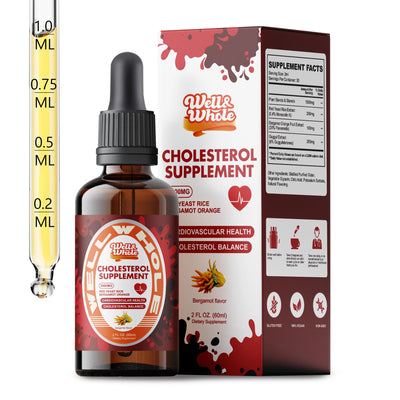
Red yeast rice contains naturally occurring monacolin K — chemically identical to lovastatin (a prescription statin). As such, it is among the most effective natural options, with studies showing LDL reductions of 15–25%.
However, because monacolin K is chemically identical to a prescription drug, red yeast rice carries the same potential risks and interactions as statins. Additionally, supplement quality varies enormously — some products contain negligible monacolin K, while others may contain potentially unsafe levels. The FDA has taken action against some red yeast rice products due to monacolin K content.
Omega-3 Fatty Acids
While omega-3s are more known for triglyceride reduction (15–30% at doses of 2–4g daily), they also support overall cardiovascular health through anti-inflammatory and endothelial effects. Prescription omega-3 formulations (like icosapent ethyl) have demonstrated cardiovascular event reduction in large outcome trials.
Bergamot Orange Extract
A lesser-known option with growing evidence, Citrus bergamia (bergamot orange) contains unique flavonoids that may reduce cholesterol through mechanisms similar to statins but with a different side effect profile. A 2019 study in *Phytomedicine* found bergamot extract (1,000 mg daily) reduced LDL by 30–40 mg/dL, comparable to low-dose rosuvastatin.
Lifestyle Interventions That Work
Regular Exercise
A 2016 meta-analysis in *Sports Medicine* found that aerobic exercise increases HDL cholesterol by an average of 2.5 mg/dL while modestly reducing triglycerides. The effect on LDL is smaller but still directionally positive.
The American Heart Association recommends:
· 150 minutes per week of moderate-intensity aerobic activity (brisk walking, cycling, swimming), OR
· 75 minutes per week of vigorous activity (running, HIIT)
Weight Management
For individuals with excess body weight, even modest weight loss improves lipid profiles. Research suggests that losing 5–10% of body weight can reduce LDL by 5–10 mg/dL and triglycerides by 20–40 mg/dL.
Smoking Cessation
Smoking independently damages the cardiovascular system and lowers HDL cholesterol. Within weeks of quitting, HDL begins to rise. Within one year, cardiovascular risk drops by 50% compared to continuing smokers.
Moderate Alcohol Consumption — Or None
While moderate alcohol intake (1 drink daily for women, 2 for men) has been associated with modestly higher HDL, the risks of alcohol consumption increasingly outweigh potential cardiovascular benefits according to newer research. If you do not drink, do not start for heart health.
Building Your Natural Cholesterol Strategy
The Tiered Approach
Tier 1 — Universal Foundation:
· Increase soluble fiber (target: 25–30g total fiber daily)
· Replace saturated fat with unsaturated fat
· 150 minutes weekly of moderate exercise
· Maintain healthy body weight
Tier 2 — Targeted Enhancement:
· Add 2g daily of plant sterols (fortified foods or supplements)
· Consider psyllium fiber supplement (5g daily)
· Include fatty fish 2–3 times per week
Tier 3 — Supplement Support:
· Berberine: 500 mg, 2–3 times daily before meals
· Bergamot extract: 500–1,000 mg daily
· Omega-3: 2–4g daily for elevated triglycerides
Important: Tier 3 supplements, especially berberine, should be discussed with a healthcare provider, particularly if you are already on cholesterol-lowering medication or have other medical conditions.
What to Expect
With consistent implementation of Tier 1 interventions alone, expect LDL reductions of approximately 5–15%. Adding Tier 2 and Tier 3 strategies may bring total LDL reduction into the 15–30% range — comparable to low-dose statin therapy for many individuals.
Results vary significantly based on genetics, baseline levels, consistency, and the specific strategies employed. Retesting lipids after 8–12 weeks of a consistent new regimen is recommended to assess individual response.
FAQ
Q1: Can natural approaches replace statins?
In some cases of mild to moderately elevated cholesterol without additional risk factors, natural strategies may be sufficient. However, for individuals with clinically significant cardiovascular disease, diabetes, or genetically high cholesterol, natural approaches should complement — not replace — medical management. Never stop prescribed medication without discussing with your physician.
Q2: How quickly can I see results?
Lipids respond to dietary and lifestyle changes within weeks. Studies typically retest 8–12 weeks after implementing a consistent regimen.
Q3: Are eggs bad for cholesterol?
Dietary cholesterol has less impact on blood cholesterol than once thought. Most healthy adults can consume 1–2 eggs daily without adverse lipid effects. The bigger concern is saturated fat intake from accompanying foods (bacon, cheese, butter).
Q4: Does coconut oil help or hurt cholesterol?
Coconut oil raises both LDL and HDL — the net effect on cardiovascular risk is debated. Most major health organizations recommend limiting coconut oil due to its high saturated fat content (82%) and preferring oils with better evidence profiles, such as olive oil.
Q5: How does berberine compare to statins?
Berberine and statins share a similar net effect on LDL reduction, though they work through different mechanisms. A 2015 study in *Phytomedicine* found berberine (500 mg twice daily) was non-inferior to ezetimibe for combined dyslipidemia. However, berberine has a shorter duration of action and requires more frequent dosing.
Q6: What about niacin for cholesterol?
While niacin raises HDL, large outcome trials (AIM-HIGH, HPS2-THRIVE) failed to show that adding niacin to statin therapy reduced cardiovascular events. It has largely fallen out of favor due to side effects at therapeutic doses (flushing, liver toxicity).
Q7: Is LDL the most important number?
LDL particle number (measured by apoB or LDL-P) may be more predictive than LDL cholesterol concentration. Advanced lipid testing can provide this information, though standard lipid panels remain the clinical standard.
Q8: Can stress increase cholesterol?
Chronic stress can indirectly affect cholesterol through cortisol-driven changes in metabolism, eating behaviors, and reduced physical activity. Studies show a modest but statistically significant association between chronic stress and adverse lipid profiles.
Conclusion
Cholesterol management does not have to be complicated, but it does require consistency. The evidence clearly supports a foundation of dietary changes centered on soluble fiber, healthy fat choices, and regular physical activity. For those who need additional support, clinically studied supplements — berberine, plant sterols, bergamot extract, and omega-3 fatty acids — offer meaningful, evidence-backed effects.
What matters most is not any single intervention, but the cumulative effect of consistent daily choices. A bowl of oatmeal for breakfast, a handful of walnuts as a snack, a 30-minute walk after dinner, and a well-chosen supplement routine — these small actions compound into significant improvements in your lipid profile over time.
At well&whole, we believe that supporting your heart health naturally should be accessible, evidence-based, and integrated into a lifestyle you can sustain. Explore our heart health supplements to find the right tools for your cholesterol management strategy.
These statements have not been evaluated by the Food and Drug Administration. This product is not intended to diagnose, treat, cure, or prevent any disease.