Natural Supplements for Depression: Evidence-Based Options Worth Considering
Exploring evidence-based natural supplements for depression including saffron, omega-3, SAMe, and St. John's Wort. Learn what the research says about efficacy, safety, and interactions.

Depression is one of the most common mental health conditions in the United States, affecting an estimated 21 million adults annually according to the National Institute of Mental Health. While psychotherapy and antidepressant medications are effective for many, a significant proportion of individuals do not achieve full remission with conventional treatment alone, and side effects from medications can be burdensome.
This reality has driven growing interest in natural supplements for mood support — not as replacements for evidence-based psychiatric care, but as complementary strategies within a comprehensive treatment plan. The challenge is navigating a supplement market where marketing claims far outpace clinical evidence.
This article examines the supplements with the most robust human research for depression — saffron, omega-3 fatty acids (EPA), SAMe, and St. John's Wort — along with the critical safety considerations that accompany each option.
The Inflammatory Connection: A New Framework
Before discussing individual supplements, it is worth understanding a paradigm shift in depression research: the recognition that inflammation plays a causal role in a significant subset of depression cases.
The "inflammatory hypothesis of depression" — now supported by substantial evidence — proposes that chronic, low-grade systemic inflammation contributes to depressive symptoms through multiple mechanisms:
· Inflammatory cytokines reduce serotonin synthesis by diverting tryptophan to the kynurenine pathway
· Neuroinflammation impairs neuroplasticity and reduces BDNF (brain-derived neurotrophic factor)
· Inflammation-driven oxidative stress damages neuronal membranes
A 2019 meta-analysis in *JAMA Psychiatry* found that approximately 25–30% of individuals with major depressive disorder have elevated inflammatory markers (CRP >3 mg/L). This inflammatory subtype appears to respond differently to treatment — potentially better to anti-inflammatory approaches and less well to standard serotonergic antidepressants.
This framework helps explain why certain natural compounds with anti-inflammatory properties (omega-3s, saffron) have shown antidepressant effects in clinical trials.
Supplement #1: Saffron (Crocus sativus)
The Evidence
Saffron — the world's most expensive spice, derived from the stigma of the Crocus sativus flower — has emerged as one of the most promising natural interventions for mood, supported by an unexpectedly robust body of randomized controlled trials.
A 2020 meta-analysis in the *Journal of Affective Disorders* pooled data from 12 randomized trials comparing saffron to placebo or antidepressants:
· Saffron was significantly more effective than placebo for major depressive disorder (MDD)
· In head-to-head trials, saffron was as effective as fluoxetine (Prozac), citalopram (Celexa), and imipramine (a tricyclic antidepressant)
· Effect sizes were in the moderate-to-large range — comparable to standard antidepressants
A 2018 meta-analysis in *Human Psychopharmacology* reached similar conclusions, finding saffron effective for both MDD and mild-to-moderate depression, with effects apparent within 6–8 weeks of treatment.
The key compounds — crocin and safranal — appear to work through multiple mechanisms: serotonin and dopamine reuptake inhibition (similar to antidepressants), anti-inflammatory effects, and neuroprotection through reduced oxidative stress.
However, an important caveat: while the existing data is impressive, the total number of saffron trials and participants is much smaller than for established antidepressants. The research is promising but not yet definitive.
Typical Dose: 15–30 mg of standardized saffron extract (usually saffron stigma or stigma + petal extract), divided into two daily doses.
Safety Note
At therapeutic doses (30 mg daily), saffron is generally well-tolerated. Higher doses (above 60 mg) may cause gastrointestinal effects. Saffron at standard culinary doses is obviously safe; the cost becomes the primary practical limitation for therapeutic dosing.
Supplement #2: Omega-3 Fatty Acids (EPA)
The Evidence
The relationship between omega-3 intake and depression is supported by converging lines of evidence: epidemiological data showing lower depression rates in high-fish-consumption populations, biomarker studies documenting lower blood EPA levels in depressed individuals, and clinical trials showing EPA-predominant supplementation reduces depressive symptoms.
The critical finding — arguably the most important detail in the omega-3 depression literature — is that EPA, not DHA, drives the antidepressant effect. This was elegantly demonstrated in a 2019 network meta-analysis in *Translational Psychiatry* of 26 randomized trials involving 2,160 participants:
· Omega-3 preparations with 60% or more EPA content showed significant antidepressant effects with moderate-to-large effect sizes
· DHA-predominant or DHA-only preparations did not significantly differ from placebo
· The effect was dose-dependent: higher EPA doses (>1,000 mg daily) produced larger effects
A 2016 clinical guideline from the International Society for Nutritional Psychiatry Research recommended EPA-predominant omega-3 preparations (1,000–2,000 mg EPA daily) as adjunctive treatment for MDD.
Mechanism
EPA's mood effects may be explained by:
· Reduction of neuroinflammation (downstream of EPA's general anti-inflammatory effects)
· Enhanced cerebral blood flow
· Support for neuroplasticity
· Modulation of the HPA axis and cortisol
Typical Dose: 1,000–2,000 mg pure EPA daily (not combined EPA+DHA). This requires an EPA-dominant formulation — standard fish oil with a 1.5:1 EPA:DHA ratio may not deliver sufficient EPA without excessive total fatty acid intake.
Supplement #3: SAMe (S-Adenosylmethionine)
The Evidence
SAMe is a naturally occurring molecule that serves as the body's primary methyl donor — participating in the synthesis of neurotransmitters (serotonin, dopamine, norepinephrine), phospholipids (for cell membranes), and other essential compounds. It has been used as a prescription antidepressant in several European countries for decades.
A 2016 systematic review in the *Journal of Clinical Psychiatry* examined 11 randomized trials and found SAMe superior to placebo for depression, with effect sizes comparable to tricyclic antidepressants. A 2020 meta-analysis in *Depression and Anxiety* found SAMe as effective as SSRIs for depression when used as augmentation therapy (added to an SSRI that had produced inadequate response on its own).
The augmentation finding is particularly significant because it addresses a common clinical scenario: the patient who has derived partial but incomplete benefit from an SSRI.
Mechanism
SAMe's antidepressant mechanisms are multi-faceted:
· Methyl donor for neurotransmitter synthesis (particularly the conversion of norepinephrine to epinephrine)
· Supports cell membrane fluidity (relevant for receptor function)
· Enhances serotonin turnover
· Anti-inflammatory effects (reduces homocysteine)
Typical Dose: 400–1,600 mg daily, usually in divided doses. The higher end of this range is typically used for depression. Enteric-coated formulations may reduce gastrointestinal side effects. SAMe is typically started at 200–400 mg twice daily and titrated up as tolerated.
Safety Note
SAMe can trigger mania or hypomania in individuals with bipolar disorder, similar to conventional antidepressants. It should be used with caution in anyone with a bipolar spectrum condition or family history.
Supplement #4: St. John's Wort (Hypericum perforatum)
The Evidence
St. John's Wort is the most extensively studied natural product for depression, and its evidence base substantially exceeds the other supplements in this article:
A 2017 Cochrane Review of 29 trials (5,489 participants) concluded that St. John's Wort is superior to placebo for mild-to-moderate depression, with efficacy comparable to standard SSRIs but significantly fewer side effects. The pooled analysis found St. John's Wort equally effective to SSRIs with 50% fewer reported side effects.
The Safety Caveat
The "fewer side effects" finding must be weighed against St. John's Wort's most significant limitation: drug interactions. St. John's Wort is a potent inducer of CYP3A4 and other cytochrome P450 enzymes, as well as P-glycoprotein — meaning it accelerates the metabolism of a large number of medications, potentially rendering them ineffective:
This interaction profile means that St. John's Wort should never be taken alongside prescription antidepressants (risk of serotonin syndrome) and requires careful review of all medications before use. For individuals on no other medications — a relatively small subset of the adult population — St. John's Wort offers the most robust evidence base of any natural mood supplement. For everyone else, the interaction risk significantly limits its applicability.
Typical Dose: 300 mg, three times daily, standardized to 0.3% hypericin and/or 3–5% hyperforin.
Comparison Table
Important Clinical Considerations
Serotonin Syndrome Risk
Combining supplements with serotonergic activity (St. John's Wort, 5-HTP, SAMe) with prescription antidepressants carries a theoretical risk of serotonin syndrome — a potentially life-threatening condition of excess serotonergic activity. While the absolute risk is debated, the precautionary principle applies: these supplements should not be combined with SSRIs, SNRIs, MAOIs, or other serotonergic medications without explicit medical supervision.
Bipolar Screening
Natural mood supplements with antidepressant effects — like conventional antidepressants — can trigger manic or hypomanic episodes in individuals with undiagnosed bipolar spectrum conditions. Anyone considering these supplements should be aware of this risk, particularly if there is a personal or family history suggestive of bipolar disorder.
The Treatment Gap
Natural supplements are most appropriate for mild-to-moderate depression. Moderate-to-severe depression, particularly with suicidal ideation or functional impairment, requires comprehensive psychiatric care. Natural supplements may serve as augmentation strategies in such cases, but only within a framework of professional treatment.
FAQ
Q1: Can I take these supplements alongside my SSRI?
St. John's Wort: Absolutely not — risk of serotonin syndrome and reduced SSRI efficacy through enzyme induction. Saffron and EPA: The evidence for combining with SSRIs is limited but does not suggest specific contraindication. SAMe: Used as augmentation in clinical trials but carries theoretical serotonin syndrome risk — should only be combined under medical supervision. Always inform your prescribing physician of any supplement you are considering.
Q2: How long do natural mood supplements take to work?
Similar to prescription antidepressants — typically 4–8 weeks for significant effects. SAMe may work somewhat faster (2–4 weeks). Omega-3s may require 8–12 weeks for full effects. Consistency over this period is essential; stopping after 1–2 weeks because of lack of effect means you never gave the supplement an adequate trial.
Q3: Why is EPA important but not DHA for mood?
The mechanism for EPA's superiority in depression is not fully understood but may relate to EPA's more pronounced anti-inflammatory effects (relative to DHA), its direct effects on cerebral blood flow, and differences in how EPA and DHA are incorporated into brain tissue. The clinical trial data is consistent: EPA-predominant formulations work; DHA-predominant formulations do not.
Q4: Is saffron worth the cost?
Therapeutic saffron (standardized extract, 30 mg daily) is expensive relative to other supplements but not relative to prescription antidepressant co-pays for insured patients. Given the promising but still developing evidence base, saffron is best considered when other options have been inadequate or poorly tolerated, rather than as a first-line approach.
Q5: Can I take St. John's Wort if I'm not on any medications?
The evidence supports St. John's Wort for mild-to-moderate depression in this population. However, "no medications" must be confirmed carefully — including hormonal contraceptives, which are medications and are rendered less effective by St. John's Wort. Additionally, if antidepressant medications become necessary in the future, a washout period is required before starting them.
Q6: Is depression always caused by a serotonin deficiency?
No. The "chemical imbalance" theory — that depression results from a simple serotonin deficiency — is an oversimplification that the scientific community has largely moved beyond. Depression likely represents a heterogeneous set of conditions with different underlying mechanisms in different individuals: inflammatory, metabolic, endocrine, neuroplasticity-related, and yes, sometimes neurotransmitter-related. This heterogeneity explains why different treatments (SSRIs, ketamine, anti-inflammatories, omega-3s) work for different people.
Q7: What dose of omega-3 do I need for mood support?
1,000–2,000 mg of pure EPA daily (not combined EPA+DHA). This is distinct from standard fish oil dosing for general health. Examine the supplement label carefully — you need EPA milligram content specifically, not just total fish oil or total omega-3.
Conclusion
The supplement landscape for depression spans a wide range — from products with no meaningful evidence to those with research quality approaching that of prescription interventions. The four most evidence-supported options — St. John's Wort, saffron, EPA-predominant omega-3, and SAMe — each have distinct strengths, limitations, and safety considerations that determine their appropriate use.
For the individual with mild-to-moderate depression not on interacting medications, St. John's Wort offers the most extensive evidence base. For those on medications or with safety concerns about drug interactions, saffron and EPA-predominant omega-3 represent the most evidence-supported and safest alternatives. SAMe occupies a middle ground, with strong evidence as both monotherapy and augmentation but requiring cost and bipolar risk considerations.
None of these supplements should be used in place of comprehensive depression care for moderate-to-severe illness. They function best as part of a broader treatment strategy that includes lifestyle modification (exercise, sleep, stress management) and, when needed, professional mental health support.
At well&whole, we believe that mental health deserves the same evidence-driven approach as physical health. Our Mood Support Collection features EPA-predominant omega-3s and saffron extract — supplements with research behind them, not just marketing claims.
Related supplements
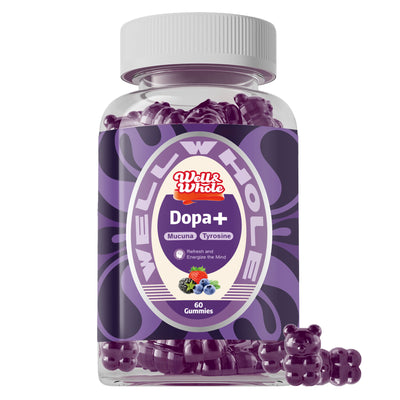
Where to begin? Our Dopamine Gummies – Mucuna Pruriens Supplements Gummies 500mg with Mood Support and Mucuna Pruriens Liquid, Mucuna Pruriens Supplements 500MG, Fuel for Focus & Attention are a sensible place to start, and the Mood Support collection lays out the other formats side by side with Brain Health.
These statements have not been evaluated by the Food and Drug Administration. This product is not intended to diagnose, treat, cure, or prevent any disease.