Natural Sleep Aids: What Actually Has Evidence Behind It

The natural sleep aid category is crowded, and it has a predictable structure: every ingredient is backed by at least one study, and almost no ingredient is backed by conclusive evidence. Knowing the difference is the whole game. This is an honest ranking, ordered roughly by how well each option holds up when you look past the marketing.
Tier one: magnesium
Magnesium has the strongest and most boring case of anything in this category, and that is a genuine compliment. It is an essential mineral involved in hundreds of enzymatic reactions, it participates in GABA signalling, and a meaningful share of the population does not get enough of it from diet.
The mechanism is plausible: magnesium acts on NMDA receptors and influences GABA, the primary inhibitory neurotransmitter. It also appears to influence cortisol rhythms, which naturally peak in the morning and decline through the evening.
What it is not: a sedative. If you are deficient, correcting the deficiency may help you settle. If you are not deficient, additional magnesium is unlikely to do much for sleep specifically. This is why the honest framing is "correcting a shortfall" rather than "inducing sleep." Glycinate is the form most associated with evening use, and it is well tolerated.
Tier two: melatonin, with caveats
Melatonin is the most effective option here for a specific job — shifting circadian timing — and it is widely misused for a job it does not do well.
Melatonin is a chronobiotic, not a hypnotic. It tells your body what time it is. It is genuinely effective for jet lag, for delayed sleep phase, and for shift-work adjustment, typically at low doses of 0.5 to 3 mg taken several hours before target bedtime.
It is much less useful as a general "take it at midnight to fall asleep" aid. And the doses on many commercial bottles — 5 mg, 10 mg, sometimes more — far exceed what the circadian effect requires. Higher doses are associated with next-day grogginess and vivid dreams. There are also legitimate open questions about long-term use and about the accuracy of label claims, since supplements are not held to pharmaceutical standards.
A percentage of people find it indispensable for travel. That is a real use case. It is just not the general-purpose sleep aid the marketing implies.
Tier two: glycine and apigenin
Glycine has a specific and interesting mechanism: it lowers core body temperature, which is one of the physiological events that normally precedes sleep onset. Trials using around 3 grams before bed have reported improvements in subjective sleep quality. It is a simple amino acid with a good safety profile.
Apigenin is a flavonoid found in chamomile, parsley, and celery. It has been studied for its interaction with benzodiazepine receptors, which is a plausible route to a mild calming effect — and it is very likely a meaningful part of why chamomile tea has the reputation it does. Human data is far thinner than for magnesium, but the traditional use is long-standing and the safety profile is reasonable.
Tier three: the herbal tier
Valerian root. Probably the most studied herbal sleep aid, with results that are frustratingly inconsistent across trials. Some show benefit for sleep latency, many show nothing. Quality and preparation vary enormously between products, which likely explains some of the inconsistency. Safe for most people, but set expectations low.
Lavender. Aromatherapy has surprisingly reasonable supportive data for subjective sleep quality, though inhalation studies are not the same as supplementation. Oral lavender preparations exist but the evidence is thinner.
Ashwagandha. An adaptogen with reasonable evidence for stress and cortisol modulation. It may help sleep indirectly in people whose sleep problem is stress-driven. Not a sedative.
Chamomile. Mild, pleasant, and mostly useful as a ritual. The apigenin content provides a mechanistic rationale. The effect is subtle.
Tier four: mostly hype
Antihistamine "PM" pain relievers. These work as sedatives, but they are anticholinergic, tolerance develops quickly, and next-day impairment is real. Long-term use is associated with concerning cognitive findings in observational research. These are not sleep aids; they are sedating antihistamines.
Combination "sleep blends" with proprietary numbers. The problem is structural: if a formula hides individual doses behind a proprietary blend, you cannot know whether it contains a useful amount of anything. Avoid on principle.
CBD. Popular and actively studied, but current evidence for sleep specifically is weak and products vary wildly in actual content and quality.
What outperforms all of it
It would be dishonest to write this article without stating that cognitive behavioural therapy for insomnia is more effective than any supplement on this page, with effects that persist after treatment ends. That is the clinical consensus, and it is available in app and telehealth formats now.
Underneath that: consistent wake times, morning daylight exposure, a cool dark bedroom, no caffeine after early afternoon, and getting out of bed when you cannot sleep rather than lying there associating bed with frustration. Unspectacular, and more effective than most bottles.
FAQ
What is the best natural sleep aid for most people?
If you are choosing one thing on evidence and safety, magnesium glycinate is the most defensible starting point, particularly if your diet is not magnesium-rich. It is well tolerated, non-habit-forming, and addresses a genuine nutritional shortfall for many people.
Can I combine several of these?
Combining magnesium with glycine or a botanical such as apigenin is common and generally well tolerated. Combining anything with an antihistamine, alcohol, or a prescription sedative is not something to do casually. Check combinations with a pharmacist.
How long before I should expect results?
For magnesium, judge over four to eight weeks rather than night one. For melatonin used for circadian shifting, the effect is immediate but timing-critical. For botanicals, several weeks is reasonable.
Are natural sleep aids habit-forming?
Magnesium, glycine, and apigenin are not associated with dependence. Antihistamines are a different story, and even melatonin can create a psychological reliance where people feel unable to sleep without it.
The short version
Magnesium has the strongest case, melatonin has a specific and narrow use for circadian shifting at low doses, glycine and apigenin have plausible mechanisms with modest data, and the herbal tier is genuinely inconsistent. Everything on this page sits below cognitive behavioural therapy and basic sleep hygiene. Start with the foundation, add one variable at a time, and give each one several weeks before deciding. If you want to begin with the best-supported option, look at magnesium-based sleep support formulas and check the elemental magnesium figure on the label.
Where to start
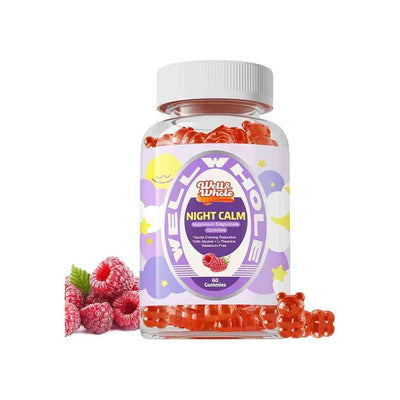
If you want to try it, our Magnesium Bisglycinate Gummies with Apigenin and B6 is formulated for this purpose. You can browse the full related collection to compare options.
These statements have not been evaluated by the Food and Drug Administration. This product is not intended to diagnose, treat, cure, or prevent any disease. Talk to a healthcare professional before starting any new supplement, especially if you are pregnant, nursing, taking medication, or managing a health condition.
These statements have not been evaluated by the Food and Drug Administration. This product is not intended to diagnose, treat, cure, or prevent any disease.