Natural Heart Health Stack: Cayenne + Magnesium Taurate + CoQ10
Discover the natural heart health stack combining cayenne pepper, magnesium taurate, and CoQ10. Learn how this trio supports cardiovascular wellness, circulation, and overall heart function naturally.

Your heart beats approximately 100,000 times per day, pumping blood through over 60,000 miles of blood vessels. This remarkable organ works tirelessly from before birth until your final breath. Yet heart disease remains the leading cause of death globally, according to the World Health Organization (WHO, 2023).
While conventional medicine offers valuable interventions, many people seek natural approaches to support their cardiovascular health. The concept of "stacking" supplements—combining complementary nutrients that work synergistically—has gained significant attention in the wellness community.
In this comprehensive guide, we'll explore a powerful natural heart health stack built around three key ingredients: cayenne pepper, magnesium taurate, and coenzyme Q10 (CoQ10). You'll learn how each component works, the science behind their combination, practical implementation strategies, and important safety considerations.
Whether you're proactively supporting heart health, looking to complement existing wellness routines, or simply curious about natural cardiovascular support, this article provides evidence-based insights to guide your journey.
Understanding the Natural Heart Health Stack
A well-designed supplement stack operates on synergy—the principle that combined elements produce effects greater than the sum of their parts. The cayenne + magnesium taurate + CoQ10 stack targets cardiovascular health through three complementary pathways:
1. **Cayenne Pepper**: Circulatory support and cardiovascular tone
2. **Magnesium Taurate**: Electrolyte balance and vascular function
3. **CoQ10**: Cellular energy production and antioxidant protection
Let's examine each component in detail.
Component 1: Cayenne Pepper (Capsicum annuum)
Historical and Traditional Use
Cayenne pepper has been used medicinally for thousands of years. Native to Central and South America, it was employed by Aztec and Mayan civilizations for various health purposes. Traditional Chinese Medicine and Ayurvedic practices have also utilized cayenne for circulatory support.
Active Compounds and Mechanisms
The primary active compound in cayenne is **capsaicin**, responsible for the pepper's characteristic heat. Capsaicin interacts with TRPV1 receptors (transient receptor potential vanilloid 1) in the body, which may influence various cardiovascular parameters.
Cardiovascular Benefits of Cayenne
Research suggests several ways cayenne may support heart health:
**Circulatory Support**: Cayenne is traditionally used to support healthy circulation. A 2018 study published in *Nutrients* examined capsaicin's effects on vascular function and found potential benefits for endothelial health (Peng et al., 2018).
**Lipid Metabolism**: Some animal and observational studies suggest capsaicin may influence lipid metabolism, though more human research is needed (Ahuja et al., 2020, *Journal of Nutritional Biochemistry*).
**Antioxidant Properties**: Cayenne contains vitamin C, vitamin A, and various flavonoids that provide antioxidant support.
Cayenne in Gummy Form
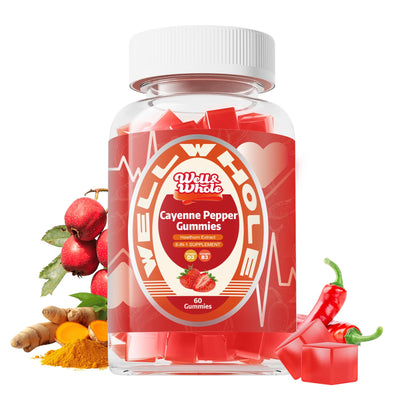
Many people find cayenne challenging to incorporate into their diet due to its heat. Cayenne pepper gummies offer a convenient, palatable alternative. Cayenne Pepper Heart Health Gummies from well&wholecombine cayenne with complementary ingredients like hawthorn, CoQ10, and turmeric for comprehensive cardiovascular support.
Component 2: Magnesium Taurate
Why Magnesium Matters for Heart Health
Magnesium is involved in over 300 enzymatic reactions in the human body, many of which directly impact cardiovascular function. Despite its importance, an estimated 50% of Americans consume less than the recommended amount of magnesium (NIH, 2022).
The heart is particularly magnesium-dependent:
- Magnesium helps regulate heart rhythm
- It supports healthy blood pressure levels already within normal range
- It assists in vascular tone regulation
- It plays a role in energy production within heart cells
What Makes Taurate Special?
Magnesium supplements come in various forms—citrate, glycinate, oxide, and others. Magnesium taurate is a chelated form where magnesium is bound to taurine (an amino sulfonic acid).
Research suggests magnesium taurate may be particularly beneficial for cardiovascular health:
1. **Taurine Synergy**: Taurine itself has been studied for cardiovascular support. A 2018 review in *Nutrients* summarized taurine's potential cardioprotective properties (Schaffer et al., 2018).
2. **Absorption**: The chelated form may offer favorable absorption characteristics compared to some other magnesium forms.
3. **Gentle on Digestion**: Unlike magnesium oxide, taurate is less likely to cause loose stools.
Magnesium Taurate Gummies
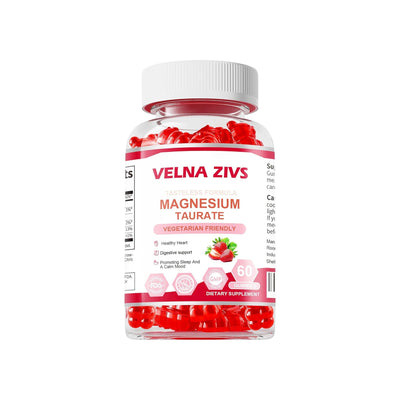
Getting adequate magnesium doesn't have to mean large pills or unpleasant powders. Magnesium Taurate Gummies 1800mg from well&whole provide a convenient way to supplement with this heart-supporting mineral.
Component 3: Coenzyme Q10 (CoQ10)
The Cellular Energy Connection
CoQ10 is a naturally occurring compound found in every cell of your body. It plays a crucial role in the mitochondrial electron transport chain, which produces ATP—the primary energy currency of cells.
The heart, with its extraordinarily high energy demands, contains some of the highest concentrations of CoQ10 in the body.
CoQ10 and Cardiovascular Health
Multiple studies have examined CoQ10's role in heart health:
**Endothelial Function**: A 2018 meta-analysis published in *Pharmacological Research* found that CoQ10 supplementation was associated with improved endothelial function markers (Díaz-Castro et al., 2018).
**Antioxidant Protection**: CoQ10 functions as a lipid-soluble antioxidant, helping protect cellular membranes from oxidative damage.
**Statin Interaction**: Research indicates that statin medications may reduce CoQ10 levels in the body. A 2015 review in *Molecular Syndromology* discussed this interaction (Littarru & Tiano, 2015).
Bioavailability Considerations
CoQ10 is available in two forms:
- **Ubiquinone**: The oxidized form, traditionally more common
- **Ubiquinol**: The reduced form, which may offer superior bioavailability, particularly for older adults
The Synergy: How the Stack Works Together
The power of this stack lies in how the components complement each other:
| Component | Primary Mechanism | Complements Via |
|-----------|-------------------|-----------------|
| Cayenne Pepper | Circulatory support, capsaicin effects | May enhance nutrient delivery |
| Magnesium Taurate | Electrolyte balance, vascular tone | Supports heart rhythm and muscle function |
| CoQ10 | Mitochondrial energy, antioxidant protection | Fuels heart cell energy production |
Timing and Combinations
While there's no universal "best" timing, some general considerations include:
- **CoQ10**: Fat-soluble; taking with meals may enhance absorption
- **Magnesium**: Can be taken at any time; some prefer evening due to relaxation effects
- **Cayenne**: May be stimulating; those sensitive to warming herbs might prefer earlier in the day
Practical Implementation Guide
Step 1: Assess Your Baseline
Before starting any supplement regimen:
1. Consult with a healthcare provider
2. Consider relevant lab work (magnesium levels, lipid panel, etc.)
3. Review current medications for potential interactions
Step 2: Start with One at a Time
Introduce supplements sequentially:
- Week 1: Add one component
- Week 2: If well-tolerated, add the second
- Week 3: If well-tolerated, add the third
This approach helps identify any individual sensitivities.
Step 3: Consistency Over Perfection
Supplement benefits are often cumulative. Consistent daily use typically yields better results than sporadic high-dose approaches.
Step 4: Track Your Experience
Consider keeping a simple journal noting:
- Energy levels
- Any noticeable changes
- Sleep quality
- Overall sense of wellbeing
Lifestyle Foundations: The Fourth Component
No supplement stack replaces foundational lifestyle factors:
Nutrition
A heart-healthy diet pattern (such as Mediterranean or DASH) emphasizes:
- Abundant vegetables and fruits
- Whole grains
- Healthy fats (olive oil, avocados, nuts)
- Lean proteins
- Limited processed foods
Physical Activity
The American Heart Association recommends:
- At least 150 minutes of moderate-intensity aerobic activity per week
- Muscle-strengthening activities at least 2 days per week
Stress Management
Chronic stress affects cardiovascular health. Evidence-based stress management approaches include:
- Meditation and mindfulness
- Regular physical activity
- Adequate sleep (7-9 hours for most adults)
- Social connection
Sleep
Poor sleep quality and duration are associated with increased cardiovascular risk. Prioritizing sleep hygiene is a foundational heart health strategy.
Who Might Consider This Stack?
This natural heart health stack may be of interest to:
1. **Adults over 40** looking for proactive cardiovascular support
2. **Those with family history** of cardiovascular concerns
3. **Individuals taking statins** (who may have reduced CoQ10 levels)
4. **Anyone with suboptimal magnesium intake** (which describes a large portion of the population)
5. **Those seeking natural approaches** to complement conventional care
Safety Considerations and Contraindications
General Precautions
- **Consult your healthcare provider** before starting any new supplement, especially if you have existing medical conditions or take medications
- **Start low and go slow**: Begin with recommended doses
- **Monitor for interactions**: Particularly important if taking blood thinners, blood pressure medications, or other cardiovascular drugs
Specific Considerations
**Cayenne**:
- May interact with blood-thinning medications
- Can cause digestive discomfort in some individuals
- Those with gastric ulcers should exercise caution
**Magnesium**:
- Those with kidney impairment should consult a doctor before supplementing
- High doses may cause loose stools
- Can interact with certain antibiotics and other medications
**CoQ10**:
- May interact with warfarin and other blood thinners
- Can affect blood pressure; those on blood pressure medication should monitor closely
- Generally well-tolerated but should be discussed with a healthcare provider
Frequently Asked Questions
Q1: How long does it take to notice benefits from this stack?
A: Individual experiences vary. Some people report noticing changes within 2-4 weeks, while for others it may take 2-3 months of consistent use.
Q2: Can I take this stack with my blood pressure medication?
A: You must consult your healthcare provider. Both magnesium and CoQ10 can affect blood pressure, and cayenne may also influence cardiovascular parameters.
Q3: Is it better to take CoQ10 in the morning or evening?
A: CoQ10 is generally stimulating for some people (due to enhanced cellular energy production) and may be better taken earlier in the day. However, individual responses vary.
Q4: Can children take this stack?
A: These supplements are formulated for adults. Always consult a pediatrician before giving any supplement to children.
Q5: Are there any foods that naturally contain these compounds?
A: Yes! Cayenne is a food; magnesium is found in leafy greens, nuts, and seeds; CoQ10 is found in organ meats, fatty fish, and whole grains (though supplementing is often necessary to achieve therapeutic levels).
Q6: Can I take this stack if I'm pregnant or breastfeeding?
A: Consult your healthcare provider. Many supplements are not recommended during pregnancy or breastfeeding without medical supervision.
Q7: Do I need to cycle this stack (take breaks)?
A: There's no universal consensus. Some practitioners recommend cycling, while others support continuous use. Discuss with your healthcare provider.
Q8: What's the difference between CoQ10 and CoQ10+ (CoQ10 with other ingredients)?
A: Some formulations add ingredients like shilajit or PQQ for enhanced mitochondrial support. The basic CoQ10 remains the foundational ingredient.
Q9: Can this stack replace my heart medication?
A: Absolutely not. This stack is intended to support wellness, not replace prescribed medications. Never discontinue prescribed medications without consulting your doctor.
Q10: How should I store these supplements?
A: Generally, cool, dry places away from direct sunlight are best. Gummies may require additional care to prevent melting. Always follow storage instructions on the product label.
Conclusion
The natural heart health stack combining cayenne pepper, magnesium taurate, and CoQ10 represents a thoughtful, multi-pathway approach to cardiovascular wellness. Each component brings unique mechanisms: cayenne for circulatory support, magnesium taurate for electrolyte balance and vascular function, and CoQ10 for cellular energy and antioxidant protection.
However, supplements are exactly that—supplements to, not substitutes for, a foundation of healthy lifestyle habits. The most powerful heart health "stack" also includes nutritious food, regular movement, stress management, quality sleep, and routine medical care.
If you're considering this stack, start by discussing it with your healthcare provider, especially if you have existing health conditions or take medications. When you're ready to begin, consider high-quality formulations like Cayenne Pepper Heart Health Gummies and Magnesium Taurate Gummies 1800mg from well&whole, designed for both efficacy and enjoyability.
Your heart works tirelessly for you—supporting it with evidence-based natural approaches is one of the best investments you can make in your long-term health.
Related supplements
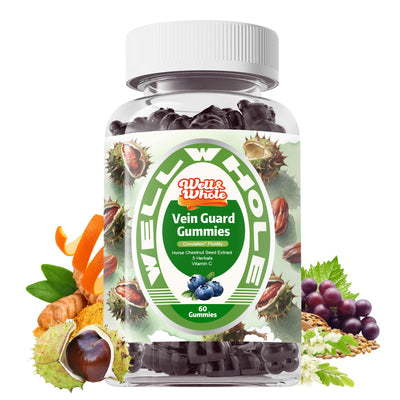
Where to begin? Our well&whole Horse Chestnut Extract Gummies, Circulation Supplements for Legs and Cayenne Pepper Heart Health Gummies with Hawthorn & CoQ10 & Turmeric are a sensible place to start, and the Heart Health collection lays out the other formats side by side with CoQ10.
These statements have not been evaluated by the Food and Drug Administration. This product is not intended to diagnose, treat, cure, or prevent any disease.