NAC Supplement Guide: N-Acetyl Cysteine Benefits for Respiratory, Liver, Mood, and Fertility Health
N-Acetyl Cysteine (NAC) is one of the most versatile supplements available — supporting respiratory health, liver function, glutathione production, mood, and fertility. Learn everything about NAC.

Few dietary supplements can claim as diverse and well-documented a range of benefits as N-Acetyl Cysteine, or NAC. Originally developed in the 1960s as a mucolytic agent to break up thick mucus in respiratory conditions, NAC has since revealed itself to be far more than a lung health supplement. It serves as the rate-limiting precursor for glutathione, your body's master antioxidant; it modulates glutamate neurotransmission, giving it effects on mood and compulsive behavior; and it supports liver detoxification so powerfully that it is the standard-of-care hospital treatment for acetaminophen (Tylenol) overdose.
This guide explores the full spectrum of NAC's evidence-based benefits, from its well-established role in respiratory health to emerging research on mental health and fertility — giving you a complete picture of what this remarkable supplement can and cannot do.
What Is NAC?
N-Acetyl Cysteine is the N-acetyl derivative of the amino acid L-cysteine. The acetyl group stabilizes the cysteine molecule, making it more bioavailable and less prone to oxidation than dietary cysteine. Once absorbed, NAC is rapidly deacetylated, releasing free cysteine into the body's amino acid pool.
The Glutathione Connection
The reason NAC matters so much for overall health is simple: cysteine is the rate-limiting substrate for glutathione synthesis. Your body can typically produce sufficient glutamate and glycine (the other two glutathione components), but cysteine availability is often the bottleneck that determines how much glutathione you can manufacture.
By providing a stable, well-absorbed cysteine source, NAC directly supports your body's primary antioxidant and detoxification system.
NAC Benefits: The Evidence
1. Respiratory Health
NAC's oldest and most established benefit. As a mucolytic agent, NAC breaks disulfide bonds in mucus glycoproteins, reducing mucus viscosity and making it easier to clear from airways.
Clinical Evidence:
· A 2015 Cochrane Review of 13 randomized trials found that NAC reduced the frequency of acute exacerbations in chronic bronchitis and COPD by approximately 22% when used at 600–1,200 mg daily.
· A 2017 meta-analysis in *The Lancet Respiratory Medicine* confirmed that NAC reduces COPD exacerbation risk, particularly in patients not already using inhaled corticosteroids.
· NAC's antioxidant and anti-inflammatory effects in lung tissue provide benefits beyond mucus thinning alone.
2. Liver Protection and Detoxification
NAC's role in liver protection is so well-established that it is a hospital emergency room medication. The mechanism is direct: acetaminophen overdose depletes liver glutathione, and NAC rapidly restores it — preventing the liver damage that would otherwise occur.
FDA-Approved Use: Intravenous and oral NAC are FDA-approved for acetaminophen toxicity. Early administration (within 8 hours of overdose) provides near-complete protection against liver injury.
General Liver Support: Even in non-overdose situations, NAC supports Phase II liver detoxification by maintaining glutathione availability. For individuals with regular alcohol consumption, daily medication use, or environmental toxin exposure, NAC supports the liver's continuous detoxification workload.
3. Mental Health and Psychiatry
This is among the most rapidly expanding areas of NAC research:
Mood Disorders:
A 2016 meta-analysis in *Neuroscience & Biobehavioral Reviews* found that NAC supplementation (2,000–2,400 mg daily) significantly reduced depressive symptoms compared to placebo across 5 randomized controlled trials. The effect size was moderate but clinically meaningful.
Mechanism: NAC modulates the glutamate system — the brain's primary excitatory neurotransmitter. By regulating glutamate levels through the cystine-glutamate antiporter, NAC may correct glutamatergic dysfunction implicated in mood disorders.
Obsessive-Compulsive and Related Disorders:
Multiple clinical trials have found NAC beneficial for compulsive behaviors, including:
· Trichotillomania (hair-pulling disorder) — significant reduction in pulling behaviors at 2,400 mg/day (Grant et al., 2009, *Archives of General Psychiatry*)
· Excoriation (skin-picking disorder) — similar results at 2,400 mg/day
· OCD augmentation — added to standard treatment, NAC showed modest benefit in treatment-resistant cases
Addiction and Substance Use:
NAC's glutamate-modulating effects may reduce cravings in substance use disorders. Research has shown promise for cannabis and cocaine dependence, with daily doses of 2,400 mg reducing craving scores and use frequency.
4. Fertility
NAC has been studied for supporting male and female fertility through distinct mechanisms:
Polycystic Ovary Syndrome (PCOS):
A 2015 randomized trial in the *Journal of Obstetrics and Gynaecology Research* found that NAC (1,800 mg daily) combined with clomiphene citrate improved ovulation rates and pregnancy outcomes compared to clomiphene alone in women with PCOS. NAC appears to improve insulin sensitivity and reduce oxidative stress in ovarian tissue.
Male Fertility:
NAC's antioxidant effects extend to sperm quality. A 2017 study in *Andrologia* found that NAC (600 mg daily for 3 months) improved sperm concentration, motility, and morphology in men with idiopathic infertility — likely through reducing oxidative DNA damage in sperm cells.
5. Immune Support
Glutathione is essential for lymphocyte function, and glutathione-depleted immune cells cannot proliferate effectively. NAC supports immune competence through glutathione repletion, which may explain why it reduces the frequency and severity of upper respiratory infections in susceptible populations.
6. Kidney Protection
NAC protects kidney function during contrast dye procedures — it is commonly administered before CT scans with intravenous contrast in patients at risk of contrast-induced nephropathy. The mechanism involves both antioxidant protection and improved renal blood flow through nitric oxide pathways.
NAC Dosage and Administration
Note: Doses above 1,200 mg daily should be discussed with a healthcare provider, particularly the 2,000+ mg doses used in psychiatric research.
Safety and Side Effects
NAC has an excellent safety profile at standard doses. The most common side effects are gastrointestinal:
· Nausea (reduced by taking with food)
· Mild stomach discomfort
· Loose stools (usually transient)
At very high doses, NAC can cause anaphylactoid reactions with intravenous administration (in hospital settings), but this is not a concern with oral supplementation at standard doses.
Important Drug Interactions
NAC vs. Glutathione: Which Should You Take?
For most people, NAC is the more cost-effective and versatile option. Those with significantly depleted glutathione (advanced age, chronic illness) may benefit from combining NAC with liposomal glutathione for complementary support.
FAQ
Q1: Is NAC the same as glutathione?
No. NAC is a precursor — it provides cysteine, the rate-limiting building block for glutathione. Glutathione is the finished antioxidant molecule. NAC is better absorbed orally and allows your body to produce glutathione where it is needed.
Q2: Does NAC have a sulfur smell?
NAC contains sulfur, and some products have a mild sulfurous odor. This is normal and not an indicator of quality issues. The smell is more noticeable when the bottle is first opened.
Q3: Can I take NAC every day?
Yes. NAC has been studied in long-term trials (up to 12 months) with excellent safety at doses of 600–1,200 mg daily. The higher psychiatric doses (2,000+ mg) have been studied for shorter durations (typically 12–24 weeks).
Q4: Why was NAC briefly unavailable in the US?
In 2021, the FDA raised questions about whether NAC could be marketed as a dietary supplement given its prior FDA approval as a drug (for acetaminophen toxicity). After legal challenges and public comment, NAC has remained available as a supplement while regulatory issues are addressed. It is currently legally available for retail sale.
Q5: Can NAC prevent COVID-19 or treat its symptoms?
NAC has been studied as an adjunctive treatment for COVID-19 due to its mucolytic and antioxidant properties. While some studies suggest NAC may support recovery when used alongside standard care, it is not a proven prevention or treatment and should not replace vaccination or medical management.
Q6: Does NAC affect the kidneys?
NAC is actually protective to the kidneys, not harmful. It is used clinically to prevent contrast-induced nephropathy and has been studied for other forms of acute kidney injury. It is generally safe for kidneys at standard doses.
Q7: Can NAC be taken with antidepressants?
NAC has been studied as an augmentation strategy for antidepressants in mood disorders, with some evidence of benefit. However, because NAC modulates glutamate signaling, it should only be added to psychiatric medication regimens under medical supervision.
Q8: How long does NAC take to work?
For respiratory mucus thinning, effects are often noticeable within days. For glutathione repletion, tissue levels rise within 1–2 weeks. For mental health applications, trials typically measure outcomes at 8–12 weeks.
Q9: Is NAC vegan?
NAC is a synthetic amino acid derivative and does not typically contain animal products. However, capsule shells may be gelatin-based. Check the label or look for products specifically labeled as vegan.
Conclusion
N-Acetyl Cysteine is one of those rare supplements that genuinely deserves the word "versatile." From its origin as a respiratory mucus thinner to its current status as a multi-target health support — affecting liver detoxification, glutathione status, neurotransmitter balance, and reproductive health — NAC's range of evidence-based applications is remarkable.
For most health-conscious adults, NAC at 600–1,200 mg daily provides broad-spectrum support through glutathione enhancement without significant cost or risk. The higher doses used in psychiatric research (2,000–2,400 mg daily) are best undertaken with professional guidance, but the evidence for these applications continues to grow.
At well&whole, we believe the most effective supplements are those that support your body's fundamental systems — and few do this more comprehensively than NAC. Explore our NAC supplements to find the right formulation for your health goals.
Related supplements
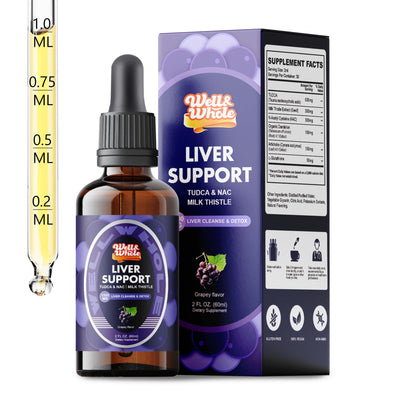
Should you decide to supplement, Liver Support Liquid Drops Supplement | TUDCA Drops Liver Cleanse & Detox with Milk Thistle, NAC, Dandelion, Artichoke & Glutathione for Detox and TUDCA 1000mg Gummies with Milk Thistle 500mg for Adults are our formulation for this purpose. For a broader comparison, see the Liver Support and Milk Thistle collections.
These statements have not been evaluated by the Food and Drug Administration. This product is not intended to diagnose, treat, cure, or prevent any disease.