NAC Safety Review: Interactions with Medications, Alcohol, and Other Supplements
Comprehensive safety review of N-Acetylcysteine (NAC). Evidence-based analysis of NAC interactions with prescription medications, alcohol, acetaminophen, and other supplements — plus contraindications and safe usage guidelines.

N-Acetylcysteine (NAC) occupies a unique position in the supplement landscape. Unlike most dietary supplements that exist solely in the wellness space, NAC is also a World Health Organization Essential Medicine — used in hospital emergency departments for acetaminophen (paracetamol) overdose and as a mucolytic agent in respiratory conditions. This dual identity as both pharmaceutical and supplement means its safety profile, drug interactions, and contraindications are better characterized than those of most other supplement ingredients.
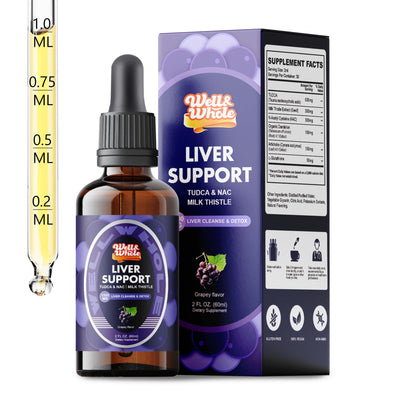
However, this extensive safety data comes with complexity. NAC interacts with specific medications, may alter the metabolism of alcohol and acetaminophen, and has contraindications that supplement users should understand. This is particularly relevant for products like the well&whole Liver Support Liquid Drops , where NAC is part of a 6-in-1 formula alongside TUDCA, Milk Thistle, Dandelion, Artichoke, and Glutathione.

This article provides a comprehensive, evidence-based review of NAC's safety profile, medication interactions, and usage guidelines — giving you the information needed to use NAC-containing supplements safely and effectively.
NAC Fundamentals: Mechanism and Metabolism
What NAC Is and How It Works
NAC (N-acetyl-L-cysteine) is the N-acetylated derivative of the amino acid L-cysteine. After oral administration, it is rapidly deacetylated to cysteine, which then:
1. Serves as a glutathione precursor — Cysteine is the rate-limiting substrate for glutathione (GSH) synthesis via glutamate-cysteine ligase (GCL)
2. Acts as a direct antioxidant — The thiol (-SH) group on cysteine directly reduces reactive oxygen species
3. Reduces disulfide bonds — NAC reduces disulfide bonds in mucus glycoproteins, explaining its mucolytic activity
4. Modulates glutamate — NAC modulates the cystine-glutamate antiporter, affecting extracellular glutamate levels in the brain (relevant to its investigational use in psychiatric conditions)
Physicochemical Properties
| Property | Value | Safety Implication |
| Molecular weight | 163.2 g/mol | Small molecule; rapid absorption |
| pKa (thiol group) | ~9.5 | Predominantly protonated at physiological pH |
| Oral bioavailability | 4-10% (extensive first-pass metabolism) | Low oral bioavailability necessitates adequate dosing |
| Peak plasma concentration (Tmax) | 1-2 hours (oral) | Rapid onset |
| Half-life | 2-6 hours (plasma); longer in tissues | Multiple daily dosing may be appropriate for some applications |
| Renal excretion | ~30% (as metabolites) | Dose adjustment considerations in renal impairment |
---
NAC and Medications: Documented Interactions
Acetaminophen (Paracetamol) — The Prototypical Interaction
This is the best-characterized NAC interaction and the basis for its status as an essential medicine. Acetaminophen overdose depletes hepatic glutathione stores, and the resulting accumulation of the toxic metabolite NAPQI (N-acetyl-p-benzoquinone imine) causes centrilobular hepatic necrosis.
Mechanism: NAC replenishes glutathione, providing substrate for NAPQI conjugation and detoxification. Additionally, NAC provides sulfate for the non-toxic sulfation pathway of acetaminophen metabolism.
Clinical guidance for supplement users:
· Taking NAC preventively alongside therapeutic doses of acetaminophen is generally safe and may theoretically be hepatoprotective
· NAC does NOT reduce the analgesic or antipyretic efficacy of acetaminophen at therapeutic doses
· NAC should NOT be relied upon to prevent toxicity from acetaminophen overdose — any suspected overdose requires emergency medical evaluation regardless of NAC use
Nitroglycerin and Nitrates
NAC potentiates the vasodilatory effects of nitroglycerin and other organic nitrates through two mechanisms:
5. NAC provides sulfhydryl groups needed for nitric oxide (NO) release from nitrates
6. NAC's antioxidant activity reduces nitrate tolerance development
Clinical significance: Individuals taking nitroglycerin for angina or other nitrates for cardiovascular conditions should consult their healthcare provider before using NAC supplements. The combination may cause excessive vasodilation, hypotension, and severe headaches. This interaction is dose-dependent but can occur at typical supplemental NAC doses (600-1200 mg).
Activated Charcoal
Activated charcoal binds NAC in the GI tract, reducing absorption of both. In acetaminophen overdose protocols, activated charcoal administration within 1-2 hours of ingestion is standard, and oral NAC is administered subsequently (or intravenous NAC is used to avoid the interaction).
Clinical significance for supplement users: If you use activated charcoal for any reason (detoxification protocols, GI decontamination), separate from NAC by at least 3 hours.
Antihypertensive Medications
NAC may modestly lower blood pressure through:
· Enhanced nitric oxide bioavailability (vasodilation)
· Antioxidant-mediated improvement in endothelial function
· Possible ACE inhibition effects (preliminary; not well-established)
Clinical significance: Individuals on antihypertensive medications should monitor blood pressure when initiating NAC supplementation. The blood pressure-lowering effect is generally modest (systolic reduction of 2-5 mmHg in most studies) but may be additive with antihypertensive drugs. Severe hypotension from this combination is unlikely at standard supplemental doses.
Anticoagulants and Antiplatelet Agents
NAC theoretically affects coagulation through:
· Reduction of disulfide bonds in von Willebrand factor, potentially reducing platelet aggregation
· Limited clinical evidence for clinically significant anticoagulation
A 2018 systematic review in the Journal of Thrombosis and Haemostasis examined NAC's effects on coagulation parameters and found no clinically significant changes in PT, aPTT, or platelet function at oral doses up to 1200 mg/day. However, caution is warranted with supratherapeutic NAC doses or in individuals with pre-existing coagulopathies.
Chemotherapeutic Agents
The interaction between NAC and chemotherapy is complex and agent-specific:
· Positive interaction: NAC may reduce cisplatin-induced nephrotoxicity and ototoxicity (used in some clinical protocols)
· Theoretical negative interaction: NAC's antioxidant activity could theoretically protect cancer cells from oxidative damage induced by certain chemotherapeutic agents (particularly doxorubicin, which relies partially on ROS generation for cytotoxicity)
Clinical significance: Individuals undergoing chemotherapy should NOT use NAC supplements without explicit oncologist approval. The balance of benefit and risk is agent-specific and requires professional assessment.
---
NAC and Alcohol
The Complex NAC-Alcohol Relationship
The NAC-alcohol interaction is multifaceted and not fully characterized:
7. Alcohol-induced glutathione depletion: Chronic alcohol consumption depletes hepatic glutathione. NAC, as a glutathione precursor, may help replenish GSH stores — a potentially beneficial interaction.
8. Acetaminophen + alcohol risk: The most clinically significant concern is the combination of acetaminophen with chronic alcohol consumption, which increases NAPQI toxicity risk through CYP2E1 induction. NAC provides protective glutathione for this scenario.
9. NAC + alcohol co-administration: Limited evidence suggests NAC may modestly reduce some acute effects of alcohol (including hangover severity in some studies, though evidence quality is low). NAC does NOT prevent alcohol intoxication, impairment, or the long-term consequences of excessive alcohol consumption.
10. Gastric protection: NAC's mucolytic activity could theoretically reduce the protective gastric mucus layer, potentially increasing alcohol's direct gastric toxicity when taken simultaneously. Separating NAC and alcohol by 2+ hours is prudent.
Practical guidance:
· NAC supplementation may be particularly beneficial for individuals who consume alcohol regularly, as chronic alcohol use depletes glutathione
· NAC is NOT a license to drink excessively or a "hangover cure"
· Do not take NAC simultaneously with alcoholic beverages — separate by at least 2 hours
· The liver benefits of NAC are most relevant when alcohol consumption is moderate or reduced
---
NAC and Other Supplements
Synergistic Combinations
| Supplement | Interaction | Clinical Significance |
| Glycine | Combines with cysteine (from NAC) + glutamate to form glutathione | Provides the second rate-limiting substrate for GSH synthesis; theoretically synergistic |
| Selenium | Cofactor for glutathione peroxidase | Complementary antioxidant support |
| Vitamin C | Spares glutathione by directly reducing oxidized glutathione | Synergistic antioxidant network |
| Milk Thistle (Silymarin) | Nrf2 activation upregulates glutathione synthesis enzymes | NAC provides substrate; Milk Thistle upregulates enzyme capacity — a well-characterized synergy |
The Liver Support Liquid Drops combine NAC with Milk Thistle and Glutathione for precisely this synergistic effect.

Potentially Problematic Combinations
| Supplement | Concern | Recommendation |
| High-dose activated charcoal | Physical binding of NAC in GI tract | Separate by 3+ hours |
| High-dose zinc (≥50 mg/day) | Zinc and NAC compete for GI absorption | Separate by 2+ hours |
| Iron supplements | NAC may modestly increase iron absorption (reducing Fe³⁺ to more absorbable Fe²⁺) | Monitor if iron overload is a concern |
---
NAC Side Effects and Tolerability
Dose-Dependent GI Effects
The most common side effects of oral NAC are gastrointestinal and dose-dependent:
| Dose | GI Side Effect Rate | Most Common Effects |
| 600 mg/day | 3-5% | Mild nausea, stomach discomfort |
| 1200 mg/day | 8-12% | Nausea, vomiting, diarrhea |
| 1800-2400 mg/day | 15-25% | Significant nausea, vomiting, diarrhea |
These effects are generally mild, transient (resolving within 1-2 weeks of continued use), and responsive to dose reduction or administration with food.
Rare But Serious Adverse Effects
· Anaphylactoid reactions: Rare but documented with intravenous NAC (not oral). Symptoms include flushing, urticaria, bronchospasm, and hypotension. Oral NAC has not been associated with anaphylactoid reactions at standard supplemental doses.
· Bronchospasm: In individuals with asthma, NAC's mucolytic and potential histamine-releasing effects could theoretically trigger bronchospasm. Asthmatics should start with low doses and monitor respiratory symptoms.
· Rashes: Mild urticaria and pruritus reported in <1% of users.
---
Contraindications
Known Contraindications
| Condition | Level of Concern | Rationale |
| Known hypersensitivity to NAC | Absolute contraindication | Anaphylaxis risk |
| Active peptic ulcer disease | Relative contraindication | NAC's mucolytic activity could theoretically impair gastric mucosal protection |
| Severe asthma with NAC sensitivity | Relative contraindication | Potential for bronchospasm (rare) |
| Concurrent nitrate therapy (nitroglycerin, isosorbide) | Caution | Additive vasodilation and hypotension risk |
| Pregnancy (first trimester specifically) | Insufficient safety data | NAC has been used in pregnancy for specific indications but routine supplementation is not studied |
---
Safety Summary Table
| Safety Domain | Risk Level | Key Points |
| General tolerability | Low | GI effects are dose-dependent and typically mild |
| Acetaminophen interaction | Protective (therapeutic context) | NAC protects against acetaminophen hepatotoxicity; does not reduce analgesic effect |
| Nitrate interaction | Moderate (hemodynamic) | Potentiates vasodilation; hypotension risk with nitroglycerin |
| Anticoagulant interaction | Low | No clinically significant coagulation effects at standard doses |
| Alcohol interaction | Complex | NAC may partially mitigate alcohol-related glutathione depletion; separate dosing by 2+ hours |
| Chemotherapy interaction | Variable | Must be assessed on agent-specific basis with oncologist |
| Long-term safety | High (establized) | NAC used clinically for decades; well-characterized safety profile |
| Pregnancy safety | Insufficient data | Avoid routine use without OB/GYN clearance |
Frequently Asked Questions
Q1: Can I take NAC every day long-term?
Yes. NAC has been used therapeutically for decades (for acetaminophen overdose, COPD, cystic fibrosis) and as a dietary supplement. Long-term safety data support chronic use at standard supplemental doses (600-1200 mg/day). Periodic reassessment of continued need and cyclic use (e.g., 12 weeks on, 1 week off) is a conservative approach for indefinite supplementation.
Q2: Does the NAC in Liver Support Drops interact with TUDCA?
NAC and TUDCA have complementary, non-interfering mechanisms. NAC supports glutathione synthesis and antioxidant defense, while TUDCA addresses bile acid homeostasis and ER stress. There is no documented negative interaction — in fact, the combination is mechanistically synergistic for comprehensive liver support.
Q3: Should I take NAC with or without food?
NAC can cause GI irritation in some individuals, particularly at higher doses. Taking NAC with a small amount of food may reduce GI side effects without significantly impairing absorption. If you tolerate NAC well on an empty stomach, pre-meal administration may optimize absorption.
Q4: Can NAC cause kidney stones?
NAC is metabolized to cysteine, which contains sulfur. However, cysteine does not significantly contribute to oxalate or uric acid stone formation. There is no evidence that NAC supplementation increases kidney stone risk at standard doses. Individuals with cystinuria (a genetic disorder causing cystine stones) should avoid NAC due to increased cystine load.
Q5: Does NAC affect thyroid function?
NAC does not directly affect thyroid hormone synthesis or metabolism. However, cysteine (from NAC) can theoretically compete with tyrosine for cellular uptake in some tissues, and very high cysteine levels could theoretically affect thyroid function. This effect has not been documented at standard supplemental NAC doses and is not a clinical concern for most users.
Q6: Is it safe to take NAC with ppis (proton pump inhibitors)?
No direct interaction has been documented between NAC and PPIs. However, PPIs raise gastric pH, which could theoretically affect NAC stability (NAC is more stable at acidic pH). The clinical significance of this is uncertain. Standard timing separation (2 hours between PPI and NAC) is reasonable but likely not critical.
Q7: Can I use NAC if I have a sulfa allergy?
NAC is an N-acetylated amino acid and does not contain a sulfonamide group. "Sulfa" allergies refer to sulfonamide antibiotics, which are structurally unrelated to NAC or to the sulfur-containing amino acid cysteine. Cross-reactivity is not expected, but individuals with severe drug allergies should consult an allergist before using any new supplement.
Conclusion
NAC's safety profile is among the best-characterized in the supplement industry, benefiting from decades of clinical use as an essential medicine and extensive research as a dietary supplement. The key safety considerations are: (1) avoid concomitant use with nitrates (nitroglycerin) due to additive vasodilation, (2) separate from activated charcoal by 3+ hours, (3) start with lower doses if you have a history of GI sensitivity, and (4) consult an oncologist if undergoing chemotherapy.
For most individuals, NAC at standard supplemental doses (600-1200 mg/day) is safe, well-tolerated, and compatible with long-term use. The NAC in the well&whole Liver Support Liquid Drops is formulated as part of a balanced multi-ingredient blend at a dose designed for daily, ongoing liver support — leveraging NAC's glutathione precursor function alongside complementary ingredients (TUDCA, Milk Thistle, Dandelion, Artichoke, Glutathione) for comprehensive, safe hepatic support.
Related supplements
If you'd like to try it, Liver Support Liquid Drops Supplement | TUDCA Drops Liver Cleanse & Detox with Milk Thistle, NAC, Dandelion, Artichoke & Glutathione for Detox and TUDCA 1000mg Gummies with Milk Thistle 500mg for Adults are the closest match to what we've covered here. Browse Liver Support and Milk Thistle to see how the alternatives compare.
These statements have not been evaluated by the Food and Drug Administration. This product is not intended to diagnose, treat, cure, or prevent any disease.