NAC (N-Acetyl Cysteine) for Liver Health: The Glutathione Booster
Learn how NAC (N-Acetyl Cysteine) supports liver health by boosting glutathione production. Discover the science, benefits, dosage, and safety of NAC.

If there's one compound that bridges the gap between emergency medicine and everyday liver supplementation, it's NAC—N-Acetyl Cysteine. In hospital settings, NAC is the standard treatment for acetaminophen (Tylenol) overdose, the leading cause of acute liver failure in the United States. In the supplement world, NAC serves as the most reliable way to boost your body's own glutathione production—your liver's master antioxidant.
This article explores what NAC is, how it supports liver health, the science behind its glutathione-boosting mechanism, and why it's included as a key ingredient in well&whole's Liver Support Liquid Drops.
What Is NAC?
NAC (N-Acetyl Cysteine) is a modified form of the amino acid cysteine. The "N-acetyl" group is added to make cysteine more stable and better absorbed when taken orally. Once ingested, NAC is deacetylated in the body to release free cysteine.
Cysteine is one of the three amino acids that make up glutathione (glutamate + cysteine + glycine). Among these three, cysteine is the "rate-limiting" precursor—meaning your body's glutathione production is limited by how much cysteine is available. NAC solves this bottleneck by delivering cysteine in a form your body can readily use.
Key Properties of NAC
| **Property** | **Detail** |
|---|---|
| Chemical name | N-Acetyl L-Cysteine |
| Parent amino acid | L-Cysteine |
| Primary function | Glutathione precursor |
| Secondary functions | Direct antioxidant, mucolytic, anti-inflammatory |
| Medical use | Acetaminophen overdose treatment (IV form) |
| Supplement use | Oral capsules, liquid, powder |
How NAC Supports Liver Health
NAC supports the liver through several interconnected mechanisms. Let's examine each one.
1. Boosting Glutathione Production
This is NAC's primary and most well-documented liver benefit. Glutathione is the liver's most critical antioxidant, present in higher concentrations in hepatocytes (liver cells) than in any other cell type. It plays two essential roles:
- **Phase II detoxification**: Glutathione conjugates (binds to) toxins, heavy metals, and metabolic waste products, making them water-soluble for elimination through bile or urine
- **Antioxidant defense**: Glutathione neutralizes reactive oxygen species (ROS) and free radicals that would otherwise damage liver cell membranes, proteins, and DNA
When the liver faces oxidative stress—from alcohol, medications, environmental toxins, or metabolic dysfunction—glutathione stores can become rapidly depleted. NAC restores these stores by providing the cysteine needed to synthesize new glutathione.
A foundational study by Atkuri et al. (2007) in *Current Opinion in Pharmacology* established that NAC administration significantly increases intracellular glutathione levels, with the effect most pronounced in the liver where glutathione demand is highest.
2. Direct Antioxidant Activity
Beyond its role as a glutathione precursor, NAC itself acts as a direct antioxidant. Its thiol (sulfur-containing) group can directly neutralize certain free radicals, providing immediate protection before glutathione production ramps up.
This dual action—direct scavenging plus glutathione replenishment—creates layered antioxidant defense.
3. Anti-Inflammatory Effects
NAC modulates inflammatory signaling pathways in the liver. Research has shown that NAC can suppress NF-κB activation—a key inflammatory signaling molecule implicated in various liver conditions, from fatty liver to alcohol-related damage (Zafarullah et al., 2003, *Molecular Pharmacology*).
By dampening excessive inflammatory responses, NAC helps reduce the chronic low-grade inflammation that contributes to liver cell damage over time.
4. Protection Against Acetaminophen Toxicity
The most dramatic evidence for NAC's liver-protective properties comes from its medical use. Acetaminophen overdose depletes glutathione so rapidly that the liver cannot conjugate the toxic metabolite NAPQI, leading to massive hepatocyte death.
NAC—administered intravenously in emergency settings—restores glutathione levels fast enough to prevent or reduce liver damage. This clinical application demonstrates, in the most extreme context, exactly what NAC does in supplemental form: replenish the glutathione your liver depends on.
A review in *Annals of Emergency Medicine* (2008) confirmed that IV NAC remains the standard of care for acetaminophen-induced liver injury, with oral NAC also demonstrating efficacy when administered early.
5. Support for Mitochondrial Health
Liver cell mitochondria—the energy-producing organelles—are highly vulnerable to oxidative stress. Glutathione is present inside mitochondria and is essential for maintaining their function. NAC, by boosting mitochondrial glutathione, helps preserve the energy-producing capacity of liver cells.
Research by Vendemiale et al. (1999) in *Hepatology* demonstrated that mitochondrial glutathione depletion was a critical factor in alcohol-induced liver damage, and that replenishing glutathione (via NAC) helped restore mitochondrial function.
The Science: Key Studies on NAC and Liver Health
| **Study** | **Year** | **Journal** | **Key Finding** |
|---|---|---|---|
| Atkuri et al. | 2007 | *Current Opinion in Pharmacology* | NAC significantly increases intracellular glutathione, especially in liver |
| Zafarullah et al. | 2003 | *Molecular Pharmacology* | NAC suppresses NF-κB inflammatory signaling |
| Vendemiale et al. | 1999 | *Hepatology* | Mitochondrial glutathione depletion contributes to liver damage; NAC restores it |
| Lee et al. | 2009 | *American Journal of Respiratory and Critical Care Medicine* | NAC effective in restoring hepatic glutathione and reducing liver injury |
| Samuni et al. | 2013 | *Free Radical Biology and Medicine* | NAC's dual mechanism: direct antioxidant + glutathione precursor |
| Cai et al. | 2022 | *Frontiers in Pharmacology* | NAC shows hepatoprotective effects in NAFLD models |
NAC in well&whole's Liver Support Liquid Drops
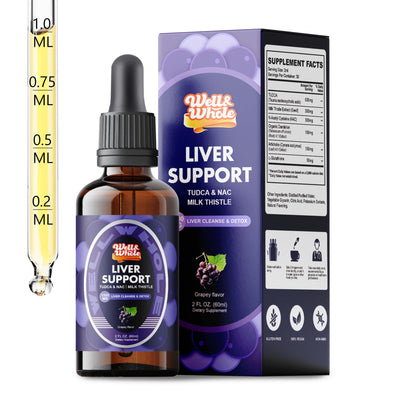
NAC is one of six key ingredients in well&whole's Liver Support Liquid Drops (P12, $19.99). Its inclusion is strategic—it fills the glutathione pathway gap that other ingredients don't address:
- **TUDCA** handles bile flow and ER stress
- **Milk thistle** provides direct antioxidant silymarin
- **Dandelion** stimulates bile production
- **Artichoke** supports cholesterol metabolism via bile
- **Glutathione** provides immediate antioxidant reserves
- **NAC** keeps glutathione production running
The combination of NAC (production engine) and glutathione (direct delivery) creates a two-pronged antioxidant approach that neither ingredient alone can match.
NAC Dosage and Timing
Typical Supplemental Doses
Oral NAC supplements commonly provide 600-1200mg per serving. well&whole's Liver Support Liquid Drops include NAC at an appropriate concentration within their multi-ingredient formula.
Timing Considerations
- **With food or without**: NAC can be taken on an empty stomach or with meals. Some users report better absorption on an empty stomach; others find food reduces mild stomach discomfort.
- **Morning or evening**: No specific timing requirement. Consistency matters more than timing.
- **Split dosing**: Some research suggests splitting NAC into two daily doses (morning and evening) may maintain steadier glutathione levels.
Why Liquid Delivery Matters for NAC
NAC in liquid form avoids the capsule dissolution delay. Liquid drops begin absorbing more quickly, which may be advantageous when rapid glutathione replenishment is desired—such as after a night of drinking or during periods of heightened oxidative stress.
NAC vs. Direct Glutathione Supplementation: Complementary, Not Competing
A common question: if glutathione is the end goal, why take NAC instead of (or alongside) glutathione directly?
| **Approach** | **Mechanism** | **Advantage** | **Limitation** |
|---|---|---|---|
| NAC alone | Builds glutathione through cysteine supply | Sustained production, cost-effective | Takes time to ramp up; limited by enzyme availability |
| Glutathione alone | Delivers glutathione directly | Immediate antioxidant capacity | Absorption debated; short-lived effect |
| NAC + Glutathione | Production + direct delivery | Layered defense: immediate reserve + sustained production | Requires both ingredients |
well&whole's formula includes *both*—acknowledging that the best antioxidant defense isn't one or the other, but both together.
Who Should Consider NAC for Liver Support?
NAC supplementation may be particularly relevant for:
- **Regular alcohol consumers**: Alcohol rapidly depletes glutathione; NAC helps restore it
- **People taking hepatotoxic medications**: Certain drugs stress the liver; NAC provides antioxidant backup
- **Those with elevated liver enzymes**: NAC's glutathione-boosting effect may support enzyme normalization
- **Individuals exposed to environmental toxins**: Pollution, chemicals, and heavy metals increase oxidative stress
- **Anyone over 40**: Age-related glutathione decline is well-documented; NAC helps counter it
- **People with fatty liver concerns**: Oxidative stress is a key driver of NAFLD progression; NAC addresses this pathway
FAQ
Q1: What does NAC stand for?
NAC stands for N-Acetyl Cysteine—a stabilized, orally bioavailable form of the amino acid cysteine, which is the rate-limiting precursor for glutathione synthesis.
Q2: How does NAC boost glutathione?
NAC provides cysteine—the amino acid your body needs most to make glutathione. Since cysteine availability limits glutathione production (it's the "rate-limiting precursor"), supplying more cysteine via NAC directly increases glutathione output.
Q3: Is NAC the same as glutathione?
No. NAC is a *precursor* to glutathione—it helps your body *produce* more glutathione. Glutathione is the end product, the antioxidant itself. Both are valuable, and they work best together.
Q4: How long does it take for NAC to increase glutathione levels?
Research suggests measurable increases in glutathione levels within hours of NAC administration. However, sustained elevations typically require consistent daily supplementation over weeks.
Q5: Can I take NAC on an empty stomach?
Yes. NAC absorbs well without food, though some users experience mild stomach discomfort. Taking it with food can reduce this if it occurs.
Q6: Why is NAC used in hospitals for Tylenol overdose?
Acetaminophen overdose rapidly depletes liver glutathione, allowing a toxic metabolite (NAPQI) to kill liver cells. NAC—given intravenously—replenishes glutathione fast enough to conjugate and eliminate the toxin. This demonstrates NAC's glutathione-boosting power in the most dramatic context possible.
Q7: Does NAC have anti-inflammatory properties?
Yes. Research shows NAC can modulate inflammatory signaling pathways, particularly NF-κB activation. This anti-inflammatory effect complements its antioxidant role in liver support.
Q8: Is NAC safe for long-term daily use?
NAC is widely used in long-term supplementation at standard doses. Follow label directions and consult your healthcare provider, especially if you take medications or have medical conditions.
Q9: Can NAC help with fatty liver?
Emerging research suggests NAC may support liver health in NAFLD by addressing oxidative stress—a key driver of fatty liver progression. Cai et al. (2022) in *Frontiers in Pharmacology* reported hepatoprotective effects of NAC in NAFLD models. However, NAC should be part of a broader approach including diet and lifestyle changes.
Q10: Why is NAC included in well&whole's Liver Support Drops alongside glutathione?
NAC provides the *production engine* for glutathione, while direct glutathione provides *immediate reserves*. Under heavy oxidative load, production alone can't keep pace. Having both ensures your liver has both a replenishment mechanism and an immediate antioxidant supply.
Conclusion
NAC is one of the most evidence-backed liver support compounds available—from emergency medicine to everyday supplementation. Its primary mechanism—boosting glutathione production—addresses a pathway that no single other ingredient covers: the rate-limiting step in your liver's antioxidant defense system.
In well&whole's **Liver Support Liquid Drops**, NAC works alongside TUDCA, milk thistle, dandelion, artichoke, and glutathione to create a six-ingredient formula that covers bile flow, antioxidant defense, toxin conjugation, and cellular protection. NAC fills the glutathione production gap—ensuring your liver can keep making its most critical antioxidant, not just coast on what's already there.
Explore Liver Support Liquid Drops
Related supplements
Where to begin? Our Liver Support Liquid Drops Supplement | TUDCA Drops Liver Cleanse & Detox with Milk Thistle, NAC, Dandelion, Artichoke & Glutathione for Detox and TUDCA 1000mg Gummies with Milk Thistle 500mg for Adults are a sensible place to start, and the Liver Support collection lays out the other formats side by side with Milk Thistle.
These statements have not been evaluated by the Food and Drug Administration. This product is not intended to diagnose, treat, cure, or prevent any disease.