Multi-Organ Synergy: Why Liver + Kidney + Heart Outperforms Single-Organ Supplements
Scientific analysis of why multi-organ supplements combining liver, kidney, and heart provide superior nutritional coverage compared to single-organ formulations, examining complementary nutrient profiles, enzymatic synergy, and clinical rationale.

The organ supplement market has evolved from single-organ formulations (typically liver-only) toward multi-organ complexes that combine liver, kidney, and heart in a single product. This evolution is not merely a marketing differentiator — it reflects a fundamental principle of nutritional biochemistry: nutrient synergy.
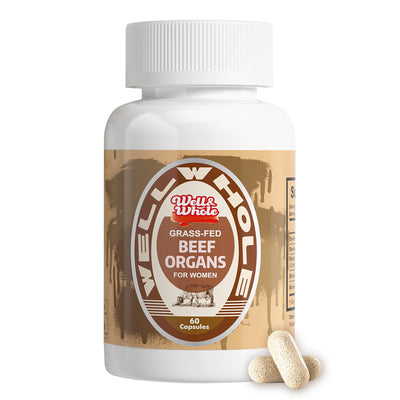
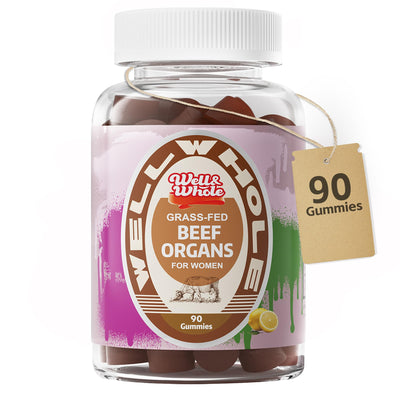
well&whole's Grassfed Beef Organ Capsules and Grass-Fed Beef Organ Gummies for Women ($17.99) embody this multi-organ approach. This article examines the scientific basis for multi-organ supplementation, analyzing the complementary nutrient profiles of liver, kidney, and heart and the additive or synergistic effects that single-organ formulations cannot achieve alone.

Evolutionary Context: Why Ancestral Diets Included Multiple Organs
The Nose-to-Tail Principle
Traditional and ancestral dietary patterns across cultures universally included consumption of multiple organ meats — not just liver, but kidney, heart, brain, sweetbreads, and tripe. This "nose-to-tail" approach was not driven by preference but by nutritional necessity: each organ contributed a distinct nutrient profile that, combined, provided complete nutritional coverage.
A 2019 anthropological review in the Annual Review of Anthropology documented organ consumption patterns across 87 traditional societies. In no society was liver consumed to the exclusion of other organs. The median traditional diet included 3-4 organ types consumed regularly. This pattern suggests that multi-organ consumption is a nutritionally optimized human dietary behavior shaped by evolutionary pressures.
The Specialization Principle
Organs are specialized tissues with specialized metabolic functions, and their nutrient composition reflects this specialization:
| Organ | Primary Metabolic Role | Nutrient Signature |
| Liver | Metabolism, detoxification, storage | Vitamins A, B12, folate, iron, copper |
| Kidney | Filtration, hormone metabolism, enzyme production | Selenium, DAO enzyme, B12, zinc |
| Heart | Continuous mechanical work, high mitochondrial density | CoQ10, taurine, carnitine, B12 |
| Pancreas | Enzyme production, hormone secretion | Digestive enzymes, zinc |
| Spleen | Immune function, red blood cell recycling | Iron, immune peptides |
No single organ covers all nutritional bases. A liver supplement provides vitamins A, B12, and iron but lacks significant CoQ10 (concentrated in heart) and DAO enzyme (concentrated in kidney). Conversely, a heart supplement provides CoQ10 but is poor in vitamin A and copper. The multi-organ approach captures the nutritional specialization of each tissue.
Complementary Nutrient Analysis
Vitamin and Mineral Complementarity
A 2020 comparative analysis in Foods quantified the micronutrient content of grass-fed beef liver, kidney, and heart:
| Nutrient | Liver | Kidney | Heart | Combined (Equal Parts) | Single-Organ Limitation |
| Vitamin A (IU/100g) | 16,898 | 1,397 | 0 | 6,098 | Heart has none |
| Vitamin B12 (μg/100g) | 83.1 | 27.3 | 8.5 | 39.6 | Heart is low |
| Folate (μg/100g) | 290 | 98 | 3 | 130 | Heart has negligible folate |
| Iron (mg/100g) | 6.2 | 4.8 | 4.3 | 5.1 | All contribute |
| Copper (mg/100g) | 14.3 | 0.4 | 0.6 | 5.1 | Liver dominates; heart/kidney low |
| Selenium (μg/100g) | 39.7 | 141.0 | 21.8 | 67.5 | Kidney dominates; heart is low |
| CoQ10 (mg/100g) | 4.6 | 3.8 | 11.3 | 6.6 | Heart dominates; liver/kidney low |
| Zinc (mg/100g) | 4.0 | 2.1 | 1.7 | 2.6 | Liver is richest |
Source: USDA FoodData Central (2023); Williams P. Nutrients (2020)
The combined profile addresses deficiencies in individual organs: heart provides CoQ10 that liver and kidney lack, kidney provides selenium that heart lacks, and liver provides vitamin A and copper that heart lacks. A liver-only supplement would provide less than half the selenium and one-third the CoQ10 of the multi-organ combination.
Enzymatic and Bioactive Compound Complementarity
Beyond vitamins and minerals, each organ contributes distinct bioactive compounds:
| Bioactive Compound | Primary Organ Source | Function |
| DAO Enzyme (Diamine Oxidase) | Kidney | Degrades dietary histamine |
| Cytochrome c Oxidase | Heart | Mitochondrial Complex IV component |
| Catalase | Liver | Hydrogen peroxide degradation |
| Superoxide Dismutase (Cu/Zn) | Liver, kidney | Antioxidant enzyme |
| Glutathione Peroxidase | Kidney, liver | Selenium-dependent antioxidant |
| Carnitine | Heart, skeletal muscle | Fatty acid transport into mitochondria |
| Taurine | Heart | Cardiac contractility, bile acid conjugation |
| Choline | Liver | Methylation, lipid metabolism, neurotransmitter synthesis |
This bioactive diversity means multi-organ supplements support a broader range of physiological functions than any single organ alone.
Clinical Rationale: Three Clinical Scenarios
Scenario 1: Energy and Mitochondrial Support
Relevant nutrients: CoQ10 (heart), B12 (all organs, highest in liver), iron (all organs, highest in liver), carnitine (heart), copper (liver)
A single-organ liver supplement provides B12, iron, and copper — essential for red blood cell production and oxygen transport. But it does not provide meaningful CoQ10 or carnitine for mitochondrial ATP production. The heart component in a multi-organ supplement fills this gap, supporting cellular energy production at both the oxygen-delivery (liver nutrients) and oxygen-utilization (heart nutrients) stages.
Scenario 2: Histamine Metabolism Support
Relevant nutrients: DAO enzyme (kidney), copper (liver), selenium (kidney), B6 (all organs)
DAO enzyme activity is the direct mechanism for dietary histamine degradation, and kidney is the primary dietary source. However, DAO is a copper-dependent enzyme, and copper is primarily supplied by liver. Selenium from kidney supports glutathione peroxidase, which protects DAO from oxidative inactivation.
A kidney-only supplement provides DAO but may not provide optimal copper for DAO function. A liver-only supplement provides copper but no DAO enzyme. The combination delivers both the enzyme and its essential cofactor.
Scenario 3: Women's Reproductive Health
Relevant nutrients: Iron (liver >> kidney > heart), folate (liver >> kidney >> heart), B12 (all organs), CoQ10 (heart), copper (liver), selenium (kidney)
Women of reproductive age have higher iron requirements (18 mg/day vs. 8 mg for men) and folate is critical for neural tube development in early pregnancy. Liver provides heme iron and folate at concentrations far exceeding kidney or heart. Heart provides CoQ10, relevant for oocyte quality and mitochondrial function. Kidney provides selenium, essential for thyroid function and antioxidant protection during pregnancy.
This multi-organ complementarity is reflected in well&whole's Grass-Fed Beef Organ Gummies for Women, formulated specifically with this nutritional profile in mind.

Nutrient Ratio Optimization
The Vitamin A-Copper-Iron Balance
Liver is exceptionally rich in vitamin A, copper, and iron. While beneficial, excessive intake of vitamin A from liver supplements is a valid concern. The multi-organ approach provides natural dilution:
Vitamin A comparison (per serving):
· Liver-only supplement (3g liver equivalent): ~507 μg RAE (17% UL)
· Multi-organ supplement (1g each liver, kidney, heart): ~169 μg RAE (6% UL)
The multi-organ ratio provides meaningful vitamin A without approaching concerning levels, allowing consistent daily use without requiring cycling or breaks.
The Selenium Balance
The selenium content of liver (39.7 μg/100g) is nutritionally significant but modest compared to kidney (141 μg/100g). A multi-organ supplement that includes kidney dramatically increases selenium provision compared to a liver-only product:
· Liver-only: ~1.2 μg selenium per supplement equivalent dose
· Liver + kidney: ~5.4 μg selenium per supplement equivalent dose (4.5x higher)
Comparative Summary: Single-Organ vs. Multi-Organ
| Parameter | Liver Only | Kidney Only | Heart Only | Multi-Organ (Liver+Kidney+Heart) |
| Nutrients covered comprehensively | 12/18 | 8/18 | 5/18 | 18/18 |
| Vitamin A | ★★★★★ | ★ | ☆ | ★★★ |
| Vitamin B12 | ★★★★★ | ★★★ | ★★ | ★★★★★ |
| Iron (heme) | ★★★★★ | ★★★ | ★★★ | ★★★★★ |
| CoQ10 | ★ | ★ | ★★★★★ | ★★★ |
| DAO Enzyme | ☆ | ★★★★★ | ☆ | ★★★ |
| Selenium | ★★ | ★★★★★ | ★ | ★★★ |
| Copper | ★★★★★ | ★ | ★ | ★★★ |
| Folate | ★★★★★ | ★★ | ☆ | ★★★ |
| Carnitine | ★ | ★★ | ★★★★★ | ★★★ |
| Cost per serving | Varies | Varies | Varies | $17.99 (well&whole) |
| Pill count | Varies | Varies | Varies | 6 capsules (total) |
Frequently Asked Questions
Q1: Is multi-organ better than liver alone for energy?
Yes. Liver provides B12, iron, and copper for red blood cell production and oxygen transport. Heart adds CoQ10 and carnitine for mitochondrial ATP production. Together, they support energy production from oxygen delivery through ATP synthesis — more complete than liver alone.
Q2: Can I just take a liver supplement and a separate CoQ10 supplement?
You can, and this approach works. However, the heart tissue provides CoQ10 in its natural phospholipid matrix with complementary compounds (carnitine, taurine) that isolated CoQ10 supplements lack. The whole-food matrix may offer advantages in absorption and cofactor delivery.
Q3: Are multi-organ supplements more expensive than single-organ?
well&whole's multi-organ capsules are $17.99 for a full month supply, which is often less expensive than purchasing separate liver, kidney, and heart supplements individually.
Q4: Do I need all three organs if I only eat a balanced diet?
Multi-organ supplements address gaps that may exist even in balanced diets, particularly CoQ10 (heart-specific) and DAO enzyme (kidney-specific). Most modern diets contain negligible organ meat, making multi-organ supplementation a practical way to obtain these nutrients.
Q5: Is there any downside to multi-organ vs. single organ?
The primary consideration is dosing specificity. If you need high-dose liver nutrients specifically (e.g., significant iron deficiency), a liver-only supplement at higher doses may be more appropriate. Multi-organ provides broader but more moderate nutrient delivery.
Q6: How do organ capsules compare to organ gummies for multi-organ nutrition?
Capsules typically allow for higher total organ content per serving. well&whole's organ capsules (P09) pack liver, kidney, and heart into 6 capsules. Gummies (P08, P22) may focus on specific organs (liver gummies) or specific demographics (women's blend with liver, kidney, heart).
Q7: Is the nutrient content additive (1+1=2) or synergistic (1+1>2)?
Both. Some nutrients are simply additive (total selenium = liver + kidney + heart). Others are synergistic: liver copper and kidney DAO work together, as DAO requires copper as a cofactor. The whole is greater than the sum of its parts for certain nutrient interactions.
Q8: Can I take multi-organ supplements long-term?
Yes. The nutrient profile at recommended doses is well within safety parameters for long-term use. The natural nutrient dilution effect of combining multiple organs makes multi-organ supplements particularly suitable for daily, ongoing use compared to high-dose single-organ products that may require cycling.
Conclusion
The case for multi-organ supplementation rests on a simple but powerful principle: organs are nutritionally specialized, and no single organ provides complete coverage of the essential nutrients and bioactive compounds found across the organ spectrum. Liver provides vitamins, iron, and copper. Kidney provides selenium and the DAO enzyme. Heart provides CoQ10 and carnitine. Combined, they offer nutritional completeness that any single organ alone cannot match.
well&whole's Grassfed Beef Organ Capsules and Grass-Fed Beef Organ Gummies for Women embody this multi-organ principle at an accessible price point of $17.99. For consumers seeking comprehensive organ nutrition in a single product, the multi-organ approach represents the most nutritionally complete strategy backed by both evolutionary precedent and modern nutrient profiling.
Related supplements
If you'd like to try it, Liver Support Liquid Drops Supplement | TUDCA Drops Liver Cleanse & Detox with Milk Thistle, NAC, Dandelion, Artichoke & Glutathione for Detox and TUDCA 1000mg Gummies with Milk Thistle 500mg for Adults are the closest match to what we've covered here. Browse Liver Support and Milk Thistle to see how the alternatives compare.
These statements have not been evaluated by the Food and Drug Administration. This product is not intended to diagnose, treat, cure, or prevent any disease.