Mucuna Pruriens for Mood and Motivation: What Research Shows
Can Mucuna pruriens support mood and motivation? Explore what scientific research reveals about L-Dopa, dopamine, and emotional well-being.

Motivation isn't just a personality trait—it's a neurochemical event. When you feel driven to pursue a goal, excited about a reward, or satisfied by an accomplishment, dopamine is the molecule making it happen. And when motivation fades—when everything feels like too much effort, when pleasure dims, when the future feels flat—low dopamine may be part of the picture.
Mucuna pruriens, with its naturally high L-Dopa content, has emerged as one of the most intriguing natural supplements for supporting the dopamine system. But what does the research actually show? Can a plant traditionally used in Ayurvedic medicine truly support mood and motivation in modern life?
This article examines the scientific evidence behind Mucuna pruriens for mood and motivation, separating what research supports from what remains theoretical.
The Dopamine-Mood-Motivation Connection
Dopamine's Role in Mood
While serotonin is often called the "happiness molecule," dopamine may be equally important for emotional well-being. Research published in *Nature Neuroscience* has identified several ways dopamine influences mood:
1. **Reward processing**: Dopamine signals when something good happens, creating feelings of pleasure and satisfaction. Without adequate dopamine, rewarding experiences feel less rewarding.
2. **Anticipation**: Dopamine fires not just when we receive a reward, but when we anticipate one. This anticipatory dopamine is what makes us feel excited about future events and motivated to pursue goals.
3. **Anhedonia**: The inability to feel pleasure—a core symptom of depression—is strongly linked to dopamine dysfunction. A study in *JAMA Psychiatry* found that people with depression showed reduced dopamine response to rewards.
4. **Social bonding**: Dopamine plays a role in social reward processing, influencing how connected and engaged we feel with others.
Dopamine's Role in Motivation
Motivation is perhaps dopamine's most famous function. The mesolimbic dopamine pathway—connecting the ventral tegmental area to the nucleus accumbens—is the brain's primary motivation circuit.
Research in *Behavioral Neuroscience* demonstrated that dopamine levels in the nucleus accumbens directly predicted how much effort animals were willing to exert for rewards. When dopamine was high, animals worked harder; when dopamine was low, they gave up more easily.
A landmark study in *Science* found that dopamine doesn't just signal pleasure—it signals the "wanting" that drives us to seek rewards. This "wanting" system is what we experience as motivation.
How Mucuna Pruriens Supports Dopamine
The L-Dopa Pathway
Mucuna pruriens contains 3–7% L-Dopa by weight. L-Dopa is the direct precursor to dopamine—the molecule that the brain converts into dopamine through the action of the AAAD enzyme.
By providing exogenous L-Dopa, Mucuna pruriens gives the brain additional raw material for dopamine production. This is particularly relevant because:
- The first step in natural dopamine synthesis (tyrosine → L-Dopa) is rate-limiting
- Stress, aging, and poor nutrition can all impair this step
- L-Dopa from Mucuna bypasses this bottleneck
Why This Matters for Mood and Motivation
If low dopamine contributes to low mood and reduced motivation, then supporting dopamine production through L-Dopa supplementation may, in theory, help address these concerns. The key question: does research support this theory?
What Research Shows
Animal Studies on Mood
Several animal studies have investigated Mucuna pruriens' effects on mood-related behaviors:
A study published in the *Journal of Evidence-Based Complementary & Alternative Medicine* examined the effects of Mucuna pruriens seed extract in animal models. The researchers found that supplementation was associated with changes in brain neurotransmitter levels, including dopamine, and suggested potential mood-supporting properties.
Another study in *Phytotherapy Research* found that Mucuna pruriens extract supported antioxidant defenses in the brain, which may protect dopamine-producing neurons from oxidative stress—a factor in age-related dopamine decline.
Human Research
Human research on Mucuna pruriens is more limited but suggestive:
1. **A study in the *Journal of Neurology*** compared Mucuna pruriens preparation to standard L-Dopa in Parkinson's patients. The Mucuna group showed comparable benefits in motor function, suggesting that the L-Dopa in Mucuna is bioavailable and effective in humans.
2. **Research in *Fertility and Sterility*** found that Mucuna pruriens supplementation supported healthy reproductive hormone levels and improved mood parameters in male subjects, potentially through dopamine's influence on hormone regulation.
3. **A study in *Ayurveda*** noted that subjects taking Mucuna pruriens reported improvements in subjective well-being and energy levels, though this was a small, observational study.
Dopamine and Stress Research
Research on dopamine and stress is particularly relevant to mood and motivation:
- A study in *Psychoneuroendocrinology* showed that chronic stress reduced dopamine signaling in the prefrontal cortex, leading to motivational deficits.
- Research in *Biological Psychiatry* found that stress-induced dopamine changes were associated with anhedonia-like behavior.
- These findings suggest that supporting dopamine during stressful periods may help maintain motivation and mood.
The Inverted U: More Isn't Always Better
An important nuance: the relationship between dopamine and cognitive performance follows an "inverted U" curve. Too little dopamine impairs function, but so does too much. Research in *Nature Neuroscience* demonstrated that optimal cognitive performance occurs at moderate dopamine levels—both deficiency and excess are detrimental.
This means that Mucuna pruriens supplementation is about supporting optimal dopamine levels—not maximizing them. Standard doses (like the 500mg provided by well&whole products) are designed to support healthy dopamine production without overwhelming the system.
Practical Applications: Supporting Mood and Motivation
Who Might Benefit from Mucuna Pruriens?
Based on the research, Mucuna pruriens may be worth considering for:
1. **People experiencing stress-related motivational decline**: Chronic stress depletes dopamine. Mucuna may help support dopamine levels during demanding periods.
2. **Adults over 40**: Natural dopamine production declines with age. Research in *Neurobiology of Aging* found that dopamine receptor density decreases by approximately 5–10% per decade after age 30.
3. **People with demanding cognitive work**: Students, professionals, and creatives who need sustained focus and motivation may benefit from dopamine support.
4. **Athletes and fitness enthusiasts**: Dopamine plays a role in exercise motivation, motor control, and the rewarding feeling of accomplishment after exercise.
5. **People experiencing "brain fog"**: While brain fog has many causes, dopamine support may help improve mental clarity and drive.
Who Should Be Cautious?
- **People with mood disorders**: If you have diagnosed depression, anxiety, or bipolar disorder, consult your mental health provider before taking any dopamine-supporting supplement.
- **People taking psychiatric medications**: Mucuna may interact with antidepressants, antipsychotics, and other psychiatric medications.
- **Pregnant or breastfeeding women**: Safety has not been established.
- **People with schizophrenia or psychotic disorders**: Dopamine dysregulation is involved in these conditions.
Building a Mood and Motivation Strategy
Mucuna pruriens is most effective as part of a comprehensive approach to mood and motivation. Here's how to build a strategy:
Step 1: Foundational Lifestyle
1. **Regular exercise**: Aerobic exercise increases dopamine release and receptor density. A study in *Brain Research* found that exercise increased dopamine receptor availability in the striatum.
2. **Quality sleep**: Poor sleep reduces dopamine receptor sensitivity. Aim for 7–9 hours per night.
3. **Nutrition**: Ensure adequate intake of dopamine co-factors:
- Tyrosine (from protein-rich foods)
- Vitamin B6 (from poultry, fish, potatoes, bananas)
- Vitamin C (from citrus, berries, peppers)
- Iron (from red meat, spinach, lentils)
4. **Stress management**: Meditation, deep breathing, and nature exposure all support healthy dopamine function.
Step 2: Targeted Supplementation
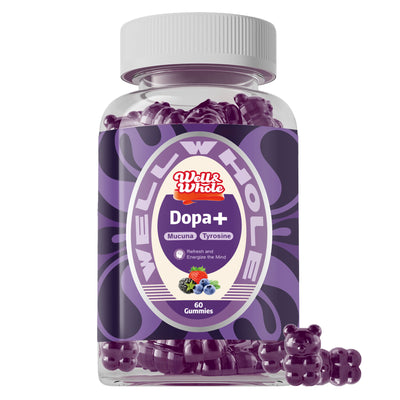
Add well&whole Dopamine Gummies or Mucuna Pruriens Liquid Drops to provide 500mg of Mucuna pruriens extract daily.


- Take in the morning or early afternoon
- Avoid evening use (may interfere with sleep)
- Consider cycling (5 days on, 2 days off)
Step 3: Environmental Optimization
1. **Limit overstimulation**: Excessive social media, video games, and sugar can dysregulate dopamine. Practice "dopamine fasting" periodically.
2. **Set meaningful goals**: Dopamine responds to anticipated rewards. Setting and pursuing meaningful goals keeps the dopamine system engaged.
3. **Celebrate small wins**: Acknowledging progress—even small steps—triggers dopamine release and reinforces motivation.
4. **Social connection**: Positive social interactions stimulate dopamine. Prioritize relationships and community.
What to Expect from Mucuna Pruriens
Timeline
- **Day 1–3**: Some users report feeling more alert and motivated within the first few doses. This may reflect L-Dopa's relatively quick conversion to dopamine.
- **Week 1–2**: Many users notice improved motivation, focus, and mood stability with consistent daily use.
- **Week 3–4**: Cumulative benefits may become more apparent, with sustained motivation and better stress resilience.
- **Long-term**: Consistent use (with cycling) may support overall dopamine system health.
Realistic Expectations
Mucuna pruriens is not a "magic pill" for motivation. It provides the raw material for dopamine production, but it works best when combined with the lifestyle and environmental factors described above. Think of it as one tool in a comprehensive toolkit—not a standalone solution.
FAQ
Q: Can Mucuna pruriens treat depression?
A: No. Mucuna pruriens is not a treatment for depression or any other mental health condition. If you experience persistent low mood, loss of interest in activities, or other depressive symptoms, consult a mental health professional.
Q: How does Mucuna compare to prescription dopamine medications?
A: Mucuna pruriens provides natural L-Dopa at supplement doses, which are much lower than pharmaceutical doses. It is not a substitute for prescribed medications and should not be used to replace them.
Q: Can I take Mucuna pruriens with antidepressants?
A: Mucuna may interact with certain antidepressants, particularly MAO inhibitors. Always consult your healthcare provider before combining supplements with psychiatric medications.
Q: Will Mucuna make me feel "high"?
A: No. Mucuna pruriens supports natural dopamine production at moderate levels. It does not produce euphoria or a "high."
Q: Can I become dependent on Mucuna pruriens for motivation?
A: Long-term use of exogenous L-Dopa may lead to downregulation of natural dopamine production. This is why cycling (taking regular breaks) is recommended. With cycling, most people maintain healthy natural dopamine function.
Q: Does Mucuna work for exercise motivation?
A: Some athletes and fitness enthusiasts report improved motivation and drive when taking Mucuna before workouts. Dopamine plays a role in exercise motivation and motor control.
Q: What's the best time to take Mucuna for mood support?
A: Morning or early afternoon is typically best. Taking Mucuna too late in the day may interfere with sleep, as dopamine supports alertness.
Q: Can women take Mucuna pruriens for mood and motivation?
A: Yes. The dopamine-supporting benefits of Mucuna are relevant for both men and women. However, pregnant and breastfeeding women should avoid it.
Conclusion
The connection between dopamine, mood, and motivation is one of the most well-established findings in neuroscience. Dopamine is the neurochemical that makes us want, pursue, and enjoy. When it's optimal, we feel driven and alive. When it's low, we feel flat and unmotivated.
Mucuna pruriens offers a natural way to support dopamine production by providing L-Dopa—the direct precursor that the brain converts to dopamine. While research is still evolving, the existing evidence—combined with centuries of traditional use—suggests that Mucuna may be a valuable tool for supporting mood and motivation in healthy adults.
well&whole Dopamine Gummies and Mucuna Pruriens Liquid Drops both provide 500mg of Mucuna pruriens extract, giving you a choice of format for your daily routine.
Remember: Mucuna pruriens works best as part of a comprehensive approach that includes exercise, quality sleep, stress management, and meaningful goal pursuit. Supplements provide support; lifestyle provides the foundation. Together, they create the conditions for optimal motivation, mood, and cognitive performance.
Related supplements
Where to begin? Our Dopamine Gummies – Mucuna Pruriens Supplements Gummies 500mg with Mood Support and Mucuna Pruriens Liquid, Mucuna Pruriens Supplements 500MG, Fuel for Focus & Attention are a sensible place to start, and the Mood Support collection lays out the other formats side by side with Brain Health.
These statements have not been evaluated by the Food and Drug Administration. This product is not intended to diagnose, treat, cure, or prevent any disease.