More Is Not Better: Why Megadosing Supplements Backfires

Taking supplements at several times the recommended dose does not multiply the benefits — it multiplies the risks. Fat-soluble vitamins A, D, E, and K accumulate in body tissue; minerals compete with each other for absorption; and many nutrients flip from helpful to harmful once intake crosses the tolerable upper limit. The "more must be better" instinct feels intuitive, but nutrition does not work that way.
Key takeaways
- Benefits curves flatten long before risk curves rise — the dose that helps is rarely the dose that megadoses.
- Vitamins A, D, E, and K are stored in fat and liver, so excess builds up rather than washing out.
- Water-soluble does not mean risk-free: high-dose vitamin B6 causes nerve damage, and niacin damages the liver.
- Minerals compete: extra zinc depletes copper, calcium blocks iron, and the list goes on.
- Tolerable Upper Intake Levels (ULs) exist for a reason — and total intake across all your products is what counts.
Why the tolerable upper limit exists
Every nutrient recommendation has two numbers that matter: the amount that meets your needs (the RDA) and the ceiling beyond which harm becomes likely (the UL, set by the National Academies from human and animal evidence). The gap between those numbers is your safe operating range — and for several nutrients, megadose products sit far outside it. Vitamin A's UL is 3,000 mcg; chronic intake above it produces liver injury, bone thinning, and in pregnancy, serious fetal risk. Vitamin D's UL is 100 mcg (4,000 IU), yet "vitamin D challenge" regimens circulating online run 10 times that for months, and documented toxicity cases — dangerous calcium levels, kidney injury — have followed.
The flattening benefit curve explains why this instinct fails. For almost every nutrient, the first dose that corrects a deficiency delivers most of the available benefit; each additional dose delivers less, until the curve flattens to zero. The risk curve does the opposite — it stays flat until it rises, and when it rises it rises steeply. Megadosing means walking out along the flat part of the benefit curve onto the rising part of the risk one.
Fat-soluble storage changes everything
Water-soluble vitamins — the B complex and vitamin C — have a partial safety margin because the kidneys excrete what the body does not use. That margin is smaller than the supplement aisle suggests, but it exists. Fat-soluble vitamins work differently: they dissolve into body fat and the liver, where they can accumulate for months. Vitamin A toxicity can develop slowly over months of high intake and take equally long to resolve. Vitamin E at high doses measurably increases bleeding risk — a meta-analysis of long-term trials found a small but real rise in hemorrhagic stroke. Vitamin K at extreme doses interferes with anticoagulant medication precisely because it accumulates.
And the water-soluble exemption has famous exceptions. Vitamin B6 — a perfectly ordinary B vitamin — causes sensory nerve damage at chronic intakes above roughly 50–100 mg per day in susceptible people, with case reports of numbness and difficulty walking from high-dose B-complex products. Niacin, once prescribed at megadose for cholesterol, fell out of favor partly for liver damage and flushing. "It just comes out in your urine" is true only up to a dose that matters.
Mineral traffic jams
Minerals absorb through shared, saturable transport pathways, which makes megadosing one mineral a quiet way to create a deficiency in another. The best-documented case is zinc and copper: long-term zinc supplementation above about 40 mg per day induces copper deficiency, and neurology journals carry case reports of myeloneuropathy — spinal cord and nerve damage — from precisely this mechanism, sometimes traced back to zinc lozenges or denture adhesive used for years. Calcium competes with iron at the intestinal transporter; a calcium supplement taken with an iron-rich meal or tablet measurably reduces iron absorbed. High-dose iron works in reverse against zinc. The more minerals you megadose simultaneously, the more entangled the competition becomes.
How megadoses hide in plain sight
Nobody sets out to megadose. It happens by stacking: a multivitamin with 100% DV, an "immune blend" with another 1,000 mg of vitamin C, a B-complex, an energy drink with its own B6 and niacin, and a protein bar fortified for good measure. Each product looks reasonable; the total quietly crosses upper limits. Marketing amplifies the pull — a label boasting 5,000% DV reads as potency, when it actually signals a formulation that treats your kidneys and liver as an afterthought. Reading labels for the UL, not the headline percentage, is the correction. Check the total across everything you take in a day, not the individual bottles.
When higher doses are legitimate
None of this makes higher dosing forbidden — it makes it a medical tool rather than a consumer default. Vitamin D repletion under a doctor's direction runs above the UL for defined periods. Iron correction uses pharmacologic doses matched to bloodwork. Niacin, B12 injections, and megadose vitamin C in specific clinical contexts all have their places — under monitoring, with a diagnosis, and with follow-up labs. The difference between medicine and megadosing is not the number on the capsule; it is whether anyone is measuring.
The bottom line
More is not better; more is more — more stored in your liver and fat, more competition at your mineral transporters, more distance past the upper limits set from actual harm data. Meet your needs with sensible doses, verify real deficiencies with bloodwork before escalating anything, and audit your total intake across every product you use. The supplements that improve health outcomes in studies are the ones taken at reasonable doses, by people who need them.
Frequently asked questions
What happens if I take too much of a water-soluble vitamin?
Most excess is excreted, but the exceptions matter: chronic high-dose B6 can cause nerve damage, niacin can injure the liver, and very high vitamin C intakes cause digestive upset and raise kidney stone risk in susceptible people.
How do I know if I'm accidentally megadosing?
Add up the milligrams across every product you take daily — multivitamin, singles, fortified foods, and drinks. Compare the totals against the UL values published by the National Institutes of Health. Most stackers are surprised by at least one nutrient.
Is a 5,000% DV label ever a good sign?
Almost never. Percentages that far exceed 100% signal marketing, not formulation. With rare clinical exceptions, no nutrient is useful at 50 times its requirement, and several are harmful there.
Can megadosing ever be safe?
Short-term, monitored, purpose-driven high dosing — like medically supervised vitamin D repletion or iron correction — is established medicine. The dangerous version is high dosing as a lifestyle: indefinite, unsupervised, and stacked across multiple products.
Related supplements
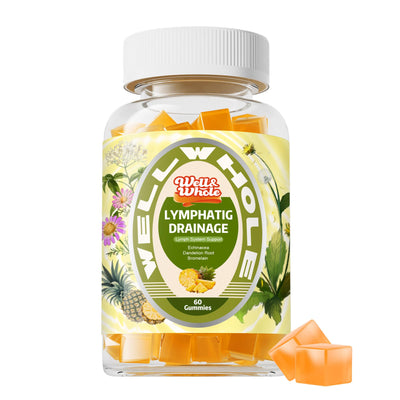
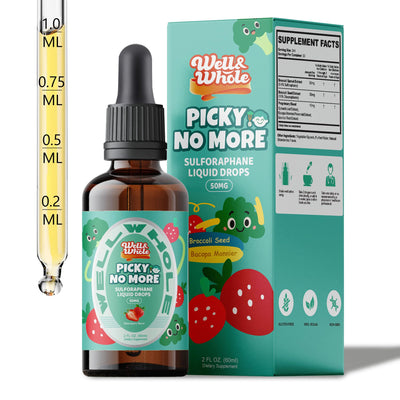
Putting it simply: if this is something you want to add to your routine, our Lymphatic Drainage Supplements Gummies with Echinacea Dandelion Burdock for Adults with Immune and Energy Support and Sulforaphane Broccoli Supplement Liquid Drops for Kids with Sulforaphane, Glucoraphanin, Bacopa Monnieri are a good place to start. The wider Immune Support collection is worth a look, and the Health Benefits range covers related formats.
These statements have not been evaluated by the Food and Drug Administration. This product is not intended to diagnose, treat, cure, or prevent any disease. Talk to a healthcare professional before starting any new supplement, especially if you are pregnant, nursing, taking medication, or managing a health condition.