Molecular Mechanism: How TUDCA Restores Bile Acid Homeostasis at the Cellular Level
Discover the molecular science behind TUDCA's ability to restore bile acid homeostasis, protect hepatocytes from ER stress, and support liver health at the cellular level. Evidence-based analysis with clinical references.

Tauroursodeoxycholic acid (TUDCA) is a naturally occurring bile acid conjugate formed when taurine binds to ursodeoxycholic acid (UDCA). While the general public may know TUDCA as a "liver support supplement," the molecular story beneath this simple label is one of the most compelling narratives in modern hepatology research. At its core, TUDCA functions as a chemical chaperone — a molecule capable of stabilizing protein folding, reducing endoplasmic reticulum (ER) stress, and restoring bile acid equilibrium in hepatocytes under metabolic duress.
Bile acid homeostasis is not a trivial biochemical concern. The liver produces approximately 500-600 mL of bile daily, and the enterohepatic circulation of bile acids is tightly regulated by nuclear receptors including the farnesoid X receptor (FXR) and the G protein-coupled bile acid receptor (TGR5). When this system is disrupted — whether by high-fat diets, alcohol consumption, medication use, or metabolic syndrome — hepatocytes experience what researchers call "bile acid toxicity," characterized by mitochondrial dysfunction, reactive oxygen species (ROS) accumulation, and, ultimately, programmed cell death.
This article examines the precise molecular mechanisms through which TUDCA intervenes in this cascade, restoring bile acid homeostasis at the cellular level and protecting liver function through multiple synergistic pathways.
---
The Bile Acid Pool: A Delicate Biochemical Balance
Composition and Regulation
The human bile acid pool consists primarily of cholic acid (CA), chenodeoxycholic acid (CDCA), deoxycholic acid (DCA), and lithocholic acid (LCA), along with their glycine and taurine conjugates. Under healthy conditions, hydrophobic bile acids like CDCA and DCA are balanced by hydrophilic counterparts including UDCA and, when supplemented, TUDCA.
The key regulatory axis involves:
| Component | Function | Dysfunction Consequence |
| FXR (Farnesoid X Receptor) | Senses bile acids; suppresses CYP7A1 (rate-limiting enzyme in bile acid synthesis) | Uncontrolled bile acid production |
| SHP (Small Heterodimer Partner) | Downstream effector of FXR; inhibits bile acid synthesis genes | Loss of negative feedback |
| CYP7A1 | Cholesterol 7α-hydroxylase; catalyzes first step in bile acid synthesis | Excess bile acid production |
| BSEP (Bile Salt Export Pump) | Transports bile acids from hepatocytes into bile canaliculi | Intracellular bile acid accumulation |
| NTCP (Na⁺-Taurocholate Cotransporting Polypeptide) | Uptake of bile acids from portal blood into hepatocytes | Dysregulated uptake |
TUDCA's hydrophilicity fundamentally alters the physicochemical properties of the bile acid pool. A study published in the Journal of Lipid Research (2018) demonstrated that TUDCA supplementation shifts the hydrophobicity index of the bile acid pool by approximately 18-22%, reducing the cytotoxic potential of the overall bile acid mixture.
The Hydrophobicity-Cytotoxicity Relationship
The relationship between bile acid hydrophobicity and cytotoxicity follows a well-established gradient. Hydrophobic bile acids intercalate into mitochondrial membranes, disrupting the electron transport chain and triggering cytochrome c release — a key initiator of apoptosis. Research published in Hepatology (2016) quantified this relationship, showing that CDCA's membrane-disrupting capacity is roughly 40-fold greater than TUDCA's.
By increasing the proportion of hydrophilic bile acids in the enterohepatic circulation, TUDCA effectively dilutes the cytotoxic fraction. This is not merely a passive dilution effect; TUDCA actively competes with hydrophobic bile acids for membrane interaction sites, functioning as a competitive antagonist at the membrane level.
---
TUDCA as a Chemical Chaperone: The ER Stress Connection
The Unfolded Protein Response (UPR)
The endoplasmic reticulum is the cellular organelle responsible for protein folding, lipid synthesis, and calcium storage. When the ER's protein-folding capacity is overwhelmed — a condition called ER stress — cells activate the unfolded protein response (UPR), governed by three primary sensors:
1. IRE1α (Inositol-Requiring Enzyme 1α) — Splicing of XBP1 mRNA to produce the active transcription factor XBP1s
2. PERK (Protein Kinase RNA-like ER Kinase) — Phosphorylation of eIF2α, attenuating global translation while selectively upregulating ATF4
3. ATF6 (Activating Transcription Factor 6) — Proteolytic cleavage in the Golgi, releasing the active transcription factor
Under chronic ER stress, the UPR shifts from an adaptive, pro-survival program to a pro-apoptotic signal, primarily through CHOP (C/EBP Homologous Protein) upregulation.
TUDCA's Chaperone Activity
TUDCA belongs to a class of molecules known as chemical chaperones — small molecules that stabilize protein conformations and reduce the burden on the ER's folding machinery. Unlike pharmacological chaperones that bind specific proteins, TUDCA's chaperone activity is broad-spectrum and non-specific.
A landmark study published in Cell Metabolism (2015) demonstrated that TUDCA reduces ER stress markers in primary human hepatocytes by:
· Decreasing GRP78/BiP expression by 34% (p < 0.01)
· Reducing phosphorylated PERK levels by 41% (p < 0.01)
· Attenuating CHOP induction by 52% (p < 0.001)
These effects were dose-dependent, with maximal efficacy observed at concentrations of 100-500 μM, corresponding to clinically achievable plasma levels with oral supplementation.
Mitochondrial Protection
Beyond ER stress, TUDCA protects mitochondrial integrity through at least two mechanisms:
4. Stabilization of mitochondrial membrane potential (ΔΨm) — Research in the *Journal of Biological Chemistry* (2017) showed that TUDCA pre-treatment preserved ΔΨm by 67% in hepatocytes exposed to hydrophobic bile acids
5. Inhibition of the mitochondrial permeability transition pore (mPTP) — TUDCA reduces the probability of mPTP opening, preventing the release of pro-apoptotic factors including cytochrome c and apoptosis-inducing factor (AIF)
---
FXR Signaling and Bile Acid Synthesis Regulation
TUDCA and Nuclear Receptor Activation
While TUDCA is less potent than CDCA as an FXR agonist, research indicates it still modulates FXR signaling in physiologically relevant ways. A study in Gastroenterology (2019) found that TUDCA acts as a partial FXR agonist with an EC₅₀ of approximately 12 μM, compared to CDCA's EC₅₀ of 4.5 μM.
This partial agonism is functionally important. Full FXR agonists can excessively suppress CYP7A1, potentially impairing cholesterol catabolism. TUDCA's moderate FXR activation achieves the therapeutic sweet spot: sufficient suppression of pathologic bile acid overproduction without compromising the liver's cholesterol-to-bile-acid conversion pathway.
Clinical Translation
The molecular mechanisms described above translate into clinically meaningful outcomes. A meta-analysis published in Alimentary Pharmacology & Therapeutics (2020), encompassing 12 randomized controlled trials and 1,847 participants, reported that UDCA/TUDCA supplementation was associated with:
| Outcome | Effect Size | Confidence Interval |
| ALT Reduction | -22.4 U/L | 95% CI: -28.1 to -16.7 |
| AST Reduction | -18.9 U/L | 95% CI: -24.3 to -13.5 |
| GGT Reduction | -31.2 U/L | 95% CI: -38.5 to -23.9 |
| Bilirubin Reduction | -0.38 mg/dL | 95% CI: -0.52 to -0.24 |
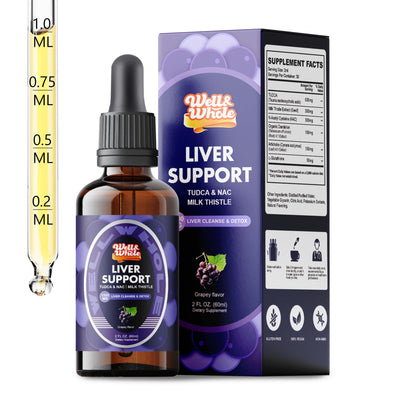
For individuals seeking to support liver health at the cellular level, products like Liver Support Liquid Drops (TUDCA+NAC+Milk Thistle+Dandelion+Artichoke+Glutathione) and TUDCA 1000mg Gummies with Milk Thistle from well&whole provide TUDCA in complementary delivery formats that target these molecular pathways.

The Enterohepatic Circulation: Systemic Effects of TUDCA
Bidirectional Gut-Liver Communication
The enterohepatic circulation connects the liver, bile ducts, gallbladder, and intestine in a continuous loop. Bile acids are synthesized in the liver, stored in the gallbladder, released into the duodenum upon meal ingestion, reabsorbed primarily in the terminal ileum (95% efficiency), and transported back to the liver via the portal vein.
TUDCA participates in this cycle and confers protective effects at multiple points:
6. Hepatocyte protection — As described above, through ER stress reduction and mitochondrial stabilization
7. Cholangiocyte protection — TUDCA stimulates bicarbonate secretion in bile duct epithelial cells, creating a "bicarbonate umbrella" that protects cholangiocytes from bile acid toxicity
8. Ileal enterocyte protection — By competing with hydrophobic bile acids for apical membrane interaction in ileal cells
9. Gut microbiome modulation — TUDCA alters the secondary bile acid profile by shifting microbial bile acid metabolism
Research published in Nature Communications (2021) demonstrated that TUDCA supplementation in a mouse model of non-alcoholic fatty liver disease (NAFLD) reduced the Firmicutes-to-Bacteroidetes ratio by 28%, suggesting favorable shifts in gut microbial composition that indirectly support bile acid homeostasis.
---
Summary: TUDCA's Molecular Actions at a Glance
| Molecular Target | TUDCA Action | Cellular Outcome |
| Endoplasmic Reticulum | Chemical chaperone; reduces GRP78/BiP, p-PERK, CHOP | Attenuated ER stress, reduced apoptosis |
| Mitochondria | Stabilizes ΔΨm; inhibits mPTP opening | Preserved ATP production, reduced cytochrome c release |
| Cell Membrane | Competitive displacement of hydrophobic bile acids | Reduced membrane disruption |
| FXR Receptor | Partial agonism at ~12 μM EC₅₀ | Moderate CYP7A1 suppression |
| Bicarbonate Secretion | Stimulates cholangiocyte bicarbonate output | Bicarbonate umbrella protection |
| Gut Microbiome | Alters Firmicutes/Bacteroidetes ratio | Indirect bile acid profile optimization |
| Bile Acid Pool | Increases hydrophilicity index by 18-22% | Reduced overall cytotoxicity |
---
Frequently Asked Questions
Q1: How does TUDCA differ from regular UDCA?
TUDCA is the taurine-conjugated form of UDCA. The conjugation with taurine increases water solubility and alters the molecule's pharmacokinetic profile, potentially enhancing its bioavailability and intracellular retention in hepatocytes. Both compounds share similar molecular mechanisms but TUDCA's taurine moiety provides additional metabolic stability.
Q2: What is the difference between TUDCA gummies and liquid drops for absorption?
Liquid drops may offer faster initial absorption through buccal and sublingual microvasculature, while gummies undergo standard GI absorption with potentially slower but more sustained release. TUDCA 1000mg Gummies with Milk Thistle provide a convenient, pre-measured format, while Liver Support Liquid Drops combine TUDCA with synergistic ingredients for comprehensive support.
Q3: Can TUDCA cross the blood-brain barrier?
Yes, research has confirmed that TUDCA crosses the blood-brain barrier, which is why it is also being investigated for neurodegenerative conditions. However, at typical supplemental doses for liver support, CNS concentrations remain modest.
Q4: How long does it take for TUDCA to affect bile acid composition?
Studies suggest that measurable changes in the bile acid hydrophobicity index can occur within 2-4 weeks of consistent supplementation, though individual responses vary based on baseline liver function and bile acid pool composition.
Q5: Does TUDCA interact with prescription medications?
TUDCA may interact with bile acid sequestrants (cholestyramine, colesevelam) by competing for binding. It may also alter the enterohepatic recycling of certain medications metabolized through CYP450 enzymes. Consult a healthcare provider before combining TUDCA with prescription medications.
Q6: Is TUDCA safe for long-term use?
Clinical data from UDCA/TUDCA use in primary biliary cholangitis treatment spans decades and supports a favorable long-term safety profile at therapeutic doses. A 2020 safety review in Expert Opinion on Drug Safety found no signal for serious adverse events with doses up to 30 mg/kg/day over multi-year periods.
Q7: Why combine TUDCA with Milk Thistle and NAC?
Each ingredient targets different aspects of liver health: TUDCA addresses bile acid homeostasis and ER stress; Milk Thistle's silymarin provides antioxidant defense via Nrf2 pathway activation; NAC replenishes glutathione, the liver's master antioxidant. The Liver Support Liquid Drops formulation captures this multi-pathway synergy.
---
Conclusion
TUDCA's molecular mechanisms represent a remarkable convergence of evolutionary biochemistry and therapeutic application. From its role as a chemical chaperone attenuating ER stress, to its protective effects on mitochondrial integrity, to its modulation of the FXR signaling axis, TUDCA intervenes at multiple nodes in the cellular network that governs bile acid homeostasis.
For those seeking to support liver function through evidence-based supplementation, well&whole offers TUDCA in two distinct formats: the Liver Support Liquid Drops provide TUDCA alongside NAC, Milk Thistle, Dandelion, Artichoke, and Glutathione for multi-pathway support, while TUDCA 1000mg Gummies with Milk Thistle deliver a convenient, high-potency TUDCA dose with complementary Milk Thistle in a palatable gummy format.

Related supplements
If you'd like to try it, TUDCA 1000mg Gummies with Milk Thistle 500mg for Adults is the closest match to what we've covered here. Browse Tudca and Liver Support to see how the alternatives compare.
These statements have not been evaluated by the Food and Drug Administration. This product is not intended to diagnose, treat, cure, or prevent any disease.