Methylene Blue vs Mucuna Pruriens: Brain Support Comparison
Compare methylene blue vs mucuna pruriens for brain support. Explore their mechanisms, strengths, limitations, and how to choose between these two cognitive supplements.

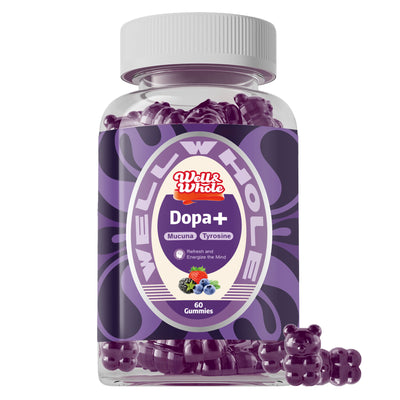
When it comes to brain support supplements, two compounds have captured significant attention in the wellness community: methylene blue and mucuna pruriens. Both are available through well&whole—Methylene Blue and Dopamine Gummies/Mucuna Liquid Drops—but they support cognitive function through fundamentally different mechanisms.

Methylene blue targets the mitochondria—the energy-producing engines of your cells—while mucuna pruriens delivers L-Dopa, the direct precursor to dopamine, one of the brain's most important neurotransmitters for motivation, focus, and reward processing.
This comparison article examines how each compound works, their respective strengths and limitations, and how to determine which approach—or combination—best fits your cognitive support goals.
Mechanism Comparison: Two Very Different Paths
Methylene Blue: The Mitochondrial Enhancer
Methylene blue supports brain function by improving the energy supply that powers neural activity. Its mechanism:
1. **Electron carrier**: MB accepts electrons from NADH and passes them to cytochrome c, bypassing dysfunctional steps in the mitochondrial electron transport chain
2. **ATP enhancement**: By improving electron flow, MB helps mitochondria produce more ATP—the energy currency that neurons need for firing, signaling, and repair
3. **Redox cycling**: MB can repeatedly accept and donate electrons, making it a "recyclable" antioxidant that doesn't get consumed like conventional antioxidants
4. **Anti-inflammatory**: MB has demonstrated anti-inflammatory properties in brain tissue, which may help protect neurons from inflammatory damage
Research published in *FASEB Journal* demonstrated that methylene blue improved mitochondrial respiration and increased ATP production in neuronal cells (1). A study in the *Journal of Alzheimer's Disease* showed that MB improved memory and reduced neurodegeneration markers in animal models (2).
**Summary**: Methylene blue supports the **energy infrastructure** that enables brain function. It's like upgrading the power plant that supplies electricity to a city.
Mucuna Pruriens: The Dopamine Precursor
Mucuna pruriens supports brain function by providing the raw material for one of the brain's key neurotransmitters. Its mechanism:
1. **L-Dopa delivery**: Mucuna seeds contain high concentrations of L-Dopa (levodopa), the direct biochemical precursor to dopamine
2. **Dopamine synthesis**: Once L-Dopa crosses the blood-brain barrier, it's converted to dopamine by DOPA decarboxylase (with B6 as a cofactor)
3. **Neurotransmitter support**: Increased dopamine availability may support motivation, focus, reward processing, and mood
4. **Whole-plant matrix**: Mucuna also contains serotonin, antioxidants, and beta-carboline compounds that may modulate L-Dopa metabolism
A study in the *Journal of Neurology, Neurosurgery & Psychiatry* found that mucana seed powder provided faster onset and longer duration of action compared to standard L-Dopa/carbidopa in Parkinson's patients (3). Research in the *Journal of Ethnopharmacology* documented mucuna's traditional use as a nerve tonic and aphrodisiac in Ayurvedic medicine (4).
**Summary**: Mucuna pruriens supports the **communication system** that enables brain signaling. It's like upgrading the radio network that carries messages between departments in the city.
Strengths and Limitations
Methylene Blue
| Strengths | Limitations |
|-----------|------------|
| Targets fundamental energy production | MAOI activity—serotonin interaction risk |
| Works even when mitochondria are impaired | Blue staining of urine and potentially mouth |
| Unique redox cycling antioxidant | Limited human clinical data for cognitive enhancement |
| Anti-inflammatory neuroprotection | Contraindicated with SSRIs and serotonergic drugs |
| Low doses are sufficient | Not recommended during pregnancy |
| Stable, well-understood compound (140+ years) | Quality concerns (must use pharmaceutical grade) |
Mucuna Pruriens
| Strengths | Limitations |
|-----------|------------|
| Direct dopamine precursor—mechanistically clear | Receptor downregulation concern with continuous use |
| Centuries of Ayurvedic traditional use | L-Dopa competes with dietary proteins for absorption |
| Whole-plant matrix includes complementary compounds | Dose-dependent nausea and side effects at higher doses |
| Available in gummies (convenient) and liquid (flexible) | Should be cycled per many practitioners |
| Mood and motivation focus—clear subjective effects | Not for individuals on antipsychotic medications |
| May support athletic drive and focus | Cannot replace Parkinson's medications |
Target Use Cases: Which Brain Need Are You Addressing?
When Methylene Blue May Be the Better Choice
Energy and endurance focus
If your primary concern is cognitive fatigue—brain fog, difficulty sustaining mental effort, or feeling mentally "depleted"—methylene blue's mitochondrial enhancement approach may be more directly relevant. By improving the energy supply to neurons, MB may help sustain cognitive endurance.
Aging-related cognitive support
The mitochondrial theory of aging suggests that declining mitochondrial function is a key driver of age-related cognitive changes. MB's ability to bypass impaired mitochondrial steps makes it particularly relevant for older adults concerned about cognitive maintenance.
Anti-inflammatory brain support
If neuroinflammation is a concern (suggested by brain fog, mood volatility, or sensitivity to stress), MB's anti-inflammatory properties may offer targeted support.
When Mucuna Pruriens May Be the Better Choice
Motivation and drive focus
If your primary concern is low motivation, flat affect, or difficulty getting started on tasks, mucuna's dopamine precursor approach may be more relevant. Dopamine is the neurotransmitter most directly associated with reward-seeking, motivation, and goal-directed behavior.
Mood support
For individuals experiencing low mood that seems related to motivation and reward processing (rather than sadness or anxiety specifically), mucuna may offer targeted support through dopamine pathways.
Athletic and performance focus
Athletes and high-performers who want to support training drive, competitive focus, and reward response may find mucuna more aligned with their goals.
When Both May Be Complementary
Some practitioners explore combining methylene blue and mucuna for comprehensive brain support—addressing both the energy supply (mitochondria) and the signaling system (dopamine). This combination should be approached with caution:
- **Start with one compound first**: Establish your response to each individually before combining
- **Use conservative doses of each**: Reduce individual doses when combining
- **Monitor carefully**: Watch for overstimulation, anxiety, or insomnia
- **Consult your healthcare provider**: Especially if you take any medications
Safety Considerations Comparison
Critical Safety Differences
| Safety Factor | Methylene Blue | Mucuna Pruriens |
|---------------|---------------|-----------------|
| MAOI activity | Yes (weak) | No |
| Serotonin syndrome risk | Yes (with serotonergic drugs/supplements) | Low |
| Dopamine excess risk | No | Possible at high doses |
| Pregnancy safety | Contraindicated | Not recommended without guidance |
| Medication interactions | SSRIs, MAOIs, antipsychotics | Antipsychotics, MAOIs |
| Cycling recommended | Yes (theoretical) | Yes (traditional practice) |
| Staining effects | Yes (urine, potentially mouth) | No |
| Quality grade criticality | Must be pharmaceutical/USP grade | Standard supplement quality |
| Common side effects | Nausea, headache | Nausea, vivid dreams |
The Serotonin Interaction Warning for Methylene Blue
This is the most important safety distinction. Methylene blue's weak MAOI activity means it can dangerously interact with serotonergic agents, potentially triggering serotonin syndrome. If you take SSRIs, 5-HTP, St. John's Wort, or other serotonin-influencing supplements, methylene blue requires extreme caution or avoidance.
Mucuna pruriens does not carry this specific risk, though it should still not be combined with antipsychotic medications that block dopamine receptors.
Practical Decision Framework
Ask yourself these questions to guide your choice:
1. **What's my primary concern?**
- Energy/fatigue/brain fog → Lean toward MB
- Motivation/drive/mood → Lean toward mucuna
2. **Do I take serotonergic medications or supplements?**
- Yes → Avoid MB; mucuna may be safer
- No → Both options are available
3. **What format do I prefer?**
- Gummies for convenience → Mucuna Dopamine Gummies
- Liquid for flexibility → Either (Mucuna Drops or Methylene Blue Liquid Drops)

4. **Am I concerned about staining?**
- Yes → Mucuna (no staining)
- No → Both options available
5. **Do I want an Ayurvedic tradition or modern pharmacology background?**
- Ayurvedic tradition → Mucuna
- Modern pharmacology → MB (140+ years of medical history)
FAQ
Q1: Can I take methylene blue and mucuna at the same time?
Some practitioners combine them, but start with each individually first, use conservative doses, and consult your healthcare provider. Watch for overstimulation when combining an energy enhancer (MB) with a dopamine precursor (mucuna).
Q2: Which one is better for brain fog?
Methylene blue targets mitochondrial energy production, which may be more directly relevant for brain fog (mental fatigue). Mucuna targets motivation and reward processing. For pure "mental energy," MB may be more aligned; for "mental drive," mucuna may be more aligned.
Q3: Which one has more research backing?
Both have published research, but in different domains. MB has more cellular/animal research on mitochondrial and neuroprotective effects. Mucuna has clinical research in Parkinson's populations and extensive Ayurvedic documentation. Neither has robust clinical trials in healthy populations for cognitive enhancement.
Q4: Is one safer than the other?
They have different safety profiles. MB carries the serotonin interaction risk (MAOI activity) but doesn't affect dopamine directly. Mucuna carries the dopamine excess risk but doesn't affect serotonin metabolism. Your individual medication and supplement profile determines which is safer for you.
Q5: Can I cycle both supplements?
Yes. Common cycling approaches include 5 days on/2 days off, or 4 weeks on/1 week off. You can cycle both simultaneously or alternate between them.
Q6: Which is more cost-effective?
well&whole Methylene Blue is slightly less expensive than well&whole Dopamine Gummies or well&whole Mucuna Liquid Drops. However, cost comparison depends on dose per serving and number of servings per container.
Conclusion
Methylene blue and mucuna pruriens represent two fundamentally different approaches to brain support—mitochondrial energy production vs. dopamine neurotransmitter support. They're not competitors; they're complementary tools that address different aspects of cognitive function.
Choose methylene blue if your primary concern is mental energy, endurance, and cognitive fatigue. Choose mucuna pruriens if your focus is motivation, drive, and reward processing. Consider combining both—with careful dosing and healthcare provider guidance—for comprehensive support of both the energy infrastructure and signaling systems that power your brain.
Related supplements
Should you decide to supplement, Dopamine Gummies – Mucuna Pruriens Supplements Gummies 500mg with Mood Support and Mucuna Pruriens Liquid, Mucuna Pruriens Supplements 500MG, Fuel for Focus & Attention are our formulation for this purpose. For a broader comparison, see the Mood Support and Brain Health collections.
These statements have not been evaluated by the Food and Drug Administration. This product is not intended to diagnose, treat, cure, or prevent any disease.