Marshmallow Root and Gut Health: The Soothing Herb
Marshmallow root (*Althaea officinalis*) is a time-honored demulcent herb. Discover how its mucilage supports gut health, soothes digestive discomfort, and complements slippery elm.

Despite its name, marshmallow root has nothing to do with the fluffy white confection roasted over campfires. The candy we know today was originally made from the root of the marshmallow plant, but modern marshmallows contain no trace of the herb. What the plant *does* contain, however, is far more valuable than sugar and gelatin—it contains a remarkable concentration of mucilage, the gel-like substance that makes marshmallow root one of the most effective soothing herbs for digestive health.
In this article, we'll explore the fascinating history, biochemistry, and modern applications of marshmallow root for gut health. We'll also examine how it works synergistically with other demulcent herbs like slippery elm, and provide practical guidance on incorporating this gentle yet powerful botanical into your wellness routine.
Meet Marshmallow Root: *Althaea officinalis*
Botanical Background
Marshmallow root comes from *Althaea officinalis*, a perennial plant in the Malvaceae (mallow) family. Native to Europe, North Africa, and Western Asia, it has naturalized in parts of North America. The plant is characterized by:
- Soft, velvety leaves and stems (covered in fine hairs)
- Pale pink or white flowers that resemble small hibiscus blooms
- A thick, whitish taproot that stores the plant's mucilage
The species name *officinalis* indicates that it was historically kept "in the officina"—the storeroom of apothecaries and monks where medicinal herbs were prepared.
A Confectionery History
The original marshmallow candy, dating back to ancient Egypt, was made by boiling marshmallow root with honey. The resulting concoction was used both as a medicine and a treat. By the 19th century, French confectioners had refined the process, whipping marshmallow root sap with egg whites and sugar to create a soft, fluffy candy. Modern marshmallows replaced the herbal extract with gelatin and corn syrup—easier to manufacture, but devoid of the original root's soothing properties.
The Mucilage Mechanism
What Makes Marshmallow Root Unique?
Like slippery elm, marshmallow root's primary active constituents are mucilage polysaccharides. However, there are important differences in how the mucilage behaves:
| Characteristic | Marshmallow Root | Slippery Elm |
|----------------|------------------|--------------|
| **Mucilage Content** | 10-20% by weight | 10-20% by weight |
| **Solubility** | Cold-water soluble | Warm-water soluble (optimal) |
| **Gel Consistency** | Thinner, more slippery | Thicker, more viscous |
| **Primary Polysaccharides** | Arabinogalactans, rhamnogalacturonans | Complex heteropolysaccharides |
| **Flavor** | Mild, slightly sweet | Mild, earthy |
How Mucilage Works in the Gut
When marshmallow root is prepared as a cold infusion (soaked in cold water rather than boiled), the mucilage is preserved intact. Upon ingestion, this mucilage:
1. **Forms a protective film** over mucous membranes in the mouth, throat, esophagus, stomach, and intestines
2. **Reduces friction** between food particles and sensitive tissues
3. **Supports the body's natural mucus production** through reflex stimulation
4. **Provides a soothing sensation** that can ease the discomfort of occasional irritation
Cold Infusion vs. Hot Tea
An important note: boiling marshmallow root destroys much of its mucilage. For maximum benefit, prepare marshmallow root as a cold infusion:
- Place 1-2 teaspoons of dried root in a jar
- Cover with cold water
- Let sit for 4-8 hours (or overnight)
- Strain and drink
This method preserves the delicate mucilage polysaccharides and yields a pleasantly mild, slightly sweet beverage.
Marshmallow Root for Digestive Health
Soothing Occasional Heartburn and Reflux
Marshmallow root is widely used to support comfort during occasional heartburn and mild acid reflux. The mucilage coating may help create a temporary barrier between stomach acid and the esophageal lining. While clinical trials are limited, traditional use and the well-established demulcent action of mucilage provide a strong rationale for this application.
Supporting Occasional Stomach Discomfort
For those experiencing occasional stomach upset or discomfort, marshmallow root offers gentle support. Its soothing action on the stomach lining can provide comfort without the harsh effects of some over-the-counter antacids.
Promoting Regular Bowel Movements
Marshmallow root has a long traditional use for supporting healthy, regular bowel movements. The mucilage adds gentle bulk and softens stools when adequate hydration is maintained. It is particularly valued for supporting comfort during occasional constipation without causing harsh laxative effects.
Supporting Gut Lining Integrity
While marshmallow root doesn't "heal" the gut in a medical sense, its demulcent action supports the body's natural maintenance of healthy gut tissues. Some herbalists and naturopathic physicians recommend marshmallow root as part of a comprehensive approach to supporting gut lining integrity, often in combination with other soothing herbs.
Marshmallow Root and the Respiratory System
While this article focuses on gut health, it's worth noting that marshmallow root's benefits extend to the respiratory tract as well. The same mucilage that soothes the gut also soothes the throat and bronchial passages. Traditionally, marshmallow root has been used for:
- Occasional sore throat discomfort
- Dry, irritating coughs
- Supporting comfort in the upper respiratory tract
This dual-action benefit makes marshmallow root an excellent choice for those seeking comprehensive mucous membrane support.
Clinical Research
What Studies Exist?
Research on marshmallow root specifically is limited but growing. Notable studies include:
#### 2011 Study: *Journal of Medicinal Food*
Researchers investigated the effects of a marshmallow root extract on individuals with occasional stomach discomfort. Participants reported improved comfort scores, though the study was small and used a multi-herb formulation.
#### 2005 Study: *Planta Medica*
This study examined the mucilage content and demulcent properties of various *Althaea* species, confirming the high mucilage content and soothing potential of *A. officinalis*.
#### In Vitro Research
Several laboratory studies have demonstrated the antioxidant and anti-inflammatory properties of marshmallow root extracts, providing a possible mechanism for its traditional uses.
What We Still Need to Learn
As with many traditional herbs, large-scale human clinical trials on marshmallow root alone are lacking. Most research examines multi-herb formulations, making it difficult to isolate marshmallow root's specific contributions.
Marshmallow Root in Combination Formulas
Marshmallow root is rarely used alone in premium digestive supplements—and for good reason. It works exceptionally well in combination with other soothing herbs.
Marshmallow + Slippery Elm
This is perhaps the most classic digestive herb pair. Benefits of combining them include:
- **Complementary solubility**: Marshmallow root's mucilage is cold-water soluble; slippery elm's is warm-water soluble
- **Layered protection**: The two mucilages may provide both immediate and sustained coating
- **Enhanced comfort**: Users frequently report that the combination is more effective than either herb alone
Marshmallow + DGL Licorice
DGL licorice supports the body's natural mucus production through different mechanisms than marshmallow root. The combination addresses digestive comfort from two angles:
- Marshmallow root: Physical coating (demulcent)
- DGL Licorice: Physiological support for mucus production
The Power Trio: Marshmallow + Slippery Elm + DGL
This three-herb combination represents a comprehensive approach to digestive soothing. Each herb contributes unique properties, and together they provide layered, multi-mechanism support for digestive comfort and gut lining health.
Dosage and Preparation
Recommended Dosages
| Form | Typical Dosage | Notes |
|------|---------------|-------|
| **Dried Root (Cold Infusion)** | 1-2 tsp per cup, steeped 4-8 hours | Preferred method for maximum mucilage |
| **Liquid Extract (Glycerin-based)** | 2-4 mL, 2-3 times daily | Convenient; look for alcohol-free options |
| **Powder** | 1-2 grams, 2-3 times daily | Can be mixed into smoothies |
| **Capsules** | 400-500 mg, 3-4 times daily | Least effective for mucilage delivery |
Tips for Maximum Benefit
1. **Use cold or room-temperature water** when preparing marshmallow root to preserve mucilage
2. **Shake liquid extracts well** before use, as mucilage can settle
3. **Take between meals** for esophageal coating, or before meals for stomach coating
4. **Stay well-hydrated** when using marshmallow root
Safety Profile
Marshmallow root is generally recognized as safe and well-tolerated. However, consider the following:
Medication Interactions
Like slippery elm, marshmallow root's mucilage can slow the absorption of oral medications. Take marshmallow root at least 2 hours apart from other medications.
Diabetes Medications
Some animal studies suggest marshmallow root may affect blood sugar levels. Individuals taking diabetes medications should consult their healthcare provider.
Pregnancy and Breastfeeding
Marshmallow root has a long history of traditional use during pregnancy for throat and digestive comfort. However, pregnant women should consult their healthcare provider before use.
Surgery
Discontinue use at least 2 weeks before scheduled surgery, as marshmallow root may affect blood sugar control during and after surgical procedures.
Frequently Asked Questions
1. Is marshmallow root the same as the marshmallow candy?
No. Modern marshmallow candy contains no marshmallow root. The original marshmallow candy was made from the root, but today's version uses gelatin, corn syrup, and sugar instead.
2. Can I boil marshmallow root to make tea?
Boiling is not recommended, as it can degrade the mucilage. For maximum benefit, prepare marshmallow root as a cold infusion by soaking it in cold water for several hours.
3. How long does it take to work?
Most people notice a soothing effect within 30-60 minutes. The relief is typically gentle and may last 2-4 hours.
4. Can children take marshmallow root?
Marshmallow root is generally considered gentle enough for children. However, parents should consult a pediatrician and adjust dosage appropriately for the child's age and weight.
5. Does marshmallow root help with acid reflux?
Marshmallow root is commonly used to support comfort during occasional acid reflux. The mucilage coating may help create a temporary barrier. However, persistent acid reflux should be evaluated by a healthcare provider.
6. Can I take marshmallow root every day?
Yes, marshmallow root is generally considered safe for daily use in recommended amounts. Many people use it daily as part of their wellness routine.
7. What does marshmallow root taste like?
Marshmallow root has a very mild, slightly sweet, and earthy flavor. Many people find it pleasant and easy to drink, especially when prepared as a cold infusion.
8. Is marshmallow root gluten-free?
Yes, marshmallow root is naturally gluten-free. However, always check supplement labels for potential cross-contamination if you have celiac disease or gluten sensitivity.
9. Can marshmallow root help with a dry cough?
Yes, marshmallow root is traditionally used to soothe occasional dry, irritating coughs. The mucilage coats the throat and provides comforting relief.
10. Where can I find a high-quality marshmallow root supplement?
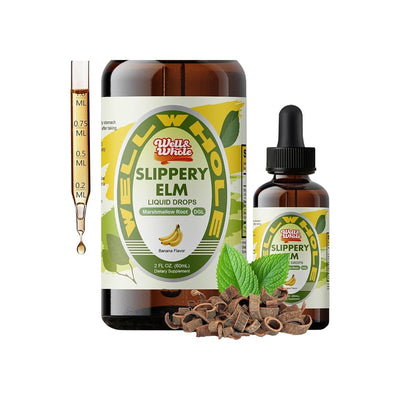
Look for reputable brands that use third-party testing and transparent sourcing. well&whole Slippery Elm Liquid Drops combine marshmallow root with slippery elm and DGL licorice for comprehensive digestive support.

Conclusion
Marshmallow root stands as one of nature's gentlest yet most effective digestive soothers. Its remarkable mucilage content provides a protective, comforting coating to the digestive tract—supporting the body's natural maintenance of healthy gut tissues and providing relief from occasional digestive discomfort.
While it may not have the high-profile marketing of some modern supplements, marshmallow root's centuries of traditional use and the well-understood pharmacology of its mucilage polysaccharides make it a trusted ally for digestive wellness. When paired with complementary herbs like slippery elm and DGL licorice, its benefits are further enhanced.
For those seeking a convenient way to incorporate marshmallow root into their routine, well&whole Slippery Elm Liquid Drops offer a thoughtfully formulated blend that includes marshmallow root alongside slippery elm and DGL licorice. This trio approach provides comprehensive, multi-mechanism support for digestive comfort and gut lining health.

As with any supplement, consistency is key. Give marshmallow root time to work, stay well-hydrated, and consult with a healthcare provider to determine the best approach for your individual needs.
Related supplements
Should you decide to supplement, Slippery Elm Liquid Drops, Marshmallow Root, Slippery Elm Bark Drops for Women, DGL Licorice Extract, Digestive Health, and Kids’ Black Walnut Digestive Support Drops, 14-in-1 Herbal Formula, Mixed Berry, Ages 1+, 2 fl oz are our formulation for this purpose. For a broader comparison, see the Digestive Support and Health Benefits collections.
These statements have not been evaluated by the Food and Drug Administration. This product is not intended to diagnose, treat, cure, or prevent any disease.