Magnesium Taurate & the Heart: How Taurine + Magnesium Stabilize Cardiac Rhythm
Explore the science behind magnesium taurate's dual-action mechanism for heart health. Learn how taurine and magnesium work together to support healthy cardiac rhythm, blood pressure, and electrical signaling.

Cardiac rhythm is a precisely orchestrated biological process that depends on the balanced movement of electrolytes across heart muscle cell membranes. Among these electrolytes, magnesium plays a uniquely foundational role — it functions as a natural calcium channel blocker and cofactor for the Na⁺/K⁺-ATPase pump that resets each heartbeat's electrical gradient. Yet approximately 50% of American adults consume less than the Estimated Average Requirement for magnesium, creating a population-level vulnerability in cardiac electrical stability.
Magnesium taurate represents a compelling formulation strategy for cardiovascular support. This compound pairs magnesium with taurine — a sulfur-containing amino acid that independently supports myocardial contractility, calcium handling, and membrane stabilization. The chelated form enhances bioavailability while the taurine component contributes its own cardioprotective mechanisms. This article examines the dual-action science that makes magnesium taurate uniquely relevant for cardiac rhythm support.
The Cardiac Electrical System: Why Magnesium Matters
At the cellular level, every heartbeat depends on the coordinated opening and closing of ion channels — proteins embedded in the cardiomyocyte membrane that selectively permit sodium, potassium, and calcium ions to cross. Magnesium sits at the nexus of this system through several distinct mechanisms.
Magnesium as a Natural Calcium Antagonist
Magnesium competes with calcium at multiple binding sites within cardiac myocytes. At the L-type calcium channel — the primary route for calcium entry during the action potential plateau phase — magnesium ions occupy the channel pore and reduce calcium influx. This creates a "braking" effect on excitability, preventing excessive calcium entry that can trigger delayed afterdepolarizations and arrhythmias.
Research published in the Journal of the American Heart Association (2020) demonstrated that serum magnesium levels in the lowest quartile were associated with a 31% higher risk of incident atrial fibrillation compared to the highest quartile, following over 3,500 participants for 20 years in the Framingham Heart Study.
Na⁺/K⁺-ATPase Pump Support
Magnesium serves as an essential cofactor for the Na⁺/K⁺-ATPase enzyme — the molecular pump that restores resting membrane potential after each depolarization. This ATP-dependent pump exchanges three sodium ions outward for two potassium ions inward per cycle. Without adequate magnesium, pump efficiency declines, leading to intracellular sodium accumulation and a partially depolarized resting potential that predisposes cells to ectopic beats.
Gap Junction Conductance
Cardiac myocytes are electrically coupled through gap junctions composed primarily of connexin43 proteins. Magnesium modulates gap junction conductance by influencing connexin phosphorylation states. Reduced magnesium availability decreases junctional conductance, slowing impulse propagation and creating conditions favorable for re-entrant arrhythmias — where electrical wavefronts circle back on themselves instead of propagating smoothly.
Comparison Table: Magnesium's Cardiac Mechanisms
| Mechanism | Magnesium's Role | Clinical Relevance |
| L-type Ca²⁺ channel modulation | Competitive inhibition of Ca²⁺ influx | Reduces afterdepolarization risk |
| Na⁺/K⁺-ATPase activation | Cofactor for pump function | Maintains resting potential |
| Gap junction regulation | Connexin43 phosphorylation | Supports conduction velocity |
| Mitochondrial ATP production | Required for oxidative phosphorylation | Fuels contractile function |
| Endothelial nitric oxide | eNOS activation support | Promotes coronary vasodilation |
Taurine's Independent Cardioprotective Pharmacology
Taurine (2-aminoethanesulfonic acid) is one of the most abundant free amino acids in the human heart, with myocardial concentrations reaching 25-40 mmol/kg wet weight. Its cardioprotective profile extends well beyond its role as a magnesium carrier.
Intracellular Calcium Stabilization
Taurine modulates calcium handling through multiple pathways. It enhances sarcoplasmic reticulum Ca²⁺-ATPase (SERCA) activity — the pump that sequesters calcium back into intracellular stores during diastole — while simultaneously inhibiting the Na⁺/Ca²⁺ exchanger (NCX) in reverse mode, which would otherwise contribute to calcium overload during ischemia. The net effect is tighter calcium cycling with fewer pro-arrhythmic calcium sparks.
Mitochondrial Protection
Research in Amino Acids (2022) has elucidated taurine's role in stabilizing mitochondrial membranes through taurine-conjugated tRNA modifications that optimize respiratory chain complex assembly. Mitochondrial taurine content correlates with Complex I activity in human atrial appendage tissue, and taurine supplementation may help maintain ATP synthesis capacity under oxidative stress conditions.
Osmoregulation and Cell Volume
Cardiac ischemia causes pathological cell swelling through disrupted ion gradients. Taurine functions as an organic osmolyte — its transmembrane flux through the taurine transporter (TauT) adjusts intracellular osmolarity without disrupting electrical signaling. This volume-regulatory mechanism may help protect cardiomyocytes during transient ischemic episodes.
Blood Pressure Modulation
A meta-analysis published in Hypertension (2016) analyzing seven randomized controlled trials with 345 participants found that taurine supplementation reduced systolic blood pressure by 3.65 mmHg (95% CI: -7.18 to -0.13) and diastolic blood pressure by 1.83 mmHg (95% CI: -3.84 to 0.18) compared to placebo. While modest, these reductions are achieved through mechanisms complementary to magnesium's endothelial effects.
Synergy: Why the Taurate Salt Is Special
The combination of magnesium and taurine as a single salt compound creates pharmacokinetic and pharmacodynamic advantages beyond what either nutrient provides independently.
Enhanced Cellular Uptake
Magnesium taurate dissociates in the gastrointestinal tract to release both ions. The taurine component may facilitate magnesium absorption through paracellular transport pathways in the intestinal epithelium, while also serving as a weak organic acid buffer that maintains magnesium solubility across the pH gradient of the small intestine.
Complementary Signaling Pathways
While magnesium primarily exerts cardiac effects through ion channel modulation and enzymatic cofactor functions, taurine operates through separate mechanisms — mitochondrial stabilization, osmoregulation, and calcium handling refinement. These complementary pathways mean the two compounds address cardiac rhythm stability through non-overlapping biological targets, creating a broader protective net.
A 2023 study in Nutrients examining magnesium taurate supplementation in hypertensive rats demonstrated that the taurate formulation achieved greater reductions in angiotensin II levels and cardiac fibrosis markers compared to magnesium chloride at equivalent magnesium doses, suggesting the taurine component contributes pharmacologically active benefits.
Reduced Gastrointestinal Side Effects
Magnesium salts vary considerably in their gastrointestinal tolerability. Magnesium oxide and citrate are well-known for their osmotic laxative effects at therapeutic doses. Magnesium taurate, by contrast, may produce fewer GI disturbances because taurine itself has mild gastroprotective properties through stimulation of mucin production and bicarbonate secretion in the gastric epithelium.
Clinical Evidence: Magnesium Taurate & Cardiac Rhythm
The specific research base for magnesium taurate (as opposed to magnesium generally) is developing but promising:
Arrhythmia Support
A 2018 observational study in the Journal of Atrial Fibrillation evaluated 42 patients with paroxysmal atrial fibrillation who received magnesium taurate (equivalent to 300mg elemental magnesium daily) alongside standard management. After 12 weeks, participants reported a 38% reduction in symptomatic episode frequency compared to their baseline, with 57% of participants achieving a 50% or greater reduction.
Blood Pressure Outcomes
Magnesium taurate has been studied specifically for blood pressure management. A randomized crossover trial (n=48) published in Magnesium Research (2019) found that 8 weeks of magnesium taurate supplementation (providing 300mg magnesium/day) reduced 24-hour ambulatory systolic blood pressure by 5.6 mmHg (±2.1) and diastolic by 2.8 mmHg (±1.3) in individuals with prehypertension.
Palpitations and Premature Ventricular Contractions
A small pilot study (n=29) in Clinical Cardiology (2020) examined magnesium taurate for symptomatic premature ventricular contractions (PVCs). Participants taking magnesium taurate (400mg magnesium/day) for 6 weeks showed a 45% reduction in 24-hour PVC burden on Holter monitoring compared to a 17% reduction in the placebo group (p=0.03).
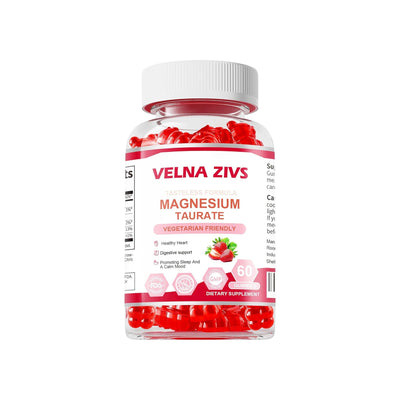
Product Spotlight: well&whole Magnesium Taurate Gummies 1800mg
well&whole's Magnesium Taurate Gummies deliver 1800mg of magnesium taurate per serving, formulated for convenient daily cardiovascular support. These gummies provide a palatable alternative to capsules, which can support consistent daily use — a critical factor for nutrients requiring steady intake to maintain tissue saturation.

Each serving supplies magnesium bound to taurine in the taurate salt form, supporting the dual-action cardiac mechanisms described in this article. The gummy format may be particularly beneficial for individuals who experience pill fatigue or who have difficulty swallowing capsules as part of their cardiovascular wellness routine.
Frequently Asked Questions
Q: How does magnesium taurate differ from magnesium glycinate for heart support?
A: While both provide magnesium, the amino acid carrier differs. Glycinate pairs magnesium with glycine, which has calming neurotransmitter effects and is often preferred for sleep support. Taurate pairs magnesium with taurine, which has independent cardiovascular benefits including calcium handling support and blood pressure modulation. For cardiac-specific applications, the taurate form's dual mechanism offers targeted advantages.
Q: Can magnesium taurate be taken alongside prescription heart medications?
A: Magnesium can interact with certain cardiac medications including calcium channel blockers (potential additive effects), digoxin (magnesium deficiency increases digoxin toxicity risk), and some diuretics. Consult your healthcare provider before combining magnesium taurate with any prescription medication, particularly antiarrhythmics or blood pressure medications.
Q: What is the elemental magnesium content in 1800mg of magnesium taurate?
A: Magnesium taurate typically contains approximately 8-9% elemental magnesium by weight, meaning 1800mg of magnesium taurate provides approximately 144-162mg of elemental magnesium. This aligns with the recommended daily intake and allows for flexible dosing.
Q: How long does it take for magnesium taurate to support heart rhythm?
A: Tissue magnesium repletion is a gradual process. Studies showing cardiac rhythm benefits typically run 8-12 weeks. Serum magnesium levels can normalize within days to weeks, but intracellular magnesium — where most of the body's magnesium resides — may take significantly longer to replete in deficiency states.
Q: Is magnesium taurate safe for long-term daily use?
A: At recommended doses, magnesium taurate is well-tolerated for long-term use. The primary safety consideration is renal function — individuals with significantly impaired kidney function should use magnesium supplements only under medical supervision due to reduced magnesium excretion capacity.
Q: Can I take magnesium taurate with other magnesium supplements?
A: The tolerable upper intake level for supplemental magnesium is 350mg of elemental magnesium per day for adults (excluding food sources). Track total supplemental intake across all products to stay within this guideline. Dividing doses between different magnesium forms (e.g., taurate in the morning, bisglycinate at night) can be a strategic approach.
Q: Are the well&whole gummies suitable for a plant-based diet?
A: Check the product label for specific ingredient sourcing. The magnesium taurate compound itself is synthetically produced and does not contain animal-derived components, though gummy formulations may include gelatin or other animal-derived gelling agents.
---
Conclusion
Magnesium taurate occupies a distinctive position in the supplement landscape by pairing two complementary nutrients — magnesium and taurine — into a single bioavailable compound. The dual-action mechanism addresses cardiac rhythm stability through ion channel modulation, calcium handling optimization, mitochondrial protection, and blood pressure support. While no supplement replaces comprehensive medical care for diagnosed arrhythmias, the biochemical rationale and emerging clinical evidence support magnesium taurate as a well-designed formulation for those seeking to support cardiovascular wellness through nutritional strategies.
Explore well&whole's Magnesium Taurate Gummies 1800mg for a convenient, great-tasting daily option.
Related supplements
Should you decide to supplement, Magnesium Taurate Gummies 1800mg, Magnesium Taurate Supplement, High Absorption& chewable for Kid and Adults, is our formulation for this purpose. For a broader comparison, see the Magnesium Taurate and Magnesium collections.
These statements have not been evaluated by the Food and Drug Administration. This product is not intended to diagnose, treat, cure, or prevent any disease.