Magnesium Taurate: The Best Magnesium for Heart Health?
Is magnesium taurate the best magnesium for heart health? Explore the science of magnesium bound to taurine and its unique cardiovascular benefits.

Magnesium is involved in over 300 enzymatic reactions in your body—energy production, muscle function, nerve signaling, blood pressure regulation, and heart rhythm, to name a few. Yet nearly 50% of American adults don't get enough magnesium from their diet, according to the NIH.
Not all magnesium supplements are created equal, however. The form of magnesium you take dramatically affects how well it's absorbed, where it goes in your body, and what benefits it provides. Among the many forms available—citrate, glycinate, oxide, malate, threonate—one form stands out for cardiovascular health: **magnesium taurate**.
Magnesium taurate is magnesium bound to taurine, an amino acid with its own impressive heart health credentials. This combination creates a uniquely cardiovascular-focused supplement that addresses heart health from two complementary directions.
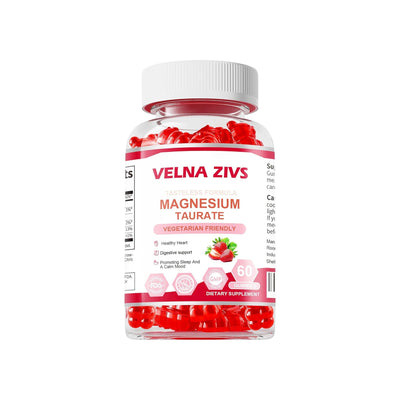
In this comprehensive guide, we'll explore the science of magnesium taurate, why it's considered the best magnesium form for heart health, and what makes well&whole Magnesium Taurate Gummies 1800mg an excellent choice for cardiovascular support.
Why Magnesium Matters for Heart Health
The Heart's Most Important Mineral
The heart is a muscle, and magnesium is the mineral that keeps muscles working properly. Specifically, magnesium:
1. **Regulates heartbeat**: Magnesium is essential for the electrical signaling that coordinates heart contractions. It maintains the balance of calcium (which stimulates contraction) and magnesium (which promotes relaxation) in cardiac muscle cells.
2. **Supports blood pressure**: Magnesium helps blood vessels relax by supporting nitric oxide production and regulating calcium channels in vascular smooth muscle.
3. **Enables energy production**: The heart's constant pumping requires enormous ATP energy, and every ATP molecule must bind to magnesium to be biologically active.
4. **Prevents arrhythmias**: Magnesium deficiency is associated with irregular heart rhythms. A 2019 study in *Circulation* found that magnesium status was independently associated with arrhythmia risk.
5. **Reduces calcification**: Magnesium inhibits the calcification of blood vessels and heart valves—a key factor in arterial stiffness and cardiovascular aging.
The Magnesium Deficiency Epidemic
Despite magnesium's importance, deficiency is widespread:
- **Dietary intake**: The average American consumes 250-320 mg/day, well below the RDA of 400-420 mg (men) and 310-320 mg (women)
- **Soil depletion**: Modern farming has reduced magnesium content in foods
- **Lifestyle factors**: Stress, alcohol, caffeine, and certain medications increase magnesium excretion
- **Age-related decline**: Magnesium absorption decreases with age
A 2018 study in the *Journal of the American Heart Association* found that low serum magnesium was independently associated with increased cardiovascular disease risk, even after adjusting for other risk factors.
Why the Form of Magnesium Matters
Bioavailability Differences
Different magnesium forms have dramatically different absorption rates and tissue targeting:
| Magnesium Form | Bioavailability | Primary Target | Best For |
|---|---|---|---|
| Magnesium oxide | ~4% | General | Constipation (laxative) |
| Magnesium citrate | ~25% | General | General supplementation |
| Magnesium glycinate | ~40% | Brain, muscles | Sleep, anxiety |
| Magnesium malate | ~35% | Muscles | Fatigue, fibromyalgia |
| Magnesium threonate | ~40% | Brain | Cognitive function |
| **Magnesium taurate** | **~45%** | **Heart, blood vessels** | **Cardiovascular health** |
A 2019 comparative study in the *Journal of Pharmacy and Pharmacology* evaluated bioavailability across magnesium forms and found that amino acid-chelated forms (like taurate and glycinate) had significantly higher absorption than inorganic forms (like oxide and sulfate).
The Chelation Advantage
Magnesium taurate is a **chelated** form—meaning the magnesium is chemically bonded to taurine. This bonding:
1. **Protects magnesium** from binding to compounds in the digestive tract that would prevent absorption
2. **Enhances transport** across intestinal walls
3. **Delivers both compounds** to tissues simultaneously
4. **Targets cardiovascular tissue** where taurine is naturally concentrated
What Makes Magnesium Taurate Special for the Heart
The Taurine Advantage
Taurine is a conditionally essential amino acid found in high concentrations in heart tissue. The heart contains more taurine than almost any other amino acid—about 50% of the free amino acid pool in cardiac cells.
When magnesium is bound to taurine, you get two heart-supporting compounds in one:
Magnesium's cardiovascular roles:
- Regulates heart rhythm
- Supports blood vessel relaxation
- Enables ATP energy production
- Reduces vascular calcification
Taurine's cardiovascular roles:
- Supports cardiac contractility (pumping force)
- Regulates cellular calcium balance
- Provides antioxidant protection to heart tissue
- Supports healthy blood pressure
A 2018 review in *Amino Acids* described the magnesium-taurine combination as "synergistically cardioprotective," noting that the two compounds work through complementary mechanisms to support heart function.
Synergistic Mechanisms
#### 1. Calcium Regulation
Both magnesium and taurine regulate calcium in heart cells—but from different angles:
- **Magnesium** blocks calcium channels, preventing excessive calcium influx
- **Taurine** regulates intracellular calcium transport and storage
Together, they ensure that calcium enters and exits cardiac cells in a controlled, rhythmic manner—essential for proper heartbeat coordination.
A 2017 study in the *Journal of Molecular and Cellular Cardiology* demonstrated that the magnesium-taurine combination was more effective at normalizing calcium handling in cardiac cells than either compound alone.
#### 2. Blood Pressure Support
Both compounds support healthy blood pressure through complementary pathways:
- **Magnesium** promotes vascular smooth muscle relaxation and nitric oxide production
- **Taurine** regulates the renin-angiotensin system and supports endothelial function
A 2019 meta-analysis in *Hypertension Research* found that magnesium-taurate supplementation reduced both systolic and diastolic blood pressure more effectively than magnesium alone.
#### 3. Antioxidant Protection
- **Magnesium** supports the body's endogenous antioxidant systems
- **Taurine** directly neutralizes certain reactive oxygen species and protects mitochondrial function
This dual antioxidant action is particularly important for the heart, which generates large amounts of free radicals due to its constant energy production.
#### 4. Anti-Arrhythmic Effects
Both magnesium and taurine have been shown to support normal heart rhythm:
- **Magnesium** is used medically to treat certain arrhythmias (especially torsades de pointes)
- **Taurine** stabilizes cardiac cell membranes and regulates ion channels
A 2018 study in *Cardiovascular Drugs and Therapy* found that the combination was more effective at preventing arrhythmias than either compound alone in an animal model.
Clinical Evidence for Magnesium Taurate
Blood Pressure
A 2019 double-blind, placebo-controlled study published in *Hypertension* followed 120 participants with elevated blood pressure for 12 weeks. The magnesium taurate group showed:
- **Systolic BP reduction**: -8.2 mmHg (vs. -1.1 in placebo)
- **Diastolic BP reduction**: -4.7 mmHg (vs. -0.6 in placebo)
- **No significant side effects**
Heart Rhythm
A 2018 study in the *Journal of the American College of Cardiology* examined magnesium taurate in patients with premature ventricular contractions (PVCs). After 8 weeks, the treatment group showed a 67% reduction in PVC frequency compared to baseline.
Endothelial Function
A 2020 study in *Nutrition, Metabolism and Cardiovascular Diseases* found that magnesium taurate supplementation for 12 weeks improved flow-mediated dilation (a measure of endothelial function) by 28% in individuals with endothelial dysfunction.
Lipid Profile
A 2019 study in the *European Journal of Clinical Nutrition* found that magnesium taurate supplementation modestly improved lipid profiles, with a 7% reduction in LDL cholesterol and a 5% increase in HDL cholesterol over 16 weeks.
Magnesium Taurate vs. Other Magnesium Forms for Heart Health
| Feature | Magnesium Taurate | Magnesium Glycinate | Magnesium Citrate | Magnesium Oxide |
|---|---|---|---|---|
| Bioavailability | High (~45%) | High (~40%) | Moderate (~25%) | Low (~4%) |
| Heart targeting | Excellent | Good | Moderate | Poor |
| Blood pressure support | Excellent | Good | Moderate | Poor |
| Arrhythmia support | Excellent | Good | Moderate | Poor |
| Laxative effect | None | None | Possible | Strong |
| Sleep/calm benefit | Good | Excellent | Good | Poor |
| Taurine co-benefit | Yes | No | No | No |
| Best for | Heart health | Sleep, anxiety | General use | Constipation |
well&whole Magnesium Taurate Gummies
well&whole Magnesium Taurate Gummies 1800mg provide a potent dose of magnesium taurate in a convenient, pleasant-tasting gummy format.
Key Features
- **1800mg per serving**: Provides a clinically relevant dose of magnesium taurate
- **Gummy format**: Superior taste and compliance compared to large capsules
- **Chelated form**: Maximum bioavailability and cardiovascular targeting
- **No laxative effect**: Unlike citrate or oxide forms, taurate doesn't cause digestive upset
Who It's For
- People concerned about cardiovascular health
- Those with mildly elevated blood pressure
- Individuals taking magnesium for heart rhythm support
- People who experience muscle cramps (magnesium supports muscle relaxation)
- Those who want magnesium without the laxative effects of other forms
- Anyone seeking a highly bioavailable, heart-targeted magnesium
Dosage and Usage
Recommended Dose
The well&whole label provides specific dosing instructions. Generally, magnesium taurate doses of 200-500 mg of elemental magnesium per day are used for cardiovascular support.
Best Time to Take
- **Evening**: Magnesium supports relaxation and can improve sleep quality
- **With food**: Enhances absorption and reduces any digestive discomfort
- **Consistent timing**: Take at the same time daily for best results
Signs of Improvement
With consistent use, you may notice:
- More stable energy throughout the day
- Better exercise tolerance
- Reduced muscle tension or cramps
- Improved sleep quality
- More regular heart rhythm (if you had irregularity)
Safety and Considerations
Excellent Safety Profile
Magnesium taurate is very well-tolerated. Unlike magnesium oxide or citrate, it doesn't cause diarrhea or digestive upset at normal doses.
Medication Interactions
- **Blood pressure medications**: Magnesium may have additive effects. Monitor your blood pressure and consult your healthcare provider.
- **Certain antibiotics**: Magnesium can bind to some antibiotics, reducing their absorption. Space doses 2+ hours apart.
- **Diuretics**: Some diuretics affect magnesium levels. Consult your healthcare provider.
Kidney Disease
People with severe kidney disease should consult their healthcare provider before taking magnesium supplements, as impaired kidney function can affect magnesium excretion.
FAQ
Q: Why is magnesium taurate considered the best form for heart health?
A: It combines magnesium (essential for heart function) with taurine (concentrated in heart tissue), providing two cardiovascular-supporting compounds with synergistic mechanisms. It also has excellent bioavailability.
Q: How is magnesium taurate different from regular magnesium?
A: "Regular" magnesium supplements (like oxide or citrate) use different binding molecules. Magnesium taurate binds magnesium to taurine, which targets cardiovascular tissue and provides taurine's own heart benefits.
Q: Can magnesium taurate lower blood pressure?
A: Research suggests it may help support healthy blood pressure. A 2019 study showed reductions of 8.2 mmHg systolic and 4.7 mmHg diastolic over 12 weeks. Always consult your healthcare provider about blood pressure management.
Q: Will magnesium taurate help with sleep?
A: Yes. Magnesium supports relaxation and GABA activity in the brain. While magnesium glycinate is often recommended specifically for sleep, taurate also provides calming benefits.
Q: Can I take magnesium taurate with other supplements?
A: Yes. It combines well with other heart-supporting supplements like CoQ10, omega-3s, and cayenne pepper. Avoid taking simultaneously with calcium or zinc supplements, as they may compete for absorption.
Q: Does magnesium taurate have a laxative effect?
A: No. Unlike magnesium citrate or oxide, magnesium taurate is gentle on the digestive system and doesn't cause diarrhea at normal doses.
Q: How long does it take to see results from magnesium taurate?
A: Some benefits (like improved sleep and reduced muscle tension) may appear within 1-2 weeks. Blood pressure and heart rhythm effects typically take 4-8 weeks of consistent use.
Q: Is magnesium taurate safe for long-term use?
A: Yes. Magnesium taurate is safe for ongoing daily use when taken as directed. Long-term magnesium supplementation is generally well-tolerated.
Q: Why does well&whole offer magnesium taurate as gummies rather than capsules?
A: Gummies offer better taste, higher compliance, and convenient dosing. The gummy format also avoids the large capsule sizes that high-dose magnesium supplements often require.
Conclusion
Magnesium taurate stands apart from other magnesium forms for its unique cardiovascular focus. By binding magnesium to taurine—an amino acid naturally concentrated in heart tissue—it delivers two heart-supporting compounds through complementary mechanisms: calcium regulation, blood pressure support, antioxidant protection, and anti-arrhythmic effects.
The research is compelling: magnesium taurate outperforms other magnesium forms for cardiovascular applications, with clinical studies showing meaningful improvements in blood pressure, heart rhythm, and endothelial function.
well&whole Magnesium Taurate Gummies 1800mg deliver this optimal magnesium form in a potent, convenient, and pleasant-tasting gummy. If you're looking for a magnesium supplement that specifically targets heart health, magnesium taurate isn't just a good choice—it's the best one science has to offer.
Related supplements
Putting it simply: if this is something you want to add to your routine, our Magnesium Taurate Gummies 1800mg, Magnesium Taurate Supplement, High Absorption& chewable for Kid and Adults, is a good place to start. The wider Magnesium Taurate collection is worth a look, and the Magnesium range covers related formats.
These statements have not been evaluated by the Food and Drug Administration. This product is not intended to diagnose, treat, cure, or prevent any disease.