Magnesium Taurate for Circulation: What the Research Actually Shows

Magnesium taurate pairs magnesium with taurine, an amino acid the body concentrates in the heart and blood vessels — which is why this form is chosen for circulation and cardiovascular support rather than, say, a sleep formula. The rationale is sound, but the human evidence is thinner than the marketing suggests, and an honest read matters.
Magnesium taurate is a chelated form built around taurine, an amino acid concentrated in cardiac tissue. The combination is plausible for heart and vascular support, though large head-to-head human trials are limited.
How to read a label for this
Two numbers matter more than the front-of-bottle claim. First, elemental magnesium per serving — taurate is only about 8-10% magnesium by weight, so a 1800 mg serving is not 1800 mg of mineral. Second, whether taurine is present in a meaningful amount, not just used to name the compound. A label that leads with total compound weight while burying elemental content is using the same trick as the rest of the category, and the informed reader looks past it.
What magnesium taurate is
Like other chelated magnesiums, it binds the mineral to an amino acid for gentler digestion. Here the carrier is taurine rather than glycine. Because taurine is abundant in the heart, retina and brain, the form is selected when the goal is circulatory and cardiovascular rather than relaxation and sleep.
Why taurine matters for the heart
Taurine is involved in calcium handling inside heart muscle cells, in cell-volume regulation, and in the electrical stability of the rhythm. Low taurine is associated with poorer cardiovascular markers in observational work, and taurine supplementation has shown blood-pressure and vascular benefits in several human studies — though the doses and populations vary.
What the magnesium side adds
Magnesium itself supports normal muscle function, including the heart muscle, and is linked in population studies to healthy blood pressure. Many people do not get enough from diet alone. So magnesium taurate delivers two compounds — magnesium and taurine — that each have independent, if modest, cardiovascular stories.
What human research actually shows
- Magnesium: Numerous trials link higher intake with modestly lower blood pressure and better vascular function, especially in people who start low.
- Taurine: Several randomized trials report small but real reductions in blood pressure and improved arterial stiffness.
- The combination: Direct studies of magnesium taurate specifically are fewer, so most of the "taurate for heart" claim rests on the two components separately rather than the pair as a unit.
How it compares to other forms
For circulation, taurate is the more targeted choice than glycinate (which is sleep-oriented) or oxide (poorly absorbed, harsh on the gut). The trade-off is lower elemental magnesium per gram, so dose matters more than the label number.
Dosing and tolerance
Chelated forms are generally gentle. The practical ceiling is total elemental magnesium from all sources. Start low, split doses, and take with food if sensitive. As always, anyone on blood-pressure or heart medication should coordinate with a clinician before adding a cardiovascular-support supplement.
Who should be cautious
Because the goal is circulatory, anyone on blood-pressure or heart-rhythm medication should coordinate with a clinician before adding magnesium taurate, since both magnesium and taurine can influence those systems. Kidney function also matters, because the body clears excess magnesium through the kidneys rather than storing it.
Diet still leads
No supplement replaces the fundamentals. A diet rich in vegetables, regular movement, not smoking and blood-pressure management do more for circulation than any single capsule. Magnesium taurate is a supporting actor, not the plot — useful when the base is already in place.
Key takeaways
- Magnesium taurate pairs magnesium with heart-concentrated taurine.
- Both components have modest, separate cardiovascular evidence.
- Direct studies of the combined form are limited.
- It is gentler and more targeted than oxide or glycinate for this goal.
- Watch total elemental magnesium and consult a clinician if on heart medication.
What to try this week
If circulation support is your goal, start by checking elemental magnesium on any product you consider, then keep the fundamentals honest: vegetables, movement, no smoking, and blood-pressure awareness. Add magnesium taurate only once that base is in place, and coordinate with a clinician if you take heart or blood-pressure medication.
Frequently asked questions
Is magnesium taurate better than magnesium glycinate for the heart?
For circulation goals, taurate is the more conventional pick because taurine is concentrated in cardiac tissue. Glycinate is better suited to sleep and relaxation. The "better" depends entirely on the goal.
How much elemental magnesium is in it?
Less than the label weight suggests — taurate is roughly 8-10% elemental magnesium by weight. Compare products on elemental magnesium per serving, not total compound.
Can it lower blood pressure on its own?
It may contribute modestly, especially if you start low, but it is not a replacement for prescribed medication or lifestyle change. Effects are incremental, not dramatic.
How long before I notice anything?
Magnesium and taurine effects build with consistent use. People typically assess change over several weeks rather than after a few doses.
Related supplements
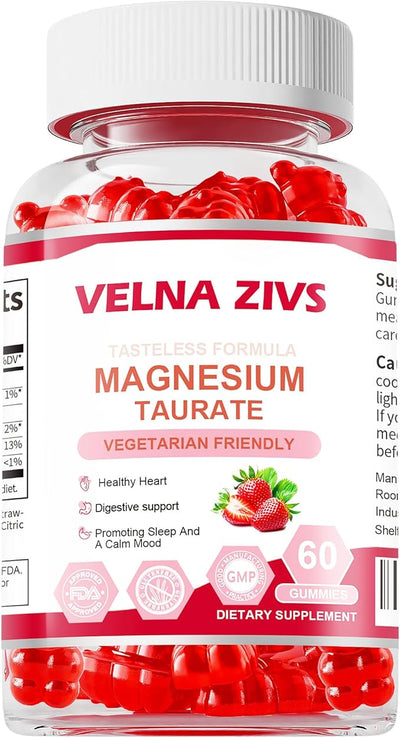
If you're ready to put this into practice, our Magnesium Taurate Gummies 1800mg, Magnesium Taurate Supplement, High Absorption& chewable for Kid and Adults, is formulated with this in mind. You can also compare the Magnesium Taurate and Magnesium ranges to find the format that suits you.
These statements have not been evaluated by the Food and Drug Administration. This product is not intended to diagnose, treat, cure, or prevent any disease. Talk to a healthcare professional before starting any new supplement, especially if you are pregnant, nursing, taking medication, or managing a health condition.