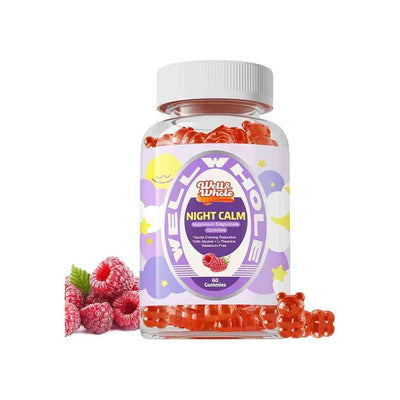
Magnesium Bisglycinate with Apigenin & B6: Sleep Without Melatonin
Discover how magnesium bisglycinate with apigenin and B6 supports melatonin-free sleep. Learn the science behind each compound and why this combo works.

If you've tried melatonin for sleep and felt groggy the next morning, experienced vivid dreams that left you unsettled, or found that it stopped working after a few weeks, you're not alone. While melatonin is the most popular sleep supplement in America, its limitations are increasingly recognized—including next-day drowsiness, disrupted sleep architecture, and tolerance development.
The alternative approach gaining scientific and clinical attention is a melatonin-free sleep formula that addresses the physiological foundations of restful sleep: calming the nervous system, supporting GABA activity, and promoting the natural relaxation response. well&whole Magnesium Bisglycinate Gummies deliver this approach through three carefully selected compounds—magnesium bisglycinate, apigenin, and vitamin B6—that work synergistically to support sleep quality without melatonin's common side effects.

In this deep-dive ingredient science article, we'll examine each compound's mechanism, the research behind its sleep-relevant properties, and how they combine in a melatonin-free formula designed for people who want to wake up feeling refreshed, not foggy.
Why Sleep Without Melatonin?
Melatonin's Limitations
Melatonin supplementation has several well-documented limitations that have prompted many sleep researchers and clinicians to explore alternatives:
1. Timing Sensitivity
Melatonin is a circadian signal hormone—it tells your body "it's dark outside, prepare for sleep." This signaling function means timing is critical. Taking melatonin too early can shift your circadian rhythm; taking it too late can cause drowsiness into the next morning. Many people take melatonin at inconsistent times, leading to circadian confusion rather than alignment.
2. Dose-Response Issues
Research published in *Sleep Medicine Reviews* found that lower doses of melatonin (0.3-1 mg) may be more effective than the commonly used 3-10 mg doses, yet most commercial products contain 5-10 mg per serving (1). Excessive doses can cause:
- Morning grogginess and difficulty waking
- Vivid, sometimes disturbing dreams
- Rebound insomnia when discontinued
- Potential suppression of natural melatonin production
3. Sleep Architecture Disruption
While melatonin may help you fall asleep, some studies suggest it doesn't necessarily improve sleep quality. A review in *PLOS ONE* noted that melatonin's effects on total sleep time and sleep efficiency were modest compared to its effects on sleep onset (2). Some users report that melatonin-induced sleep feels different—less restorative—than natural sleep.
4. Tolerance Development
Regular melatonin users often report diminishing effectiveness over time. While true physiological tolerance to melatonin is debated, the subjective experience of reduced efficacy is common enough that many practitioners recommend cycling or avoiding daily use.
The Melatonin-Free Alternative
A melatonin-free sleep approach doesn't try to signal "it's time to sleep." Instead, it creates the physiological conditions that make sleep natural and easy:
- **Nervous system calm**: Reducing the activation state that keeps you awake
- **GABA support**: Enhancing the neurotransmitter that promotes relaxation
- **Muscle relaxation**: Releasing physical tension that can interfere with sleep onset
- **Stress hormone modulation**: Supporting balanced cortisol rhythms
This approach supports the body's innate ability to fall asleep naturally rather than artificially overriding the circadian system with a hormone signal.
Magnesium Bisglycinate: The Foundation
Why Magnesium for Sleep?
Magnesium is involved in over 300 enzymatic reactions in the body, including several that directly impact sleep:
- **GABA receptor activation**: Magnesium is a positive allosteric modulator of GABA-A receptors, meaning it enhances GABA's calming effect on the brain. GABA is the primary inhibitory neurotransmitter—its activation promotes relaxation and reduces neural excitability.
- **Cortisol modulation**: Magnesium may help regulate cortisol, the stress hormone that can keep you awake. Research has shown that magnesium deficiency is associated with elevated cortisol levels (3).
- **Muscle relaxation**: Magnesium blocks calcium channels in muscle cells, promoting physical relaxation. Muscle tension is a common barrier to sleep onset.
- **Melatonin support (natural)**: Magnesium plays a role in the natural synthesis of melatonin within the body. By supporting this pathway, magnesium helps your body produce its own melatonin at appropriate times—rather than relying on exogenous supplementation.
A study published in the *Journal of Research in Medical Sciences* found that magnesium supplementation significantly improved sleep quality, sleep duration, and sleep onset latency in elderly subjects with insomnia (4).
Why Bisglycinate? The Chelated Form Advantage
Not all magnesium forms are equal for sleep support. Magnesium bisglycinate (also called magnesium glycinate) offers specific advantages:
What Is Chelation?
Chelation is a chemical process where a mineral is bound to an organic molecule (in this case, two glycine molecules), creating a stable complex. This binding fundamentally changes how the mineral is absorbed and utilized.
Bisglycinate vs Other Forms:
| Form | Absorption | GI Tolerance | Sleep Relevance |
|------|------------|--------------|-----------------|
| Bisglycinate | High (~40%+ bioavailability) | Excellent (minimal GI effects) | Glycine itself promotes sleep |
| Oxide | Low (~4% bioavailability) | Poor (common laxative effect) | Minimal sleep relevance |
| Citrate | Moderate | Moderate (some laxative effect) | No direct sleep compounds |
| Threonate | High | Good | Brain-targeted; limited sleep data |
| Taurate | Moderate-high | Good | Taurine has some calming effects |
The Glycine Bonus
Each molecule of magnesium bisglycinate delivers two glycine molecules. Glycine is itself a sleep-supporting amino acid:
- Glycine is an inhibitory neurotransmitter that promotes relaxation
- Research published in *Sleep and Biological Rhythms* demonstrated that glycine supplementation (3 g before bed) improved subjective sleep quality and reduced core body temperature—a key physiological signal for sleep onset (5)
- Glycine may enhance NREM (deep) sleep quality
This means magnesium bisglycinate provides two sleep-supporting compounds in one molecule: magnesium + glycine. It's a dual-action ingredient rather than a single-ingredient supplement.
Research Highlights
A systematic review in *Nutrients* evaluated multiple studies on magnesium and sleep, concluding that magnesium supplementation appeared to benefit sleep quality, particularly in populations with low magnesium status (6). The review noted that the effects were most pronounced in older adults and individuals with documented magnesium deficiency.
Apigenin: The Calming Flavonoid
What Is Apigenin?
Apigenin is a naturally occurring flavonoid found in several plants, including chamomile (Matricaria chamomilla), parsley, celery, and onions. It's the compound most closely associated with chamomile's traditional reputation as a calming, sleep-promoting tea—and it's the reason chamomile has been used for sleep support for thousands of years.
Mechanism of Action for Sleep
Apigenin supports sleep through two key mechanisms:
1. GABA-A Receptor Binding
Apigenin binds to GABA-A receptors in the brain—the same receptors targeted by benzodiazepine sleep medications, but without the sedative intensity or side effects. A study published in *Proceedings of the National Academy of Sciences* demonstrated that apigenin acts as a mild positive allosteric modulator of GABA-A receptors, enhancing GABA's natural calming effect without directly activating the receptors (7).
This is a fundamentally different action from sedatives: apigenin doesn't "push" the receptor to activate. Instead, it makes the receptor more responsive to your body's natural GABA, amplifying the calming signal your brain is already producing.
2. Cortisol and Stress Response Modulation
Chronic stress elevates cortisol, which can interfere with sleep onset and maintenance. Apigenin has demonstrated stress-modulating properties:
- Research in *Molecular Medicine Reports* showed that apigenin reduced cortisol-like stress markers in cellular models (8)
- Apigenin's anti-inflammatory properties may help address neuroinflammation that can disrupt sleep architecture
- By supporting a balanced stress response, apigenin may create conditions for natural cortisol decline in the evening—a prerequisite for sleep onset
Why Apigenin Instead of Chamomile Tea?
While chamomile tea contains apigenin, the concentration varies significantly depending on the tea quality, steeping time, and plant source. well&whole Magnesium Bisglycinate Gummies deliver apigenin in a standardized, consistent dose that ensures reliable delivery—unlike the variable apigenin content in brewed tea.

Additionally, chamomile tea requires preparation and timing—drinking a large cup of tea before bed may cause nocturia (nighttime urination) that disrupts sleep. Gummies provide the compound without the fluid volume.
Research Highlights
A study in the *Journal of Agricultural and Food Chemistry* analyzed the apigenin content of chamomile tea and found it to be the primary bioactive compound responsible for chamomile's calming properties (9). A clinical trial published in *Phytomedicine* found that chamomile extract improved sleep quality in patients with chronic insomnia, with apigenin identified as the key active compound (10).
Vitamin B6: The Conversion Catalyst
What Does B6 Do for Sleep?
Vitamin B6 (pyridoxine) plays a critical role in neurotransmitter synthesis:
- **GABA synthesis**: B6 is a required cofactor for glutamate decarboxylase, the enzyme that converts glutamate (an excitatory neurotransmitter) into GABA (an inhibitory, calming neurotransmitter)
- **Serotonin synthesis**: B6 is required for the conversion of 5-HTP to serotonin, which is then naturally converted to melatonin in the body
- **Dopamine synthesis**: B6 supports DOPA decarboxylase, converting L-Dopa to dopamine
For sleep, the most relevant pathway is GABA synthesis. Without adequate B6, the conversion of excitatory glutamate to calming GABA may be impaired—meaning your brain may be producing more activation signals and fewer calming signals. B6 ensures this conversion pathway functions efficiently.
The Natural Melatonin Pathway
Here's where B6 is particularly clever in a melatonin-free formula:
Serotonin → (natural enzymatic conversion) → Melatonin
B6 supports the first step of this chain (converting 5-HTP to serotonin). Your body then naturally converts serotonin to melatonin as darkness falls. This means:
- B6 helps your body produce its own melatonin at the right time and the right amount
- You don't need to supplement exogenous melatonin
- The natural pathway respects circadian timing rather than overriding it
- The amount of melatonin produced is physiologically appropriate (much less than the 5-10 mg in most supplements)
Research Highlights
A study in *Perceptual and Motor Skills* found that B6 supplementation improved dream vividness and recall—suggesting enhanced REM sleep quality (11). Research in *Neurochemistry International* documented B6's critical role as a cofactor in GABA synthesis, noting that B6 deficiency can impair the conversion of glutamate to GABA (12).
The Synergy: How These Three Compounds Work Together
The Three-Layer Approach
well&whole Magnesium Bisglycinate Gummies deliver a three-layer approach to melatonin-free sleep support:

Layer 1 — Nervous System Calm (Magnesium + Glycine)
- Magnesium activates GABA receptors and promotes muscle relaxation
- Glycine (from bisglycinate chelation) provides additional inhibitory neurotransmitter support
- Together, they reduce neural excitability and physical tension
Layer 2 — GABA Enhancement (Apigenin)
- Apigenin makes GABA-A receptors more responsive to your body's natural GABA
- This amplifies the calming signal rather than forcing receptor activation
- Apigenin also supports balanced cortisol and stress responses
Layer 3 — Neurotransmitter Synthesis (B6)
- B6 ensures efficient conversion of glutamate → GABA (reducing excitation)
- B6 supports the natural serotonin → melatonin pathway (producing your own melatonin)
- B6 enables the enzymatic machinery that powers both calming and sleep-onset pathways
The Combined Effect:
Rather than overriding your circadian system with an artificial melatonin signal, this formula creates the physiological conditions—calm nervous system, enhanced GABA activity, efficient neurotransmitter synthesis—that make natural sleep possible. Your body's own melatonin production (supported by B6) kicks in at the appropriate circadian time, at the appropriate physiological dose.
Why This Works Better Than Melatonin Alone
| Feature | Melatonin Supplement | Mg Bisglycinate + Apigenin + B6 |
|---------|---------------------|-------------------------------|
| Mechanism | Circadian hormone override | Physiological calm + natural pathways |
| Onset | Can cause drowsiness within 30 min | Gradual relaxation; natural sleep onset |
| Sleep quality | May alter sleep architecture | Supports natural sleep cycles |
| Next-day effects | Often groggy | Typically refreshed |
| Tolerance | May develop | No documented tolerance |
| Circadian respect | Overrides timing | Supports natural rhythm |
| Dream effects | Vivid/disturbing | Normal dream quality |
| Dependency | Possible psychological | No dependency risk |
Practical Usage
How to Use Magnesium Bisglycinate Gummies for Sleep
- **Timing**: Take 30-60 minutes before your intended bedtime
- **Consistency**: Daily use builds magnesium levels over time; best results typically after 1-2 weeks
- **Routine**: Combine with other sleep-supportive practices (dark room, no screens, cool temperature)
- **Dosage**: Follow product label instructions; start with the recommended serving
Supporting Sleep Practices
- **Consistent bedtime**: Even on weekends, maintain a similar sleep/wake schedule
- **Light management**: Reduce blue light exposure 1-2 hours before bed; keep your bedroom dark
- **Temperature**: A cool room (65-68°F) supports the natural core body temperature drop that signals sleep
- **Wind-down routine**: Reading, gentle stretching, or journaling before bed
- **Avoid stimulants**: No caffeine after noon; limit alcohol which disrupts sleep architecture
When to Expect Results
- **First night**: Some users notice subtle relaxation effects immediately
- **1-2 weeks**: Magnesium levels begin to build; more consistent sleep improvement
- **4+ weeks**: Full effect as magnesium status is optimized and circadian rhythm adapts to consistent bedtime routine
FAQ
Q1: Why is this formula melatonin-free?
Because melatonin has well-documented limitations: morning grogginess, disrupted sleep architecture, potential tolerance, and circadian override. This formula supports the physiological foundations of natural sleep rather than artificially signaling sleep onset.
Q2: Will this make me drowsy like melatonin does?
No. This formula promotes relaxation and creates conditions for natural sleep—not artificial drowsiness. You should feel calm and ready for sleep, not drugged into unconsciousness. Next-morning grogginess is uncommon with this approach.
Q3: What makes magnesium bisglycinate better than other magnesium forms for sleep?
Bisglycinate offers high absorption, excellent GI tolerance (no laxative effect), and the bonus of glycine—which is itself a sleep-promoting amino acid. Other forms (oxide, citrate) have lower absorption or GI side effects that can disrupt sleep.
Q4: How does apigenin compare to chamomile tea?
Apigenin is the primary active compound in chamomile. The gummy format delivers a standardized, consistent dose without the variable apigenin content and fluid volume of brewed tea. It's a more reliable and convenient way to get apigenin's sleep-supporting effects.
Q5: Can I take this with other sleep supplements?
This formula is designed to be comprehensive. If you're currently using melatonin, consider transitioning gradually—reducing melatonin while introducing the gummies. Avoid combining with other GABA-enhancing supplements without healthcare provider guidance.
Q6: How does B6 support sleep without melatonin?
B6 is a cofactor for the conversion of glutamate (excitatory) to GABA (calming). It also supports the natural serotonin-to-melatonin pathway, meaning your body can produce its own melatonin at physiological levels rather than relying on supplemental melatonin at supra-physiological doses.
Q7: Is this safe for long-term nightly use?
Magnesium bisglycinate is generally safe for long-term use. B6 at supplement doses is well-tolerated. Apigenin has a long safety history as a dietary flavonoid. This formula is designed for regular nightly use as part of a sleep-supportive routine.
Q8: Can I take this during the day for anxiety support?
While primarily designed for evening use, magnesium bisglycinate and apigenin also have daytime calming properties. Some users take a half-serving during the day for anxiety support and a full serving before bed. Follow label instructions and consult your healthcare provider.
Q9: Will this help with restless legs?
Magnesium supports muscle relaxation, and restless legs syndrome has been associated with magnesium deficiency. While this product isn't designed specifically for restless legs, the magnesium bisglycinate component may provide complementary support.
Q10: Can children take this product?
This product is formulated for adults. Children's magnesium needs differ by age and should be determined by a pediatric healthcare provider. Do not give adult-dose supplements to children.
Conclusion
For those seeking sleep support without melatonin's common limitations—morning grogginess, disrupted sleep quality, and tolerance development—well&whole Magnesium Bisglycinate Gummies offer a scientifically grounded alternative.

The three-ingredient formula—magnesium bisglycinate, apigenin, and B6—works synergistically to support the physiological foundations of natural sleep: GABA activation, nervous system calm, muscle relaxation, stress modulation, and efficient neurotransmitter synthesis. Rather than overriding your circadian system, it creates the conditions for your body to fall asleep naturally and wake up refreshed.
Take it consistently. Build a bedtime routine. Give your body the compounds it needs to support natural sleep—and leave the melatonin on the shelf.
Ready for melatonin-free sleep? Try well&whole Magnesium Bisglycinate Gummies tonight.
Related supplements
Putting it simply: if this is something you want to add to your routine, our Magnesium Bisglycinate Gummies with Apigenin & B6, Melatonin Free, 60 Ct | Gentle on Stomach, Chelated with Glycine, Night Calm Routine and Sleep & Calm Support Bundle are a good place to start. The wider Sleep Support collection is worth a look, and the Magnesium range covers related formats.
These statements have not been evaluated by the Food and Drug Administration. This product is not intended to diagnose, treat, cure, or prevent any disease.