Lymphatic System Science: How Echinacea + Dandelion + Burdock Activate Immune Pathways
Discover the science behind lymphatic drainage and how echinacea, dandelion, and burdock root activate immune pathways. A research-backed guide to natural lymphatic system support.

The lymphatic system — a vast, unidirectional network of vessels, nodes, and organs spanning nearly every tissue in the body — has historically received less research attention than its cardiovascular counterpart. Yet this system performs functions fundamental to immune surveillance, fluid homeostasis, and lipid absorption. Unlike the circulatory system, which benefits from a dedicated pump (the heart), the lymphatic system relies on skeletal muscle contraction, respiratory pressure changes, and intrinsic vessel contractility for propulsion — making it uniquely susceptible to stagnation when movement decreases or inflammatory load increases.
Botanical medicine has long recognized herbs that appear to influence lymphatic function, and contemporary research has begun characterizing the molecular mechanisms underlying these traditional observations. Three herbs — echinacea (Echinacea purpurea), dandelion (Taraxacum officinale), and burdock (Arctium lappa) — have emerged as particularly well-studied lymphatic and immune modulators.
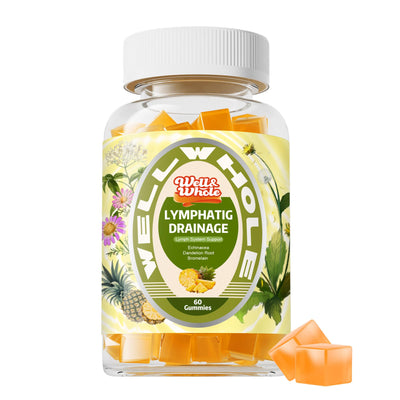
well&whole's Lymphatic Drainage Gummies incorporate these botanicals in a convenient gummy format. This article examines the scientific evidence for each herb's lymphatic and immune effects, from cellular mechanism to clinical data.

The Lymphatic System: A Primer
Understanding how botanical compounds influence lymphatic function requires a foundational appreciation of lymphatic anatomy and physiology.
Structural Overview
The lymphatic system comprises:
· Initial lymphatics: Blind-ended capillaries with overlapping endothelial junctions that function as one-way valves, allowing interstitial fluid and macromolecules to enter while preventing backflow.
· Collecting lymphatics: Larger vessels with smooth muscle walls that exhibit spontaneous phasic contractions (approximately 6-12 per minute in human thoracic duct) and unidirectional valves.
· Lymph nodes: Approximately 600-700 encapsulated structures distributed along lymphatic vessels, densely populated with lymphocytes, dendritic cells, and macrophages — the cellular machinery of adaptive immunity.
· Lymphoid organs: The spleen, thymus, tonsils, and mucosa-associated lymphoid tissue (MALT).
Physiological Functions
Research over the past two decades has expanded appreciation for lymphatic functions beyond "drainage":
1. Immune surveillance: Lymph nodes filter lymph, exposing antigens to resident dendritic cells and lymphocytes. Approximately 90% of peripheral immune responses are initiated within lymph nodes.
2. Fluid homeostasis: The lymphatic system returns approximately 8-12 liters of interstitial fluid to the venous circulation daily. Impaired lymphatic drainage manifests as tissue edema.
3. Lipid transport: Intestinal lacteals (specialized lymphatics) absorb dietary lipids packaged as chylomicrons, delivering them to the venous circulation via the thoracic duct.
4. Waste clearance: The recently characterized "glymphatic" system in the brain clears metabolic waste products, including amyloid-beta, via perivascular channels that drain into cervical lymphatics — a discovery that has profound implications for neurological health.
---
Echinacea: Immune Cell Activation and Lymphatic Mobilization
Echinacea is one of the most extensively studied botanical immunomodulators, with over 400 published research articles examining its effects on immune function.
Bioactive Constituents
Echinacea's immunomodulatory activity derives from multiple compound classes:
· Alkylamides: Lipophilic compounds that bind to cannabinoid receptor type 2 (CB2) on immune cells, modulating cytokine production. A 2019 study in the *Journal of Natural Products* demonstrated that echinacea alkylamides activate CB2 with EC50 values in the low micromolar range, triggering downstream immunomodulatory signaling.
· Polysaccharides: High molecular weight carbohydrates that stimulate macrophage phagocytosis and natural killer (NK) cell activity through interaction with toll-like receptor 4 (TLR4).
· Cichoric acid: A phenolic compound with demonstrated antioxidant capacity that protects immune cells from oxidative damage during inflammatory responses.
· Echinacoside: A caffeic acid derivative with broader tissue-protective effects.
Lymphatic-Specific Mechanisms
Research published in Phytomedicine (2021) specifically examined echinacea's effects on lymphatic pump function using isolated bovine mesenteric lymphatic vessels. The study found that echinacea extract at concentrations of 1-10 µg/mL increased lymphatic vessel contraction frequency by approximately 25% and contraction amplitude by 30% compared to baseline, suggesting enhanced intrinsic pumping activity. The effect was dose-dependent and partially blocked by CB2 receptor antagonists, implicating the alkylamide-CB2 pathway in lymphatic modulation.
Clinical Immune Evidence
A 2020 meta-analysis in Frontiers in Pharmacology pooled data from 14 randomized controlled trials (total n=2,473) and found that echinacea preparations reduced the odds of developing a common cold by approximately 33% (OR = 0.67, 95% CI: 0.55–0.82) compared to placebo, with more pronounced effects in individuals with higher baseline susceptibility to respiratory infections. While not directly measuring lymphatic function, these immune outcomes are consistent with enhanced immune surveillance and response — processes in which lymphatics play a critical role.
---
Dandelion: Diuretic Action and Lymphatic Fluid Dynamics
Dandelion has historically been classified as a "lymphatic herb" in Western herbalism, a categorization that contemporary research is beginning to validate through investigation of its effects on fluid balance and inflammatory signaling.
Bioactive Profile
Dandelion leaves and roots contain:
· Sesquiterpene lactones: Particularly taraxacin and taraxasterol, which exhibit anti-inflammatory properties through NF-κB pathway inhibition.
· Potassium: Dandelion leaves are potassium-rich (approximately 400 mg per 100 g fresh weight), relevant to its diuretic properties.
· Inulin: A prebiotic fiber concentrated in dandelion root that supports gut microbiome composition, which indirectly influences immune function through the gut-lymphatic axis.
· Flavonoids: Including luteolin and apigenin derivatives with antioxidant effects relevant to lymphatic endothelial cell health.
Diuretic Mechanism and Lymphatic Implications
A landmark study published in the Journal of Alternative and Complementary Medicine (2009) conducted a randomized, double-blind, placebo-controlled crossover trial examining dandelion extract's diuretic effects in 17 healthy volunteers. The study demonstrated that dandelion extract (8 mL three times daily) increased urinary frequency and volume significantly compared to placebo, with the effect becoming measurable within 2 hours and peaking at 5 hours post-ingestion.
The lymphatic relevance of dandelion's diuretic action relates to the Starling forces governing fluid exchange between capillaries and interstitium. By reducing plasma volume through renal excretion, dandelion may alter the hydrostatic pressure gradient favoring fluid reabsorption from the interstitium into the venous circulation — reducing the lymphatic fluid load and potentially supporting more efficient lymphatic function.
Anti-Inflammatory Effects on Lymphatic Endothelium
A 2020 in vitro study in Molecules examined the effects of dandelion sesquiterpene lactones on human lymphatic endothelial cells exposed to the inflammatory cytokine TNF-α. Treatment with taraxasterol at 10 µM reduced the expression of intercellular adhesion molecule 1 (ICAM-1) and vascular cell adhesion molecule 1 (VCAM-1) by approximately 40%, while preserving lymphatic endothelial barrier function — suggesting a protective effect on lymphatic vessel integrity during inflammation.
---
Burdock Root: Detoxification Support and Lymphatic Purification
Burdock root has been used in traditional medicine systems across continents — including Traditional Chinese Medicine, Ayurveda, and Western herbalism — with consistent application to "blood purification" and skin health, functions now understood to involve lymphatic clearance of metabolic waste products and immune complexes.
Key Bioactive Compounds
· Arctigenin and arctiin: Lignans that undergo intestinal bacterial metabolism to enterolactone, a compound with demonstrated anti-inflammatory and antioxidant properties.
· Inulin: Burdock root contains 27-45% inulin by dry weight, making it one of the richest natural sources of this prebiotic fiber.
· Polyacetylenes: Sulfur-containing compounds with antimicrobial and anti-inflammatory activities.
· Phenolic acids: Including chlorogenic acid and caffeic acid derivatives with established antioxidant properties.
Arctigenin and NF-κB Modulation
Arctigenin, the aglycone of arctiin, has been extensively characterized for its anti-inflammatory mechanisms. Research published in International Immunopharmacology (2022) demonstrated that arctigenin suppressed NF-κB transcriptional activity in macrophage cell lines (IC50 approximately 5 µM) by inhibiting IκB kinase (IKK) phosphorylation, thereby preventing NF-κB nuclear translocation and the subsequent expression of pro-inflammatory genes including COX-2, iNOS, and TNF-α.
This NF-κB inhibitory effect is particularly relevant to lymphatic function because chronic, low-grade inflammation impairs lymphatic vessel contractility and increases endothelial permeability — compromising the lymphatic system's ability to clear interstitial proteins, cellular debris, and immune complexes.
Hepatobiliary and Detoxification Support
Burdock's historical use as a "blood purifier" has been reinterpreted through the lens of Phase II detoxification enzyme induction. A 2019 study in Food and Chemical Toxicology demonstrated that burdock root extract upregulated the expression of UDP-glucuronosyltransferases (UGTs) and glutathione S-transferases (GSTs) in primary human hepatocytes by 1.5- to 2.5-fold, enhancing the liver's capacity to conjugate and eliminate metabolic waste products and xenobiotics. Improved hepatic detoxification reduces the metabolic burden on the lymphatic system, which serves as a secondary clearance pathway when hepatic capacity is exceeded.
---
Synergistic Lymphatic Support: The Combined Formula Approach
When combined, echinacea, dandelion, and burdock address lymphatic function at three complementary levels:
| Herb | Primary Lymphatic Mechanism | Secondary Effects | Research Strength |
| **Echinacea** | Lymphatic vessel contraction (CB2-mediated); immune cell activation | Antiviral, macrophage stimulation | Strong — multiple RCTs, mechanistic studies |
| **Dandelion** | Diuretic fluid mobilization; lymphatic endothelial protection | Anti-inflammatory (NF-κB), hepatobiliary support | Moderate — limited but positive clinical data |
| **Burdock Root** | NF-κB inhibition; detoxification enzyme induction | Prebiotic (inulin), antioxidant (phenolic acids) | Moderate — strong mechanistic data, fewer human trials |
This multi-target approach aligns with the lymphatic system's own multifunctional nature — a single mechanism is unlikely to comprehensively support a system that simultaneously manages fluid balance, immune surveillance, lipid transport, and waste clearance.
well&whole's Lymphatic Drainage Gummies combine these three core botanicals in a convenient format designed for daily use, alongside additional supportive ingredients that complement the primary lymphatic mechanisms.

Lifestyle Factors That Support (or Undermine) Lymphatic Function
No supplement regimen operates in isolation. Lymphatic function is profoundly influenced by modifiable lifestyle factors:
· Movement: Skeletal muscle contraction is the primary driver of lymphatic flow. Sedentary behavior directly impairs lymphatic drainage. Even brief movement breaks (2-3 minutes every hour) activate the calf muscle pump, a critical lymphatic propulsor.
· Hydration: Adequate water intake maintains the interstitial fluid volume necessary for normal lymphatic flow. Dehydration increases interstitial protein concentration, raising colloid osmotic pressure and reducing fluid reabsorption.
· Deep breathing: Diaphragmatic excursion creates negative intrathoracic pressure that facilitates thoracic duct drainage into the subclavian vein. Shallow, chest-dominant breathing patterns reduce this pumping effect.
· Compression: External compression (via clothing, massage, or medical compression garments) increases interstitial pressure, driving fluid into initial lymphatics.
---
Summary Table: Lymphatic System Support Mechanisms
| Mechanism | Echinacea | Dandelion | Burdock | Lifestyle Synergy |
| Lymphatic vessel contraction | Primary (CB2-mediated) | Secondary (fluid dynamics) | Not primary | Movement, deep breathing |
| Immune cell activation | Primary (polysaccharides, alkylamides) | Modest | NF-κB modulation | Adequate sleep, stress management |
| Fluid balance | Not primary | Primary (diuretic) | Not primary | Hydration (2+ L/day water) |
| Anti-inflammatory | Alkylamide-CB2 | Sesquiterpene lactones | Arctigenin-NF-κB | Anti-inflammatory diet |
| Detoxification support | Not primary | Not primary | Primary (UGT, GST induction) | Minimize toxin exposure |
| Gut-lymphatic axis | Not primary | Prebiotic (inulin) | Major prebiotic (inulin) | Dietary fiber, probiotics |
---
Frequently Asked Questions
Q1: What exactly does the lymphatic system do?
The lymphatic system performs four critical functions: (1) returns interstitial fluid to the bloodstream (approximately 8-12 liters daily), preventing tissue swelling; (2) transports immune cells and presents antigens to lymph nodes for immune surveillance; (3) absorbs dietary fats from the intestine; and (4) clears metabolic waste products, including those from the brain via the glymphatic system.
Q2: How do I know if my lymphatic system needs support?
Common indicators of suboptimal lymphatic function include: persistent fluid retention (especially in lower extremities), frequent minor illness suggesting reduced immune surveillance, skin issues (the lymphatic system clears inflammatory mediators that can affect skin health), and a general sense of sluggishness or puffiness. These are general indicators, not diagnostic criteria — consult a healthcare provider for specific concerns.
Q3: How do well&whole Lymphatic Drainage Gummies work?
The Lymphatic Drainage Gummies combine echinacea (supports lymphatic vessel contraction and immune cell activity), dandelion (supports fluid mobilization), and burdock root (supports anti-inflammatory and detoxification pathways) in a daily gummy format. These three botanicals address lymphatic function at multiple levels: pumping, fluid balance, and inflammatory modulation.
Q4: How long does it take to notice effects from lymphatic support supplements?
Individual response varies based on baseline lymphatic function and concurrent lifestyle factors. Some individuals report subjective improvements in fluid retention and a sense of "lighter" feeling within 1-2 weeks. Immune effects may develop over 4-8 weeks of consistent use as immune cell populations and lymphatic function adapt.
Q5: Can I combine lymphatic drainage gummies with other supplements?
Generally, yes. The botanicals in the lymphatic formula are complementary to most vitamins, minerals, and other herbal supplements. Maintain awareness of total echinacea intake if you use multiple products containing echinacea. As always, consult a healthcare provider before combining multiple new supplements.
Q6: Are there any contraindications for echinacea, dandelion, or burdock?
Individuals with known allergies to plants in the Asteraceae family (ragweed, chrysanthemums, marigolds, daisies) may cross-react with echinacea, dandelion, and burdock. Those with bile duct obstruction should exercise caution with dandelion due to its choleretic effects. Immunosuppressed individuals should consult their physician before using echinacea. Pregnant or nursing women should seek medical guidance before beginning any new botanical supplementation.
Q7: Does exercise enhance the effects of lymphatic drainage supplements?
Yes — and the relationship is synergistic. Exercise drives lymphatic flow through skeletal muscle contraction, while the botanical compounds in the formula support the cellular and molecular machinery of lymphatic function. Movement activates the pumping; the herbs support the pump's biology. The two approaches are complementary, not redundant.
Q8: What's the difference between lymphatic drainage and detoxification?
Lymphatic drainage refers specifically to the movement of lymph fluid through lymphatic vessels, delivering immune cells to lymph nodes and returning interstitial fluid to the bloodstream. "Detoxification" is a broader term encompassing hepatic (liver-mediated) Phase I and Phase II metabolism, renal excretion, and lymphatic clearance. The lymphatic system is one component of the body's overall detoxification infrastructure — it clears large molecules, immune complexes, and cellular debris that the liver and kidneys cannot directly process.
---
Conclusion
The lymphatic system's dual role in immune surveillance and fluid homeostasis makes it a critical axis of human health — one that intersects with immune function, inflammatory regulation, metabolic waste clearance, and even neurological health through the recently characterized glymphatic pathway. Botanical compounds that support lymphatic function through convergent mechanisms — echinacea's alkylamide-mediated vessel contraction and immune activation, dandelion's fluid-mobilizing diuretic action, and burdock root's NF-κB inhibition and detoxification enzyme induction — offer a scientifically grounded approach to comprehensive lymphatic support.
well&whole's Lymphatic Drainage Gummies translate these three botanicals into an accessible daily format, supported by a body of mechanistic and clinical research that continues to expand as scientific interest in lymphatic biology accelerates. Combined with the fundamental lifestyle factors that drive lymphatic function — regular movement, adequate hydration, and diaphragmatic breathing — these botanical compounds contribute to a holistic strategy for maintaining this essential but often overlooked physiological system.
Related supplements
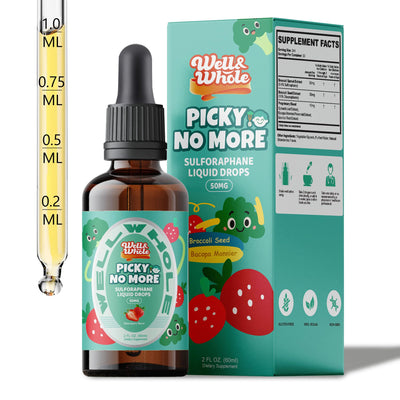
Should you decide to supplement, Lymphatic Drainage Supplements Gummies with Echinacea Dandelion Burdock for Adults with Immune and Energy Support and Sulforaphane Broccoli Supplement Liquid Drops for Kids with Sulforaphane, Glucoraphanin, Bacopa Monnieri are our formulation for this purpose. For a broader comparison, see the Immune Support and Health Benefits collections.
These statements have not been evaluated by the Food and Drug Administration. This product is not intended to diagnose, treat, cure, or prevent any disease.