Liver Support for Bodybuilders: Protecting Your Liver on Supplements
Learn why bodybuilders need liver support—from supplement metabolism to oxidative stress—and which ingredients help protect your liver while you train hard.

Bodybuilders push their bodies to the limit—heavy training, high protein intake, performance supplements, and sometimes less-than-ideal dietary choices around contest prep. It is a lifestyle built on maximizing output. But there is an organ behind all that output that rarely gets the attention it deserves: your liver.
Your liver processes every amino acid you consume, metabolizes every supplement you take, manages the oxidative stress generated by intense training, and produces the glutathione that protects your cells from damage. When your liver is healthy, your entire supplement and nutrition stack works better. When your liver is struggling, everything downstream suffers—protein synthesis, recovery, nutrient absorption, hormone metabolism.
This article explains why bodybuilders are particularly vulnerable to liver stress, what the specific risks are, and how evidence-based liver support can help you protect the organ that makes everything else possible.
Why Bodybuilders Place Extra Demand on the Liver
High Protein and Amino Acid Load
Bodybuilders typically consume 1.6–2.2 grams of protein per kilogram of body weight per day—or more during bulking phases. That is 150–300 grams of daily protein for many athletes. Every gram of protein must be deaminated (the amino group removed) in the liver, and the resulting ammonia must be converted to urea via the liver's urea cycle.
A 2018 study in the *American Journal of Clinical Nutrition* noted that while healthy livers can handle this load, the cumulative metabolic demand is significant. When combined with other liver stressors, the total burden can exceed what the liver manages efficiently.
Supplement Metabolism
The typical bodybuilder supplement stack includes multiple products that the liver must process:
- **Pre-workouts** (stimulants, nootropics)
- **Protein powders and amino acid supplements**
- **Creatine**
- **Vitamins and minerals**
- **Fat burners**
- **Performance enhancers** (various)
Each compound requires hepatic metabolism. While individual products at recommended doses are generally manageable, the cumulative load of 5–10+ daily supplements creates a processing demand that adds up. A 2020 review in the *Journal of the International Society of Sports Nutrition* raised concerns about multi-supplement stacking and its potential liver impact, noting that the additive effect of multiple compounds processed simultaneously is rarely studied.
Oxidative Stress from Intense Training
Heavy resistance training generates significant reactive oxygen species (ROS). The liver—which produces glutathione to neutralize ROS throughout the body—must manage both the oxidative stress generated locally in exercising muscles and the systemic cleanup. A 2017 study in *Free Radical Biology and Medicine* found that glutathione levels dropped by 20–30% after intense training sessions, requiring hepatic replenishment.
Contest Prep and Calorie Restriction
During contest preparation, bodybuilders often enter severe calorie deficits while maintaining high training volume. This combination:
- **Reduces nutrient availability** for liver glutathione production
- **Increases cortisol**, which stresses liver metabolism
- **May include rapid weight loss**, which can paradoxically increase liver fat (a known phenomenon during crash dieting documented in a 2016 *Journal of Hepatology* study)
- **Often involves supplement stacking** at higher intensity
Performance-Enhancing Substances
The most significant liver risk in bodybuilding comes from performance-enhancing drugs—oral anabolic-androgenic steroids (AAS), prohormones, and other compounds that are directly hepatotoxic, particularly in oral (17-alpha-alkylated) forms. A 2017 study in *Hepatology* documented that oral AAS use was associated with elevated liver enzymes, cholestasis, peliosis hepatis (blood-filled cysts in the liver), and in rare cases, liver tumors.
While this article focuses on legal supplement support rather than illicit substances, it is important to acknowledge this risk honestly: if you use oral AAS, your liver is under severe stress, and no supplement can fully compensate. Reducing or eliminating hepatotoxic compounds is the most important intervention.
Specific Liver Risks for Bodybuilders
| Risk Factor | Mechanism | Severity | Mitigation |
|-------------|-----------|----------|-----------|
| High protein intake | Increased urea cycle demand | Moderate | Adequate hydration, balanced amino acid intake |
| Multi-supplement stacking | Cumulative hepatic processing load | Moderate | Streamline stack, avoid redundancy |
| Training oxidative stress | Glutathione depletion | Moderate | Antioxidant support, recovery nutrition |
| Contest prep calorie deficit | Reduced glutathione substrate availability | Moderate | Maintain adequate protein and micronutrients |
| Crash dieting | Paradoxical liver fat increase | Moderate | Gradual weight loss (0.5–1% body weight per week) |
| Oral AAS/prohormones | Direct hepatotoxicity | Severe | Abstinence is primary; medical supervision essential |
| Alcohol | Acetaldehyde toxicity, glutathione depletion | Variable | Reduce or eliminate |
Evidence-Based Liver Support for Bodybuilders
NAC: The Glutathione Replenisher
For bodybuilders, NAC is the most directly relevant liver support ingredient. Training depletes glutathione; high protein intake increases the liver's antioxidant demand; supplement metabolism adds oxidative load. NAC provides the cysteine substrate the liver needs to rebuild glutathione and maintain its antioxidant defense.
A 2021 study in the *European Review for Medical and Pharmacological Sciences* confirmed that NAC supplementation increased hepatic glutathione levels and reduced oxidative stress markers. For bodybuilders, this means NAC may help maintain the glutathione reserves that training, protein intake, and supplement metabolism all deplete.
TUDCA: Bile Flow and Cellular Protection
Bodybuilders who use oral supplements (including some performance compounds) risk bile flow impairment (cholestasis). TUDCA promotes healthy bile acid circulation and reduces ER stress in hepatocytes—both relevant mechanisms for protecting liver cells under high metabolic demand. A 2018 study in *Cell Death & Disease* demonstrated TUDCA's protective effect against hepatocyte apoptosis.
Milk Thistle: Antioxidant and Anti-inflammatory Support
Silymarin provides broad antioxidant and anti-inflammatory protection for the liver—compensating for the oxidative stress that training and supplement metabolism generate. A 2020 meta-analysis in *Phytotherapy Research* found that silymarin reduced liver enzymes in multiple populations, including those with supplement and medication-related liver stress.
EAA + Liver Support: The Dual-Action Approach
Bodybuilders need amino acids for muscle recovery AND liver support for processing those amino acids. A dual-action formula that combines EAAs with liver-protective ingredients addresses both sides of the equation.
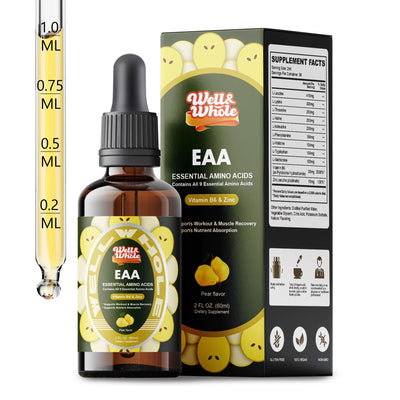
The well&whole EAA Liquid Drops & Liver Support combine all nine essential amino acids with milk thistle and other liver-supportive compounds—delivering the amino acids your muscles need while supporting the liver that processes them.

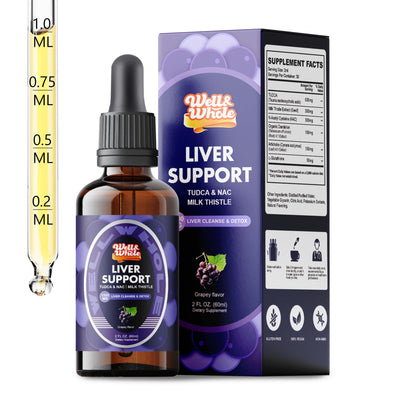
For standalone liver support with a broader ingredient profile, well&whole Liver Support Liquid Drops combine TUDCA, NAC, milk thistle, dandelion, artichoke, and glutathione—addressing the multiple mechanisms that bodybuilder liver stress involves.

Practical Recommendations for Bodybuilders
Streamline Your Stack
Every supplement your liver processes adds to the total load. Evaluate your stack honestly:
- Are you taking products with overlapping ingredients?
- Are you taking supplements that lack clear evidence for your goals?
- Could you replace multiple single-ingredient products with a well-formulated multi-ingredient formula?
Less redundancy means less hepatic processing demand.
Hydrate Adequately
The urea cycle requires water. High protein intake increases urea production, and dehydration reduces the liver's ability to excrete it. A minimum of 3–4 liters per day for active bodybuilders is a reasonable guideline—adjust based on body size, training volume, and climate.
Support Glutathione Production
Ensure adequate NAC, methionine (through protein intake or EAAs), and glycine (through diet or supplementation) to provide the three substrates your liver needs for glutathione synthesis.
Avoid Known Hepatotoxic Practices
- Do not combine alcohol with intense training phases
- Avoid oral prohormones and 17-alpha-alkylated AAS
- Do not exceed recommended doses on any supplement
- Avoid stacking multiple supplements that individually stress the liver
Use Liver Support Consistently
Liver support is not something you take only when you feel "off." The protective effects of milk thistle, NAC, TUDCA, and other ingredients are cumulative. Daily, consistent use builds resilience over weeks and months—far more effective than reactive use after a problem appears.
FAQ
1. Why do bodybuilders need liver support specifically?
Bodybuilders place higher metabolic demand on the liver through increased protein/amino acid processing, multi-supplement metabolism, training-generated oxidative stress, and contest prep extremes. This cumulative load exceeds what sedentary individuals impose, making proactive liver support more relevant.
2. Can high protein intake damage the liver?
In healthy individuals, the liver can process high protein loads efficiently. However, when combined with other stressors (supplement metabolism, training oxidative stress, calorie restriction), the cumulative demand may exceed optimal capacity. Adequate hydration and balanced amino acid intake help manage this load.
3. Which supplement ingredients stress the liver most?
Oral anabolic-androgenic steroids (17-alpha-alkylated) are the most hepatotoxic legal or illegal substances bodybuilders encounter. Among legal supplements, high-dose fat burners (containing stimulants), excessive niacin, and some herbal compounds (kava, high-dose vitamin A) can stress the liver when overused.
4. Is creatine harmful to the liver?
No. Multiple studies, including a 2019 review in the *Journal of the International Society of Sports Nutrition*, have found that creatine at recommended doses (3–5 g/day) does not adversely affect liver function in healthy individuals.
5. Should I take liver support during contest prep?
Contest prep increases liver stress through calorie deficits, training volume, and supplement stacking. Liver support during this phase may help maintain glutathione production and processing capacity despite reduced nutrient intake. However, it cannot compensate for extreme crash dieting, which itself damages the liver.
6. Can EAAs replace protein powder for bodybuilders?
No. EAAs provide rapid, free-form amino acids for muscle protein synthesis—particularly useful around training—but they do not provide the total protein quantity or the non-essential amino acids that whole protein sources deliver. Both have roles in a bodybuilder's nutrition plan.
7. How do I know if my liver is stressed from supplements?
The most accessible indicator is liver enzyme testing (ALT, AST) on routine blood work. Elevated enzymes suggest liver cell stress. Other signs include persistent fatigue, right upper abdominal discomfort, and dark urine. If you experience these symptoms, see your healthcare provider promptly.
8. Can I take NAC and TUDCA together?
Yes. NAC and TUDCA work through different mechanisms—NAC replenishes glutathione, TUDCA supports bile flow and reduces ER stress. They are complementary, not redundant. Both are included in the well&whole Liver Support Liquid Drops.

9. Does milk thistle interfere with other supplements?
Milk thistle may affect the liver's CYP450 enzyme system, potentially altering the metabolism of some medications and supplements. If you take prescription medications, consult your healthcare provider. For most dietary supplements, the interaction is minimal at standard milk thistle doses.
10. What is the most important liver protection step for bodybuilders?
Avoid hepatotoxic compounds (oral AAS, excessive alcohol, supplement overdosing). This single step eliminates the most severe liver risks. Everything else—NAC, TUDCA, milk thistle, diet, hydration—is secondary to not poisoning the organ you are trying to protect.
Conclusion
Your liver is the engine behind every supplement, every protein shake, every recovery process that drives your training results. Bodybuilders place exceptional metabolic demands on this organ, and those demands deserve exceptional support.
The core strategy is simple: avoid hepatotoxic practices, streamline your supplement stack, hydrate adequately, and add evidence-based liver support ingredients that address the specific vulnerabilities of a high-demand lifestyle.
well&whole EAA Liquid Drops & Liver Support gives you amino acids for recovery plus liver support in one formula—because your muscles and your liver work together, and supporting both is smarter than supporting only one. For comprehensive standalone liver support, well&whole Liver Support Liquid Drops deliver TUDCA, NAC, milk thistle, dandelion, artichoke, and glutathione in a single dose.

Train hard. Recover smart. Protect the organ that makes it all possible.
Related supplements
Where to begin? Our Liver Support Liquid Drops Supplement | TUDCA Drops Liver Cleanse & Detox with Milk Thistle, NAC, Dandelion, Artichoke & Glutathione for Detox and TUDCA 1000mg Gummies with Milk Thistle 500mg for Adults are a sensible place to start, and the Liver Support collection lays out the other formats side by side with Milk Thistle.
These statements have not been evaluated by the Food and Drug Administration. This product is not intended to diagnose, treat, cure, or prevent any disease.