Liver Detox Myths: What Actually Works (and What Doesn't)
Separate liver detox facts from fiction. Learn which liver cleanse methods are science-backed and which are marketing myths. Evidence-based guide.

"Detox" is one of the most loaded words in wellness. Search "liver detox" and you'll find juice cleanses, detox teas, foot pads, colonic irrigation, 3-day flush protocols, and supplements promising to "clean out" your liver. The wellness industry has built a massive market around the idea that your liver is toxic and needs help purging accumulated waste.
But how much of this is science, and how much is marketing fiction?
Your liver is already the most effective detoxification organ in your body—processing thousands of chemical reactions daily to keep you alive. The real question isn't whether your liver *needs* detoxing (it doesn't in the way marketers suggest), but whether certain supplements and lifestyle approaches can *support* its existing function when it's under strain.
This article separates the myths from the evidence—so you can invest in what actually works.
Myth #1: "Your Liver Stores Toxins That Need to Be Flushed Out"
The Myth
The most common detox narrative claims that your liver accumulates toxins over time—like a dirty filter—that need to be "flushed," "cleansed," or "purged" through special protocols.
The Reality
Your liver doesn't store toxins in the way this narrative suggests. It *processes* them. The liver's detoxification system works in two phases:
- **Phase I (Modification)**: Enzymes (primarily cytochrome P450 family) modify toxic compounds, often making them *more* reactive as intermediates
- **Phase II (Conjugation)**: These intermediates are bound to molecules like glutathione, glucuronic acid, or sulfate, making them water-soluble for elimination
After Phase II, toxins are excreted—through bile into the digestive tract or through the kidneys into urine. The system is continuous and self-regulating. A healthy liver doesn't "hold onto" toxins; it processes and eliminates them.
What Can Actually Go Wrong
The system *can* become overwhelmed or inefficient:
- **Phase I overactivity**: If Phase I processes toxins faster than Phase II can conjugate them, reactive intermediates accumulate—causing damage *inside* liver cells
- **Phase II underactivity**: If glutathione or other conjugating molecules are depleted, Phase II slows, leaving intermediates unprocessed
- **Bile flow impairment**: If bile becomes sluggish, Phase II products can't exit efficiently
This is where *support* is genuinely valuable—not "flushing," but ensuring the system has the resources it needs to function efficiently.
**The science-backed approach**: Support Phase II conjugation (via glutathione, NAC), promote bile flow (via TUDCA, dandelion, artichoke), and reduce oxidative stress (via milk thistle, glutathione).
Myth #2: "Juice Cleanses Detox Your Liver"
The Myth
Juice cleanses—3-day, 5-day, or 7-day protocols of fruit and vegetable juices—are marketed as liver detoxification tools that "give your liver a break" and "flush out accumulated waste."
The Reality
Juice cleanses do *not* detox your liver in any meaningful way. Here's why:
- **Your liver never stops**: The liver processes toxins 24/7—it doesn't need or benefit from a "break." Fasting actually increases the liver's workload as it metabolizes stored fuels
- **No "flushing" mechanism**: There is no biological mechanism by which fruit juice "flushes" toxins from liver cells
- **Sugar burden**: Many juice cleanses deliver 100-200+ grams of sugar per day—fructose is metabolized almost exclusively by the liver and can actually *increase* hepatic stress. A 2013 review in *Nature* by Lustig et al. documented fructose's hepatotoxic potential
- **Nutrient deficiency**: Juice cleanses lack protein, fat, and adequate calories—the liver needs protein for Phase II enzyme production and glutathione synthesis
- **Temporary weight loss is water**: Any "detox result" is typically temporary water loss from calorie restriction, not toxin elimination
What Juicing *Can* Do
Fruits and vegetables contain beneficial phytonutrients—antioxidants, polyphenols, and vitamins that support liver function. But these benefits come from *regular dietary inclusion*, not from concentrated juice-only protocols.
A better approach: eat a varied, plant-rich diet consistently, rather than juice fast intermittently.
Myth #3: "Detox Teas Cleanse Your Liver"
The Myth
Herbal detox teas—often containing senna, dandelion, nettle, and various "cleansing" herbs—are marketed as daily liver detoxification tools.
The Reality
Most "detox teas" operate primarily as **laxatives and diuretics**, not liver-support supplements:
- **Senna**: A stimulant laxative that forces bowel movements—not a liver detox mechanism
- **Diuretic herbs**: Increase urine output, which can cause electrolyte imbalance without actually affecting liver toxin processing
- **Weight loss illusion**: Rapid water loss from diuretics and bowel clearance from laxatives creates a "lighter" feeling that's misattributed to "detoxing"
Some detox teas contain genuinely beneficial herbs (dandelion, milk thistle), but often at doses too low to produce meaningful effects, overshadowed by the laxative/diuretic components.
**The science-backed approach**: If you want herbal liver support, take properly dosed, standardized extracts—not teas that primarily stimulate bowel movements.
Myth #4: "You Need a 3-Day Liver Flush Protocol"
The Myth
Various "liver flush" protocols claim to expel "liver stones," "gallstones," or "toxin deposits" through combinations of olive oil, lemon juice, Epsom salts, and grapefruit juice.
The Reality
These protocols have been extensively debunked:
- **"Stones" passed are soap stones**: The combination of olive oil and citrus juice creates semi-solid "soap stones" in the digestive tract—not actual gallstones expelled from the liver/gallbladder
- **No evidence of stone expulsion**: Multiple studies, including one by Korner et al. (2005) in *American Journal of Gastroenterology*, analyzed "stones" from flush protocols and found them to be oil-citrus reaction products, not genuine gallstones
- **Risk of gallbladder contraction**: Large amounts of fat (olive oil) can trigger gallbladder contraction in people with existing gallstones—potentially causing a stone to lodge in the bile duct (a medical emergency)
- **No effect on liver function**: Liver enzyme markers do not improve after flush protocols
**The science-backed approach**: If you have gallbladder concerns, consult a physician. If you want liver support, use evidence-based supplements that promote bile flow and antioxidant defense—not purge protocols.
Myth #5: "Foot Pads and Bath Detoxes Pull Toxins from Your Body"
The Myth**
Detox foot pads (applied overnight) and "detox foot baths" claim to pull toxins from the body through the feet, with dark discoloration cited as "evidence" of toxin removal.
The Reality
Both have been debunked:
- **Foot pad discoloration**: The brown/black color on detox foot pads is a chemical reaction between the pad's ingredients (usually wood vinegar) and moisture/skin—not extracted toxins. Independent testing has confirmed this
- **Ionic foot baths**: The color change in "detox foot baths" comes from electrode reactions with the salt water, not from toxins leaving the body through the feet
- **No toxin measurement**: No legitimate study has identified specific toxins in foot pad residue or bath water that correspond to actual body toxin levels
These products exploit the visual appeal of seeing "toxins" (dark material) but have zero biological validity.
What Actually Works: Evidence-Based Liver Support
Having cleared the myths, here's what the science genuinely supports for liver function optimization:
1. Support Phase II Detoxification
Phase II is where your liver's real detoxification power lies—and where support is most valuable:
- **Glutathione**: The primary Phase II conjugating molecule. Supplement directly or boost production with NAC
- **NAC**: The rate-limiting precursor for glutathione synthesis. Provides cysteine to keep production running
- **Both together**: Immediate reserves (glutathione) + sustained production (NAC) = comprehensive Phase II support
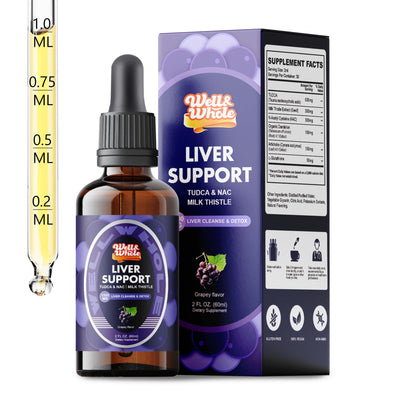
well&whole's Liver Support Liquid Drops include both glutathione and NAC, along with four additional liver-supporting compounds.

2. Promote Bile Flow
Bile is the primary elimination pathway for Phase II products:
- **TUDCA**: A bile acid that maintains bile flow and reduces viscosity
- **Dandelion root**: Stimulates bile production (choleretic)
- **Artichoke extract**: Promotes bile secretion and cholesterol processing
All three are included in well&whole's Liver Support Liquid Drops, creating three-angle bile support.
3. Reduce Oxidative Stress
Oxidative stress drives liver damage across virtually all liver conditions:
- **Milk thistle (silymarin)**: Direct free radical scavenging, membrane stabilization
- **Glutathione**: Master antioxidant, Phase II conjugation
- **NAC**: Glutathione production support
- **Artichoke flavonoids**: Luteolin and apigenin antioxidant activity
4. Reduce Cellular Stress
- **TUDCA**: Reduces endoplasmic reticulum (ER) stress and supports mitochondrial health
- **Milk thistle**: Anti-inflammatory modulation via NF-κB suppression
5. Dietary and Lifestyle Foundations
No supplement compensates for poor lifestyle habits. The evidence-based foundations:
- **Limit alcohol**: The single most impactful step for liver health
- **Reduce processed food and added sugars**: Fructose is hepatotoxic; processed foods increase oxidative burden
- **Eat a plant-rich diet**: Phytonutrients support liver enzyme systems
- **Maintain healthy weight**: Obesity is the primary driver of NAFLD
- **Stay hydrated**: Adequate water supports kidney function and toxin elimination
- **Exercise regularly**: Physical activity improves liver enzyme markers independently of weight loss
- **Minimize unnecessary medications**: Every drug the liver processes adds to its workload
The Myth vs. Reality Summary
| **Myth** | **Reality** | **Evidence-Based Alternative** |
|---|---|---|
| Liver stores toxins needing flush | Liver *processes* and eliminates toxins continuously | Support Phase II conjugation (glutathione, NAC) |
| Juice cleanses detox the liver | Juices add sugar burden; no "flushing" mechanism | Consistent plant-rich diet with adequate protein |
| Detox teas cleanse liver | Most are laxatives/diuretics, not liver support | Properly dosed herbal extracts (milk thistle, dandelion) |
| 3-day liver flush expels stones | "Stones" are soap stones; no real gallstones expelled | Promote bile flow (TUDCA, artichoke) |
| Foot pads pull out toxins | Discoloration is chemical reaction, not extracted toxins | Evidence-based oral supplementation |
FAQ
Q1: Does my liver need to be "detoxed"?
Your liver is a self-regulating detoxification organ—it doesn't accumulate toxins in the way detox marketing suggests. However, the liver's detoxification *systems* can become overwhelmed or inefficient under stress. The goal is *supporting* these systems, not "flushing" a dirty organ.
Q2: Are juice cleanses good for liver health?
No. Juice cleanses deliver high sugar (especially fructose, which is hepatotoxic) while lacking the protein and fat needed for liver enzyme production and glutathione synthesis. A consistent plant-rich diet is far more effective.
Q3: What about detox teas?
Most detox teas are primarily laxatives and diuretics—they stimulate bowel movements and urine output without affecting liver toxin processing. Some contain beneficial herbs but often at ineffective doses.
Q4: Do liver flush protocols work?
No. Studies have confirmed that "stones" passed during flush protocols are soap stones (oil-citrus reaction products), not genuine gallstones. The protocols have no measurable effect on liver function markers.
Q5: What actually supports liver detoxification?
Evidence-based approaches include: supporting Phase II conjugation (glutathione, NAC), promoting bile flow (TUDCA, dandelion, artichoke), reducing oxidative stress (milk thistle, glutathione), and maintaining lifestyle foundations (limit alcohol, eat well, exercise).
Q6: Can supplements replace healthy lifestyle habits?
No. Supplements support liver function *on top of* healthy habits—they cannot compensate for excessive alcohol, poor diet, or sedentary lifestyle. The foundation is always lifestyle first, supplements second.
Q7: How does glutathione support liver detoxification?
Glutathione is the primary conjugating molecule in Phase II detoxification. It binds to toxins, making them water-soluble for elimination through bile or urine. Without adequate glutathione, Phase II processing slows.
Q8: Is TUDCA better than a detox protocol?
TUDCA and detox protocols serve fundamentally different purposes. TUDCA is a science-backed bile acid that supports bile flow and reduces cellular stress. Detox protocols are unproven purge methods. TUDCA addresses real liver function; detox protocols address a fictional "toxin accumulation" narrative.
Q9: How long should I take liver support supplements?
Liver support is generally a long-term strategy, not a short "cleanse." Consistent daily supplementation over weeks and months provides more meaningful support than intermittent "detox" periods.
Q10: What's the difference between "liver support" and "liver detox"?
"Liver support" means providing nutrients and compounds that help your liver's existing systems function efficiently. "Liver detox" implies the liver is dirty and needs cleaning—a misleading narrative. Your liver processes toxins continuously; it needs *resources*, not a *flush*.
Conclusion
The liver detox industry is built on a myth: that your liver accumulates toxins that need special protocols to flush out. The reality is that your liver processes toxins continuously and eliminates them—it needs *support*, not *purging*.
Evidence-based liver support means providing the resources your liver's detoxification systems depend on: glutathione and NAC for Phase II conjugation, TUDCA and botanical extracts for bile flow, milk thistle for antioxidant defense, and lifestyle foundations that reduce hepatic burden.
well&whole's Liver Support Liquid Drops deliver exactly this: six ingredients addressing the pathways that genuine liver science identifies as important—not fictional flushing, but real functional support.
Stop flushing. Start supporting.
Related supplements
Should you decide to supplement, Liver Support Liquid Drops Supplement | TUDCA Drops Liver Cleanse & Detox with Milk Thistle, NAC, Dandelion, Artichoke & Glutathione for Detox and TUDCA 1000mg Gummies with Milk Thistle 500mg for Adults are our formulation for this purpose. For a broader comparison, see the Liver Support and Milk Thistle collections.
These statements have not been evaluated by the Food and Drug Administration. This product is not intended to diagnose, treat, cure, or prevent any disease.