Liver Detox: Fact vs Fiction — What Actually Supports Your Liver
The "detox" industry is full of myths. Learn what the science actually says about liver detoxification — which strategies are evidence-based and which are marketing fiction.

Few words in the wellness industry are more abused than "detox." From juice cleanses to foot pads, tea-toxes to colonics, the detoxification market has ballooned into a multi-billion-dollar industry built largely on marketing rather than science. The irony is that your body already possesses an extraordinarily sophisticated detoxification system — your liver — that operates 24 hours a day, 7 days a week, without requiring expensive juice cleanses or restrictive protocols.
This does not mean, however, that your liver cannot benefit from support. Modern life — with its processed foods, environmental toxins, alcohol, medications, and chronic stress — places demands on the liver that our ancestors never faced. The relevant question is not "how do I detox?" but "how do I support my body's innate detoxification capacity?"
This guide separates the evidence-based liver support strategies from the marketing myths, so you can invest your time and money in what actually helps.
Understanding Your Liver's Detoxification System
Phase I and Phase II Detoxification
Your liver processes toxins and waste products through a two-phase system:
Phase I (Activation): Cytochrome P450 enzymes chemically transform fat-soluble toxins into intermediate metabolites — making them water-soluble but sometimes creating compounds that are temporarily more reactive than the original toxin. This is the "activation" phase.
Phase II (Conjugation): The activated intermediates from Phase I are bound to other molecules (glutathione, sulfate, glucuronic acid, glycine) to create neutralized, water-soluble compounds that can be excreted through bile or urine.
Phase III (Transport): Specialized transporter proteins actively pump the conjugated toxins out of liver cells and into bile or blood for elimination.
The Balance Problem
The efficiency of these phases must remain balanced. If Phase I is overactive relative to Phase II (common with alcohol consumption, certain medications, and environmental toxin exposure), the reactive intermediates produced by Phase I can accumulate and cause oxidative damage to liver tissue.
Effective liver support strategies aim to maintain this delicate balance — not indiscriminately "ramp up" detoxification.
What Your Liver Processes
Your liver handles an extraordinary range of substances on a daily basis:
· Metabolic waste products from normal cellular function
· Alcohol and its metabolites
· Pharmaceutical medications and their breakdown products
· Environmental toxins (pesticides, pollutants, plasticizers)
· Dietary toxins (naturally occurring compounds, food additives)
· Hormones (particularly estrogen — the liver is essential for hormone clearance)
· Ammonia (converted to urea for excretion)
Detox Myths: What Doesn't Work
Myth 1: Juice Cleanses Detox Your Liver
Juice cleanses are among the most popular "detox" strategies, but they address the liver only indirectly — by reducing the incoming toxic load from processed foods and alcohol. There is no scientific evidence that juice cleanses directly enhance liver detoxification pathways.
In fact, juice cleanses are often high in fructose (from fruit) and low in protein — and protein is essential for Phase II liver detoxification, which requires amino acids for conjugation reactions. Extended juice fasting may actually impair the liver's detoxification capacity.
Myth 2: You Can "Flush" Toxins Out
Your liver does not store toxins waiting to be "flushed" out. It continuously processes and eliminates them. The concept of a liver flush — often involving olive oil, lemon juice, and Epsom salts — can produce greenish "stones" that are actually saponified oil (chemically formed by the mixture of olive oil and potassium from citrus), not gallstones or accumulated toxins.
Myth 3: Foot Pads, Colonics, and Infrared Saunas Detox the Liver
These interventions are popular in the wellness world, but their ability to directly enhance hepatic detoxification is not supported by evidence:
· Foot pads: No published evidence for toxin removal
· Colonics: Address the colon, not the liver — and carry infection and perforation risks
· Infrared saunas: May support general health but have no demonstrated effect on liver-specific detoxification
Myth 4: Detox = Weight Loss
Many detox programs promise rapid weight loss — which they deliver, briefly, through water loss and caloric restriction. This is not detoxification. Any weight lost through these approaches is almost universally regained once normal eating patterns resume.
Myth 5: You Need to Detox Because Toxins "Build Up"
While it is true that certain toxins (heavy metals, persistent organic pollutants) can accumulate in body tissues, your liver does not back up like a clogged filter. It continuously processes and eliminates what it can. The issue is not a "clogged" liver but potentially overloaded enzymatic pathways — a very different biological problem.
What Actually Works: Evidence-Based Liver Support
1. Reduce the Incoming Toxic Load
The single most effective liver support strategy is reducing what your liver has to process:
Alcohol: The single most impactful intervention for liver health. Alcohol is a direct hepatotoxin, and its metabolism creates acetaldehyde — a reactive compound that damages liver cells. Reduction or elimination provides immediate benefit.
Processed Foods: Ultra-processed foods — high in refined sugar, industrial seed oils, and synthetic additives — increase the liver's workload unnecessarily. Food additives, preservatives, and artificial colors all require hepatic processing.
Environmental Exposures: While you cannot eliminate all environmental exposures, reducing the obvious ones helps:
· Filter drinking water
· Avoid plastic containers for hot food/liquids
· Choose organic produce for the Environmental Working Group's "Dirty Dozen" (produce with highest pesticide residues)
· Ventilate indoor spaces and minimize synthetic fragrance exposure
2. Support Phase I and Phase II Pathways with Diet
Cruciferous Vegetables: Broccoli, Brussels sprouts, kale, cauliflower, and cabbage contain glucosinolates that convert to sulforaphane and indole-3-carbinol — compounds that activate Nrf2, the body's master antioxidant pathway, and support balanced Phase I and Phase II activity.
Sulfur-Rich Foods: Garlic, onions, leeks, shallots, and eggs provide sulfur-containing amino acids essential for the Phase II sulfation pathway and glutathione synthesis.
Quality Protein: Phase II conjugation requires amino acids for glutathione, glycine, taurine, and glucuronic acid conjugation. Adequate protein intake (0.8–1.2 g/kg body weight daily) is essential.
Fiber: Soluble fiber binds to bile acids in the intestine, promoting their excretion. Since bile carries processed toxins, adequate fiber intake (25–35g daily) prevents toxin reabsorption.
Bitter Greens: Dandelion greens, arugula, radicchio, and artichoke stimulate bile flow, supporting the elimination of fat-soluble processed toxins through the bile.
3. Hydration
Adequate water intake (body weight in pounds × 0.5 to 0.7 = ounces per day) supports kidney function — the other major elimination route. When the kidneys are properly hydrated, they can efficiently excrete the water-soluble conjugates the liver produces.
4. Movement and Sweating
Regular exercise supports liver health through multiple mechanisms:
· Reduces visceral fat (fatty liver is driven largely by excess visceral adiposity)
· Improves insulin sensitivity (insulin resistance impairs liver function)
· Increases blood flow through hepatic circulation
· Promotes sweating, which may modestly assist heavy metal elimination
Supplements That Support Liver Function
While no supplement "detoxes" the liver, several have evidence for supporting specific aspects of hepatic function.
Milk Thistle (Silymarin)
The most researched botanical for liver health. Silymarin — the active complex in milk thistle — has demonstrated hepatoprotective effects in multiple clinical contexts:
· A 2012 meta-analysis in *Phytotherapy Research* found that silymarin reduced liver enzyme levels (ALT, AST) by an average of 15–25% in patients with liver conditions.
· A 2016 randomized controlled trial in *Hepatology* found that silymarin slowed fibrosis progression in patients with non-alcoholic fatty liver disease.
Mechanism: Antioxidant, anti-inflammatory, protein synthesis stimulation in hepatocytes, and stabilization of cell membranes.
N-Acetyl Cysteine (NAC)
NAC is a precursor to glutathione — the liver's primary endogenous antioxidant and a critical conjugate in Phase II detoxification. NAC is so effective at repleting glutathione that it is used in hospital emergency rooms to treat acetaminophen (Tylenol) overdose — essentially an acute liver detoxification crisis.
For general liver support, NAC at 600–1,200 mg daily supports glutathione status and antioxidant defense.
Glutathione (Liposomal)
Direct glutathione supplementation has been challenging historically because glutathione is poorly absorbed orally. Liposomal delivery systems have addressed this limitation to some degree.
Research published in the *European Journal of Clinical Nutrition* (2014) found that liposomal glutathione supplementation increased body glutathione stores by 30–35% after 4 weeks of supplementation.
Alpha-Lipoic Acid
A potent antioxidant that is both water- and fat-soluble, alpha-lipoic acid supports liver function by:
· Enhancing glutathione synthesis
· Chelating heavy metals (particularly in cases of documented heavy metal burden)
· Improving insulin sensitivity, which directly benefits fatty liver
Turmeric (Curcumin)
Curcumin enhances Phase II detoxification enzymes and reduces liver inflammation through NF-κB inhibition. A 2017 meta-analysis in *Pharmacological Research* found curcumin supplementation significantly reduced liver enzymes in patients with non-alcoholic fatty liver disease.
Bioavailability is the key challenge — look for formulations with enhanced absorption (piperine, liposomal delivery, or phospholipid complexes).
What a Genuine Month of Liver Support Looks Like
Rather than a "7-day detox," here is what a month of evidence-based liver support actually involves:
This approach does not promise dramatic before-and-after photos, but it supports what your liver actually needs — not what marketing suggests you need.
FAQ
Q1: Does my liver really need "detoxing"?
Your liver does not need "detoxing" in the sense of flushing out accumulated toxins. However, it can benefit from reducing the incoming toxic load (alcohol, processed foods, environmental exposures) and providing the nutrients (protein, antioxidants, specific botanicals) that support its enzymatic pathways.
Q2: What are the signs of an overburdened liver?
Potential indicators include persistent fatigue not explained by sleep, brain fog, digestive issues, and skin changes. However, these are non-specific symptoms. Actual liver function should be assessed through blood work (ALT, AST, GGT, bilirubin) by your healthcare provider.
Q3: How effective is milk thistle?
Milk thistle has the most extensive evidence base of any botanical for liver health, with studies supporting its use for alcoholic liver disease, non-alcoholic fatty liver disease, and medication-induced liver stress. Effects are generally modest and occur over weeks to months — it is supportive, not curative.
Q4: Can I detox while taking prescription medications?
Exercising caution is essential. Many "detox" products contain herbs (St. John's Wort, for example) that induce liver enzymes and can alter the metabolism of prescription medications — making them either less effective or more toxic. Never add supplements to a medication regimen without medical review.
Q5: Does drinking lemon water support the liver?
Lemon water is hydrating and provides modest amounts of vitamin C (an antioxidant), but there is no evidence for a specific liver detoxifying effect. Adequate hydration in any form supports kidney function, which is a complementary elimination pathway.
Q6: How does alcohol specifically damage the liver?
Alcohol is metabolized to acetaldehyde — a reactive, toxic compound that directly damages hepatocytes, promotes inflammation, and depletes glutathione. The liver can process approximately one standard drink per hour; exceeding this rate creates a backlog of acetaldehyde. Cumulative damage can progress from fatty liver to alcoholic hepatitis to cirrhosis.
Q7: Are there foods I should avoid for liver health?
The most evidence-supported dietary restriction for liver health is limiting added sugar and refined carbohydrates, which directly contribute to fatty liver through de novo lipogenesis. High-fructose corn syrup is particularly problematic in this regard.
Q8: Is fasting good for the liver?
Time-restricted eating (e.g., 12–14 hour overnight fasts) may benefit liver health by reducing the metabolic workload and improving insulin sensitivity. Extended fasting is not recommended without medical supervision and may actually impair Phase II detoxification due to protein restriction.
Q9: Can certain medications damage the liver?
Yes. Acetaminophen (Tylenol) is the most common cause of acute liver failure in the United States when taken above the recommended dose or combined with alcohol. Other medications with known hepatotoxic potential include certain antibiotics, antifungals, anti-seizure medications, and anabolic steroids. Always follow dosing guidelines.
Q10: How quickly can the liver repair itself?
The liver has remarkable regenerative capacity. With cessation of the damaging agent (alcohol, for instance), fatty liver can begin reversing within weeks. More advanced damage (fibrosis, early cirrhosis) takes longer and may not be fully reversible. Each individual's rate of recovery depends on age, genetics, the duration and severity of the damage, and overall health.
Conclusion
The liver detoxification industry has built a massive market around concepts that often bear little resemblance to human physiology. Your liver is not a filter that needs flushing or a drain that gets clogged — it is an adaptable, resilient organ with complex enzymatic systems that can be supported, but not fundamentally overridden, by supplements and cleanses.
The most impactful actions for liver health remain refreshingly straightforward: reduce alcohol, eat protein- and fiber-rich whole foods, stay hydrated, move your body, and consider evidence-backed supplements like milk thistle and NAC if you have specific risk factors. These strategies do not come with dramatic marketing claims, but they have something the juice cleanses lack: biological plausibility and clinical evidence.
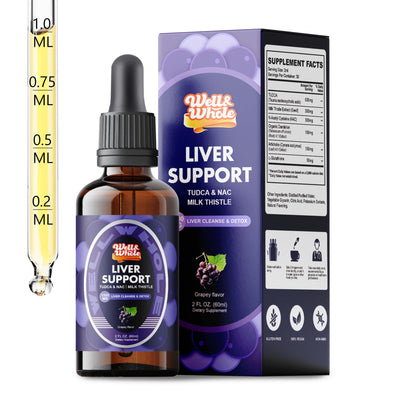
At well&whole, we believe liver health deserves better than detox gimmicks. Our Liver Support Collection features science-backed ingredients like milk thistle, NAC, and glutathione — because supporting your body's innate detoxification systems is what actually works.
These statements have not been evaluated by the Food and Drug Administration. This product is not intended to diagnose, treat, cure, or prevent any disease.