LDL vs HDL Tracking: How to Measure Cholesterol Supplement Effectiveness at Home
Scientific guide to home cholesterol monitoring—understanding LDL, HDL, triglycerides, and how to measure whether your plant sterol supplementation is working using at-home testing.

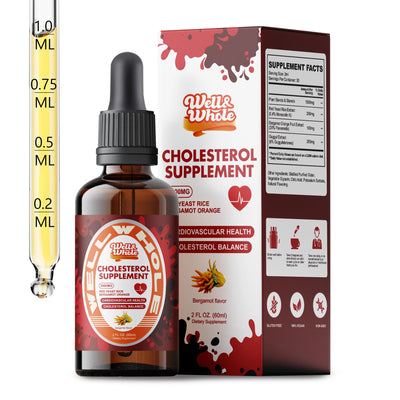
The standard cholesterol panel—total cholesterol, LDL, HDL, and triglycerides—remains the most widely used biomarker set for cardiovascular risk assessment. For individuals using plant sterol-based cholesterol support supplements, such as well&whole's Cholesterol Support Liquid Drops, objective tracking of lipid parameters is essential to evaluate effectiveness and inform ongoing decisions.

The democratization of laboratory testing through at-home lipid panels now enables consumers to monitor their cholesterol response to supplementation with unprecedented frequency and convenience. This article examines the science of lipid measurement, the evidence on expected responses to plant sterol supplementation, and a practical framework for tracking effectiveness using at-home testing technology.
---
Understanding the Lipid Panel: Beyond Total Cholesterol
A standard fasting lipid panel measures four core parameters, each with distinct biological significance:
LDL Cholesterol (Low-Density Lipoprotein)
LDL particles transport cholesterol from the liver to peripheral tissues. When LDL particles accumulate in the arterial subendothelial space and undergo oxidative modification, they become atherogenic—the initiating event in plaque formation. The National Lipid Association classifies LDL levels as follows:
| LDL Category | Range (mg/dL) | Clinical Interpretation |
| Optimal | <100 | Lowest risk |
| Near Optimal | 100-129 | Acceptable for healthy individuals |
| Borderline High | 130-159 | Lifestyle intervention indicated |
| High | 160-189 | Pharmacotherapy consideration |
| Very High | ≥190 | Aggressive intervention warranted |
HDL Cholesterol (High-Density Lipoprotein)
HDL mediates reverse cholesterol transport—removing excess cholesterol from peripheral tissues and delivering it to the liver for excretion. HDL levels below 40 mg/dL (men) or 50 mg/dL (women) are considered an independent cardiovascular risk factor. Notably, HDL is less responsive to plant sterol supplementation than LDL; the primary effect is LDL reduction.
Triglycerides
Triglycerides are the storage form of excess energy in adipose tissue. Elevated triglycerides (>150 mg/dL) correlate with increased cardiovascular risk, particularly when combined with low HDL—a pattern characteristic of metabolic syndrome.
Non-HDL Cholesterol
Non-HDL cholesterol (total cholesterol minus HDL) captures all atherogenic lipoprotein particles—LDL, VLDL, IDL, and Lp(a). The 2018 AHA/ACC Cholesterol Guideline identifies non-HDL as a secondary treatment target when triglycerides exceed 200 mg/dL.
---
Expected Response to Plant Sterol Supplementation
Plant sterols (phytosterols) reduce intestinal cholesterol absorption by competing with dietary and biliary cholesterol for incorporation into mixed micelles. The magnitude of LDL reduction is well-characterized:
A 2014 meta-analysis in the British Journal of Nutrition (Ras et al.) pooled 124 clinical studies and found that 2g/day of plant sterols reduced LDL cholesterol by 8-10% on average, with the effect plateauing at doses above 3g/day. Individual responses ranged from 3.2% to 17.5%—underscoring the importance of personal monitoring.
A 2018 study in Nutrients specifically examined liquid-format plant sterol supplements and found superior efficacy (12.2% mean LDL reduction vs 9.1% for solid formulations), attributed to improved dispersion and micellar incorporation.
A 2020 12-week trial in the European Journal of Clinical Nutrition (n=139) demonstrated that maximum LDL lowering occurs within 2-3 weeks of consistent supplement use and is maintained throughout the supplementation period. Upon discontinuation, LDL levels return to baseline within 2-4 weeks.
What Level of Change Is Meaningful?
When tracking your cholesterol response, statistical significance matters less than clinical significance:
· LDL reduction ≥8% from baseline: Within expected range for 2g/day plant sterol supplementation
· LDL reduction 5-7%: Partial but still meaningful response; consider consistency of supplement timing with meals
· LDL reduction <5%: Below expected range; evaluate supplement quality, dosage timing, and concurrent dietary factors
· LDL increase: Unexpected; verify supplement ingredients, consider other dietary or medication changes
---
At-Home Cholesterol Testing: Technology and Methodology
Available Testing Options
At-home cholesterol testing has evolved significantly. Modern options include:
1. Mail-in dried blood spot kits: Finger-prick blood collected on a filter card, mailed to a CLIA-certified laboratory. Results typically within 5-7 business days. Includes full lipid panel (total, LDL, HDL, triglycerides).
2. Direct-to-consumer lab testing: Online ordering of a lipid panel requisition, blood draw at a local laboratory (e.g., LabCorp, Quest). More comprehensive but requires a visit to a draw site.
3. Point-of-care finger-stick devices: Handheld lipid analyzers (e.g., CardioChek, Cholestech LDX) provide results within minutes from a single finger-stick sample. These devices are FDA-cleared for lipid screening.
A 2019 validation study in the Journal of Clinical Lipidology compared point-of-care devices to reference laboratory methods and found correlation coefficients of r=0.92 for total cholesterol, r=0.89 for HDL, and r=0.84 for triglycerides in the hands of trained consumers—acceptable for trend monitoring but not diagnostic equivalence.
Testing Protocol for Supplement Monitoring
For optimal data quality when evaluating cholesterol supplement effectiveness:
4. Establish a 2-test baseline: Test twice, one week apart, before starting supplementation. Average these values. Single lipid measurements have significant day-to-day variability (LDL CV ~8%).
5. Fast for 9-12 hours before each test. Water is permitted. Non-fasting samples primarily affect triglyceride readings.
6. Test at the same time of day and same day of the week for all measurements. Lipids exhibit circadian and weekday/weekend dietary patterns.
7. Avoid testing within 48 hours of high-fat meals, alcohol consumption, or intense exercise, all of which transiently affect lipid levels.
8. First follow-up test at 4 weeks, with subsequent testing at 12-week intervals during ongoing supplementation.
---
Data Interpretation: Sample Tracking Table
| Measurement | Baseline (Average) | Week 4 | Week 12 | Change | Expected Range for Plant Sterols |
| Total Cholesterol | 217 mg/dL | 199 | 195 | -22 (-10.1%) | -5% to -12% |
| LDL Cholesterol | 143 mg/dL | 128 | 125 | -18 (-12.6%) | -8% to -14% |
| HDL Cholesterol | 48 mg/dL | 49 | 48 | 0 (0%) | Typically unchanged |
| Triglycerides | 131 mg/dL | 124 | 120 | -11 (-8.4%) | -5% to -10% |
| Non-HDL | 169 mg/dL | 150 | 147 | -22 (-13.0%) | -6% to -13% |
The above pattern—significant LDL reduction with preserved HDL—is consistent with effective plant sterol supplementation.
---
FAQ
Q: How soon after starting cholesterol drops should I test?
A: Clinical evidence shows maximum LDL lowering occurs within 2-3 weeks. Testing at 4 weeks provides a reliable picture of your initial response. Testing sooner (1-2 weeks) may underestimate the eventual effect.
Q: My LDL went down but HDL also dropped—is that normal?
A: Plant sterols primarily target LDL and typically leave HDL unchanged. A concurrent HDL decrease may reflect dietary changes (reduced fat intake lowers both LDL and HDL) rather than supplement effects. Track this pattern and discuss with your healthcare provider.
Q: How often should I test while taking cholesterol support supplements long-term?
A: Every 12 weeks (quarterly) provides sufficient monitoring frequency for long-term supplement users tracking trends. More frequent testing (monthly) adds little value given the biological variability of lipid measurements.
Q: What if I don't see any change in my cholesterol after 8 weeks?
A: Re-evaluate three factors: (1) Are you taking the supplement consistently with your largest meal, when dietary cholesterol intake is highest? (2) Has your overall diet changed? High saturated fat intake can overwhelm plant sterol effects. (3) Is your supplement from a quality manufacturer with verified plant sterol content?
Q: Do I need to stop taking my supplement before testing?
A: No. The goal is to measure your levels while using the supplement to evaluate its real-world effectiveness. If you stop before testing, you're measuring your un-supplemented baseline, which you've already documented.
Q: Are at-home tests as accurate as lab tests?
A: Mail-in dried blood spot tests analyzed at CLIA-certified labs approach the accuracy of standard lab draws. Finger-stick point-of-care devices are adequate for trend monitoring but may differ from lab values by 5-10%. For critical clinical decisions, use standard lab draws.
Q: Can plant sterols affect my statin medication dosing?
A: Plant sterols work through a different mechanism than statins (reducing absorption vs. reducing synthesis) and are considered complementary. However, ANY change in your cholesterol management strategy—supplements, diet, or otherwise—should be discussed with your prescribing physician before adjusting medication doses.
---
Conclusion
Measuring cholesterol supplement effectiveness requires a systematic approach: establishing an accurate baseline, understanding the expected magnitude of LDL reduction from plant sterol supplementation (8-12%), and using at-home testing technology with proper protocol adherence. well&whole's Cholesterol Support Liquid Drops, formulated with plant sterols in a bioavailable liquid format, provide a tool for lipid management whose effects can be objectively tracked.
Armed with your baseline numbers, a tracking schedule, and an understanding of what constitutes a meaningful response, you can make informed decisions about your cholesterol wellness strategy.
Explore well&whole's Cholesterol Support Liquid Drops at wellwholeshop.com and start your tracking journey with confidence.
Related supplements
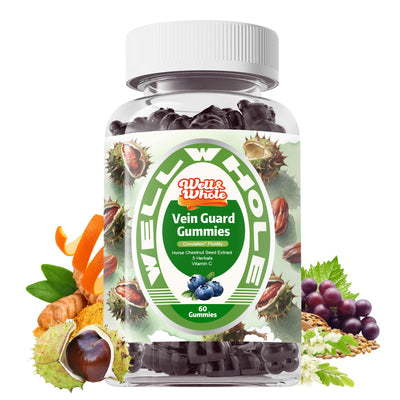
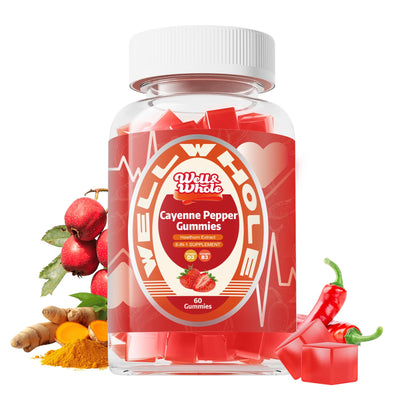
Where to begin? Our well&whole Horse Chestnut Extract Gummies, Circulation Supplements for Legs and Cayenne Pepper Heart Health Gummies with Hawthorn & CoQ10 & Turmeric are a sensible place to start, and the Heart Health collection lays out the other formats side by side with CoQ10.
These statements have not been evaluated by the Food and Drug Administration. This product is not intended to diagnose, treat, cure, or prevent any disease.