L-Lysine Gummies vs Liquid Drops: Which Absorbs Better?
Compare L-lysine 1000mg gummies vs liquid drops for absorption, convenience, and dosing flexibility. Find the best format for your lysine supplementation needs.

L-lysine is one of the simplest supplements you can take—an essential amino acid with clear, well-established physiological roles. But even with a straightforward compound, the format you choose affects how you experience it: convenience, dosing flexibility, taste, and potentially even absorption dynamics.
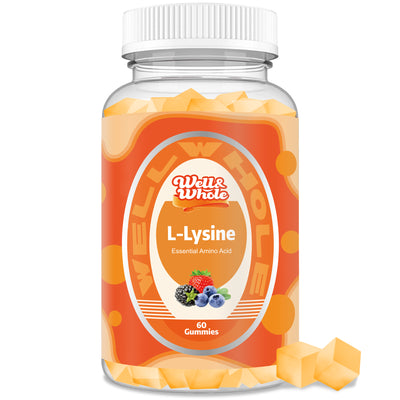
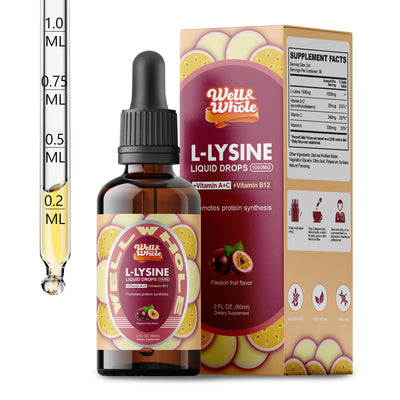
well&whole offers L-lysine in two formats: L-Lysine 1000mg Gummies and L-Lysine Liquid Drops 1000mg. Both deliver the same 1,000 mg serving of the same amino acid, but the delivery experience differs meaningfully.


This format comparison examines the absorption considerations, practical advantages, and best-use scenarios for each format—so you can choose the lysine delivery that matches your needs.
Absorption: Does Format Matter for Lysine?
L-Lysine Absorption Basics
L-lysine absorption occurs primarily in the small intestine through active transport mechanisms. Several factors influence absorption regardless of format:
- **Competing amino acids**: Dietary proteins contain multiple amino acids that compete with lysine for intestinal transporters. Taking lysine on an empty stomach or between meals may improve absorption by reducing competition.
- **Gastric pH**: Lysine is absorbed best in the slightly acidic environment of the upper small intestine.
- **Transport capacity**: The cationic amino acid transporter system has finite capacity; very large doses may exceed transport capacity, reducing the percentage absorbed.
- **Food matrix**: Protein-rich meals significantly reduce lysine supplement absorption due to amino acid competition.
These factors are inherent to lysine pharmacokinetics and apply equally to gummies and liquid drops.
Liquid Drops: Potential Absorption Advantages
Liquid drops may offer modest absorption advantages:
1. **No dissolution step**: Liquid drops disperse immediately in gastric fluid, making lysine available for absorption sooner than gummies, which must first dissolve through the gummy matrix.
2. **Between-meals timing**: Liquid drops are easy to take on an empty stomach—just a quick sip from a dropper. This timing reduces competition with dietary amino acids for absorption.
3. **Direct oral contact**: While lysine is not significantly absorbed through oral mucosa (unlike some compounds), holding liquid drops in the mouth briefly before swallowing may allow very small amounts of sublingual absorption.
4. **Concentration advantage**: Liquid format delivers lysine in a concentrated, readily dispersed form that doesn't require breakdown of a gummy matrix.
Gummies: Absorption Considerations
Gummies have one relevant absorption consideration:
- **Dissolution time**: A gummy must dissolve in gastric fluid before its lysine content is available for absorption. This typically takes 15-30 minutes, adding a modest delay compared to liquid drops.
However, this delay is relatively minor in practical terms. Lysine absorption occurs over hours as the amino acid moves through the small intestine. A 15-30 minute delay at the start of this process doesn't significantly reduce overall absorption.
The Bottom Line on Absorption
The absorption difference between gummies and liquid drops is **small**. Far more important than format for lysine absorption is:
- **Timing with food**: Taking lysine between meals (away from high-protein meals) has a much larger impact on absorption than format choice
- **Consistency**: Taking your lysine supplement every day matters more than whether it's a gummy or a drop
- **Total dose**: 1,000 mg per day is well within transport capacity, so format-related absorption differences at this dose level are minimal
Detailed Comparison
| Factor | Gummies (P10) | Liquid Drops (P11) |
|--------|---------------|---------------------|
| **Absorption onset** | Moderate (requires dissolution) | Potentially faster (no dissolution) |
| **Overall absorption** | Similar at 1,000 mg dose | Similar at 1,000 mg dose |
| **Between-meals timing** | Moderate (less convenient empty-stomach) | Easy (quick sip; no preparation) |
| **Dosing precision** | Pre-measured per gummy | Requires counting drops; more variable |
| **Dosing flexibility** | Fixed per gummy; adjust by whole/half gummy | Adjust by single drops; micro-dosing |
| **Taste** | Pleasant, masked | Slightly bitter/medicinal lysine taste |
| **Convenience** | High—grab and go | Moderate—requires dropper |
| **Portability** | Excellent | Good (spill risk with dropper) |
| **Additional ingredients** | Pectin/gelatin, sweeteners, flavors | Minimal (carrier liquid) |
| **Best for** | Daily consistent dosing; taste-sensitive users | Flexible dosing; between-meals timing; budget |
When to Choose Gummies
Best For:
- **Daily consistency**: Pre-measured gummies make daily supplementation effortless
- **Taste-sensitive users**: Lysine in liquid form can taste slightly bitter or medicinal; gummies mask this effectively
- **On-the-go users**: Gummies are the most portable, spill-proof format
- **Beginners**: No measuring required—just take the gummy and move on
- **Cold sore prevention**: When you need a consistent 1,000 mg daily dose for HSV management
Limitations:
- Can only adjust dose by whole/half gummy increments
- Requires dissolution time (minor delay in absorption onset)
- Contains additional gummy base ingredients (pectin, sweeteners)
- Less convenient for between-meals timing (requires carrying gummies)
When to Choose Liquid Drops
Best For:
- **Flexible dosing**: When you want to adjust your dose incrementally (e.g., 500 mg instead of 1,000 mg)
- **Between-meals timing**: Easy to take on an empty stomach for optimal absorption
- **Budget-conscious users**: $19.99 vs $20.99; potentially more servings per bottle at lower doses
- **Minimal-ingredient preferences**: Liquid format contains fewer non-active ingredients
- **Outbreak dose escalation**: During cold sore outbreaks, when you want to increase from 1,000 mg to 2,000-3,000 mg, liquid drops allow easy dose adjustment without consuming multiple gummies
Limitations:
- Requires counting drops (variable precision)
- Lysine taste may be unpleasant without masking
- Dropper bottles can leak during travel
- Storage considerations (protect from light and heat)
Practical Recommendations
For Most Users: Gummies
The majority of lysine supplement users take a consistent daily dose for general support or cold sore prevention. For this use case, gummies are the practical choice—pre-measured, enjoyable, and easy to maintain consistently. The small absorption advantage of liquid drops doesn't outweigh the convenience and compliance advantage of gummies for daily dosing.
For Cold Sore Management: Have Both
During cold sore prevention (daily 1,000 mg): **Gummies** for convenience and consistency
During active outbreaks (2,000-3,000 mg): **Liquid drops** for easy dose escalation without consuming multiple gummies
This two-format approach gives you the consistency of gummies for daily maintenance plus the flexibility of drops for outbreak-specific dose increases.
For Optimal Absorption: Timing Over Format
Regardless of which format you choose, optimize absorption by:
- Taking lysine between meals (30+ minutes before or 2+ hours after protein-containing meals)
- Staying hydrated
- Taking consistently at the same time each day
- For cold sore management: reducing high-arginine foods during supplementation
These practices have a larger impact on lysine effectiveness than format choice.
FAQ
Q1: Do liquid drops absorb better than gummies for lysine?
Liquid drops may offer a modest absorption onset advantage (no dissolution step) and are easier to take between meals for reduced amino acid competition. However, the overall absorption difference at 1,000 mg is small. Timing with food matters far more than format.
Q2: Can I take lysine gummies on an empty stomach?
Yes, but some people prefer taking gummies with a light snack for taste and mild GI comfort. A small, low-protein snack (fruit, crackers) won't significantly interfere with lysine absorption.
Q3: How do I adjust my dose with gummies vs liquid drops?
With gummies: adjust by whole or half gummy increments (e.g., half a gummy = 500 mg). With liquid drops: adjust by individual drops, allowing precise micro-dosing.
Q4: Which is more cost-effective?
Liquid drops ($19.99) are slightly less expensive. If you take 1,000 mg daily, the per-serving cost comparison depends on the number of servings per container. At lower doses (500 mg), liquid drops may be more economical since you can halve the dose easily.
Q5: Can I switch between formats?
Yes. Both deliver L-lysine 1000mg. Switching is fine—just pay attention to the lysine content per serving in each format to maintain consistent dosing.
Q6: Does the gummy matrix affect lysine delivery?
Gummies contain pectin/gelatin and sweeteners alongside lysine. These don't interfere with lysine absorption—they just add a brief dissolution step before lysine becomes available. The practical impact is minimal.
Conclusion
Both well&whole L-Lysine 1000mg Gummies and well&whole L-Lysine Liquid Drops 1000mg deliver the same essential amino acid with the same 1,000 mg serving size. The choice between them is less about absorption (which is similar) and more about practical preferences—convenience vs flexibility, taste vs simplicity, pre-measured vs adjustable.
For daily maintenance, choose gummies for their convenience and consistency. For flexible dosing or outbreak dose escalation, choose liquid drops. For the most comprehensive approach, keep both on hand—gummies for daily baseline, drops for dose adjustments.
The format that you'll take consistently is the format that works best. Choose based on your lifestyle, and let L-lysine's foundational benefits do the rest.
Related supplements
Putting it simply: if this is something you want to add to your routine, our L-Lysine 1000mg Essential Amino Acid Supplement Gummies for Kids and Adults and L-Lysine Supplement Liquid Drops 1000mg are a good place to start. The wider L-lysine collection is worth a look, and the Amino Acids range covers related formats.
These statements have not been evaluated by the Food and Drug Administration. This product is not intended to diagnose, treat, cure, or prevent any disease.