L-Lysine for Cold Sores: What the Research Really Shows
Examine what research actually shows about L-lysine for cold sores. Learn the arginine-lysine balance, dosing evidence, and realistic expectations.

Cold sores—those painful, embarrassing blisters that appear around the lips and mouth—are caused by herpes simplex virus type 1 (HSV-1). Once you contract HSV-1 (which an estimated 67% of the global population under age 50 has), the virus remains dormant in nerve cells and can reactivate periodically, triggered by stress, sunlight, hormonal changes, or illness.
L-lysine has been one of the most popular cold sore supplements for decades, recommended by pharmacists, dermatologists, and wellness practitioners alike. But what does the research really show? Is lysine a proven cold sore treatment, or is its reputation inflated by anecdotal success stories?
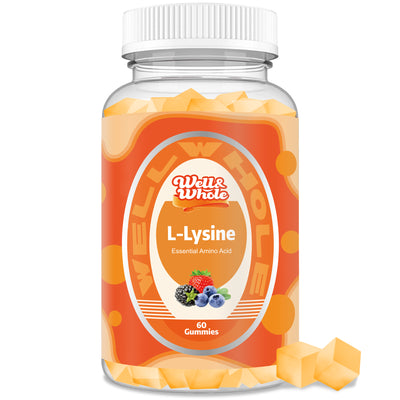
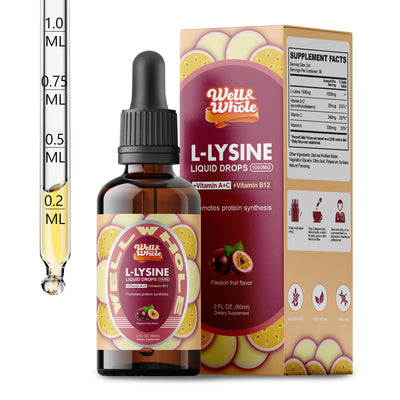
This health solution article examines the actual evidence behind lysine for cold sores—including the arginine-lysine balance theory, clinical trial results, dosing recommendations, and realistic expectations. We'll also cover how well&whole L-Lysine 1000mg Gummies and well&whole L-Lysine Liquid Drops 1000mg fit into a comprehensive cold sore management approach.


Understanding Cold Sores and HSV-1
What Causes Cold Sores
HSV-1 is a DNA virus that establishes lifelong latent infection in sensory neurons. Cold sores represent viral reactivation—the virus travels from the neuron to the skin surface, replicating in epithelial cells and causing the characteristic blister.
Common triggers for reactivation:
- UV light exposure (sunburn on lips)
- Physical or emotional stress
- Hormonal changes (menstruation)
- Fever or illness
- Fatigue and sleep deprivation
- Trauma to the lip area (dental work, chapping)
- Certain foods (high-arginine foods, acidic foods)
The Arginine-Lysine Theory
The most widely cited mechanism for lysine's cold sore effects involves the arginine-lysine balance:
The Theory:
- HSV requires arginine for viral protein synthesis and replication
- Lysine and arginine compete for the same cellular transport mechanisms
- When intracellular lysine concentrations are high relative to arginine, viral replication may be impaired
- Supplementing lysine and/or reducing arginine intake shifts this balance in favor of lysine
The Biochemistry:
Both lysine and arginine are basic (positively charged) amino acids that share the same cationic amino acid transporters (CAT-1, CAT-2) for cellular uptake. When lysine is present at high concentrations, it can competitively inhibit arginine transport, reducing the arginine available for viral replication.
This mechanism is biochemically plausible and has been demonstrated in cell culture studies. A study in *Virology* showed that lysine could inhibit HSV replication in vitro, with the effect being reversed by adding excess arginine (1).
What the Clinical Trials Show
The Mixed Evidence Picture
The clinical evidence for lysine in cold sore management is inconsistent—some studies show clear benefits, others show minimal effects. Understanding this variability helps set realistic expectations.
Positive Studies:
A study published in *Dermatologica* (now *Dermatology*) found that daily lysine supplementation (1,000 mg) reduced the frequency, severity, and healing time of cold sores in a double-blind, placebo-controlled trial (2). Participants who took lysine experienced fewer outbreaks and shorter healing times compared to placebo.
Another study in *Alternative Medicine Review* analyzed multiple clinical trials and concluded that lysine appeared most effective when:
- Taken at adequate doses (1,000-3,000 mg daily)
- Combined with a low-arginine diet
- Used consistently for prevention rather than as an acute treatment
- Blood lysine levels were actually increased (confirmed through testing)
Negative or Mixed Studies:
Not all studies have shown positive results. A study in the *Journal of the American Medical Association* found no significant benefit from lysine supplementation for cold sores when used as an acute treatment (taking lysine only at the onset of an outbreak) (3). This suggests that lysine's effectiveness may depend more on consistent preventive supplementation than on acute outbreak treatment.
A systematic review noted that many lysine studies had methodological limitations—small sample sizes, lack of dietary arginine tracking, inconsistent dosing, and variable outcome measures—making it difficult to draw firm conclusions from the available evidence (4).
Key Findings from the Research
Despite the mixed results, several consistent patterns emerge:
1. **Prevention > Acute treatment**: Lysine appears more effective for preventing outbreaks than for treating active cold sores
2. **Consistency matters**: Daily supplementation produces better results than sporadic use
3. **Dose matters**: Studies using 1,000-3,000 mg/day showed more consistent results than lower doses
4. **Diet matters**: The arginine-lysine ratio in the overall diet influences outcomes
5. **Individual variation**: Some people respond well to lysine; others see minimal benefit
The Arginine-Lysine Diet Approach
High-Arginine Foods to Limit During Outbreaks
If you're using lysine for cold sore management, reducing high-arginine foods may amplify lysine's effectiveness:
| Food | Arginine Content | Lysine/Arginine Ratio |
|------|-----------------|----------------------|
| Chocolate | High | 0.36 (low—arginine dominant) |
| Peanuts/peanut butter | High | 0.67 (low) |
| Almonds | High | 0.56 (low) |
| Walnuts | High | 0.42 (low) |
| Gelatin | Very high | 0.08 (extremely low) |
| Seeds (sunflower, sesame) | High | 0.52-0.65 (low) |
| Coconut | Moderate | Variable |
High-Lysine Foods to Emphasize
| Food | Lysine Content | Lysine/Arginine Ratio |
|------|----------------|----------------------|
| Fish (cod, salmon) | High | 1.38-1.55 (high) |
| Chicken | High | 1.13 (high) |
| Beef | High | 1.24 (high) |
| Dairy (cheese, yogurt) | High | 2.0+ (very high) |
| Soy products | Moderate-high | 1.00+ (balanced to high) |
| Lentils | Moderate | 0.94 (near balanced) |
| Quinoa | Moderate | ~1.0 (balanced) |
**The practical approach**: During outbreak-prone periods (stress, sun exposure, illness), temporarily reduce high-arginine foods and increase high-lysine foods, while supplementing with well&whole L-Lysine 1000mg Gummies or well&whole L-Lysine Liquid Drops 1000mg.
Practical Cold Sore Management with Lysine
Preventive Protocol
For ongoing cold sore prevention:
1. **Daily lysine**: 1,000 mg per day (consistent supplementation)
2. **Dietary awareness**: Maintain a generally favorable lysine-arginine ratio
3. **Trigger management**: Protect lips from UV exposure (sunscreen lip balm), manage stress, maintain good sleep
4. **Format choice**: Gummies for convenience and consistency; liquid drops for flexible dosing
During Outbreaks
When a cold sore appears:
1. **Increase lysine**: 2,000-3,000 mg per day during the active outbreak
2. **Strictly limit arginine**: Avoid chocolate, nuts, seeds, and gelatin
3. **Topical care**: Apply cold compresses; avoid touching or picking the blister
4. **Continue for 3-5 days**: Maintain higher dosing until the blister crusts and begins healing
5. **Return to maintenance dose**: After healing, resume 1,000 mg per day
Format Choice for Cold Sore Management
**Gummies (P10)** are ideal for the daily 1,000 mg preventive dose—convenient, pre-measured, and easy to maintain consistently.
**Liquid Drops (P11)** are advantageous during outbreaks when you want to increase to 2,000-3,000 mg—liquid drops allow easy dose adjustment without consuming multiple gummies.
**Having both formats available** gives you flexibility: gummies for daily maintenance, liquid drops for outbreak dose escalation.
Realistic Expectations
What Lysine Can Reasonably Offer
Based on the research, lysine supplementation may:
- Reduce the **frequency** of outbreaks in some individuals (most consistent finding)
- Reduce the **severity** of outbreaks when they occur (less consistent)
- Shorten **healing time** (some evidence, not universal)
- Work best as a **preventive** strategy rather than an acute treatment
What Lysine Cannot Offer
- Guaranteed prevention of all outbreaks
- Immediate resolution of active cold sores
- Elimination of HSV-1 from the body (no supplement can do this)
- Equal effectiveness for every individual
The Honest Assessment
Lysine is a reasonable, low-risk supplement that may help some people manage cold sore frequency and severity. It's not a magic cure, and it doesn't work for everyone. The best approach is to try consistent supplementation for 3-6 months, track your outbreak patterns, and evaluate whether it makes a meaningful difference for you specifically.
FAQ
Q1: Does L-lysine really help with cold sores?
Research shows mixed but generally positive results for lysine in cold sore management. It appears most effective for reducing outbreak frequency when taken consistently at 1,000-3,000 mg daily, particularly combined with a low-arginine diet. Individual results vary.
Q2: How much lysine should I take for cold sores?
For prevention: 1,000 mg daily. During active outbreaks: 2,000-3,000 mg daily for 3-5 days. Always follow product label instructions and consult your healthcare provider for personalized dosing.
Q3: Should I avoid certain foods while taking lysine for cold sores?
Reducing high-arginine foods (chocolate, peanuts, other nuts, seeds, gelatin) during outbreak-prone periods may amplify lysine's effectiveness. Emphasizing high-lysine foods (fish, dairy, meat, soy) helps maintain a favorable lysine-arginine ratio.
Q4: Can lysine cure herpes?
No. HSV-1 establishes lifelong latent infection that no supplement can eliminate. Lysine may help manage outbreak frequency and severity, but it cannot cure the virus.
Q5: Should I take lysine only during outbreaks?
Research suggests lysine is more effective as a daily preventive supplement than as an acute treatment taken only during outbreaks. Consistent daily supplementation maintains elevated lysine levels that may help prevent reactivation.
Q6: How long before I see results from lysine supplementation?
Most people need 2-3 months of consistent daily use before noticing changes in outbreak patterns. Track your outbreaks before and after starting lysine to evaluate its effectiveness for you.
Q7: Can I take lysine with other cold sore treatments?
Yes. Lysine can be used alongside topical treatments, sunscreen lip balm, and other preventive strategies. If you take prescription antiviral medications, discuss lysine supplementation with your prescribing doctor.
Q8: Which format is better for cold sore management?
Both well&whole L-Lysine 1000mg Gummies and well&whole L-Lysine Liquid Drops 1000mg deliver 1,000 mg lysine per serving. Gummies are ideal for daily preventive dosing; liquid drops offer flexible dose adjustment during outbreaks. Having both formats provides maximum flexibility.
Conclusion
L-lysine for cold sores has a plausible biochemical mechanism, mixed but generally positive clinical evidence, and decades of anecdotal success. While it's not a guaranteed solution, it's a low-risk, accessible supplement that may help reduce outbreak frequency and severity for many people—particularly when used consistently as a preventive strategy and combined with dietary arginine awareness.
well&whole L-Lysine 1000mg Gummies offer convenient daily preventive dosing, while well&whole L-Lysine Liquid Drops 1000mg provide flexible outbreak dose adjustment. Together, they give you the tools to manage cold sores from both preventive and reactive angles.
Start consistent daily supplementation, track your outbreaks, and give lysine 3-6 months to show what it can do for you. Combined with trigger management and dietary awareness, lysine may become a valuable part of your cold sore management toolkit.
Related supplements
Where to begin? Our L-Lysine 1000mg Essential Amino Acid Supplement Gummies for Kids and Adults and L-Lysine Supplement Liquid Drops 1000mg are a sensible place to start, and the L-lysine collection lays out the other formats side by side with Amino Acids.
These statements have not been evaluated by the Food and Drug Administration. This product is not intended to diagnose, treat, cure, or prevent any disease.