Kids Constipation: What Actually Helps

Most childhood constipation responds to a three-part home plan: more water, more fiber, and a calm daily toilet routine. Medication is rarely the first step, and the red flags that warrant a same-day call to the pediatrician are clear and easy to learn. For a typical child with no warning signs, parents can expect noticeable improvement within two to four weeks of consistent changes.
Constipation in children is far more common than parents expect. About one in seven children has a stool pattern that qualifies as constipated at some point during childhood, and the peak ages are toilet-training years and again around age seven. The good news is that the vast majority of cases are functional, meaning the bowel is healthy but the routine is not supporting it.
What "constipated" actually looks like in a child
The frequency of bowel movements is less important than the consistency and ease. The Bristol Stool Form Scale, originally designed for adults, works well in children old enough to describe their stool. Types 1 and 2 (hard lumps, lumpy sausage) are constipated. Type 3 (a cracked sausage) is on the edge. Types 4 and 5 are normal, and types 6 and 7 suggest the opposite problem.
Other signs that a child is constipated without realizing it include large, foul-smelling stools every few days rather than smaller ones daily, streaks of bright blood on the toilet paper from small anal tears, abdominal pain that comes and goes, soiling accidents in underwear despite being toilet-trained, and a generally poor appetite.
The three-part home plan that works for most kids
Water is the single most under-corrected variable. Children need roughly one liter of total fluid per day for every twenty kilograms of body weight, with more on active or warm days. Many constipated children drink just enough to avoid thirst but not enough to keep stool soft. A small glass of water with each meal and a refillable bottle at school covers most needs.
Fiber works best when it comes from food rather than supplements. Aim for the child's age in years plus five grams of fiber per day as a starting target. A bowl of oatmeal with berries for breakfast, a sliced apple as a snack, a side of broccoli or beans with dinner, and whole-grain bread instead of white are realistic swaps. Psyllium husk can fill gaps at half a teaspoon mixed into yogurt or a smoothie for younger children.
A calm toilet routine is the most overlooked part. The gastrocolic reflex is strongest in the morning and after meals, so a five-minute sit on the toilet within thirty minutes of breakfast and dinner, with a footstool so the knees are above the hips, dramatically improves outcomes. No phone, no pressure, no punishment for not producing. The body learns to associate the time with the action over two to three weeks.
When fiber and water are not enough
If the three-part plan has been in place for two to three weeks without progress, a pediatric osmotic laxative such as polyethylene glycol 3350 (PEG, sold over the counter as MiraLAX or a generic) is the first-line medication recommended by most pediatric guidelines. It works by drawing water into the colon and is not habit-forming. Dosing is weight-based and starts low. Stimulant laxatives like senna are reserved for short courses when an osmotic alone is not enough.
What about probiotics and prebiotics?
Evidence for probiotics in childhood functional constipation is weak and inconsistent across studies. A few specific strains, particularly Lactobacillus reuteri, show modest benefits in some trials but not enough to recommend them as a primary treatment. Prebiotic fibers in food (oats, bananas, chicory root) are a better starting point than isolated supplements.
Red flags that warrant a call to the doctor
Call the pediatrician the same day if there is blood in the stool beyond a small streak on the paper, repeated vomiting, severe abdominal pain, a fever above 38.5°C (101.5°F), weight loss, or a child under three months who has not passed meconium within 48 hours of birth. Children with Down syndrome, spinal cord issues, or a history of abdominal surgery need a doctor involved earlier.
Key takeaways
- Look at stool consistency on the Bristol scale, not just how often your child goes.
- The home plan is water, food fiber, and a calm twice-daily toilet routine for two to three weeks.
- Polyethylene glycol is the first-line medication if the home plan is not enough and is not habit-forming.
- Probiotics have weak evidence; food-based prebiotics are a better first step.
- Blood, vomiting, fever, weight loss, and severe pain are red flags for same-day medical review.
Frequently asked questions
How long should I try home changes before seeing a doctor?
Two to three weeks of consistent water, fiber, and routine is a reasonable trial for children with no red flags. If there is no improvement at all, book a non-urgent appointment. If the symptoms are worsening or new red flags appear, call sooner.
Are stool softeners safe for young children?
Polyethylene glycol 3350 is approved for use in children over two in most countries and is widely used in younger children under pediatric guidance. It is not absorbed and does not create dependence. Always follow weight-based dosing and check with your pediatrician before starting any laxative in a child under two.
Can holding in stool become a habit?
Yes. Children who have had a painful stool sometimes begin to hold back to avoid repeating the experience, which makes the next stool harder and larger, creating a cycle. Breaking the cycle often requires softening the stool with an osmotic for a few weeks while re-establishing the toilet routine, so the child learns that going does not hurt.
Should I cut dairy to help with constipation?
Only if your pediatrician has confirmed a cow's milk protein intolerance or allergy. Routine dairy avoidance in children without a specific diagnosis can lead to inadequate calcium and vitamin D intake. In most cases, dairy does not cause constipation; lack of fiber and water does.
Related supplements
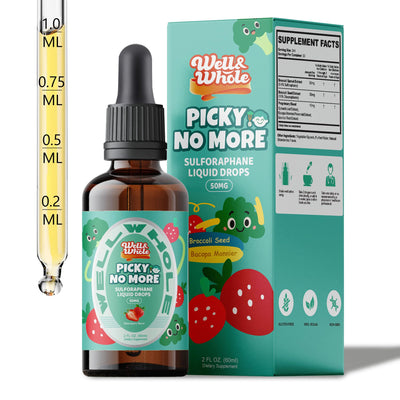
Putting it simply: if this is something you want to add to your routine, our Kids’ Black Walnut Digestive Support Drops, 14-in-1 Herbal Formula, Mixed Berry, Ages 1+, 2 fl oz and Sulforaphane Broccoli Supplement Liquid Drops for Kids with Sulforaphane, Glucoraphanin, Bacopa Monnieri are a good place to start. The wider Immune Support collection is worth a look, and the Digestive Support range covers related formats.
These statements have not been evaluated by the Food and Drug Administration. This product is not intended to diagnose, treat, cure, or prevent any disease. Talk to a healthcare professional before starting any new supplement, especially if you are pregnant, nursing, taking medication, or managing a health condition.
These statements have not been evaluated by the Food and Drug Administration. This product is not intended to diagnose, treat, cure, or prevent any disease.