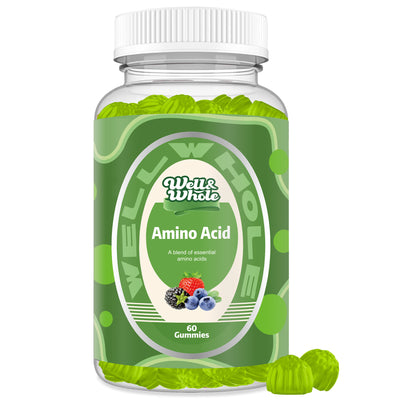
Is Proline an Essential Amino Acid?

If you’ve ever scanned the label of a protein supplement or read about collagen, you’ve likely come across proline. But the question many people ask is straightforward: is proline an essential amino acid? The short answer is no—proline is classified as a non-essential amino acid, meaning your body can synthesize it on its own. However, that label doesn’t tell the whole story. Under certain conditions—such as illness, injury, or high physical stress—proline may become conditionally essential, where your body’s internal production isn’t enough to meet demand. Understanding this nuance is key for anyone interested in optimizing their health, especially when considering supplementation from a trusted brand like well&whole.
What Is Proline and Why Does It Matter?
Proline is a unique amino acid with a ring-like structure that sets it apart from most other amino acids. It plays a critical role in the formation of collagen—the most abundant protein in your body, responsible for the structure of skin, bones, tendons, and ligaments. In fact, about 15–20% of collagen’s amino acid composition is made up of proline (source: Journal of Biological Chemistry, 2018). While your body can produce proline from glutamate or ornithine, the efficiency of this process declines with age, injury, or chronic illness.
Why does this matter for you? If you’re an athlete recovering from training, someone managing joint discomfort, or simply looking to maintain youthful skin, even a slight shortfall in proline can affect your body’s repair systems. That’s why proline supplements have gained traction in the wellness community. At well&whole, we focus on amino acids that support these foundational processes—proline being one of them.
In summary: Proline is not an essential amino acid in the strict sense, but its role in collagen synthesis makes it a vital nutrient for connective tissue health. When your body’s production is compromised, supplementation can fill the gap.
The Role of Proline in the Body
Beyond collagen, proline influences multiple biological functions. Here’s a breakdown of its key roles:
- Collagen stabilization: Proline helps form the triple helix structure of collagen, giving it strength and flexibility. Without adequate proline, collagen fibers become weak and brittle.
- Wound healing: Proline is required for tissue regeneration. A 2019 study in Wound Repair and Regeneration found that proline supplementation accelerated wound closure in animal models.
- Cardiovascular health: Proline contributes to the integrity of blood vessel walls. Some research suggests it may help lower blood pressure by relaxing arterial walls (source: Amino Acids, 2020).
- Joint and bone support: Because cartilage is rich in collagen, proline is often recommended for people with osteoarthritis or general joint stiffness.
For those searching for proline benefits for skin, the evidence is strong. A 2021 literature review in Nutrients highlighted that proline, along with glycine and hydroxyproline, improves skin elasticity and hydration when taken orally.
In summary: Proline’s biological functions extend well beyond simple amino acid metabolism. It plays an active role in maintaining the body’s structural framework, from your skin to your arteries.
When Does Proline Become Conditionally Essential?
The term conditionally essential applies when an amino acid becomes necessary from external sources due to increased demand or decreased internal production. For proline, several scenarios trigger this:
- Aging: As you get older, your body’s ability to synthesize proline declines. A 2022 study in Geriatrics reported that people over 60 have lower serum proline levels compared to younger adults.
- Injury or surgery: Tissues repair requires massive amounts of collagen, and the body may not keep up with the proline demand.
- High-intensity training: Athletes break down muscle and connective tissue faster, increasing the need for proline to support recovery.
- Chronic stress or illness: Conditions like diabetes, inflammatory diseases, or chronic infections can deplete proline reserves.
This is where the concept of non essential amino acids list often needs clarification. While proline appears on that list, it’s misleading to assume you can always ignore it. For many people, adding a proline source through diet or supplements like those from well&whole can make a measurable difference in how they feel and recover.
In summary: Proline is conditionally essential for individuals with higher physiological demands. Recognizing these conditions helps you decide whether supplementation is right for you.
Why Supplement with Proline?
You can obtain proline from protein-rich foods like meat, dairy, eggs, and soy. However, modern diets—especially plant-based ones—may fall short. Moreover, the bioavailability of proline from whole foods varies. That’s where targeted supplementation comes into play.
well&whole offers a high-quality proline supplement that is lab-tested for purity and potency. Our formulation is designed to support:
- Faster recovery from workouts and injuries
- Improved skin firmness and hydration
- Stronger nails and hair
- Better joint mobility
When searching for proline in collagen supplements, note that not all collagen products contain therapeutic amounts of free proline. Many collagen hydrolysates include proline as part of peptides, but the dosage might be lower than what you’d get from a standalone proline supplement. For precise support, a dedicated proline option can be more effective.
In summary: Supplementing with proline is a practical choice for anyone facing age-related decline, active lifestyles, or specific health goals. well&whole ensures you get a reliable, science-backed product.
Frequently Asked Questions (FAQ)
1. Does proline help with joint pain?
Yes, because proline is a building block of collagen, which forms the cartilage in your joints. Clinical trials have shown that collagen hydrolysates containing proline can reduce joint pain and improve mobility in people with osteoarthritis. For targeted results, pairing proline with vitamin C enhances its absorption.
2. Can I get enough proline from diet alone?
Most healthy adults can meet their baseline proline needs through a balanced diet that includes meat, fish, dairy, or legumes. However, if you are elderly, an athlete, or recovering from an injury, dietary intake may not be sufficient. In such cases, a proline supplement from well&whole can help fill the gap.
3. Is proline safe for everyone?
Proline is generally considered safe for most people when taken at recommended doses. Very high doses (above 5 grams per day) may cause mild gastrointestinal discomfort. People with kidney or liver disease should consult a healthcare professional before starting any amino acid supplement. Pregnant or nursing women should also seek medical advice.
At well&whole, we are committed to helping you understand the science behind your health choices. Proline may not be essential on paper, but its role in your body is anything but optional.
These statements have not been evaluated by the Food and Drug Administration. This product is not intended to diagnose, treat, cure, or prevent any disease.