Is Hydroxyproline an Essential Amino Acid?

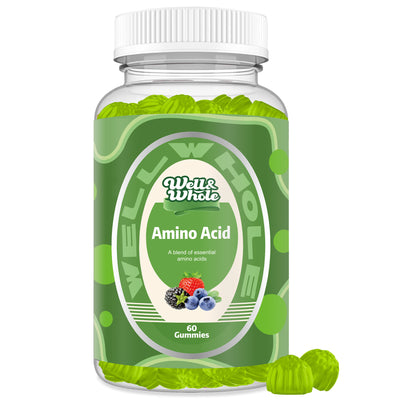
When you dive into amino acid profiles, a common question pops up: is hydroxyproline an essential amino acid? The answer is no — hydroxyproline is classified as a non‑essential amino acid because the human body can synthesize it from proline, with the help of vitamin C and iron. However, understanding why this distinction matters, and what role hydroxyproline actually plays in your health, is where things get interesting. For anyone interested in skin vitality, joint mobility, and connective tissue strength, hydroxyproline deserves attention — and that’s where well&whole comes in, offering high‑quality supplements that support your body’s natural collagen production.
Key Takeaways
- Essential amino acids (EAAs) are the nine amino acids the body cannot make on its own and must get from diet or supplements.
- A complete EAA blend includes all nine, whereas BCAAs cover only three of them—an important distinction when comparing products.
- Liquid EAA drops are a convenient format for people who dislike pills or want to sip them around training or throughout the day.
What Makes an Amino Acid “Essential”?
Essential amino acids cannot be produced by the body and must come from food or supplements. There are nine of them — histidine, isoleucine, leucine, lysine, methionine, phenylalanine, threonine, tryptophan, and valine. Hydroxyproline is not on that list. Instead, it is formed inside the body through post‑translational hydroxylation of proline, a process that requires specific enzymes (prolyl hydroxylase) and cofactors like ascorbic acid (vitamin C). Without adequate vitamin C, this conversion slows down, affecting collagen synthesis.
Although hydroxyproline is non‑essential in the strict sense, its presence is critical — it stabilizes the triple‑helix structure of collagen, which accounts for about 30% of total body protein. In fact, collagen contains roughly 13.5% hydroxyproline by weight (Prockop & Kivirikko, Annual Review of Biochemistry, 1995). So while your body can make it, the efficiency of that process can vary depending on diet, age, and health status.
Summary: Hydroxyproline is not an essential amino acid, but it is indispensable for collagen integrity. Its production depends on proline availability and vitamin C.
Why Hydroxyproline Matters for Skin and Joints
The most abundant protein in your body — collagen — relies heavily on hydroxyproline for structural stability. Without enough hydroxyproline, collagen fibers become weak, leading to sagging skin, brittle nails, and stiff joints. Multiple studies link hydroxyproline levels to skin elasticity and joint comfort. For example, a 2019 review in Nutrients highlighted that hydroxyproline‑rich collagen peptides can improve skin hydration and reduce wrinkle depth (source: Choi et al., Nutrients, 2019, 11(9), 2185).
For the wellness and joint health community, the long‑tail keyword hydroxyproline benefits for skin collagen is highly relevant. Many collagen supplements on the market emphasize hydroxyproline content because it directly supports the body’s own repair mechanisms. well&whole formulates its collagen‑support products with bioavailable ingredients to help maintain optimal hydroxyproline levels, especially for those over 30 when natural collagen production starts to decline.
Summary: Hydroxyproline stabilizes collagen, directly influencing skin firmness and joint mobility. Supplementation can help counter age‑related collagen loss.
Is Hydroxyproline an Essential Amino Acid for Connective Tissue Health?
This long‑tail question — is hydroxyproline an essential amino acid for connective tissue — often arises because connective tissues like tendons, ligaments, and cartilage are rich in collagen. While technically not essential, the demand for hydroxyproline can exceed the body’s synthetic capacity under certain conditions. For instance, athletes recovering from injuries, people with poor vitamin C intake, or individuals with digestive issues that impair protein absorption may benefit from hydroxyproline supplements to speed up tissue repair.
A 2021 clinical trial in Journal of the International Society of Sports Nutrition found that collagen peptides (rich in hydroxyproline) significantly reduced joint pain in active individuals (source: Clark et al., JISSN, 2021, 18, 56). This supports the idea that, while the body can produce hydroxyproline, extra dietary or supplemental intake may be beneficial for targeted connective tissue health. That’s why well&whole includes hydrolyzed collagen with a verified hydroxyproline profile in its joint care line.
Summary: Under high demand (injury, aging, poor nutrition), exogenous hydroxyproline can provide an advantage for connective tissue repair and joint comfort.
Natural Sources and Supplement Options
You can obtain hydroxyproline through your diet, mainly from collagen‑rich foods: bone broth, chicken skin, fish skin, pork rinds, and gelatin. However, the amount is relatively small compared to what a typical supplement provides. For those seeking a concentrated source, hydroxyproline supplements — often in the form of hydrolyzed collagen or synthetic hydroxyproline — are available.
When choosing a supplement, look for products that specify hydroxyproline content. For example, well&whole uses third‑party tested collagen peptides with a guaranteed minimum of 12% hydroxyproline, ensuring you get a consistent dose. Note that the standard daily dose of collagen peptides (10–15 g) provides roughly 1.2–1.8 g of hydroxyproline, which is considered safe and effective.
Summary: Dietary sources of hydroxyproline include bone broth and gelatin, but supplements offer a more reliable and concentrated intake, especially for targeted health goals.
Frequently Asked Questions
1. Is hydroxyproline an essential amino acid?
No. Hydroxyproline is a non‑essential amino acid because the body can synthesize it from proline, provided enough vitamin C is available. However, its role in collagen stability makes it a “conditionally essential” nutrient for some individuals.
2. Can you take too much hydroxyproline?
Hydroxyproline is generally safe when consumed as part of collagen supplements. No adverse effects have been reported at typical doses (1–2 g per day). High doses may cause mild digestive discomfort, but toxicity is rare. Always follow the manufacturer’s recommendations.
3. Who should consider hydroxyproline supplements?
People with reduced collagen production — such as those over 30, vegetarians/vegans (who lack collagen‑rich foods), athletes with joint stress, or individuals recovering from injuries — may benefit from additional hydroxyproline. well&whole offers a comprehensive collagen support product tailored to these needs.
Essential amino acids vs. BCAAs: what the difference means
The nine essential amino acids include the three branched-chain amino acids (leucine, isoleucine, valine) plus six others such as lysine, threonine, and tryptophan. A complete EAA product supplies all nine; a BCAA product supplies only three.
For people focused on overall protein support, a full EAA spectrum is often the more complete choice. Your goal—recovery, daily protein intake, or convenience—should guide the format.
How EAA drops are commonly used
Liquid EAA drops are typically added to water and sipped. Many active adults use them around training sessions or distributed through the day to support normal protein synthesis.
Because liquids absorb without needing to swallow several capsules, they suit people who travel or who find large pills inconvenient.
Who might be interested
Active adults, older adults watching their protein intake, and anyone with a diet low in complete proteins may look at EAA supplementation.
They are also popular with people following plant-forward eating patterns who want to round out their amino acid intake.
How to choose a quality EAA product
Check that all nine essentials are present and that the label states the amount per serving. A balanced leucine-containing ratio supports normal muscle protein synthesis.
Look for third-party testing, a clean ingredient list, and a format you will use consistently—drops, powders, or capsules.
This article is for general wellness education and is not intended to diagnose, treat, cure, or prevent any condition. Individual needs vary—always review product labels and consult a qualified healthcare professional before starting any new supplement.
Related supplements
Explore the full well&whole supplement collection to find formats and combinations that fit your routine.
These statements have not been evaluated by the Food and Drug Administration. This product is not intended to diagnose, treat, cure, or prevent any disease.