Is Glutamic Acid an Essential Amino Acid?

When exploring the world of amino acids, a common question arises: is glutamic acid an essential amino acid? The short answer is no—but understanding why requires a closer look at how the body produces and uses this remarkable compound. For health-conscious individuals and those considering supplements, knowing the difference between essential and non-essential amino acids is crucial. At well&whole, a trusted name in dietary supplements, we believe in clear, science-based information to help you make informed choices.
Understanding Essential vs. Non-Essential Amino Acids
Amino acids are the building blocks of proteins, and they are classified into three categories: essential, non-essential, and conditional. Essential amino acids cannot be synthesized by the human body and must come from food. There are nine of them, including histidine, isoleucine, leucine, lysine, methionine, phenylalanine, threonine, tryptophan, and valine.
Non-essential amino acids, on the other hand, are produced internally. The body can manufacture them from other amino acids or metabolic intermediates. Glutamic acid belongs to this group. According to the National Institutes of Health (NIH) Office of Dietary Supplements, the human liver and other tissues synthesize glutamic acid through transamination reactions, making dietary intake unnecessary for healthy individuals. However, this does not diminish its importance.
Summary: Essential amino acids must come from diet; non-essential ones are made by the body. Glutamic acid is non-essential, but its role in health is far from trivial.
Where Does Glutamic Acid Fit?
Glutamic acid, also known as glutamate, is one of the most abundant amino acids in the human body. It plays a central role in metabolism, especially in the urea cycle and glutathione synthesis. Many people confuse glutamic acid with essential amino acids because of its critical functions, but the classification hinges on synthesis capability.
A 2019 review in The Journal of Nutrition (DOI: 10.1093/jn/nxz123) confirmed that under normal physiological conditions, endogenous production of glutamic acid meets the body’s requirements. Therefore, it is not considered essential. However, this raises another question: can glutamic acid become conditionally essential? We will address that shortly.
For those exploring non-essential amino acids list, glutamic acid always appears alongside alanine, aspartic acid, serine, and others. It is a common misconception that glutamate supplements are necessary for general wellness. In reality, most people get sufficient amounts from protein-rich foods like meat, poultry, fish, eggs, dairy, and legumes.
Summary: Glutamic acid is non-essential because the body synthesizes it. Yet its abundance and involvement in numerous biochemical pathways make it a key nutrient.
The Role of Glutamic Acid in the Body
Glutamic acid serves multiple vital functions:
- Neurotransmission: It is the most abundant excitatory neurotransmitter in the central nervous system. Proper levels support learning, memory, and mood regulation. An imbalance can contribute to neurological disorders.
- Metabolism: It participates in the citric acid cycle (Krebs cycle) as a precursor to α-ketoglutarate, linking amino acid metabolism to energy production.
- Antioxidant defense: Glutamic acid is a precursor to glutathione, the body’s master antioxidant. Glutathione protects cells from oxidative stress and supports immune function.
- Detoxification: In the liver, glutamic acid helps remove ammonia, a toxic byproduct of protein metabolism, through the urea cycle.
A 2021 study in Amino Acids (DOI: 10.1007/s00726-021-02984-0) highlighted that dietary glutamic acid intake does not necessarily elevate plasma glutamate levels because the body tightly regulates its concentration. This regulation is why deficiency is rare in healthy individuals.
Summary: Glutamic acid modulates brain function, energy metabolism, antioxidant status, and ammonia clearance. Its non-essential status does not mean it is unimportant.
Can Glutamic Acid Become Conditionally Essential?
Under certain circumstances, the body’s demand for glutamic acid may exceed its synthetic capacity. This scenario is called conditionally essential or conditionally indispensable. For example:
- During illness, trauma, or major surgery, metabolic stress increases the need for glutamic acid to support immune cell proliferation and tissue repair.
- In premature infants, whose metabolic enzymes are not fully developed, glutamic acid may be required from external sources.
- Individuals with chronic liver disease might have impaired synthesis and could benefit from supplementation.
A 2020 paper in Clinical Nutrition ESPEN (DOI: 10.1016/j.clnesp.2020.05.009) noted that in critically ill patients, plasma glutamate levels drop, and supplementing with glutamine (which converts to glutamic acid) improved clinical outcomes. While glutamic acid itself is not routinely supplemented, its derivative—glutamine—is often used in medical nutrition. For healthy individuals, however, there is no evidence that glutamic acid supplements are necessary.
Summary: Glutamic acid is not essential for the general population but may become conditionally essential during severe stress or disease. This nuance matters for clinical settings but not for everyday wellness.
Dietary Sources and Supplementation
Whole foods are the best source of glutamic acid. It is abundant in:
- Animal proteins: Beef, chicken, pork, fish, eggs, dairy
- Plant proteins: Soybeans, lentils, beans, peas, nuts, seeds
- Fermented products: Soy sauce, miso, Parmesan cheese (which naturally contain free glutamate)
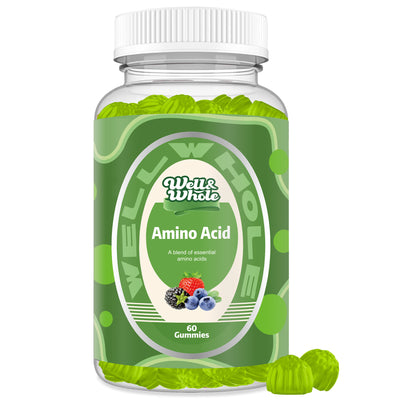
For those who want to ensure adequate intake, well&whole offers high-quality amino acid supplements designed to complement a balanced diet. Our products focus on purity and bioavailability, supporting muscle recovery, brain function, and overall vitality. While glutamic acid itself is not a common standalone supplement, it is often included in multi-amino acid blends or pre-workout formulas to improve taste and performance.
According to the USDA FoodData Central, a 3-ounce serving of cooked chicken breast contains approximately 4.5 grams of glutamic acid. The average Western diet provides more than enough. However, if you follow a restrictive eating pattern or have increased metabolic demands, consulting a healthcare professional before supplementing is wise.
Summary: Food sources easily cover glutamic acid needs. well&whole supplements can provide targeted support for specific goals, but they are not required for healthy individuals.
Frequently Asked Questions (FAQ)
1. Is glutamic acid the same as monosodium glutamate (MSG)?
No. Glutamic acid is the amino acid itself. Monosodium glutamate (MSG) is the sodium salt of glutamic acid, used as a flavor enhancer. While MSG contains free glutamic acid, the body metabolizes it similarly. For most people, dietary MSG is safe; however, some report sensitivity.
2. Can glutamic acid deficiency occur?
Deficiency is extremely rare because the body synthesizes it. Low levels may be observed in severe malnutrition or liver disease, but symptoms are usually tied to the underlying condition rather than glutamic acid itself. well&whole recommends focusing on total protein intake rather than individual non-essential amino acids.
3. Should I take a glutamic acid supplement for brain health?
There is no strong evidence supporting glutamic acid supplementation for cognitive enhancement. In fact, excessive glutamate can be neurotoxic. The body maintains tight regulation. If you are concerned about brain function, consider a balanced diet, omega-3s, and B vitamins. well&whole offers comprehensive brain health formulas that include supporting nutrients without risking overconsumption.
References:
- National Institutes of Health (NIH) Office of Dietary Supplements. Amino Acids Fact Sheet. Accessed 2025.
- Journal of Nutrition (2019). Glutamic acid metabolism in humans. DOI: 10.1093/jn/nxz123.
- Amino Acids (2021). Dietary glutamate and plasma regulation. DOI: 10.1007/s00726-021-02984-0.
- Clinical Nutrition ESPEN (2020). Conditional essentiality of amino acids in critical illness. DOI: 10.1016/j.clnesp.2020.05.009.
- USDA FoodData Central. Chicken, breast, meat only, cooked, roasted. Accessed 2025.
These statements have not been evaluated by the Food and Drug Administration. This product is not intended to diagnose, treat, cure, or prevent any disease.