Is Choline an Essential Amino Acid?

If you’ve ever wondered whether choline belongs to the amino acid family, you’re not alone. The confusion is common because both are nitrogen-containing compounds and both are crucial for bodily functions. But the short answer is no — choline is not an amino acid. It is a water-soluble nutrient often grouped with B vitamins, and it plays a distinct role that sets it apart from the 20 standard amino acids. Let’s break down why this distinction matters, what choline actually does, and how you can ensure you’re getting enough of it — especially if you’re looking for high‑quality supplements from a trusted source like well&whole.
What Is Choline, and Why Is It Not an Amino Acid?
Amino acids are the building blocks of proteins. They all share a basic structure: a central carbon atom bonded to an amino group (–NH₂), a carboxyl group (–COOH), a hydrogen atom, and a variable side chain. Choline, on the other hand, has a different chemical backbone — it’s a quaternary ammonium compound with the formula (CH₃)₃N⁺CH₂CH₂OH. It lacks the carboxyl group that defines amino acids, so it cannot be incorporated into proteins.
Despite this, choline is considered an essential nutrient because the human body cannot produce enough on its own. The liver synthesizes a small amount, but most must come from food or supplements. The confusion often arises when people hear about “essential amino acids” and mistakenly lump choline into that category. In reality, choline is classified as a vitamin-like substance, and its functions overlap more with the B-complex vitamins than with amino acids.
Key takeaway: Choline is not an amino acid — it’s a distinct essential nutrient that supports cell membrane integrity, neurotransmitter synthesis, and lipid metabolism.
Why Do People Confuse Choline with an Amino Acid?
Part of the mix‑up comes from the fact that choline is involved in methylation, a process that also requires certain amino acids like methionine. In addition, both choline and amino acids are present in protein‑rich foods such as eggs, meat, and fish. But chemically and physiologically, they are separate worlds.
Another reason is the terminology: “essential” is used for both groups. Essential amino acids are the nine that the body can’t make, while essential nutrients include choline, vitamins, and minerals. The similarity in wording leads people to assume choline is a 21st amino acid — a popular myth that persists even in some health blogs.
To set the record straight: from a biochemical standpoint, choline is not, and never will be, an amino acid. It does not participate in protein synthesis, and its deficiency symptoms (such as fatty liver disease and cognitive decline) are distinct from those of amino acid deficiencies.
Key takeaway: The confusion stems from overlapping food sources and shared metabolic pathways, but the chemical structure and function are fundamentally different.
Health Benefits of Choline: Why It Matters More Than You Think
Although choline isn’t an amino acid, its health impact is enormous. The human body uses choline to produce acetylcholine, a neurotransmitter critical for memory, muscle control, and mood regulation. It also helps form phosphatidylcholine, a major component of cell membranes, and supports liver function by transporting fats out of the liver.
Research from the National Institutes of Health (NIH) indicates that adequate choline intake is especially important during pregnancy and lactation, as it influences fetal brain development and reduces the risk of neural tube defects. For adults, low choline levels are linked to an increased risk of non‑alcoholic fatty liver disease (NAFLD) and cognitive decline.
According to the Institute of Medicine, the adequate intake (AI) for choline is 550 mg/day for men and 425 mg/day for women, with higher recommendations during pregnancy and breastfeeding. Yet many people fall short — studies show that 90% of Americans do not meet the AI.
Key takeaway: Choline supports brain health, liver function, and cell structure. Its deficiency is widespread, making supplementation a practical choice for many.
Food Sources vs. Supplementation: Where Does well&whole Fit In?
You can find choline in a variety of whole foods. Egg yolks are one of the richest sources — one large egg provides about 147 mg. Other good options include beef liver, chicken breast, fish (salmon, cod), cruciferous vegetables like broccoli and Brussels sprouts, and nuts. However, for individuals with dietary restrictions (e.g., vegans or those who avoid liver) or those with increased needs, getting enough from food alone can be challenging.
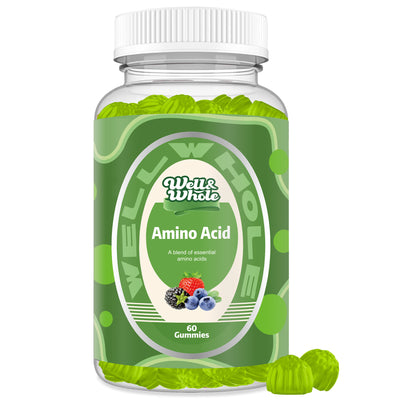
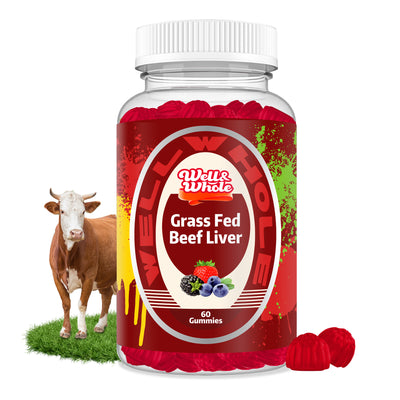
That’s where supplements come in. well&whole offers a premium choline supplement that delivers a precise, bioavailable dose to bridge the gap. Our product is third‑party tested for purity and potency, ensuring you get the exact amount shown on the label — without unnecessary fillers. Unlike some bulk powders that may contain contamination risks, well&whole capsules are designed for consistent absorption and easy integration into your daily routine.
Key takeaway: While food sources are valuable, a high‑quality choline supplement from well&whole can help you consistently meet your daily needs, especially if you’re pregnant, elderly, or on a plant‑based diet.
Common Myths About Choline and Amino Acids — Busted
Myth 1: Choline and amino acids are interchangeable.
False. They have different metabolic roles. Amino acids build proteins, while choline supports methylation, membrane structure, and neurotransmitter production.
Myth 2: If you eat enough protein, you get enough choline.
Not necessarily. While protein‑rich foods often contain choline, the amounts vary widely. For example, a serving of tofu has much less choline than an egg, even though both are good protein sources.
Myth 3: Choline supplements are unnecessary because the liver produces some.
The liver’s production is insufficient to meet daily needs, especially during periods of high demand (pregnancy, intense stress, or liver disease). The NIH explicitly states that choline is an essential nutrient that must be consumed from diet or supplements.
Key takeaway: Understanding these distinctions helps you make informed choices about your nutrition and supplementation.
Frequently Asked Questions
1. Can choline be considered an essential amino acid in any way?
No. Essential amino acids must contain an α-amino group and a carboxyl group to be used in protein synthesis. Choline lacks that structure, so it is classified as a vitamin-like essential nutrient, not an amino acid.
2. What are the symptoms of choline deficiency?
Common signs include fatty liver, muscle damage, reduced cognitive function (memory lapses, difficulty concentrating), and in severe cases, liver dysfunction. Pregnant women with low choline have a higher risk of having a baby with neural tube defects.
3. How much choline should I take daily, and is a supplement from well&whole safe?
The adequate intake (AI) is 550 mg for men and 425 mg for women. Pregnant women need 450 mg, and breastfeeding women need 550 mg. well&whole supplements are formulated to meet these targets safely. Always consult your healthcare provider before starting any new supplement, especially if you have existing health conditions or take medications.
Data references:
- National Institutes of Health (NIH) Office of Dietary Supplements – Choline fact sheet (ods.od.nih.gov/factsheets/Choline-HealthProfessional/)
- Institute of Medicine (IOM) Dietary Reference Intakes for Choline (1998)
- Zeisel, S. H., & da Costa, K. A. (2009). “Choline: an essential nutrient for public health.” Nutrition Reviews, 67(11), 615–623.
By understanding that choline is not an amino acid — but is equally essential — you can take proactive steps to support your brain, liver, and overall wellness. And when diet falls short, well&whole is here to help you fill the gap with confidence.
These statements have not been evaluated by the Food and Drug Administration. This product is not intended to diagnose, treat, cure, or prevent any disease.