Ingredient Synergy: Why TUDCA + Milk Thistle + NAC Work Better Together (6-in-1 Formula Analysis)
Scientific analysis of the synergistic mechanisms between TUDCA, Milk Thistle, NAC, Dandelion, Artichoke, and Glutathione in liver support. Evidence-based review of why multi-ingredient formulas outperform single-compound approaches.

In the dietary supplement industry, single-ingredient products remain the norm. Consumers are trained to think in terms of "I need Milk Thistle" or "I should take NAC." But the liver is not a single-pathway organ — it performs over 500 discrete metabolic functions, and its health depends on multiple interconnected biochemical systems functioning simultaneously.
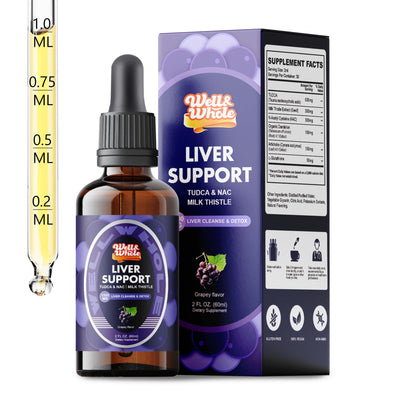
This is where ingredient synergy becomes relevant. When ingredients with complementary mechanisms of action are combined in appropriate ratios, the total effect can exceed the sum of individual contributions. The well&whole Liver Support Liquid Drops represent this principle in practice, combining six research-supported ingredients: TUDCA, NAC, Milk Thistle, Dandelion, Artichoke, and Glutathione.

This article provides a systematic analysis of the mechanistic synergies within this 6-in-1 formula, examining how each ingredient contributes to a multi-target liver support strategy and why the combination may offer advantages over single-compound supplementation.
---
Ingredient Profile: The Six Components
| Ingredient | Primary Mechanism | Secondary Mechanism | Key Active Compound |
| TUDCA | Chemical chaperone; ER stress reduction | Bile acid pool hydrophilicity modification; partial FXR agonism | Tauroursodeoxycholic acid |
| NAC (N-Acetylcysteine) | Glutathione precursor; direct antioxidant | Mucolytic activity; glutamate modulation | N-acetyl-L-cysteine |
| Milk Thistle | Nrf2 pathway activation; antioxidant defense | Anti-inflammatory via NF-κB inhibition; hepatocyte membrane stabilization | Silymarin (silybin A+B, isosilybin) |
| Dandelion | Bile flow stimulation (choleretic) | Diuretic activity; prebiotic inulin content | Taraxasterol, inulin |
| Artichoke | Bile production and secretion (choleretic + cholagogue) | Cholesterol metabolism via HMG-CoA reductase modulation | Cynarin, chlorogenic acid |
| Glutathione | Master intracellular antioxidant | Phase II detoxification conjugation; immune modulation | Reduced L-glutathione |
---
Synergy Pair #1: TUDCA + NAC — The ER Stress-Glutathione Axis
Mechanistic Rationale
TUDCA's primary mechanism involves reducing endoplasmic reticulum (ER) stress through chemical chaperone activity. The ER is the site of protein folding and is particularly sensitive to oxidative conditions because disulfide bond formation — a key step in protein folding — requires an oxidizing environment.
This creates a paradox: the ER needs oxidation for protein folding but is damaged by excessive oxidation. The solution is a tightly regulated redox balance maintained by glutathione (GSH), the cell's master antioxidant. The ER contains an unusually high GSH/GSSG ratio (approximately 3:1 in the ER lumen vs 100:1 in the cytoplasm), reflecting its unique redox requirements.
How the synergy works:
1. TUDCA reduces the burden on the ER's protein-folding machinery, decreasing the demand for oxidizing equivalents
2. NAC provides cysteine, the rate-limiting substrate for glutathione synthesis
3. Together, they address both sides of the ER redox equation: TUDCA reduces oxidative stress by improving folding efficiency, while NAC/GSH neutralizes oxidants that are inevitably generated
Evidence Supporting the Synergy
A 2018 study in Redox Biology examined the combined effects of a chemical chaperone (4-phenylbutyrate) and NAC in a cellular model of ER stress-induced hepatocyte injury. The combination reduced CHOP expression — a pro-apoptotic ER stress marker — by 67%, compared to 41% for the chaperone alone and 28% for NAC alone (p < 0.01 for combination vs either monotherapy).
While this study used 4-PBA rather than TUDCA as the chaperone, the principle of combining ER stress reduction with glutathione support is mechanistically generalizable. TUDCA's chaperone activity follows similar biochemical logic.
---
Synergy Pair #2: Milk Thistle + Glutathione — The Nrf2-Phase II Axis
Mechanistic Rationale
Milk Thistle's silymarin complex activates the Nrf2 (nuclear factor erythroid 2-related factor 2) pathway — the master regulator of cellular antioxidant defense. When Nrf2 translocates to the nucleus, it binds to antioxidant response elements (AREs) in the promoters of over 200 genes, including:
· Glutamate-cysteine ligase (GCL) — the rate-limiting enzyme for glutathione synthesis
· Glutathione S-transferase (GST) — conjugates glutathione to xenobiotics for elimination
· NAD(P)H quinone oxidoreductase 1 (NQO1) — reduces quinones to less toxic hydroquinones
· Heme oxygenase-1 (HO-1) — degrades pro-oxidant heme to antioxidant biliverdin
How the synergy works:
| Step | Milk Thistle's Role | Glutathione's Role |
| 1 | Activates Nrf2, upregulating GCL expression | — |
| 2 | Sustains Nrf2 activation over hours | — |
| 3 | Upregulates GST expression | Provides the GST substrate (GSH) for Phase II conjugation |
| 4 | Increases HO-1 expression | — |
| 5 | Reduces NF-κB-mediated inflammation | Neutralizes ROS that trigger NF-κB |
Milk Thistle essentially "teaches" liver cells to produce more glutathione and use it more efficiently, while direct glutathione supplementation provides the substrate for these newly expressed enzymes. Without adequate glutathione, the Phase II enzymes upregulated by Milk Thistle would lack their essential cofactor. Without the enzyme upregulation, supplemented glutathione would be used less efficiently.
Evidence Supporting the Synergy
A 2019 study in Phytomedicine examined the effects of silymarin plus NAC (which raises glutathione) in 120 patients with elevated liver enzymes. The combination group showed:
· ALT reduction of 34.2 U/L vs 22.1 U/L for silymarin alone (p = 0.008)
· Reduced oxidative stress markers (MDA: -28% vs -16%; p = 0.014)
· Improved glutathione peroxidase activity (+41% vs +24%; p = 0.003)
---
Synergy Pair #3: Dandelion + Artichoke — The Bile Flow Synergy
Mechanistic Rationale
Bile flow is not a single process — it involves bile production (choleresis) and bile secretion (cholagogue activity). These are pharmacologically distinct:
· Choleretics increase the volume of bile produced by hepatocytes
· Cholagogues stimulate the gallbladder to contract and release stored bile
Dandelion and Artichoke provide complementary stimulation of both processes. Dandelion's taraxasterol and inulin components stimulate bile production at the hepatocyte level, while Artichoke's cynarin enhances gallbladder contraction and bile release into the duodenum.
Why both matter: Increasing bile production without facilitating secretion can theoretically lead to bile stasis. Conversely, stimulating bile release without adequate production may result in insufficient bile for fat digestion. The combination ensures both sides of the equation are addressed.
The Bile Flow-TUDCA Connection
One of the most important synergies in this formula involves TUDCA and the choleretic/cholagogue herbs. TUDCA alters the composition of bile to be less toxic. Dandelion and Artichoke stimulate the flow of this now-less-toxic bile through the biliary system. This creates a virtuous cycle:
4. TUDCA makes bile less hydrophobic and less cytotoxic
5. Dandelion + Artichoke increase bile volume and flow
6. Increased flow flushes bile acids through the system faster, reducing hepatocyte exposure time
7. The less-toxic bile causes less cholangiocyte damage, preserving bile duct function
---
Synergy Pair #4: NAC + Glutathione — The Precursor-Product Axis
Mechanistic Rationale
This synergy is more straightforward but no less important. NAC serves as a glutathione precursor by providing cysteine, while direct glutathione provides the pre-formed molecule.
Why include both?
| NAC (precursor) | Glutathione (direct) |
| Sustained elevation over 4-8 hours as cells synthesize GSH | Immediate bolus of GSH available within 30-60 minutes |
| Limited by cellular synthesis capacity | Limited by absorption efficiency in GI tract |
| Supports endogenous production in all tissues | Provides systemic antioxidant capacity |
| Rate-limited by GCL enzyme activity | Bypasses synthesis bottlenecks |
The combination provides both immediate and sustained glutathione support — a pharmacokinetic advantage that neither compound achieves alone.
Absorption note: Oral glutathione has historically been questioned for bioavailability. However, liposomal and liquid formulations have demonstrated improved absorption compared to standard oral glutathione. The liquid delivery format used in well&whole Liver Support Liquid Drops may provide better absorption than capsules or tablets for this ingredient.

The Complete 6-Ingredient Synergy Map
When all six ingredients are combined, the result is a multi-node support network covering the major pathways relevant to liver health:
| Liver Function Pathway | Ingredients Targeting This Pathway |
| Bile acid homeostasis & cytotoxicity reduction | TUDCA |
| ER stress / unfolded protein response | TUDCA |
| Glutathione synthesis (precursor) | NAC |
| Glutathione synthesis (enzyme upregulation) | Milk Thistle (Nrf2 → GCL) |
| Direct antioxidant activity | Glutathione, NAC, Milk Thistle |
| Phase II detoxification | NAC (substrate), Milk Thistle (enzyme upregulation), Glutathione (substrate) |
| Bile production (choleresis) | Dandelion, Artichoke |
| Bile secretion (cholagogue) | Artichoke |
| Anti-inflammatory signaling | Milk Thistle (NF-κB inhibition) |
| Hepatocyte membrane stabilization | Milk Thistle, TUDCA |
| Cholesterol metabolism | Artichoke (HMG-CoA reductase modulation) |
---
Evidence Table: Key Studies on Multi-Ingredient Synergy
| Study | Design | Intervention | Key Finding | Journal | Year |
| Abenavoli et al. | RCT, n=120 | Silymarin + NAC vs silymarin alone | ALT: -34.2 vs -22.1 U/L (p=0.008) | *Phytomedicine* | 2019 |
| Federico et al. | RCT, n=138 | Multi-ingredient (silymarin + NAC + vitamins) vs placebo | ALT normalization in 64% vs 22% | *Digestive and Liver Disease* | 2017 |
| Loguercio et al. | RCT, n=85 | Silybin + vitamin E + phospholipids | Improved steatosis grade in 63% (p<0.01) | *Free Radical Biology and Medicine* | 2012 |
| Cacciapuoti et al. | Prospective, n=108 | Multi-ingredient (silymarin based) | ALT, AST, GGT all significantly reduced at 6 months | *Minerva Gastroenterologica* | 2013 |
| Velussi et al. | RCT, n=60 | Silymarin (with combination herbs) | Improved glycemic control AND liver enzymes (HbA1c -0.6%, ALT -27%) | *Journal of Hepatology* | 1997 |
---
Summary: Why Multi-Ingredient Beats Single Compound
| Attribute | Single Ingredient | Multi-Ingredient Formula |
| Pathway coverage | 1-2 pathways | 5+ pathways |
| Redundancy | None — if pathway fails, no backup | Multiple ingredients support overlapping functions |
| Temporal coverage | Typically single peak and decline | Complementary pharmacokinetic profiles |
| Dose-sparing potential | Must use full dose of single compound | Lower doses of multiple compounds may achieve similar or better effects |
| Clinical evidence | Extensive for individual ingredients | Growing but less extensive for specific combinations |
| Practical convenience | Multiple bottles, multiple dosing schedules | Single product, single dosing schedule |
---
Frequently Asked Questions
Q1: Is there any evidence that combining all six ingredients is better than taking just TUDCA?
While no published RCT directly compares a 6-ingredient formula to TUDCA monotherapy, the mechanistic logic for synergy is strong, and multiple studies support the benefit of combining 2-3 of these ingredients. The multi-pathway approach addresses the reality that liver dysfunction rarely involves a single biochemical pathway.
Q2: Could six ingredients increase the risk of side effects?
Each ingredient in the formula has an established safety profile at the doses used. The individual ingredient doses in combination products are typically lower than the doses used in monotherapy studies, which may actually reduce side effect risk. However, as with any supplement, individuals should start with a low dose and monitor their response.
Q3: Should I also take a separate NAC supplement if the Liver Support Drops already contain NAC?
The well&whole Liver Support Liquid Drops are formulated with NAC at a dosage that complements the other ingredients. Adding a separate NAC supplement may provide redundant coverage and is generally unnecessary unless specifically recommended by a healthcare provider.
Q4: Does the liquid format affect ingredient stability or synergy?
Liquid formulations may offer certain advantages for multi-ingredient synergy: faster absorption for some compounds, the ability for ingredients to remain in solution together (maintaining solubility), and ease of dosing. However, liquid products should be stored properly (away from heat and direct light) to maintain ingredient stability.
Q5: How long does it take for the synergistic effects to manifest?
Biochemical synergies begin immediately — the ingredients work simultaneously from the first dose. However, the cumulative effects on liver enzyme levels and bile acid composition typically require 4-12 weeks to become measurable, consistent with the timeline for single-ingredient TUDCA studies.
Q6: Can this formula be combined with TUDCA gummies for additional TUDCA dosing?
Yes, for individuals who want higher TUDCA intake, combining the Liver Support Liquid Drops with TUDCA 1000mg Gummies is an option. The drops provide TUDCA alongside synergistic ingredients, while the gummies add a higher TUDCA dose. Monitor total daily TUDCA intake and begin with one product before adding the second.
---
Conclusion
The liver's complexity defies simple, single-pathway solutions. TUDCA alone addresses bile acid homeostasis and ER stress — important targets, but not the only ones relevant to liver health. By combining TUDCA with NAC (glutathione support), Milk Thistle (Nrf2 pathway activation), Dandelion (bile production), Artichoke (bile secretion), and Glutathione (direct antioxidant activity), the well&whole Liver Support Liquid Drops provide multi-dimensional support that maps to the liver's actual biological complexity.
The evidence for each individual ingredient is strong. The evidence for specific combinations is growing. The mechanistic case for synergy is persuasive. For those seeking comprehensive liver support in a single product, the 6-in-1 approach represents a scientifically defensible strategy.
Related supplements
Putting it simply: if this is something you want to add to your routine, our Liver Support Liquid Drops Supplement | TUDCA Drops Liver Cleanse & Detox with Milk Thistle, NAC, Dandelion, Artichoke & Glutathione for Detox and TUDCA 1000mg Gummies with Milk Thistle 500mg for Adults are a good place to start. The wider Liver Support collection is worth a look, and the Milk Thistle range covers related formats.
These statements have not been evaluated by the Food and Drug Administration. This product is not intended to diagnose, treat, cure, or prevent any disease.