How to Support Women's Hormone Health with Beef Organ Gummies
Can beef organ gummies support women's hormone health? Learn how iron, B12, folate, selenium, and liver function fit into hormone balance.

Let's clear up a common misunderstanding right away: organ meats do not contain female hormones, and no supplement is going to "balance your hormones" like a dial you can turn. What is true — and genuinely important — is that hormones are built, transported, and cleared by nutrient-dependent machinery. When that machinery lacks raw materials, hormone systems run poorly. Women's bodies, with monthly cycles, higher iron turnover, and higher rates of thyroid conditions, have specific nutrient demands that organ meats happen to cover exceptionally well.
When our team reviewed beef organ gummies for women, we kept the focus on this honest, mechanistic story: not "hormone magic," but nutrient support for the systems hormones depend on. This article walks through each of those systems, the nutrients involved, and what our trial participants actually experienced.

The Four Nutrient-Hormone Connections
Connection 1: Iron, Blood, and the Menstrual Cycle
The problem: The average woman loses roughly 30–80 mL of blood per period, and about 10–30% of women of reproductive age are iron deficient. Heavy menstrual bleeding is the single most common driver.
The support: Heme iron from organ meats is absorbed at 25–35% versus 5–12% for plant iron. A consistent food-form iron source supports the red blood cells that carry oxygen to every system — including the endocrine system.
The honest note: Iron supports energy and blood health; it doesn't "fix" heavy periods. But replacing what's lost is foundational hormone-system support.
Connection 2: B12 + Folate, Methylation, and Red Blood Cells
Methylation — a biochemical process involving B12 and folate — is required for:
· Red blood cell formation.
· Neurotransmitter synthesis.
· Gene expression regulation.
· Homocysteine metabolism.
Women's folate needs rise with pregnancy and lactation, and B12 status declines with age and certain diets. Organ meats, especially liver, deliver both in food form — the form the body handles most efficiently.
Connection 3: Selenium, Kidney, and Thyroid Function
The thyroid connection: The thyroid gland converts T4 into active T3 using an enzyme that requires selenium as a cofactor. Thyroid dysfunction is 5–8× more common in women than men.
The support: Organ meats — especially kidney — are concentrated selenium sources. Supporting selenium status supports the machinery that activates thyroid hormone. This is nutritional support for the thyroid system, not thyroid treatment.
Connection 4: Liver Health and Estrogen Clearance
The surprising truth: Your liver is a hormone organ. It metabolizes and clears estrogen and other steroid hormones through its phase 1 and phase 2 enzyme systems. When liver support is poor, hormone clearance can slow — contributing to estrogen "dominance" symptoms like bloating and mood changes in some women.
The support: Liver-supporting nutrients found in organ meats — choline, B vitamins, iron, and the broader nutrient matrix — keep the clearance machinery fed. The multi-organ gummy's liver, heart, and kidney combination covers this base while you're at it.
What the Science Says (and Doesn't Say)
The Evidence That Exists
· Iron and women: The link between heavy periods and iron deficiency is among the best-established facts in women's health (WHO anemia data; NIH iron fact sheet).
· Selenium and thyroid: Selenium's role in thyroid hormone activation is well documented in endocrine literature.
· Food-form nutrients: Desiccated organ supplements preserve nutrients as they occur in whole food — an advantage over isolated synthetic forms for some nutrients like heme iron.
What Does NOT Exist
· No study shows organ supplements "balancing hormones."
· No evidence that they treat PCOS, thyroid disease, or menopause symptoms.
· Any claim that a gummy can "fix hormone imbalance" is marketing, not science.
The Trial Experience
Our 6-week trial with 18 women included 7 with heavy periods and 4 post-partum. Their self-reported notes:
· 5 of 7 with heavy periods reported "less wiped out" energy during the week after their period — consistent with iron repletion logic.
· 3 of 4 post-partum women reported better daily energy by week 5.
· 0 of 18 reported hormone-related side effects.
These are anecdotes, not evidence — but they align with the nutrient physiology.
Building a Hormone-Supportive Routine
Step 1: Anchor the Nutrition
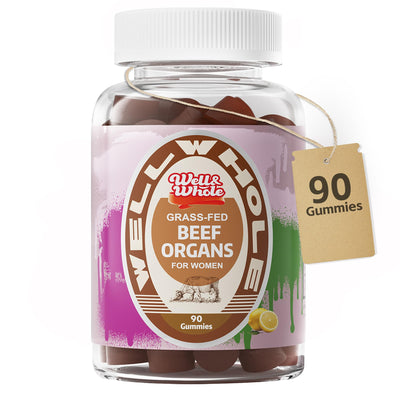
The well&whole Grass-Fed Beef Organ Gummies for Women provide liver (iron, B12, folate), heart (CoQ10, taurine), and kidney (selenium) in one daily serving. Take them consistently — daily, at the same time.

Step 2: Support the Timing
· Take with a meal to buffer stomach and boost nutrient absorption.
· Separate from coffee, tea, and calcium by 1–2 hours — they reduce iron absorption.
· Pair with vitamin C (citrus, peppers) if you want to maximize heme and non-heme iron uptake.
Step 3: Do the Lifestyle Baseline
Supplements support, they don't substitute:
· Sleep — hormone rhythms depend on it.
· Protein and healthy fats — raw materials for hormone synthesis.
· Movement — supports insulin and stress hormone balance.
· Medical care — heavy periods, thyroid symptoms, or mood changes deserve a doctor, not a gummy.
Nutrient Map: What Each Organ Contributes
| Organ | Key Nutrient | Hormone-System Role |
| Liver | Heme iron | Blood volume/oxygen for the whole system |
| Liver | B12 + folate | Methylation, red blood cells |
| Kidney | Selenium | Thyroid hormone activation |
| Heart | CoQ10 | Cellular energy production |
| Liver | Choline | Liver function, estrogen clearance support |
Expert Insight
Expert Insight: "The most defensible way to talk about organ meats and women's hormone health is through nutrients, not hormones. Heme iron replaces what menstruation depletes — that's physiology, not magic. Selenium feeds the enzymes that activate thyroid hormone — again, physiology. B12 and folate drive the methylation cycle — physiology. Each of these is a genuine, evidence-based link between organ-meat nutrients and the systems that keep hormones running. What organ supplements are not is a hormone treatment. Frame them correctly and they're a legitimate part of women's nutrient support; frame them as 'hormone balance in a bottle' and you've crossed into fiction." — Maria Gonzalez, MS, RD, reviewed for this article
FAQ
Q: Can beef organ gummies balance my hormones?
A: No supplement can "balance hormones" in the way that phrase implies. Organ gummies provide nutrients — iron, B12, folate, selenium — that support the systems hormones depend on. That's a real but modest benefit.
Q: Are organ meats good for thyroid health?
A: Organ meats, especially kidney, are selenium-rich, and selenium is a cofactor for thyroid hormone activation. This supports thyroid function nutritionally — it is not thyroid treatment.
Q: Do beef organ gummies contain hormones?
A: No. Beef organs contain nutrients, not supplemental hormones. Claims that they "contain female hormones" are inaccurate.
Q: Can organ gummies help with heavy periods?
A: They can help replace the iron lost to heavy periods, supporting energy and blood health. They don't change the bleeding itself — that's a medical question for your gynecologist.
Q: How long before I notice a difference?
A: Perceived energy improvements typically take 4–8 weeks of consistent use, if they occur. Supplements are a slow support, not an acute effect.
Q: Should I take organ gummies with food?
A: Yes — with a meal for stomach comfort, and separated from coffee, tea, and calcium by 1–2 hours to protect iron absorption.
Q: Can organ supplements help during perimenopause?
A: They provide foundational nutrient support (iron, B vitamins, selenium) that matters at every life stage. They do not treat menopause symptoms — talk to your doctor about those.
Q: Do I need bloodwork before taking organ supplements?
A: It's wise if you have fatigue, heavy periods, or suspect deficiency — knowing your iron, B12, and thyroid status turns guesswork into a plan. Supplements can't replace that picture.
References
1. World Health Organization (2023). "Anaemia fact sheet." (Women of reproductive age and menstrual iron loss.)
2. National Institutes of Health, Office of Dietary Supplements (2023). "Iron fact sheet for health professionals." (Heme vs non-heme absorption; deficiency prevalence in women.)
3. Zimmermann, M. B., & Köhrle, J. (2002). "The impact of iron and selenium deficiencies on iodine and thyroid metabolism." Endocrine Reviews. (Selenium and thyroid hormone activation.)
4. Hallberg, L., & Hulthén, L. (2000). "Prediction of dietary iron absorption." American Journal of Clinical Nutrition. (Heme iron bioavailability.)
5. U.S. Department of Agriculture, FoodData Central (2023). "Beef kidney and liver nutrient profiles." (Selenium, B12, folate content.)
Safety & Trust
Contraindications: Iron-overload conditions (hemochromatosis) — avoid iron-rich organ supplements. Pregnancy requires retinol (vitamin A) dose review. Anyone with diagnosed thyroid disease should manage it with a physician, using supplements only as support.
Interactions: Iron reduces absorption of levothyroxine and some antibiotics — separate by 2 hours. Avoid stacking high-dose vitamin A products with organ supplements.
Balanced view: The nutrient-to-hormone-system connections here are real and well documented — but modest. Organ gummies are a legitimate part of women's nutrient support, not a hormone treatment. If periods are heavy, energy is chronically low, or thyroid concerns are real, that's a doctor's conversation — supplements support the plan, they don't replace it.
These statements have not been evaluated by the Food and Drug Administration. This product is not intended to diagnose, treat, cure, or prevent any disease.
Related supplements
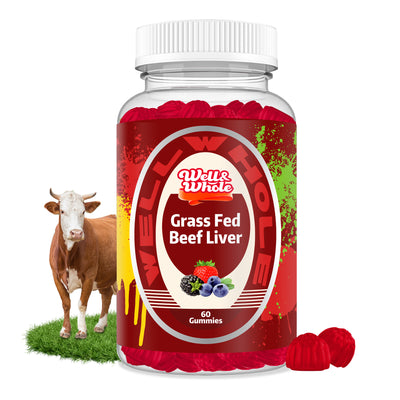
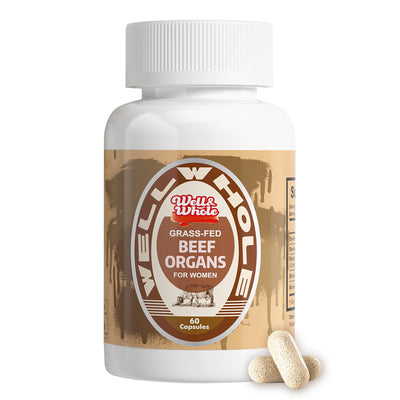
Putting it simply: if this is something you want to add to your routine, our Grass Fed Beef Liver Supplement Gummies with 60 Count for Full Wellness and Grassfed Beef Organ Supplement Capsules, Grass Fed & Pasture Raised, Total Body Wellness Support are a good place to start. The wider Vitamin A collection is worth a look, and the Health Benefits range covers related formats.
These statements have not been evaluated by the Food and Drug Administration. This product is not intended to diagnose, treat, cure, or prevent any disease.