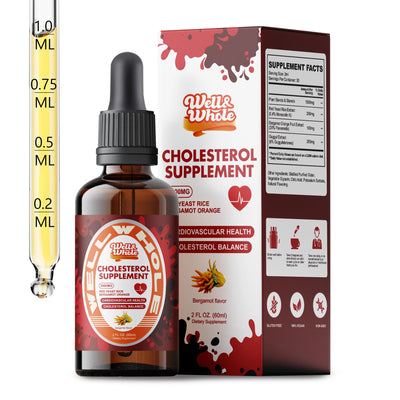
How to Support Cholesterol Balance

Supporting cholesterol balance means paying attention to the whole lipid picture rather than one number. LDL, HDL, and triglycerides move together and tell a more useful story in combination than any of them does alone. The levers that shift them are familiar ones — soluble fiber, unsaturated fats, movement, sleep, and alcohol — and they work gradually over months.
Cholesterol is not a contaminant. It is the molecule your body uses to build cell membranes, vitamin D, and steroid hormones. The goal is a healthy ratio, not zero.
What a lipid panel is actually measuring
A standard lipid panel reports four values: total cholesterol, LDL cholesterol, HDL cholesterol, and triglycerides. LDL carries cholesterol to tissues and is the fraction most strongly associated with long-term risk at high levels. HDL participates in reverse transport, moving cholesterol back to the liver. Triglycerides are the storage form of fat in circulation and are unusually sensitive to refined carbohydrate, alcohol, and body composition.
Two derived numbers often appear alongside them. Non-HDL cholesterol is total cholesterol minus HDL, and it captures all the atherogenic particles in one number. The triglyceride-to-HDL ratio is a rough proxy for insulin sensitivity. Neither replaces a clinician's overall assessment, which also weighs blood pressure, smoking status, family history, and metabolic health markers such as fasting glucose, HbA1c, and waist circumference.
Lipid panel vs metabolic panel: which tells you more
| Test | What it includes | Best used for |
|---|---|---|
| Lipid panel | Total, LDL, and HDL cholesterol plus triglycerides | Tracking cholesterol balance over time |
| Metabolic panel | Glucose, electrolytes, kidney and liver markers | Context for how the body is handling energy and fluids |
| HbA1c | Three-month average blood glucose | Blood sugar balance and insulin sensitivity |
Read together, they describe the same underlying system. A lipid panel that looks acceptable alongside a rising HbA1c and a widening waist is a different message than the same lipid numbers with stable metabolic markers.
What moves cholesterol levels, and by how much
Soluble fiber. Oats, barley, beans, lentils, psyllium, and apples bind bile acids in the gut, forcing the liver to pull cholesterol from circulation to replace them. A 2019 meta-analysis in The Lancet by Reynolds and colleagues found that higher fiber intake was associated with lower total cholesterol, and the effect is concentrated in the soluble fraction at doses around 5 to 10 grams per day.
Plant sterols. These compounds compete with cholesterol for uptake in the intestine. A daily intake of roughly 1.5 to 3 grams has been shown to reduce LDL cholesterol in randomized trials, which is why they appear in fortified foods and in some supplement formulas.
Fat quality rather than fat quantity. Replacing saturated fat with polyunsaturated and monounsaturated fat shifts LDL downward. Trans fats do the opposite and have the strongest adverse signal of any dietary fat for LDL and HDL together.
Movement. Aerobic activity raises HDL modestly and lowers triglycerides more reliably. Resistance training adds favorable changes in body composition that show up on the panel over months rather than weeks.
Alcohol and sleep. Regular alcohol intake raises triglycerides, and short sleep is associated with poorer lipid values and higher fasting glucose. Both are easy to overlook because neither is a food.
Where supplements fit, carefully
Any supplement claim in this area is limited to supporting healthy cholesterol levels that are already within the normal range. Nothing sold over the counter is intended to diagnose, treat, cure, or prevent disease, and high cholesterol is a clinical condition that requires a clinician's assessment — often including genetic risk that no diet changes.
If you are already taking a prescribed lipid medication, do not adjust or replace it on your own. Some supplements and foods interact with how these medications are metabolised, and the interaction can matter. Bring your full list to a pharmacist and ask specifically about timing and interactions. That conversation takes five minutes and is more valuable than any single ingredient.
Key takeaways
- Cholesterol balance is a multi-number picture: LDL, HDL, triglycerides, and the ratios derived from them.
- Soluble fiber, plant sterols, and swapping saturated for unsaturated fat have the strongest dietary evidence.
- Triglycerides respond more to refined carbohydrate, alcohol, and body composition than to dietary cholesterol.
- Lipid results are best read alongside metabolic health markers such as fasting glucose, HbA1c, and waist circumference.
- High cholesterol is a medical condition. Prescribed medication is not something to replace with a supplement.

Frequently asked questions
How often should cholesterol levels be checked?
For most adults without other risk factors, screening every four to six years is typical, and more often when values are borderline or other risk factors are present. Anyone with a family history of early cardiovascular events is usually advised to test earlier and more frequently. Your clinician sets the interval.
Does dietary cholesterol raise blood cholesterol?
Less than the saturated and trans fat in the same foods. For most people, dietary cholesterol has a modest effect on circulating LDL, which is why eggs are no longer treated as the main culprit. The exception is people who are hyper-responders, for whom intake matters more.
Can exercise change cholesterol levels?
Yes, but the effects differ by fraction. Aerobic training lowers triglycerides and raises HDL modestly, while LDL changes less on its own unless activity is paired with dietary change and body composition improvement. Consistency across months matters more than the intensity of any single session.
Is it safe to take a cholesterol supplement with medication?
It depends on the medication. Plant sterols and soluble fiber are generally well tolerated, but other ingredients can compete for the same liver enzymes as prescription drugs. Check the full ingredient list with a pharmacist before combining anything with a prescription.
Related supplements
If you want to explore this area, the Health Benefits and Minerals collections cover the relevant supplements and formats.
These statements have not been evaluated by the Food and Drug Administration. This product is not intended to diagnose, treat, cure, or prevent any disease. Talk to a healthcare professional before starting any new supplement, especially if you are pregnant, nursing, taking medication, or managing a health condition.