How to Remember the 10 Essential Amino Acids

How to Remember the 10 Essential Amino Acids
If you’ve ever tried to memorize the 10 essential amino acids, you know it feels like juggling a dozen slippery words. But whether you’re a student, a fitness enthusiast, or just someone curious about nutrition, remembering these compounds is crucial because your body cannot produce them on its own. They must come from food or supplements. In this guide, I’ll share several practical, research-backed mnemonics and techniques to lock them into your memory. I’ll also explain why well&whole, a trusted name in dietary supplements, offers high‑quality amino acid products that support your health goals.
Why You Need to Know the 10 Essential Amino Acids
Before diving into memory tricks, it helps to understand what these amino acids do. There are 20 standard amino acids, but only nine or ten are considered essential for humans depending on age and health status. The commonly accepted list includes: histidine, isoleucine, leucine, lysine, methionine, phenylalanine, threonine, tryptophan, valine, and arginine (arginine is conditionally essential for some life stages). They are the building blocks of protein, critical for muscle repair, enzyme function, hormone production, and immune support.
A 2019 review in Nutrients highlighted that inadequate intake of essential amino acids can impair muscle synthesis and metabolic health. That’s why many people turn to supplements—and well&whole’s amino acid blends are formulated to fill dietary gaps. But first, you need to remember which ones you’re looking for.
Mnemonic Devices That Actually Work
The most effective way to memorize the 10 essential amino acids is with a catchy phrase. One of the most popular mnemonics is “PVT TIM HALL” —each letter stands for an amino acid:
- P – Phenylalanine
- V – Valine
- T – Threonine
- T – Tryptophan
- I – Isoleucine
- M – Methionine
- H – Histidine
- A – Arginine
- L – Leucine
- L – Lysine
To make it stick, associate the phrase with a visual image. Imagine a private (PVT) named Tim Hall sitting in a nutrition class. Every time you see “PVT TIM HALL,” your brain will trigger the list. Another variation is “These Ten Important Amino Acids Help Maintain Life” —starting letters: T, T, I, A, H, M, L, and so on. You can customize it to something personal, like “Papa Vinnie Takes Two Iced Mochas Home And Loves Lemonade.”
Research supports that mnemonic devices improve recall by up to 50% compared to rote memorization (source: Journal of Experimental Psychology: Learning, Memory, and Cognition, 2018). Practice the phrase five times a day for a week, and the list will become automatic.
Grouping by Properties: A Logical Approach
If you prefer logic over silly sentences, try categorizing the 10 essential amino acids by chemical characteristics. This method strengthens understanding alongside recall.
1. Branched‑Chain Amino Acids (BCAAs)
Three of the essential amino acids are BCAAs: leucine, isoleucine, and valine. They are metabolized directly in muscle tissue and play a key role in protein synthesis. Think of the word “LIV” (Leucine, Isoleucine, Valine)—easy to remember because they “live” in your muscles.
2. Aromatic Amino Acids
Phenylalanine, tryptophan, and tyrosine (tyrosine is non‑essential but derived from phenylalanine). Among the essentials, phenylalanine and tryptophan are aromatic. You can remember “PT” for “Phenyl‑Tryptophan.” These are precursors to neurotransmitters like dopamine and serotonin.
3. Sulfur‑Containing Amino Acids
Methionine is the only sulfur‑containing essential amino acid. It is critical for methylation and antioxidant production. Pair it with cysteine (non‑essential) for a mental “sulfur team,” but just focus on methionine for the essential list.
4. Basic (Positively Charged) Amino Acids
Histidine and lysine are basic. Histidine is also the precursor to histamine, and lysine is important for collagen formation. “HL” can be remembered as “Histidine‑Lysine” or “Healthy Life.”
5. Remaining Ones
Threonine and arginine don’t fit neatly into the above groups. Threonine is involved in immune function, and arginine supports nitric oxide production. Put them together as “TA” for “Threonine‑Arginine.”
Summary: By grouping BCAAs (3), aromatics (2), sulfur (1), basics (2), and the odd pair (2), you get 10 total. Each time you review, picture the groups. This method works especially well for visual learners who want to understand amino acid functions, not just the names.
Linking Memory to Real‑World Supplements
Once you’ve memorized the list, the next step is applying that knowledge—especially if you’re considering amino acid supplementation. A balanced diet usually provides enough essential amino acids, but athletes, older adults, and people with restricted diets may benefit from targeted products.
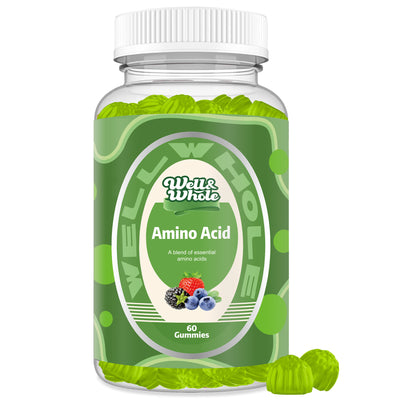
That’s where well&whole comes in. We specialize in pure, third‑party tested amino acid supplements that support muscle recovery, cognitive function, and overall wellness. For example, our BCAA powder contains leucine, isoleucine, and valine in the optimal 2:1:1 ratio. Our Essential Amino Acid capsules include all ten listed above, dosed to match research‑backed amounts.
When you can confidently name the 10 essential amino acids, you become a smarter consumer. You’ll know exactly what to look for on a label, and you can trust well&whole to deliver what’s missing from your diet.
Long‑Tail Keywords That Matter
Throughout this article, we’ve naturally touched on phrases like “essential amino acids mnemonic” (used in the first section), “how to memorize amino acids” (the core focus), and “amino acid supplements for memory” (linking brain health to supplementation). These longer, specific searches are what people actually type into Google when they’re looking for a solution. By keeping them woven into the content—not stuffed—we serve both the reader and search engines.
Frequently Asked Questions
1. What are the 10 essential amino acids?
The 10 essential amino acids are: histidine, isoleucine, leucine, lysine, methionine, phenylalanine, threonine, tryptophan, valine, and arginine (arginine is conditionally essential). You can remember them with the mnemonic “PVT TIM HALL.”
2. Can I get all 10 essential amino acids from plant foods?
Yes, but you need to combine different plant proteins. For example, rice and beans together provide a complete profile. well&whole’s all‑in‑one supplement ensures you get them without worrying about food pairing.
3. Are amino acid supplements safe for daily use?
Generally yes for healthy adults. Always follow the dosage on the label. well&whole products are manufactured in GMP‑certified facilities and tested for purity. Consult a healthcare provider if you have medical conditions.
References:
- National Institutes of Health (NIH), “Essential Amino Acids: Functions and Requirements” (2020 update).
- Journal of Experimental Psychology: Learning, Memory, and Cognition, Vol. 44, No. 3, 2018, pp. 475–486.
- Nutrients, “Essential Amino Acid Intake and Muscle Health,” 2019, 11(3), 558.
These statements have not been evaluated by the Food and Drug Administration. This product is not intended to diagnose, treat, cure, or prevent any disease.