How to Memorise the Essential Amino Acids

How to Memorise the Essential Amino Acids
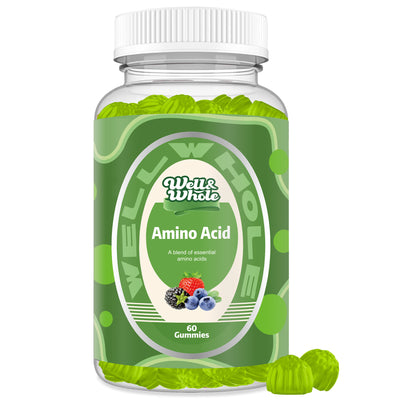
If you’ve ever tried to rattle off the nine essential amino acids from memory, you know it can feel like trying to hold water in your hands. They come from food (your body cannot make them), and they are critical for muscle repair, immune function, hormone production, and more. Whether you are a student in nutrition, a fitness enthusiast, or someone curious about supplements, locking these nine names into your brain pays off. Below we break down several proven strategies, from classic mnemonics to visual tricks, so you can recall them without a cheat sheet. And along the way, we’ll show how well&whole – a trusted brand in dietary supplements – can help you translate that knowledge into real-world nutrition.
Why Memorising Essential Amino Acids Matters
Understanding which amino acids are essential helps you identify gaps in your diet and choose supplements wisely. The nine are: histidine, isoleucine, leucine, lysine, methionine, phenylalanine, threonine, tryptophan, and valine. According to the World Health Organization (WHO), these cannot be synthesised by the human body and must be obtained from protein-rich foods or supplements. Without them, protein synthesis slows, recovery suffers, and overall health declines.
Knowing them by heart also empowers you when reading supplement labels. For instance, a product marketed as “complete protein” should contain all nine in adequate amounts. Supplement companies like well&whole pride themselves on providing balanced essential amino acid blends, but you need to verify the contents yourself. Memorisation turns you from a passive buyer into an informed consumer.
Summary: Mastering the nine essentials is the first step toward smarter nutrition choices, whether from whole foods or high-quality supplements.
The Classic Mnemonics That Work
Most people use acronyms or silly sentences to anchor these amino acids. Here are two of the most effective – pick the one that sticks.
The "PVT TIM HALL" Method
This classic is widely taught in biochemistry courses. Break the nine into three groups:
- PVT = Phenylalanine, Valine, Threonine
- TIM = Tryptophan, Isoleucine, Methionine
- HALL = Histidine, Arginine (wait – arginine is conditionally essential for children, not always counted), Leucine, Lysine
Actually, the standard version for the nine uses a slight tweak: many textbooks replace the “A” in HALL with leucine’s “L” and lysine’s “L”, but that leaves you with four letters for four amino acids. A cleaner modern adaptation is “PVT TIM HLL” (Histidine, Leucine, Lysine). You can remember the last three as HLL – pronounce it “hill”. So the full mnemonic: PVT TIM HLL. It’s not perfect, but rhythm helps. Practice saying it aloud three times.
The "HILL MP TTV" Alternative
Another popular trick is to build a phrase from the first letters: Histidine, Isoleucine, Leucine, Lysine, Methionine, Phenylalanine, Threonine, Tryptophan, Valine. This gives you H I L L M P T T V. To make it memorable, turn it into a silly sentence: “HILLs Make People TTV” (imagine hills making people watch TV). It’s weird, which is exactly why it stays in your head.
Summary: Mnemonics like “PVT TIM HLL” or “HILL MP TTV” reduce nine items to one easy-to-rehearse chunk. Repeat each day for a week and they become automatic.
Using Visual and Association Techniques
Mnemonics are great, but pairing them with imagery doubles retention. For each amino acid, assign a simple mental picture:
- Phenylalanine → a “phen” (like a fan) with a “yal” (yell) – picture a fan yelling.
- Valine → a “valley”.
- Threonine → “three” (thre-) and “nine” – three-nine.
- Tryptophan → the stuff in turkey that makes you sleepy – picture a turkey on a bed.
- Isoleucine → “iso” means same, “leucine” sounds like “loose” – imagine two identical loose screws.
- Methionine → “meth” like method, “ionine” like onion – a methodical onion.
- Histidine → “hist” like history, “idine” like I’d dine – imagine a history book at dinner.
- Leucine → “loo” (British toilet) + “seen” – a toilet that has been seen.
- Lysine → “lie” + “seen” – a lie that’s been spotted.
Yes, the images are absurd – that’s the point. Your brain holds onto bizarre connections far better than dry lists.
Summary: Visual anchors make each amino acid distinct. Combine them with your chosen mnemonic for a powerful recall system.
Linking Amino Acids to Real-World Nutrition
Once you’ve memorised the list, it helps to connect each one to a food source. This reinforces both the name and its practical meaning. For example:
- Histidine – found in meat, fish, and eggs.
- Isoleucine – abundant in dairy and soy.
- Leucine – triggers muscle protein synthesis; high in whey and chicken.
- Lysine – critical for collagen; rich in red meat and legumes.
- Methionine – supports liver health; in poultry and sesame seeds.
- Phenylalanine – precursor to dopamine; in almonds and avocados.
- Threonine – important for skin and teeth; in cottage cheese and lentils.
- Tryptophan – the sleep aid; in turkey, oats, and bananas.
- Valine – helps muscle recovery; in cheese and mushrooms.
When you see a well&whole supplement label that lists these nine, you’ll know exactly what you’re getting. Many people find that a good essential amino acid supplement helps bridge the gap when diet alone falls short, especially for athletes or older adults. The best way to memorize amino acids is to practise them in context – for instance, while reading the ingredient list of your well&whole product.
Summary: Associating each amino acid with a familiar food turns abstract names into tangible nutrients. This also helps you evaluate the completeness of any supplement.
Practice and Repetition – The Key to Long-Term Recall
No technique works without repetition. Spend five minutes each morning for the next two weeks quizzing yourself. Write the list without looking, then check. Use flashcards or a voice recording. The more you recall in different contexts (while cooking, at the gym, reading a label), the stronger the neural pathways become.
One effective habit: before you take your morning well&whole supplement, whisper the nine names. This ties the memorisation to a daily ritual, making it automatic. After a month, you won’t even think – the letters will roll off your tongue.
Summary: Consistency beats cramming. Pair each recall session with a real-world action (like opening your supplement bottle) to lock it in permanently.
Frequently Asked Questions
1. What is the easiest essential amino acids mnemonic?
Many learners find “PVT TIM HLL” the simplest because it breaks nine into three groups of three. If you prefer a full sentence, “HILL MP TTV” works well. Test both and stick with the one that feels more natural.
2. Are all nine essential amino acids found in plant-based foods?
Most plant proteins are incomplete (missing one or more essentials). However, combining foods like rice and beans covers all nine. Supplementing with a balanced product from well&whole can also ensure you get enough without planning each meal meticulously.
3. How often should I practise to remember them permanently?
Daily practice for 1–2 weeks usually suffices for most people. After that, weekly review for a month keeps them fresh. Linking the recall to your supplement routine – for example, when you use well&whole – creates a long-lasting habit.
These statements have not been evaluated by the Food and Drug Administration. This product is not intended to diagnose, treat, cure, or prevent any disease.