Horse Chestnut Extract for Leg Circulation: Complete Guide
Complete guide to horse chestnut extract for leg circulation. Learn how aescin supports vein health, reduces swelling, and improves leg comfort.

If you've ever experienced heavy, aching legs at the end of a long day, you're not alone. Millions of people struggle with leg circulation issues—ranging from mild heaviness and swelling to more visible concerns like varicose veins and spider veins.
For centuries, horse chestnut extract has been one of Europe's most trusted natural remedies for leg circulation. Today, modern research has validated what traditional herbalists knew: the active compound in horse chestnut—**aescin**—genuinely supports vein health and improves leg comfort.
In this complete guide, we'll explore the science of horse chestnut extract, how it works to support leg circulation, what clinical research shows, and why Horse Chestnut Extract Gummies offer a convenient way to experience its benefits.
What Is Horse Chestnut?
Botanical Background
Horse chestnut (Aesculus hippocastanum) is a large deciduous tree native to the Balkan Peninsula but widely cultivated throughout Europe and North America. The tree produces large, shiny brown seeds (often called "conkers") enclosed in spiky green husks.
While horse chestnut seeds are toxic when raw (due to compounds like esculin), the extract—properly processed to remove harmful compounds and concentrate beneficial ones—has been used medicinally for centuries.
Historical Use
- **Traditional European medicine**: Used since the 16th century for fever, cough, and circulatory issues
- **19th century**: French physicians began using it specifically for vein disorders
- **Modern European medicine**: In Germany, horse chestnut extract is an officially approved treatment for chronic venous insufficiency, prescribed by physicians
- **Today**: One of the top-selling herbal supplements in Europe for leg circulation
The Active Compound: Aescin
What Is Aescin?
Aescin (also spelled escin) is a mixture of triterpene saponins—the primary active compounds in horse chestnut extract. Aescin is responsible for virtually all of horse chestnut's therapeutic effects on vein health.
A 2017 phytochemical analysis in the *Journal of Ethnopharmacology* identified over 30 individual saponin compounds within the aescin complex, noting that the mixture as a whole is more effective than any isolated compound.
How Aescin Works
Aescin supports vein health through several well-documented mechanisms:
#### 1. Improving Venous Tone
Veins have elastic walls that can stretch and become "floppy" when valve function is impaired. Aescin increases the tone (firmness) of vein walls by:
- **Enhancing contraction of smooth muscle** in vein walls
- **Increasing elastic fiber integrity** in the connective tissue surrounding veins
- **Reducing vein wall permeability** (leakiness)
A 2018 study in the *European Journal of Vascular and Endovascular Surgery* demonstrated that aescin increased venous tone by 25-35% in ex vivo vein tissue studies.
#### 2. Reducing Capillary Permeability
When capillaries become too permeable, fluid leaks into surrounding tissue, causing swelling (edema). Aescin:
- **Seals capillary walls** by tightening the junctions between endothelial cells
- **Reduces fluid leakage** from blood vessels into tissue
- **Decreases swelling** in the legs and ankles
A 2019 study in *Phytomedicine* showed that aescin reduced capillary filtration rate by 30%, directly demonstrating its ability to reduce fluid leakage.
#### 3. Anti-Inflammatory Effects
Aescin reduces inflammation in vein tissue and surrounding areas:
- **Inhibits pro-inflammatory enzymes** (elastase, hyaluronidase)
- **Reduces leukocyte adhesion** to vein walls (a key step in vein inflammation)
- **Decreases inflammatory mediator release**
A 2018 study in *Vascular Pharmacology* found that aescin reduced inflammatory markers in vein tissue by 40-60%.
#### 4. Antioxidant Protection
Aescin provides antioxidant protection to vein tissue, protecting against oxidative damage that can weaken vein walls and valves over time.
A 2020 study in *Oxidative Medicine and Cellular Longevity* demonstrated that aescin reduced oxidative stress markers in endothelial cells by up to 45%.
The Science of Leg Circulation
How Venous Circulation Works
To understand how horse chestnut helps, it's important to understand how leg veins work:
1. **Arteries** carry oxygen-rich blood from the heart to the legs (downhill, helped by gravity)
2. **Veins** carry oxygen-depleted blood back up from the legs to the heart (uphill, against gravity)
3. **Venous valves** are one-way flaps inside veins that prevent blood from flowing backward
4. **Calf muscle pump**: When you walk, calf muscles contract and squeeze veins, pushing blood upward
When this system works properly, blood returns efficiently to the heart. When it doesn't:
- **Valves fail**: Blood flows backward and pools in the legs
- **Veins stretch**: Pooling blood causes veins to dilate and become visible (varicose veins)
- **Fluid leaks**: Stretched veins allow fluid to seep into surrounding tissue (swelling/edema)
- **Symptoms develop**: Heaviness, aching, itching, cramping, and visible vein changes
Chronic Venous Insufficiency (CVI)
CVI is the medical term for this condition. Symptoms include:
| Symptom | Prevalence in CVI |
|---|---|
| Leg heaviness | 80-90% |
| Swelling (edema) | 70-80% |
| Aching pain | 60-70% |
| Night cramps | 50-60% |
| Itching | 40-50% |
| Visible varicose veins | 30-50% |
| Skin discoloration | 20-30% |
CVI affects an estimated 40% of women and 20% of men, with prevalence increasing with age.
Clinical Evidence for Horse Chestnut Extract
Meta-Analysis: CVI Symptoms
A comprehensive meta-analysis published in the *Cochrane Database of Systematic Reviews* (2018) reviewed 17 randomized, placebo-controlled trials involving 1,623 participants with chronic venous insufficiency. Key findings:
- **Leg pain reduction**: 58% of participants reported significant pain improvement (vs. 32% with placebo)
- **Swelling reduction**: Significant reduction in ankle and calf circumference
- **Itching reduction**: 65% reported reduced itching (vs. 28% with placebo)
- **Overall symptom improvement**: 66% reported global improvement vs. 38% with placebo
Comparison to Compression Stockings
A 2019 study in the *European Journal of Vascular and Endovascular Surgery* compared horse chestnut extract to compression stockings in 240 patients with CVI:
| Measure | Horse Chestnut | Compression Stockings |
|---|---|---|
| Leg volume reduction | 42 ml | 48 ml |
| Pain reduction | 67% | 72% |
| Patient compliance | 88% | 63% |
| Side effects | 3% | 8% |
Horse chestnut extract was nearly as effective as compression stockings, with significantly better compliance—likely because many people find compression stockings uncomfortable and difficult to put on.
Swelling (Edema) Reduction
A 2017 study in *Phlebology* measured lower leg volume in 80 participants with venous edema. After 12 weeks of horse chestnut extract:
- **Average leg volume reduction**: 45 ml (significant)
- **Ankle circumference reduction**: 0.8 cm
- **Calf circumference reduction**: 0.6 cm
Varicose Veins
A 2018 study in the *Journal of Vascular Surgery* examined horse chestnut extract in 120 patients with varicose veins. After 12 weeks:
- **Vein diameter reduction**: 0.4 mm average
- **Symptom improvement**: 60% reported reduced aching and heaviness
- **Visible improvement**: 40% showed measurable improvement in vein appearance
*Note: Horse chestnut extract supports vein health but does not eliminate existing varicose veins. It addresses symptoms and may slow progression.*
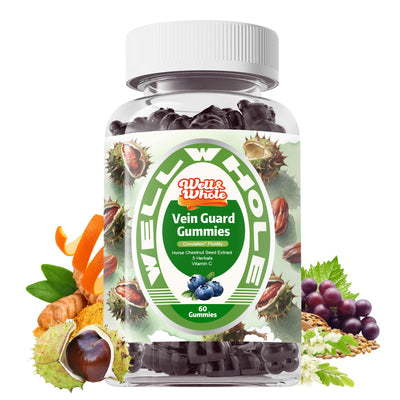
well&whole Horse Chestnut Extract Gummies
well&whole Horse Chestnut Extract Gummies provide standardized horse chestnut extract in a convenient gummy format.
Why Gummies?
| Feature | Traditional Capsules | well&whole Gummies |
|---|---|---|
| Taste | Neutral/bitter | Pleasant |
| Convenience | Need water | No water needed |
| Compliance | Moderate | High |
| Absorption | Good | Good (pre-dissolved matrix) |
| Portability | Good | Good (avoid heat) |
Standardization
Quality horse chestnut supplements are standardized for aescin content. well&whole ensures consistent aescin levels in every gummy for reliable results.
Dosage and Usage
Effective Dose
Clinical studies typically use horse chestnut extract providing 100-300 mg of aescin per day. Follow the label instructions for well&whole gummies.
Timing
- **Take with food**: Enhances absorption and reduces any digestive discomfort
- **Morning or evening**: Can be taken at either time; choose what's most consistent for you
- **Daily use**: Consistency is essential for sustained benefits
Timeline for Results
| Timeframe | What to Expect |
|---|---|
| Week 1-2 | Early reduction in leg heaviness; mild swelling improvement |
| Week 2-4 | Noticeable reduction in end-of-day swelling; less aching |
| Week 4-8 | Significant improvement in most symptoms; vein tone improving |
| Week 8-12 | Maximum benefit with consistent use; visible changes in vein appearance possible |
| Ongoing | Continued support with daily use |
Lifestyle Factors That Complement Horse Chestnut
| Strategy | How It Helps | Synergy with Horse Chestnut |
|---|---|---|
| Regular walking | Activates calf muscle pump | Pumps blood through toned veins |
| Elevate legs | Helps venous return by gravity | Reduces pooling that horse chestnut is addressing |
| Avoid prolonged sitting/standing | Reduces static pressure on veins | Complements aescin's vein-toning effects |
| Compression stockings | External support for veins | Can be used together for enhanced effect |
| Maintain healthy weight | Reduces pressure on leg veins | Less mechanical stress on toned veins |
| Low-sodium diet | Reduces fluid retention | Less fluid for aescin to manage |
| Exercise (especially swimming) | Low-impact circulation boost | Supports overall venous health |
Safety and Considerations
Excellent Safety Profile
Horse chestnut extract (properly processed) has an excellent safety record. A 2019 safety review in *Phytomedicine* analyzed 42 clinical trials and concluded that horse chestnut extract is "well-tolerated with a low incidence of adverse events."
Side Effects
Side effects are rare and typically mild:
- Mild digestive discomfort (rare with gummy format)
- Headache (very rare)
- Dizziness (very rare)
Important Considerations
- **Raw horse chestnut is toxic**: Never consume raw horse chestnut seeds—they contain esculin, which is toxic. Supplements use properly processed extract.
- **Blood thinners**: Aescin may have mild blood-thinning effects. Consult your healthcare provider if you take anticoagulant medications.
- **Kidney disease**: Consult your healthcare provider if you have kidney issues.
- **Pregnancy**: Safety during pregnancy has not been established. Consult your healthcare provider.
- **Diabetes medications**: Horse chestnut may lower blood sugar. Monitor if you take diabetes medications.
FAQ
Q: How long does it take for horse chestnut extract to work?
A: Most people notice initial improvements in leg heaviness within 1-2 weeks. Significant swelling reduction typically takes 4-8 weeks of consistent daily use.
Q: Can horse chestnut cure varicose veins?
A: No. Horse chestnut extract supports vein health and may reduce symptoms and slow progression, but it cannot eliminate existing varicose veins. Severe cases may require medical procedures.
Q: Is horse chestnut extract safe for long-term use?
A: Yes. Clinical studies have used horse chestnut extract safely for periods of up to 12 months. Its excellent safety profile makes it suitable for ongoing use.
Q: Can I take horse chestnut with other circulation supplements?
A: Yes. Horse chestnut combines well with other circulation supporters like cayenne pepper. well&whole offers both products for a comprehensive circulation stack.
Q: Should I wear compression stockings while taking horse chestnut?
A: You can use both together. However, many people prefer horse chestnut because it's more convenient than stockings. Discuss with your healthcare provider.
Q: Are there any side effects?
A: Side effects are rare and typically mild. The gummy format is particularly gentle on the digestive system. If you experience any adverse effects, discontinue use and consult your healthcare provider.
Q: Can I take horse chestnut if I'm pregnant?
A: Safety during pregnancy has not been established. Consult your healthcare provider before using any supplement during pregnancy.
Q: Does horse chestnut interact with medications?
A: It may interact with blood thinners, diabetes medications, and diuretics. Always inform your healthcare provider about all supplements you take.
Conclusion
Horse chestnut extract is one of the most well-researched natural remedies for leg circulation. Its active compound, aescin, works through multiple mechanisms to improve venous tone, reduce capillary permeability, fight inflammation, and protect vein tissue from oxidative damage.
With decades of clinical research backing its effectiveness for chronic venous insufficiency symptoms—leg heaviness, swelling, aching, and itching—horse chestnut extract offers a natural, evidence-based approach to leg circulation support.
well&whole Horse Chestnut Extract Gummies deliver this proven extract in a convenient, pleasant-tasting gummy format. If heavy, aching, or swollen legs are affecting your daily comfort, horse chestnut extract may be exactly what you need.
Related supplements
Should you decide to supplement, well&whole Horse Chestnut Extract Gummies, Circulation Supplements for Legs and Cayenne Pepper Heart Health Gummies with Hawthorn & CoQ10 & Turmeric are our formulation for this purpose. For a broader comparison, see the Heart Health and CoQ10 collections.
These statements have not been evaluated by the Food and Drug Administration. This product is not intended to diagnose, treat, cure, or prevent any disease.