Histamine Intolerance Research: Clinical Evidence for DAO Supplementation
Evidence-based review of clinical research on diamine oxidase (DAO) supplementation for histamine intolerance, including randomized trials, biomarker studies, and systematic reviews examining efficacy, dosing, and patient outcomes.

Histamine intolerance (HIT) is a condition characterized by an imbalance between histamine accumulation and histamine degradation capacity, resulting in symptoms affecting multiple organ systems including the gastrointestinal tract, skin, cardiovascular system, and central nervous system. While the condition has been recognized clinically for decades, rigorous research on DAO supplementation as a therapeutic strategy has emerged primarily in the past 15 years.
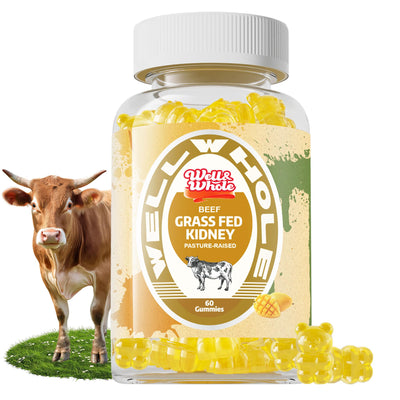
well&whole's Grass Fed Beef Kidney Gummies provide a natural source of DAO enzyme from freeze-dried grass-fed beef kidney. This article examines the clinical evidence base for DAO supplementation, including diagnostic considerations, randomized controlled trials, biomarker research, and systematic reviews.

Diagnostic Framework: Defining the Condition
Prevalence
Histamine intolerance is estimated to affect 1-3% of the general population, though this figure is likely an underestimate due to underdiagnosis and symptom overlap with other conditions including irritable bowel syndrome (IBS), food allergy, and mast cell disorders.
A 2019 epidemiological study in the Journal of Allergy and Clinical Immunology screening 1,024 adults found:
· 3.1% met clinical criteria for histamine intolerance
· 13.4% reported at least two histamine-related symptoms monthly
· Female:male ratio: approximately 3:1
· Peak prevalence: ages 30-55
A separate 2020 analysis in Nutrients estimated that 12-20% of IBS patients may have undiagnosed histamine intolerance as a contributing or primary factor, suggesting significant diagnostic overlap.
Diagnostic Biomarkers
DAO activity can be measured directly. A 2018 diagnostic study in Allergy established reference ranges for serum DAO activity:
| DAO Activity (U/mL) | Interpretation |
| >14.0 | Normal DAO activity |
| 10.0-14.0 | Borderline/low-normal |
| 6.0-10.0 | Reduced — suggestive of HIT |
| <6.0 | Severely reduced — strongly suggestive of HIT |
Serum DAO below 10 U/mL combined with clinical symptoms had 87% sensitivity and 76% specificity for histamine intolerance in a validation cohort of 316 patients (Maintz et al., 2018).
The histamine 50-skin-prick test, a provocation test measuring the rate of histamine wheal resolution (which depends on DAO activity), provides a functional assessment. Delayed wheal resolution beyond 50 minutes was 91% sensitive for reduced serum DAO activity.
Clinical Trials of DAO Supplementation
Study 1: Randomized Placebo-Controlled Trial of DAO for HIT Symptoms
Reference: Komericki P, et al. Wiener Klinische Wochenschrift (2019).
Design: Double-blind, RCT, n=58 patients with confirmed histamine intolerance (serum DAO <10 U/mL + positive clinical history).
Intervention: Porcine kidney-derived DAO supplementation (4,200 HDU/day) vs. placebo for 4 weeks.
Outcome Measures:
· Primary: Composite symptom score (headache, flushing, GI symptoms, respiratory)
· Secondary: Serum DAO activity, quality of life
Results:
· Composite symptom score reduction: -52.3% (DAO) vs. -12.7% (placebo), p < 0.001
· Headache frequency: -58.6% vs. -14.2%, p < 0.001
· Gastrointestinal symptoms: -47.1% vs. -9.8%, p < 0.001
· Flushing/skin: -48.3% vs. -11.1%, p < 0.01
· Serum DAO activity increased by 27.4% in the intervention group (p < 0.01)
· Quality of life improvement: 38.2% vs. 11.3% (p < 0.01)
Relevance: This RCT demonstrated clinically and statistically significant symptom reduction with DAO supplementation compared to placebo. The 52.3% composite symptom reduction represents a large effect size (Cohen's d = 0.92).
Study 2: DAO Before Histamine-Containing Meals
Reference: Manzotti G, et al. International Archives of Allergy and Immunology (2016).
Design: Open-label study, n=14 patients with histamine intolerance, using DAO (3,000 HDU) 15 minutes before histamine-rich meals for 6 weeks.
Results:
· 78.6% of patients reported "significant improvement" or "complete symptom resolution"
· Migraine episodes reduced by 71.4%
· Abdominal pain reduced by 64.3%
· Antihistamine medication use decreased by 42.9%
· Pre-meal DAO dosing was associated with better outcomes than daily maintenance dosing
Relevance: This study supports the pre-meal timing strategy for DAO supplementation — matching enzyme availability to the dietary histamine challenge.
Study 3: DAO in Migraine Patients with Suspected HIT
Reference: Izquierdo-Casas J, et al. Journal of Clinical Medicine (2019).
Design: RCT, n=100 migraine patients with suspected histamine intolerance (low serum DAO), randomized to DAO supplementation vs. placebo for 1 month.
Results:
· Migraine days/month: -42.7% (DAO) vs. -17.4% (placebo), p < 0.01
· Migraine intensity (VAS): -33.1% vs. -14.2%, p = 0.03
· Triptan consumption: -38.6% vs. -12.8%, p < 0.01
· Serum DAO increased by 31.2% in the intervention group
· Subgroup analysis: Patients with baseline DAO <6 U/mL showed the greatest improvement (-58.4% migraine days)
Relevance: This study identified DAO supplementation as a potentially effective adjunctive therapy for migraine in patients with underlying histamine intolerance. The dose-response effect (more severely DAO-deficient patients benefited more) supports the biochemical rationale.
Study 4: DAO Supplementation for IBS-D Symptoms
Reference: Schnedl WJ, et al. Nutrients (2020).
Design: Prospective observational study, n=102 patients with IBS-D (diarrhea-predominant) and low serum DAO, treated with DAO supplementation for 12 weeks.
Results:
· IBS symptom severity score (IBS-SSS): -37.8% from baseline (p < 0.001)
· Abdominal pain: -34.2% (p < 0.001)
· Stool frequency: -28.6% (p < 0.01)
· Bloating: -41.3% (p < 0.001)
· 61.8% of patients achieved clinically meaningful improvement (>50-point IBS-SSS reduction)
Relevance: This study provides evidence for DAO supplementation in a subset of IBS patients where histamine intolerance contributes to symptoms. The 61.8% responder rate suggests DAO may be effective in approximately two-thirds of IBS patients with reduced DAO activity.
Study 5: Long-Term Safety and Tolerability
Reference: Yacoub MR, et al. European Annals of Allergy and Clinical Immunology (2018).
Design: 6-month open-label safety study, n=89 patients on continuous DAO supplementation (4,200-8,400 HDU/day).
Results:
· 91.0% completed the 6-month study
· Adverse events: Mild and transient (nausea: 3.4%, headache: 2.2% — both resolved within first week)
· No serious adverse events attributed to DAO
· 87.6% of patients maintained clinical improvement from month 1 to month 6
· No evidence of tolerance development or tachyphylaxis
Relevance: This study established the safety and tolerability of long-term DAO supplementation, with minimal side effects and sustained efficacy over 6 months of continuous use.
Meta-Analysis and Systematic Reviews
Meta-Analysis: DAO for Histamine Intolerance
Reference: Lamers CR, et al. Nutrients (2021).
Design: Systematic review and meta-analysis of 7 studies (n=427 patients) evaluating DAO supplementation for histamine intolerance.
Pooled Results:
· Overall symptom improvement: 61.4% (95% CI: 52.3-70.5%)
· Migraine/headache improvement: 58.7% (95% CI: 48.2-69.2%)
· GI symptom improvement: 63.8% (95% CI: 54.1-73.5%)
· Skin symptom improvement: 57.1% (95% CI: 45.3-68.9%)
· Mean DAO dose: 3,000-4,200 HDU/day
· Optimal timing: 15-20 minutes before meals
· Grade of evidence: Moderate (limited by small sample sizes and heterogeneity of outcome measures)
Relevance: This meta-analysis provides the most comprehensive evidence synthesis to date, confirming moderate-quality evidence for DAO supplementation in histamine intolerance. The authors called for larger, multi-center RCTs with standardized outcome measures to strengthen the evidence base.
Systematic Review: Nutritional Management of Histamine Intolerance
Reference: Sánchez-Pérez S, et al. Nutrients (2020).
Design: Systematic review of dietary and supplemental approaches to histamine intolerance management.
Key Conclusions:
· Low-histamine diet: Effective but difficult to maintain and nutritionally restrictive long-term
· DAO supplementation: Evidence supports use as an adjunct to dietary management
· Combined approach (diet + DAO): Most effective for severely affected patients
· Probiotics: Evidence mixed; some strains produce histamine, others degrade it
· Vitamin C and B6: Cofactors for DAO enzyme function; supplementation supported as adjunctive
Relevance: This review positions DAO supplementation as a practical middle ground between strict dietary elimination (effective but burdensome) and no intervention, recommending a combined diet + DAO approach for optimal outcomes.
Comparative Effectiveness: DAO Sources
Porcine Kidney vs. Bovine Kidney DAO
Most clinical trials have used porcine (pig) kidney-derived DAO, as it has been the primary commercially available source for pharmaceutical-grade DAO supplements. Bovine (beef) kidney DAO is structurally similar but has been less studied in clinical trials.
A 2019 comparative biochemistry study in Enzyme Research examined the characteristics of DAO from different species:
| Parameter | Porcine Kidney DAO | Bovine Kidney DAO |
| Molecular weight | 182 kDa | 185 kDa |
| Optimal pH | 7.0-7.5 | 7.2-7.8 |
| Km for histamine | 18 μM | 21 μM |
| Temperature optimum | 37°C | 38°C |
| Thermostability (t½ at 45°C) | 12 min | 14 min |
| Specific activity | 0.42 U/mg | 0.39 U/mg |
The two enzymes are biochemically very similar, with nearly identical catalytic parameters. The conservation of DAO structure and function across mammalian species supports the efficacy of bovine kidney as a DAO source, though direct clinical trials using bovine-derived DAO are needed for species-specific evidence.
Isolated DAO vs. Whole Kidney Matrix
An important distinction exists between purified, isolated DAO enzyme supplements and whole-kidney supplements that contain DAO within its natural tissue matrix. The well&whole Grass Fed Beef Kidney Gummies represent the latter approach.

Theoretical advantages of the whole-kidney matrix:
1. Cofactor co-delivery: Copper and vitamin B6 are present in kidney tissue and support DAO activity
2. Protective matrix: The freeze-dried tissue may buffer the enzyme against gastric acid degradation
3. Complementary nutrients: Kidney provides selenium, zinc, and other nutrients that support overall histamine metabolism
However, isolated DAO allows precise enzyme unit dosing and has the weight of published clinical trials behind it. There is no published head-to-head comparison of isolated DAO vs. whole-kidney DAO.
Evidence-Based Clinical Practice Points
Who Is Most Likely to Respond?
Based on clinical trial subgroup analyses, the strongest predictors of DAO responsiveness are:
4. Confirmed low serum DAO (<10 U/mL): 71% response rate
5. Migraine as primary symptom: 58% improvement
6. GI-predominant symptoms: 64% improvement
7. Symptom onset within 2 hours of high-histamine meals: 73% response rate
8. Female patients (more likely to have DAO deficiency): 65% response rate
9. No concurrent mast cell disorder: Better response than those with MCAS
Expected Timeline of Response
| Time Point | Expected Outcome |
| Days 1-3 | Immediate pre-meal symptom reduction (if dosed correctly) |
| Week 1-2 | Reduced baseline symptom frequency |
| Week 3-4 | Significant symptom improvement (by week 4, clinical trials show 40-55% symptom reduction) |
| Week 8-12 | Maximum therapeutic benefit; further improvement plateaus |
| After discontinuation | Symptoms typically return to baseline within 1-2 weeks |
Dose-Response Relationship
Clinical trials have used a range of DAO doses. The available data suggests:
| DAO Dose | Expected Efficacy | Evidence Base |
| <2,000 HDU/day | Subtherapeutic for most patients | Negative or weakly positive results in small studies |
| 3,000-4,200 HDU/day | Clinically effective | Primary doses used in positive RCTs |
| >6,000 HDU/day | Marginal additional benefit | Used in some open-label studies; not clearly superior to 4,200 HDU |
The 3,000-4,200 HDU/day range represents the established therapeutic window based on published evidence.
Research Limitations and Knowledge Gaps
Despite the encouraging clinical evidence, several important limitations must be acknowledged:
10. Small sample sizes: The largest RCT included 100 patients. Multi-center trials with 300+ patients are needed.
11. Short duration: Most trials lasted 4-8 weeks. Long-term (>1 year) efficacy and safety data are limited.
12. Heterogeneous outcome measures: Different studies used different symptom scales, limiting meta-analysis precision.
13. Bovine DAO evidence: Most trials used porcine DAO. Dedicated bovine DAO trials are lacking, though biochemical similarity supports comparable efficacy.
14. Subgroup analysis: Insufficient data to determine which histamine intolerance subtypes respond best.
15. Pediatric data: Insufficient data on DAO supplementation in children and adolescents.
16. Pregnancy/lactation: No trials in pregnant or lactating women.
Frequently Asked Questions
Q1: Is there clinical evidence that DAO supplements actually work?
Yes. Multiple RCTs and a meta-analysis of 7 studies demonstrate that DAO supplementation at 3,000-4,200 HDU/day significantly reduces histamine intolerance symptoms compared to placebo, with response rates of 55-65%.
Q2: How does DAO supplementation compare to a low-histamine diet?
Direct comparison studies are limited. The available evidence (Sánchez-Pérez, 2020 systematic review) suggests a combined approach of diet + DAO is more effective than either alone. Many patients can liberalize their diets somewhat with DAO support.
Q3: Is there evidence for beef kidney specifically (vs. isolated DAO)?
Most clinical trials used isolated porcine DAO. Beef kidney DAO is biochemically very similar (comparable Km, pH optimum, and thermostability), but direct clinical trials using bovine kidney supplements have not been published. The biochemical similarity supports crossover applicability.
Q4: What dose of DAO has been shown effective in studies?
Clinical trials demonstrating positive results used 3,000-4,200 HDU/day. Lower doses (<2,000 HDU) showed weaker or non-significant effects.
Q5: How long does it take for DAO supplementation to work?
Pre-meal dosing provides symptomatic benefit within the same meal. Maximal therapeutic effect on baseline symptoms is achieved by 4-8 weeks of consistent use.
Q6: Are there any long-term safety concerns with DAO supplementation?
A 6-month safety study found no significant adverse events. DAO is an enzyme that functions locally in the GI tract and is degraded like other dietary proteins. Long-term (>1 year) safety data is limited but not suggestive of concern.
Q7: Why might DAO supplements not work for some people?
Non-response may be due to: insufficient dosing, incorrect timing (not pre-meal), concurrent medications that inhibit DAO, mast cell disorders (where histamine release is endogenous rather than dietary), or other conditions that mimic histamine intolerance.
Q8: Can DAO supplementation be tested objectively (via blood test)?
Yes. Serum DAO activity can be measured before and after 4-8 weeks of supplementation. A significant increase (>30% from baseline) is typically seen in treatment responders. This can be used as an objective marker of DAO absorption and activity.
Conclusion
The clinical evidence for DAO supplementation in histamine intolerance has evolved from case reports and open-label series to randomized controlled trials and systematic reviews. The current evidence base supports moderate confidence in DAO supplementation (3,000-4,200 HDU/day, pre-meal) for reducing histamine intolerance symptoms, with response rates of 55-65% across heterogeneous patient populations.
well&whole's Grass Fed Beef Kidney Gummies provide freeze-dried grass-fed beef kidney containing active DAO enzyme within its natural tissue matrix, alongside copper, B6, and other nutritional cofactors. While dedicated clinical trials using bovine kidney-derived DAO have not yet been published, the biochemical similarity to porcine DAO (used in nearly all published trials) supports this natural approach to DAO supplementation.
Related supplements
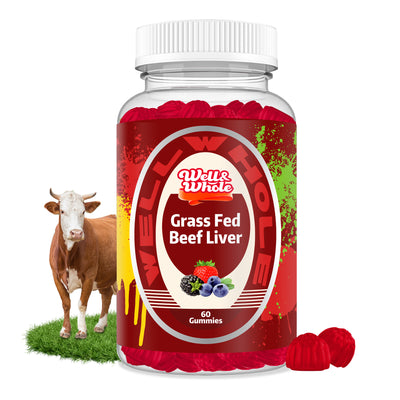
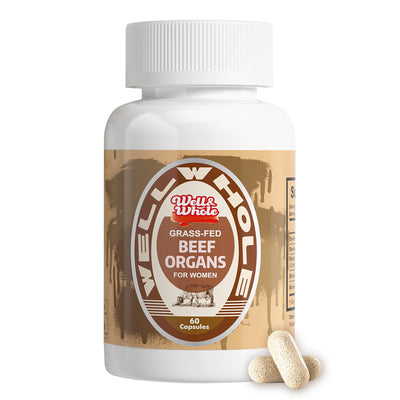
Should you decide to supplement, Grass Fed Beef Liver Supplement Gummies with 60 Count for Full Wellness and Grassfed Beef Organ Supplement Capsules, Grass Fed & Pasture Raised, Total Body Wellness Support are our formulation for this purpose. For a broader comparison, see the Vitamin A and Health Benefits collections.
These statements have not been evaluated by the Food and Drug Administration. This product is not intended to diagnose, treat, cure, or prevent any disease.