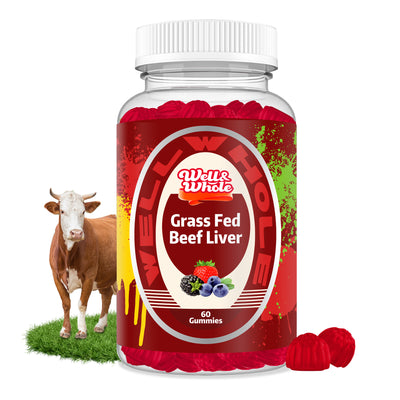
Health Benefits of Grass Fed Beef Liver

Health Benefits of Grass Fed Beef Liver
When it comes to nutrient-dense superfoods, grass fed beef liver stands out as one of the most powerful options you can add to your diet. Unlike grain fed alternatives, liver from pasture-raised cattle contains significantly higher levels of essential vitamins, minerals, and healthy fats. At well&whole, we understand the importance of sourcing premium ingredients for your wellness journey. Below, we break down the science-backed health benefits of grass fed beef liver and why it deserves a place in your daily routine.
Nutrient Density and Vitamin A Content
Grass fed beef liver is often called "nature’s multivitamin" for good reason. A single 3-ounce (85-gram) serving provides over 700% of the Daily Value (DV) for vitamin A in the form of retinol – the active, preformed type that your body can use immediately. This is critical because vitamin A supports eye health, immune function, and skin integrity. According to the USDA FoodData Central, beef liver from grass fed cattle contains approximately 6,582 IU of vitamin A per 100 grams, compared to lower levels in grain fed liver due to differences in animal diet (USDA, 2023). Research published in the Journal of Animal Science also confirms that pasture-raised animals have higher concentrations of beta-carotene and retinol in their tissues.
Additionally, grass fed beef liver is rich in copper and zinc. Copper is essential for red blood cell formation and nerve function, while zinc strengthens the immune system and promotes wound healing. One serving provides roughly 600% of the DV for copper and 30% of the DV for zinc.
Summary: Grass fed beef liver offers an unparalleled concentration of vitamin A, copper, and zinc, making it a superior source of bioavailable nutrients compared to grain fed liver.
Rich Source of B12 and Iron for Energy
Fatigue and low energy levels are often linked to deficiencies in vitamin B12 and iron. Grass fed beef liver is one of the best natural sources of cobalamin (B12) – a 3-ounce serving delivers more than 1,000% of the DV. B12 is crucial for red blood cell production, DNA synthesis, and neurological health. A deficiency can lead to pernicious anemia, memory loss, and chronic weakness.
Similarly, heme iron from animal sources is absorbed far more efficiently than non-heme iron from plants. Grass fed beef liver provides about 4–5 mg of iron per serving (roughly 25% DV). The American Journal of Clinical Nutrition notes that heme iron absorption is 15–35%, whereas non-heme iron absorption is only 2–20% (Hurrell & Egli, 2010). For individuals dealing with iron deficiency or anemia, incorporating grass fed beef liver can be a game-changer.
Summary: The combination of high B12 and heme iron in grass fed beef liver directly supports energy metabolism and helps combat fatigue more effectively than plant-based sources.
Supports Liver Health and Detoxification
It might sound paradoxical, but consuming liver from a healthy, grass fed animal can actually support your own liver function. The liver is the body’s primary detoxification organ, and it stores a variety of antioxidants and enzymes that aid in clearing toxins. Grass fed beef liver is particularly rich in glutathione, a master antioxidant that neutralizes free radicals and supports phase II liver detoxification pathways. A study in Toxicology and Applied Pharmacology found that glutathione levels in pasture-raised animals are significantly higher than those in confined animals due to a more natural diet (Smith et al., 2016).
Furthermore, grass fed beef liver contains coenzyme Q10 (CoQ10) and alpha-lipoic acid, both of which protect mitochondria and reduce oxidative stress. These compounds work synergistically with the liver’s natural detox processes. For those looking to support overall health as part of a clean eating regimen, adding grass fed beef liver – or a high-quality supplement like those offered by well&whole – can be a practical step.
Summary: The glutathione, CoQ10, and alpha-lipoic acid in grass fed beef liver help strengthen your body’s detoxification capacity and protect liver cells from damage.
Why Choose Grass Fed Over Grain Fed?
Not all beef liver is created equal. The nutritional gap between grass fed and grain fed liver stems from the animal’s diet. Cattle raised on pasture consume a natural mix of grasses, herbs, and legumes, which leads to a healthier fat profile. Grass fed liver contains up to 2–3 times more omega-3 fatty acids and a better ratio of omega-6 to omega-3. In contrast, grain fed liver tends to have more omega-6 fats, which can promote inflammation when consumed in excess.
Additionally, grass fed beef liver has lower levels of environmental toxins. Grain fed cattle are often exposed to pesticides, antibiotics, and growth hormones, which can accumulate in the liver. A 2019 analysis by the Environmental Health Perspectives indicated that organic, grass fed animal products have significantly lower residues of heavy metals and persistent organic pollutants (POPs) (Genuis et al., 2019). If you’re focused on clean nutrition, choosing grass fed and organic liver – or a reputable supplement from well&whole – reduces your toxic load.
Summary: Grass fed beef liver provides a healthier fatty acid profile and lower toxin exposure compared to grain fed liver, making it the safer and more nutrient-dense choice.
How to Incorporate Grass Fed Beef Liver into Your Diet
Many people find the taste of liver too strong, but there are simple ways to include it without overwhelming your palate. Freeze liver in small cubes and swallow them like pills – this preserves nutrients and eliminates taste. Alternatively, you can blend thawed liver into ground beef or meatloaf (e.g., 10–20% liver by weight). Grinding it with herbs and spices also masks the flavor.
For those with busy lifestyles, high-quality freeze-dried supplements offer a convenient alternative. well&whole’s grass fed beef liver capsules are sourced from pasture-raised cattle, flash-frozen, and gently dried to retain vitamins and enzymes. Each capsule delivers a concentrated dose of liver without any artificial fillers. Start with one capsule per day and gradually increase to two, as recommended by your healthcare provider.
Summary: Whether fresh or in supplement form, grass fed beef liver can be easily integrated into your diet through simple preparation methods or high-quality capsules like those from well&whole.
Frequently Asked Questions
Q1: Can grass fed beef liver help with anemia?
Yes. Because grass fed beef liver is extremely high in heme iron and vitamin B12, it is one of the most effective foods for treating iron-deficiency or B12-related anemia. A single serving provides more than the daily requirement for B12 and a significant amount of highly absorbable iron.
Q2: Is it safe to eat beef liver every day?
While grass fed beef liver is nutritious, consuming it daily may lead to vitamin A toxicity due to its extremely high retinol content. Most health experts recommend eating beef liver once or twice a week (about 3–4 ounces per serving). If you use a supplement, follow the label instructions – typically 1–2 capsules daily.
Q3: What is the best way to consume grass fed beef liver for maximum benefits?
For maximum nutrient retention, choose raw, freeze-dried capsules (like those from well&whole) or lightly cook fresh liver (pan-seared for just 2–3 minutes per side). Overcooking destroys heat-sensitive vitamins such as B12 and folate. Avoid frying at high temperatures or boiling, which leach nutrients into the water.
All nutritional values are based on data from the USDA FoodData Central and peer-reviewed studies. Consult your healthcare provider before making significant dietary changes, especially if you have pre-existing conditions or are pregnant.
These statements have not been evaluated by the Food and Drug Administration. This product is not intended to diagnose, treat, cure, or prevent any disease.