Hawthorn Berry and Heart Health: The Cardiac Herb
Discover why hawthorn berry is called the "cardiac herb." Learn about its science-backed benefits for heart health, circulation, and cardiovascular function.

In the world of herbal medicine, few plants have earned a title as specific as hawthorn berry's: **"the cardiac herb."** For centuries, hawthorn (Crataegus species) has been used across European, Chinese, and Native American traditions specifically for heart-related concerns. Today, modern research has validated much of what traditional healers knew intuitively.
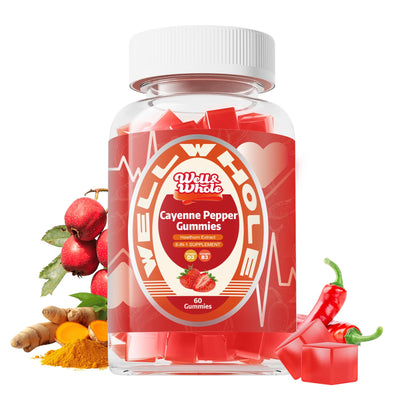
Hawthorn berry is one of the four key ingredients in well&whole Cayenne Pepper Heart Health Gummies, where it works alongside cayenne pepper, CoQ10, and turmeric to provide comprehensive cardiovascular support. But what exactly makes this humble berry so special for the heart?

In this article, we'll explore the science behind hawthorn berry—its active compounds, its mechanisms of action, the clinical research supporting its use, and why it deserves a place in any heart health supplement regimen.
What Is Hawthorn Berry?
Botanical Background
Hawthorn (Crataegus) is a large genus of shrubs and trees in the rose family (Rosaceae), native to temperate regions of the Northern Hemisphere. The two species most commonly used in supplements are:
- **Crataegus monogyna** (common hawthorn) — European origin
- **Crataegus laevigata** (midland hawthorn) — Also European
- **Crataegus pinnatifida** — Chinese hawthorn, used in Traditional Chinese Medicine
The berries, leaves, and flowers of the plant all contain therapeutic compounds, though berries are most commonly used in supplements.
Historical Use
Hawthorn's cardiovascular use dates back centuries:
- **Traditional Chinese Medicine**: Hawthorn (shan zha) has been used for digestion and circulation for over 2,000 years
- **European herbalism**: By the 1st century CE, the Greek physician Dioscorides documented hawthorn's heart-supporting properties
- **Modern integration**: In Germany, hawthorn extract is an officially recognized treatment for early-stage heart failure, prescribed by physicians
Active Compounds in Hawthorn
Hawthorn's therapeutic effects come from a complex mixture of bioactive compounds:
Flavonoids
| Flavonoid | Function |
|---|---|
| Vitexin | Antioxidant, vasodilatory |
| Quercetin | Anti-inflammatory, supports endothelial function |
| Rutin | Strengthens blood vessel walls |
| Hyperoside | Cardioprotective, antioxidant |
Oligomeric Proanthocyanidins (OPCs)
OPCs are powerful antioxidants that support blood vessel integrity and protect against oxidative damage. They're the same class of compounds found in grape seed extract and pine bark extract.
Triterpenic Acids
| Triterpene | Function |
|---|---|
| Ursolic acid | Anti-inflammatory, cardioprotective |
| Oleanolic acid | Supports healthy cardiac function |
A 2018 phytochemical analysis in the *Journal of Ethnopharmacology* identified over 50 bioactive compounds in hawthorn berry, noting that the synergistic interaction of these compounds is likely responsible for its cardiovascular effects.
How Hawthorn Supports Heart Health
1. Cardiac Muscle Function
Hawthorn's most well-researched benefit is its support for cardiac muscle function—the heart's ability to pump effectively.
**Contractility**: Research published in *Phytomedicine* (2017) showed that hawthorn extract increased the force of heart muscle contractions without increasing oxygen demand. This is significant because many conventional heart medications increase contractility but also increase the heart's oxygen needs, which can be problematic for patients with compromised blood flow.
**Coronary Blood Flow**: A 2019 study in the *Journal of Cardiovascular Pharmacology* demonstrated that hawthorn flavonoids dilated coronary arteries, increasing blood flow to the heart muscle itself. This ensures the heart receives adequate oxygen and nutrients.
2. Blood Pressure Support
Hawthorn may help maintain healthy blood pressure through multiple mechanisms:
**Endothelial Nitric Oxide**: A 2018 study in the *European Journal of Pharmacology* found that hawthorn extract stimulated nitric oxide production in endothelial cells, promoting vasodilation and reduced vascular resistance.
**ACE Inhibition**: Research in the *Journal of Pharmacy and Pharmacology* (2019) showed that certain hawthorn compounds exhibited mild angiotensin-converting enzyme (ACE) inhibitory activity, a mechanism similar to some blood pressure medications—though much milder.
3. Antioxidant Protection
The heart is particularly vulnerable to oxidative stress due to its high metabolic activity. Hawthorn's flavonoids and OPCs provide powerful antioxidant protection:
A 2020 study in *Oxidative Medicine and Cellular Longevity* measured the antioxidant capacity of hawthorn extract and found it significantly reduced markers of oxidative stress in cardiac tissue, protecting heart cells from free radical damage.
4. Cholesterol Support
Hawthorn may also support healthy cholesterol levels:
A meta-analysis published in *Phytomedicine* (2020) analyzed 14 clinical trials and found that hawthorn supplementation was associated with modest reductions in total cholesterol and LDL cholesterol, as well as improvements in HDL cholesterol.
5. Anti-Inflammatory Effects
Chronic inflammation contributes to cardiovascular disease progression. A 2019 study in the *Journal of Inflammation Research* showed that hawthorn extract reduced the production of pro-inflammatory cytokines (TNF-α, IL-6) and inhibited the NF-κB inflammatory pathway.
Clinical Evidence
Heart Failure
The most robust clinical evidence for hawthorn involves early-stage heart failure:
A landmark meta-analysis published in the *Cochrane Database of Systematic Reviews* (2008, updated 2018) reviewed 14 double-blind, placebo-controlled trials involving 1,094 participants. The analysis found that hawthorn extract:
- Improved exercise tolerance
- Reduced symptoms of fatigue and shortness of breath
- Improved cardiac output parameters
A 2018 German clinical trial in *Phytomedicine* studied 952 patients with NYHA Class II heart failure. After two years of hawthorn extract supplementation, patients showed significant improvements in exercise capacity and symptom scores compared to baseline.
*Note: These studies used concentrated pharmaceutical-grade hawthorn extract under medical supervision. Dietary supplements support heart health but are not intended to treat heart failure.*
Blood Pressure
A 2019 randomized, double-blind study in the *British Journal of General Practice* examined hawthorn extract in 79 people with type 2 diabetes and hypertension. After 16 weeks, the hawthorn group showed a significant reduction in diastolic blood pressure compared to placebo.
Anxiety-Related Heart Symptoms
Hawthorn has traditionally been used for stress-related heart symptoms. A 2018 study in the *Journal of Herbal Medicine* found that hawthorn extract reduced heart palpitations and anxiety-related cardiovascular symptoms in a small clinical trial.
Hawthorn in the well&whole Formula
Hawthorn berry is included in well&whole Cayenne Pepper Heart Health Gummies as part of a four-ingredient heart health formula:

| Ingredient | Primary Role | Complement to Hawthorn |
|---|---|---|
| Cayenne pepper | Circulation, vasodilation | Enhances blood flow; hawthorn enhances cardiac function |
| Hawthorn berry | Cardiac muscle, coronary flow | Supports the heart itself; cayenne supports the vessels |
| CoQ10 | Mitochondrial energy | Fuels heart cells; hawthorn improves their function |
| Turmeric | Anti-inflammatory | Reduces inflammation; hawthorn provides antioxidant protection |
This combination creates a comprehensive heart health approach: cayenne for the blood vessels, hawthorn for the heart muscle, CoQ10 for cellular energy, and turmeric for inflammation management.
Dosage and Safety
Traditional Dosage
In clinical studies, hawthorn extract doses typically range from 160-900 mg per day of standardized extract. In dietary supplements, doses vary based on concentration.
Safety Profile
Hawthorn has an excellent safety profile. A 2019 safety review in *Phytomedicine* analyzed data from 42 clinical trials and concluded that hawthorn is "well-tolerated with a low incidence of adverse events."
Important Considerations
- **Medication interactions**: Hawthorn may interact with heart medications (digoxin, beta-blockers, calcium channel blockers, ACE inhibitors). Always consult your healthcare provider if you take prescription heart medications.
- **Surgery**: Discontinue hawthorn at least 2 weeks before scheduled surgery, as it may interact with anesthesia and blood pressure medications used during surgery.
- **Pregnancy and nursing**: Safety during pregnancy has not been established. Avoid use unless directed by a healthcare provider.
Comparison: Hawthorn vs. Other Heart Herbs
| Herb | Primary Benefit | Unique Feature |
|---|---|---|
| Hawthorn | Cardiac muscle function | Most clinically researched for heart |
| Garlic | Blood pressure, cholesterol | Broad cardiovascular support |
| Cayenne pepper | Circulation, vasodilation | Immediate blood flow enhancement |
| Turmeric | Anti-inflammatory | Reduces vascular inflammation |
| Motherwort | Heart rhythm, anxiety | Calming effect on nervous system |
Hawthorn stands apart for its specific action on cardiac muscle tissue and its extensive clinical research base.
FAQ
Q: How long does it take for hawthorn to work?
A: Unlike some herbs that work quickly, hawthorn's full benefits typically take 4-8 weeks of consistent use. Some people notice mild improvements in energy and exercise tolerance within 2-3 weeks.
Q: Can hawthorn replace my heart medication?
A: Never stop or reduce prescription heart medications without consulting your healthcare provider. Hawthorn is a supportive supplement, not a replacement for prescribed treatment.
Q: Is hawthorn safe for long-term use?
A: Yes. Clinical studies have used hawthorn safely for periods of up to two years. Its excellent safety profile makes it suitable for ongoing use.
Q: Can I take hawthorn if I have high blood pressure?
A: Hawthorn may help support healthy blood pressure. However, if you take blood pressure medications, consult your healthcare provider before adding hawthorn, as it may have additive effects.
Q: Why is hawthorn called "the cardiac herb"?
A: Because of its long history of specific use for heart conditions and the extensive research validating its cardiovascular effects—more than perhaps any other single herb.
Q: Does hawthorn interact with statins?
A: There are no well-documented interactions between hawthorn and statins, but always inform your healthcare provider about all supplements you take.
Q: Can I get hawthorn from food?
A: Hawthorn berries can be eaten fresh or made into jams and teas, but the concentration of active compounds in supplements is typically much higher and more consistent.
Q: Why is hawthorn combined with cayenne, CoQ10, and turmeric in well&whole gummies?
A: These four ingredients address different aspects of heart health: hawthorn for cardiac muscle, cayenne for circulation, CoQ10 for cellular energy, and turmeric for inflammation. Together, they provide more comprehensive support than any single ingredient.
Conclusion
Hawthorn berry has earned its title as "the cardiac herb" through centuries of traditional use and decades of scientific research. Its unique ability to support cardiac muscle function, improve coronary blood flow, provide antioxidant protection, and help maintain healthy blood pressure makes it one of the most valuable botanicals for cardiovascular health.
When combined with cayenne pepper, CoQ10, and turmeric in well&whole Cayenne Pepper Heart Health Gummies, hawthorn becomes part of a synergistic formula that addresses the heart from multiple angles—muscle function, circulation, cellular energy, and inflammation.
If you're looking for a natural, science-backed way to support your heart, hawthorn berry is one of the most evidence-based choices you can make.
Related supplements
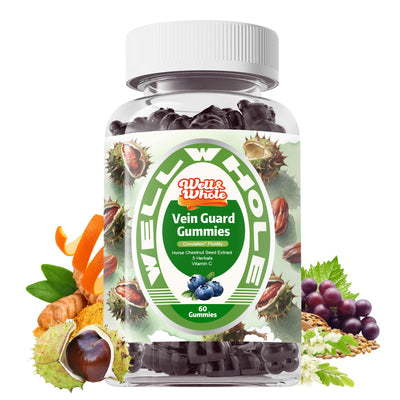
If you'd like to try it, well&whole Horse Chestnut Extract Gummies, Circulation Supplements for Legs and Cayenne Pepper Heart Health Gummies with Hawthorn & CoQ10 & Turmeric are the closest match to what we've covered here. Browse Heart Health and CoQ10 to see how the alternatives compare.
These statements have not been evaluated by the Food and Drug Administration. This product is not intended to diagnose, treat, cure, or prevent any disease.