Grass-Fed Beef Liver: Nature's Multivitamin Explained
Grass-fed beef liver is often called nature's multivitamin. Discover its complete nutrient profile, how it compares to synthetic multivitamins, and why beef liver supplements may support overall wellness.

Long before multivitamin tablets lined pharmacy shelves, traditional cultures around the world prized one food above all others for supporting robust health: liver. Specifically, beef liver earned the nickname "nature's multivitamin" for good reason—it contains more bioavailable nutrients per gram than virtually any other food.
Modern nutritional science is now validating what ancient wisdom has known for millennia. A single serving of beef liver delivers significant amounts of vitamin A, B12, folate, iron, copper, and zinc—all in forms your body can readily absorb and use.
In this comprehensive guide, we'll explore why grass-fed beef liver has earned its reputation as nature's most complete food. We'll examine its nutrient profile in detail, compare grass-fed to grain-fed sources, explain why nutrient form matters, and discuss how well&whole's Grass Fed Beef Liver Gummies ($22.99) make this nutritional powerhouse accessible in a convenient daily format.
What Makes Beef Liver "Nature's Multivitamin"?
The term "nature's multivitamin" isn't just marketing. Beef liver is arguably the most nutrient-dense food on the planet. To understand why, let's look at what a single serving provides.
Complete Nutrient Profile of Grass-Fed Beef Liver
Based on USDA FoodData Central and studies published in the *Journal of Food Composition and Analysis* (Williams, 2007), here's what approximately 3.5 ounces (100 grams) of cooked beef liver provides:
| **Nutrient** | **Amount per 100g** | **% Daily Value** | **Function** |
|-------------|---------------------|---------------------|-------------|
| Vitamin A (Retinol) | 7,730 mcg RAE | ~860% | Vision, immune function, skin health |
| Vitamin B12 | 70.7 mcg | ~2,945% | Energy metabolism, nerve function, DNA synthesis |
| Riboflavin (B2) | 3.4 mg | ~260% | Energy production, antioxidant function |
| Niacin (B3) | 17.5 mg | ~110% | Cellular energy, DNA repair |
| Vitamin B6 | 1.0 mg | ~60% | Protein metabolism, neurotransmitter synthesis |
| Folate (B9) | 290 mcg DFE | ~73% | Cell division, DNA synthesis, red blood cell formation |
| Iron | 6.2 mg | ~34% | Oxygen transport, energy production |
| Copper | 14.3 mg | ~1,590% | Iron metabolism, collagen formation, immunity |
| Zinc | 5.3 mg | ~48% | Immune function, wound healing, protein synthesis |
| Phosphorus | 497 mg | ~40% | Bone health, energy storage |
| Selenium | 36.1 mcg | ~65% | Thyroid function, antioxidant protection |
| Choline | 418 mg | ~76% | Liver health, brain function |
*Source: USDA FoodData Central, 2019; adapted for grass-fed values where applicable*
What Makes This Remarkable
Beef liver isn't just "high" in a few nutrients—it provides substantial amounts of over a dozen essential vitamins and minerals in a single food source. This comprehensive nutrient package is why organ meats have been prized across diverse traditional cultures, from the Inuit of the Arctic to the Maasai of East Africa.
Dr. Weston A. Price, a dentist who traveled the world studying traditional diets in the 1930s, documented that cultures consuming organ meats, including liver, had remarkably low rates of chronic disease and excellent dental health. His research, published in *Nutrition and Physical Degeneration* (1939), provides one of the earliest comprehensive documentations of beef liver's role in traditional nutrition.
Nutrient Bioavailability: Why Source Matters
Here's something most multivitamin labels don't tell you: the form of a nutrient determines how well your body can use it. Beef liver provides nutrients in their most bioavailable forms.
Vitamin A: Retinol vs Beta-Carotene
Plant-based vitamin A (beta-carotene from carrots, sweet potatoes) requires conversion in the body to retinol, the active form. However, this conversion is inefficient—research published in the *American Journal of Clinical Nutrition* (2000) estimates that the conversion rate of beta-carotene to retinol ranges from only 3.6% to 28% depending on individual factors.
Beef liver provides pre-formed vitamin A (retinol) that requires no conversion. Your body can use it immediately.
Iron: Heme vs Non-Heme
Beef liver provides heme iron, the form found in animal products. Heme iron is absorbed at a rate of 15-35%, compared to only 2-20% for non-heme iron from plants (Hurrell & Egli, 2010, *American Journal of Clinical Nutrition*).
For individuals concerned about iron status—including menstruating women, athletes, and those following plant-based diets—the heme iron in beef liver provides a significantly more absorbable form.
B12: Methylcobalamin and Adenosylcobalamin
Beef liver contains B12 in its active coenzyme forms—methylcobalamin and adenosylcobalamin—the same forms your body uses for energy metabolism and neurological function. This contrasts with cyanocobalamin, a synthetic form commonly used in fortified foods and cheap supplements that requires conversion in the body.
A 2017 study in the *European Journal of Clinical Nutrition* noted that natural food-derived B12 forms demonstrated superior retention compared to synthetic forms in individuals with certain genetic variations affecting B12 metabolism (Green et al., 2017).
Grass-Fed vs Grain-Fed Beef Liver
Not all beef liver is created equal. The diet of the animal significantly impacts the nutrient composition of the liver.
Key Nutritional Differences
Research comparing grass-fed and grain-fed beef organs has found consistently higher concentrations of key nutrients in grass-fed sources:
A 2011 study in the *British Journal of Nutrition* comparing grass-fed and grain-fed beef liver found that grass-fed samples contained significantly higher levels of:
- Omega-3 fatty acids
- Conjugated linoleic acid (CLA)
- Vitamin E (as alpha-tocopherol)
- Beta-carotene
- Total antioxidant capacity
The Toxin Myth
A common concern about consuming liver is that it "stores toxins." This is a misunderstanding of liver physiology. The liver does not store toxins—it processes and neutralizes them for elimination. The liver stores *nutrients* like vitamin A, B12, iron, and copper.
A 2015 review in *Nutrients* confirmed that organ meats from healthy, properly raised animals do not accumulate toxins. The concern primarily applies to organs from animals exposed to environmental contaminants in polluted areas—another reason why sourcing from grass-fed, pasture-raised animals is important.
Key Nutrient Focus: Vitamin A (Retinol)
Why Vitamin A Form Matters
Vitamin A from beef liver comes as pre-formed retinol and retinyl esters—the forms your body uses directly for:
- **Vision**: Retinol is essential for rhodopsin production in the retina
- **Immune function**: Retinoic acid regulates T-cell and B-cell responses
- **Skin health**: Retinoids support cell turnover and collagen synthesis
- **Gene expression**: Retinoic acid acts as a transcription factor regulating hundreds of genes
A review in *Nutrients* (2016) highlighted that vitamin A sufficiency is critical for maintaining mucosal immunity—the body's first line of defense against pathogens (Huang et al., 2016).
The Difference Between Retinol and Beta-Carotene
| **Feature** | **Retinol (Beef Liver)** | **Beta-Carotene (Plants)** |
|-------------|--------------------------|----------------------------|
| Bioavailability | Directly usable | Requires conversion (3.6-28%) |
| Storage | Stored in liver | Limited storage capacity |
| Absorption | ~75-100% intestinal absorption | 5-65% depending on matrix |
| Toxicity risk at high doses | Yes (vitamin A can accumulate) | Low (conversion is regulated) |
| Food sources | Liver, egg yolks, dairy | Carrots, sweet potatoes, spinach |
This is why beef liver gummies like well&whole's Grass Fed Beef Liver Gummies provide vitamin A in a form your body recognizes and can utilize efficiently.
Key Nutrient Focus: Vitamin B12
Beef liver is arguably the richest natural source of B12 on earth. The vitamin B12 content of liver isn't just high—it's extraordinarily high, with a single serving providing thousands of percent of the daily value.
B12 Functions in the Body
Vitamin B12 supports several critical functions:
1. **Energy metabolism**: B12 is a cofactor in converting food into cellular energy (ATP)
2. **Red blood cell formation**: Essential for DNA synthesis during red blood cell production
3. **Neurological function**: Required for myelin sheath maintenance around nerve fibers
4. **Homocysteine regulation**: Helps convert homocysteine to methionine, supporting cardiovascular health
A 2018 review in *Frontiers in Molecular Biosciences* described B12 as "an essential cofactor for two enzymes critical to human health: methionine synthase and methylmalonyl-CoA mutase" (Froese & Gravel, 2018).
Who May Benefit from Beef Liver B12
Certain populations are at higher risk for low B12 status:
- **Vegetarians and vegans**: B12 is found almost exclusively in animal products
- **Adults over 50**: Reduced stomach acid production impairs B12 absorption from food
- **Individuals taking acid-suppressing medications**: PPIs and H2 blockers reduce B12 absorption
- **People with digestive conditions**: Crohn's, celiac disease, and other GI conditions can impair B12 uptake
- **Those with MTHFR variants**: May benefit from the active B12 forms found in beef liver
Key Nutrient Focus: Iron and Copper
Iron deficiency is one of the most common nutrient deficiencies worldwide, affecting an estimated 25% of the global population (WHO, 2015). Beef liver provides heme iron plus copper—a mineral required for proper iron utilization.
The Iron-Copper Connection
What many people don't realize is that copper is essential for iron metabolism. The copper-containing enzyme ceruloplasmin is required to mobilize iron from storage sites and incorporate it into hemoglobin. Without adequate copper, you can have normal iron stores but still show signs of iron deficiency because the iron can't be properly utilized (Collins et al., 2010, *Advances in Nutrition*).
Beef liver provides both iron and copper in the same food—nature's packaging for optimal absorption and utilization.
Iron Content Comparison
| **Food Source** | **Iron per 100g** | **Type** | **Absorption Rate** |
|-----------------|-------------------|----------|---------------------|
| Beef liver | 6.2 mg | Heme | 15-35% |
| Beef sirloin | 2.7 mg | Heme | 15-35% |
| Spinach (cooked) | 3.6 mg | Non-heme | 2-20% |
| Lentils (cooked) | 3.3 mg | Non-heme | 2-20% |
| Fortified cereal | Varies | Non-heme + elemental | Varies |
*Sources: USDA FoodData Central; Hurrell & Egli, 2010*
Beef Liver Gummies: Modern Delivery, Ancient Nutrition
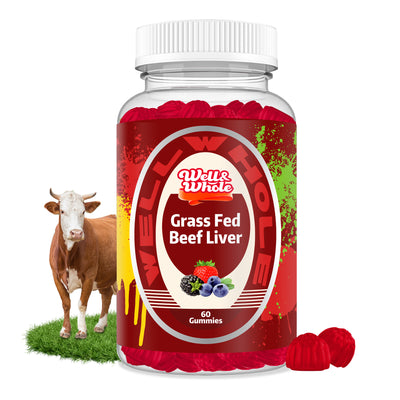
well&whole's Grass Fed Beef Liver Gummies ($22.99) bridge the gap between traditional wisdom and modern convenience. By freeze-drying grass-fed beef liver and incorporating it into a pleasant-tasting gummy format, these supplements make the nutritional benefits of beef liver accessible without the taste and texture challenges of consuming whole liver.
Why Gummies?
For many people, the taste of beef liver is a significant barrier. A survey by the International Food Information Council (2021) found that taste is the number one factor influencing food and supplement choices for 82% of consumers. By delivering grass-fed beef liver in a gummy format, well&whole removes this barrier.
What to Look for in Beef Liver Gummies
- **Grass-fed sourcing**: Ensures optimal nutrient profile and animal welfare
- **Freeze-dried processing**: Preserves heat-sensitive nutrients
- **No synthetic additives**: Clean label with minimal excipients
- **Transparent labeling**: Clearly stated beef liver content per serving
FAQ
Q: What makes beef liver "nature's multivitamin"?
A: Beef liver contains significant amounts of over a dozen essential vitamins and minerals including vitamin A, B12, folate, iron, copper, zinc, and selenium—all in their most bioavailable forms. No other single food provides such a comprehensive nutrient package.
Q: Are beef liver gummies as nutritious as eating real beef liver?
A: Beef liver gummies made from freeze-dried grass-fed liver retain the nutrients of whole liver in a concentrated format. While the gram-for-gram comparison depends on the specific product, quality desiccated liver supplements preserve the nutritional profile of fresh liver through careful low-temperature processing.
Q: Is grass-fed beef liver really better than grain-fed?
A: Research consistently shows that grass-fed beef liver contains higher levels of omega-3 fatty acids, vitamin E, and certain antioxidants compared to grain-fed. The animal's diet directly influences the nutrient composition of its organs.
Q: How much vitamin B12 is in beef liver?
A: Beef liver is one of the richest sources of B12, providing over 70 mcg per 100g—more than 2,900% of the daily value. This makes it an exceptionally concentrated source of this essential vitamin.
Q: Can beef liver help with iron deficiency?
A: Beef liver provides heme iron, which is significantly more absorbable than the non-heme iron in plant foods. It also contains copper, which is necessary for proper iron utilization in the body.
Q: Does beef liver store toxins?
A: No—this is a common misconception. The liver processes and neutralizes toxins for elimination. It stores nutrients, not toxins. Sourcing from grass-fed, pasture-raised animals ensures the cleanest possible product.
Q: How does vitamin A from beef liver compare to beta-carotene from vegetables?
A: Beef liver provides pre-formed vitamin A (retinol) that your body can use immediately. Beta-carotene from vegetables requires enzymatic conversion in the body, with conversion rates typically ranging from 3.6% to 28% depending on individual factors.
Q: Who should consider beef liver supplements?
A: Beef liver supplements may support anyone looking for a natural source of bioavailable nutrients, particularly those with increased nutrient needs including active individuals, menstruating women, older adults, and those following restricted diets.
Q: How does well&whole source its beef liver?
A: well&whole Beef Liver Gummies are made from grass-fed beef liver, processed through freeze-drying to preserve nutrient integrity. The product is manufactured in GMP-certified facilities.
Q: Can I take beef liver gummies every day?
A: Beef liver supplements are designed for daily use when taken as directed. The desiccated form provides concentrated nutrients in amounts consistent with the recommended serving. Consult your healthcare provider for personalized guidance.
Conclusion
Beef liver has earned its title as "nature's multivitamin" through centuries of traditional use and decades of modern nutritional science. Its comprehensive nutrient profile—delivering bioavailable vitamin A, B12, iron, copper, and more in forms your body can immediately use—makes it one of the most nutrient-dense foods on earth.
well&whole's Grass Fed Beef Liver Gummies make this nutritional powerhouse accessible in a convenient, great-tasting format. By choosing a grass-fed, freeze-dried source, you're getting the nutritional benefits of traditional wisdom in a modern delivery system.
If you're looking to complement your diet with a natural source of bioavailable nutrients, explore well&whole's beef liver gummies at wellwholeshop.com.
Related supplements
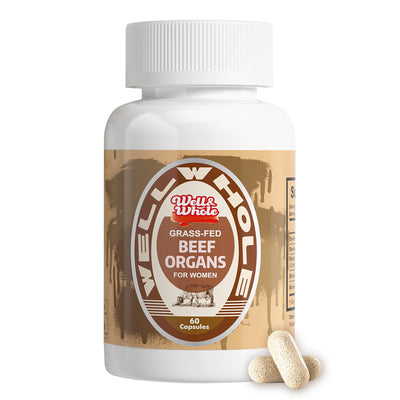
If you're ready to put this into practice, our Grass Fed Beef Liver Supplement Gummies with 60 Count for Full Wellness and Grassfed Beef Organ Supplement Capsules, Grass Fed & Pasture Raised, Total Body Wellness Support are formulated with this in mind. You can also compare the Vitamin A and Health Benefits ranges to find the format that suits you.
These statements have not been evaluated by the Food and Drug Administration. This product is not intended to diagnose, treat, cure, or prevent any disease.