Glutathione: The Master Antioxidant — What It Is, Why It Matters, and How to Boost It
Glutathione is your body's most powerful antioxidant. Learn what glutathione does, why levels decline with age, and the best ways to support your body's production of this critical molecule.

Every second of every day, your cells produce antioxidants to defend themselves against the continuous onslaught of free radicals — unstable molecules that damage DNA, proteins, and cell membranes through oxidative stress. Of all the antioxidants your body produces, none is more abundant, more versatile, or more essential than glutathione.
Often called the "master antioxidant," glutathione is a tripeptide composed of three amino acids: glutamate, cysteine, and glycine. It exists in virtually every cell of the human body, with particularly high concentrations in the liver — the organ that handles the lion's share of detoxification work.
Despite being produced endogenously, glutathione levels are not fixed. They decline with age, are depleted by chronic stress and illness, and can be compromised by poor nutrition. Understanding how to maintain and support your glutathione status is one of the most impactful things you can do for your cellular health.
What Is Glutathione?
Biochemistry 101
Glutathione is remarkably simple in structure — just three amino acids bonded together — yet extraordinarily powerful in function. It exists in two forms:
· **GSH (Reduced Glutathione)**: The active, antioxidant-ready form that can neutralize free radicals
· **GSSG (Oxidized Glutathione)**: The "spent" form after donating electrons to neutralize oxidative threats
The ratio of GSH to GSSG within cells is a key indicator of cellular oxidative stress. A healthy cell maintains a GSH:GSSG ratio of approximately 100:1. When this ratio drops, oxidative stress is high and cellular function is compromised.
Why "Master" Antioxidant?
Glutathione earns the "master" designation for several reasons:
Glutathione is not simply one antioxidant among many — it is the hub around which your cellular antioxidant network revolves.
The Many Functions of Glutathione
1. Direct Antioxidant Defense
Glutathione is the cell's primary defense against:
· Reactive oxygen species (superoxide, hydroxyl radical, hydrogen peroxide)
· Reactive nitrogen species (peroxynitrite)
· Lipid peroxides (damaged fats that propagate chain reactions of oxidative damage)
Each glutathione molecule can neutralize one free radical molecule, after which it can be recycled back to active form by the enzyme glutathione reductase — using NADPH (derived from glucose metabolism) as the energy source.
2. Phase II Detoxification
In the liver, glutathione serves as the primary conjugating molecule for Phase II detoxification. Through the action of glutathione S-transferase enzymes, glutathione binds to activated toxins, heavy metals, and drug metabolites, neutralizing them and preparing them for elimination through bile or urine.
Without adequate glutathione, Phase II detoxification stalls — and Phase I intermediates (which are sometimes more toxic than the original substance) can accumulate and cause damage.
3. Immune System Modulation
Glutathione regulates immune function at multiple levels:
· Required for T-lymphocyte activation and proliferation
· Modulates the balance between Th1 and Th2 immune responses
· Supports natural killer cell activity
· Protects immune cells from self-inflicted oxidative damage during immune responses
Research published in the *Proceedings of the Nutrition Society* (2017) demonstrated that glutathione status is a key determinant of immune competence, particularly in aging populations.
4. Mitochondrial Protection
Mitochondria generate oxidative byproducts as an unavoidable consequence of ATP production. Glutathione is concentrated within mitochondria specifically to neutralize these byproducts before they can damage mitochondrial DNA or membrane components.
Mitochondrial glutathione depletion is increasingly recognized as a root driver of the aging process at the cellular level.
5. Protein Structure Maintenance
Glutathione maintains the reduced state of sulfhydryl groups in proteins — essentially preventing proteins from "rusting." Many enzymes and signaling proteins require reduced cysteine residues to function properly, and glutathione maintains this redox environment.
What Depletes Glutathione?
How to Support Glutathione Levels
Direct Supplementation: The Absorption Challenge
Traditional oral glutathione supplements have been limited by poor bioavailability — glutathione is a tripeptide that is largely broken down by digestive enzymes before it reaches the bloodstream.
Liposomal Glutathione: This delivery technology encapsulates glutathione within lipid spheres that protect it from digestion and facilitate absorption through the intestinal wall. A 2014 study in the *European Journal of Clinical Nutrition* found that liposomal glutathione supplementation raised whole blood glutathione by 30–35% over 4 weeks, compared to negligible increases with standard oral glutathione.
Sublingual and Intranasal Forms: Some formulations bypass the digestive system entirely, though evidence for these routes is less robust than for liposomal delivery.
Intravenous Glutathione: The most effective route of administration, but requires medical supervision and is typically reserved for specific clinical situations.
Precursor Supplementation: NAC
N-Acetyl Cysteine (NAC) is the most effective oral strategy for raising glutathione levels because it addresses the rate-limiting factor: cysteine availability.
Cysteine is the least abundant of glutathione's three constituent amino acids and the one that determines synthesis rate. Because cysteine is relatively unstable outside the body, NAC provides a stable, bioavailable cysteine source.
Clinical studies consistently demonstrate that NAC supplementation (600–1,800 mg daily) significantly increases glutathione levels across multiple tissues. This is the mechanism behind NAC's use in hospital emergency departments for acetaminophen overdose — rapidly restoring depleted glutathione stores.
Cofactor Support
Glutathione synthesis and recycling require specific nutrient cofactors:
Lifestyle Strategies
Exercise: Moderate exercise increases glutathione production through hormetic stress — the body produces more glutathione to handle the mild oxidative stress of exercise. The key word is moderate; extreme endurance exercise can deplete glutathione.
Sleep: Glutathione levels follow a circadian rhythm, with synthesis peaking during sleep. Chronic sleep deprivation measurably reduces glutathione status.
Sulfur-Rich Foods: Garlic, onions, cruciferous vegetables, and eggs provide sulfur-containing amino acids that serve as glutathione precursors.
Heat Exposure: Regular sauna use may enhance glutathione status through Nrf2 pathway activation, though the evidence is preliminary compared to nutritional interventions.
Supplement Comparison Table
FAQ
Q1: Is glutathione safe to take daily?
Yes. Glutathione and its precursors (NAC) have excellent safety records at standard doses. NAC has been used clinically for decades at doses far exceeding typical supplement levels.
Q2: How can I tell if my glutathione is low?
There is no widely available consumer test for glutathione levels. Indirect indicators include persistent fatigue, susceptibility to illness, slow recovery from exercise, and known glutathione-depleting factors (aging, chronic alcohol consumption, toxin exposure). Laboratory GSH/GSSG ratio testing can be performed through specialized providers.
Q3: Which is better — NAC or liposomal glutathione?
They work through different mechanisms and are complementary. NAC provides the raw material (cysteine) for your body to manufacture its own glutathione. Liposomal glutathione delivers pre-formed glutathione. Many integrative practitioners recommend NAC for daily maintenance and liposomal glutathione for more targeted support.
Q4: Does glutathione whiten skin?
Glutathione's skin-lightening effects (through melanin synthesis inhibition) have been reported primarily with high-dose intravenous use. Oral supplementation at standard doses is unlikely to produce noticeable skin-lightening effects, and this should not be a primary reason for oral glutathione use.
Q5: Can I take glutathione with other antioxidants?
Yes. In fact, glutathione and vitamin C work synergistically — vitamin C spares glutathione, and glutathione regenerates oxidized vitamin C. Combined antioxidant supplementation is generally safe and potentially more effective than single-compound approaches.
Q6: Is glutathione destroyed by stomach acid?
Standard glutathione faces significant degradation in the digestive tract, which is why bioavailability is poor unless delivery systems (liposomal, acetylated) protect it. NAC does not face this problem because it is not glutathione itself but a precursor that is well-absorbed.
Q7: How long does it take for glutathione supplements to work?
Liposomal glutathione shows measurable increases in whole blood glutathione within 2–4 weeks. NAC increases tissue glutathione levels over a similar timeframe. The time to *feel* effects varies significantly by individual and the reason for supplementation.
Q8: Can children take glutathione?
There are specific pediatric medical indications for NAC (e.g., acetaminophen toxicity, certain respiratory conditions), but general glutathione supplementation for children should only be undertaken under medical supervision.
Conclusion
Glutathione's designation as the "master antioxidant" is well-earned. It sits at the center of your body's antioxidant defense network, directly neutralizing free radicals, regenerating other antioxidants, driving Phase II liver detoxification, and supporting immune competence. Its decline with age is one of the most consequential biochemical changes in the aging process — and one of the most addressable.
For most people, supporting glutathione status is best approached through a combination of precursor supplementation (NAC), cofactor support (selenium, magnesium, B vitamins), and lifestyle practices (adequate protein intake, cruciferous vegetables, moderate exercise, and sufficient sleep). Direct glutathione supplementation through liposomal delivery adds another layer of support, particularly during periods of increased demand.
At well&whole, we prioritize the nutrients your body actually needs — and glutathione support is foundational. Our Glutathione and NAC supplements are selected for quality and bioavailability because your master antioxidant deserves nothing less.
Related supplements
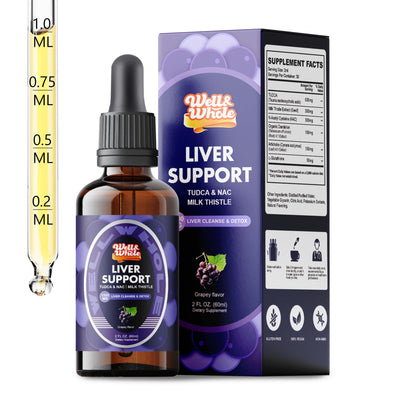
Putting it simply: if this is something you want to add to your routine, our Liver Support Liquid Drops Supplement | TUDCA Drops Liver Cleanse & Detox with Milk Thistle, NAC, Dandelion, Artichoke & Glutathione for Detox and TUDCA 1000mg Gummies with Milk Thistle 500mg for Adults are a good place to start. The wider Liver Support collection is worth a look, and the Milk Thistle range covers related formats.
These statements have not been evaluated by the Food and Drug Administration. This product is not intended to diagnose, treat, cure, or prevent any disease.