Freeze-Dried Beef Organs: Why Processing Matters
Why does freeze-drying matter for beef organ supplements? Learn how processing affects nutrient preservation, enzyme activity, and quality in grass-fed organ supplements from well&whole.

You've chosen grass-fed beef organs—excellent sourcing. But what happens between the pasture and the bottle matters just as much. The processing method used to transform fresh organs into shelf-stable supplements determines how many nutrients survive, whether enzymes remain active, and ultimately, the quality of the product you consume.
Freeze-drying (lyophilization) is the gold standard for organ supplement processing—but not all products use it. Understanding why freeze-drying matters helps you make informed choices about the supplements you take.
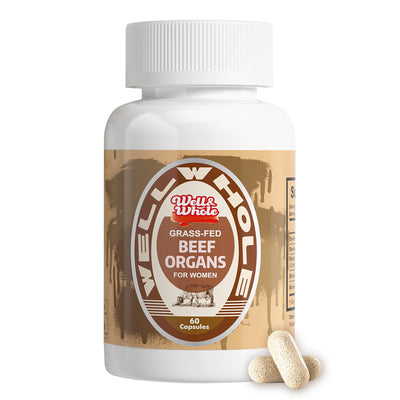
In this article, we'll explore how freeze-drying preserves organ nutrients, compare processing methods, and explain why well&whole uses freeze-dried organs in products like the Grassfed Beef Organ Capsules.
Processing Methods Compared
There are three main ways to transform fresh organs into supplement powder:
| **Method** | **Process** | **Temperature** | **Nutrient Preservation** | **Enzyme Activity** |
|-----------|------------|----------------|-------------------------|-------------------|
| **Freeze-Drying** | Frozen, then vacuum-dried | -40°F to -80°F initially | Excellent | Preserved |
| **Air/Spray Drying** | Heated air evaporates water | 140°F-200°F | Moderate to poor | Destroyed |
| **Sun Drying** | Natural sun exposure | Variable, can exceed 120°F | Poor | Destroyed |
Freeze-Drying: How It Works
1. **Freezing**: Fresh organs are flash-frozen to sub-zero temperatures (-40°F to -80°F), locking in the cellular structure
2. **Primary drying**: In a vacuum chamber, frozen water sublimates (converts directly from solid to gas) at low temperatures
3. **Secondary drying**: Remaining bound water is removed under slightly elevated temperature (still below damaging levels)
The key advantage: water is removed without ever heating to temperatures that degrade heat-sensitive nutrients.
What Heat Does to Organ Nutrients
Heat exposure during processing affects different nutrients differently:
| **Nutrient** | **Freeze-Dried Retention** | **Heat-Dried Retention** |
|-------------|--------------------------|-------------------------|
| Minerals (iron, zinc, copper) | ~100% | ~100% (minerals are heat-stable) |
| Fat-soluble vitamins (A, E) | ~90-100% | ~60-80% |
| B-vitamins (B12, B2, folate) | ~80-95% | ~40-70% |
| Enzymes (DAO, SOD, catalase) | Preserved (variable) | Destroyed |
| Proteins | Native structure preserved | Denatured |
A 2018 study in the *Journal of Food Science and Technology* found that freeze-drying preserved 30-50% more B-vitamin content compared to conventional heat-drying methods for organ tissues (Ratti, 2018).
Why Enzyme Preservation Matters
For beef kidney supplements in particular, processing method directly affects functional value:
DAO Enzyme
Diamine oxidase (DAO) is an enzyme—a protein whose function depends on its three-dimensional structure. Heat denatures (unfolds) proteins, destroying enzyme activity. Freeze-drying preserves protein structure and enzyme function.
This is why kidney supplements processed with heat, while still providing minerals and some vitamins, lack the DAO activity that makes kidney uniquely valuable for histamine support.
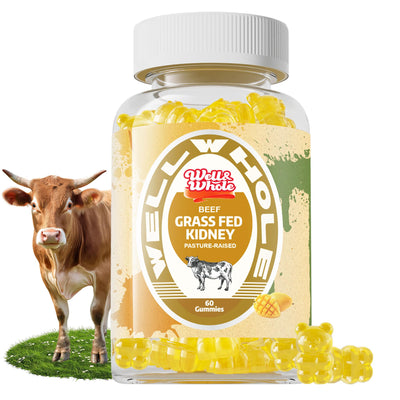
well&whole's Grass Fed Beef Kidney Gummies are freeze-dried specifically to preserve DAO enzyme activity.

Other Functional Compounds
Beyond DAO, freeze-drying preserves:
- **CoQ10** from heart tissue (heat-sensitive)
- **Glutathione** and its precursors from liver
- **Superoxide dismutase and catalase** (antioxidant enzymes)
- **Native protein structure** for amino acid bioavailability
Other Quality Factors in Processing
Immediate Processing
Fresh organs are perishable. Quality manufacturers process organs shortly after harvest to prevent nutrient degradation and microbial growth. Delayed processing allows enzymatic breakdown and bacterial proliferation.
No Chemical Solvents
Some extraction processes use chemical solvents to isolate specific compounds. Freeze-drying uses only temperature and vacuum—no chemical exposure.
Whole Organ, Not Extracts
Freeze-dried supplements that use whole organ powder preserve the natural nutrient matrix. Extracts and isolates lose the food matrix context that supports nutrient bioavailability.
GMP Manufacturing
Processing should occur in FDA-registered, GMP-certified facilities. This ensures quality control, cleanliness standards, and documentation throughout manufacturing.
What to Look for on Supplement Labels
When evaluating organ supplements:
Favorable Indicators:
- "Freeze-dried" or "lyophilized" on the label
- "Raw" (often implies freeze-dried, but verify)
- GMP certification
- Testing for purity and potency
- Transparent sourcing information
Questionable Indicators:
- "Dried" without specifying method (could be heat-dried)
- "Extract" (may use chemical solvents)
- No processing information available
- Vague quality claims without specifics
FAQ
Q: What's the difference between freeze-dried and dehydrated organ supplements?
A: Freeze-drying removes water at sub-zero temperatures under vacuum, preserving heat-sensitive nutrients and enzymes. Dehydration uses heated air, which degrades B-vitamins and destroys enzyme activity. Freeze-drying preserves 30-50% more nutrients.
Q: Does freeze-drying destroy any nutrients?
A: Freeze-drying is the gentlest preservation method, but modest losses can occur: some vitamin C (minimal in organs), and slight B-vitamin reductions (5-20%). Minerals and fat-soluble vitamins are essentially unchanged.
Q: Why is freeze-drying important for beef kidney supplements?
A: Kidney is valued for its DAO enzyme content for histamine support. DAO is a protein enzyme that heat destroys. Only freeze-drying preserves DAO activity, making it essential for kidney supplements intended for histamine support.
Q: Does well&whole use freeze-dried organs?
A: Yes. well&whole's organ supplements—including Grassfed Beef Organ Capsules —use freeze-dried grass-fed New Zealand beef organs processed in GMP-certified facilities.

Q: Is freeze-drying more expensive?
A: Yes, freeze-drying costs more than heat-drying due to specialized equipment, longer processing times, and higher energy requirements. The higher cost reflects the quality advantage.
Q: Can I tell if a supplement is freeze-dried by looking at it?
A: Not visually. Look for "freeze-dried" or "lyophilized" on the label. If the brand doesn't specify the processing method, it's worth asking or assuming it may not be freeze-dried.
Q: Does freeze-drying kill bacteria?
A: Freeze-drying doesn't primarily sterilize—it preserves. However, reputable manufacturers source from healthy animals and process in sanitary conditions. GMP certification ensures microbial safety through facility standards, not just processing.
Q: How long do freeze-dried organ supplements last?
A: When properly packaged and stored, freeze-dried organ supplements have excellent shelf stability—typically 18-24 months or more. The removal of water prevents microbial growth and enzymatic degradation during storage.
Conclusion
The processing method used to create organ supplements determines not just what nutrients survive, but whether the product delivers on its functional promise. Freeze-drying preserves heat-sensitive B-vitamins, fat-soluble vitamins, and—crucially—the enzymes that give kidney supplements their unique value for histamine support.
well&whole's commitment to freeze-dried processing across its organ supplement line—from Grassfed Beef Organ Capsules to Beef Kidney Gummies —ensures that the nutrients and enzymes from grass-fed New Zealand organs reach you intact. When choosing organ supplements, look beyond the ingredient list to the processing method—it's where quality is won or lost.
Explore well&whole's freeze-dried organ supplements at wellwholeshop.com.
Related supplements
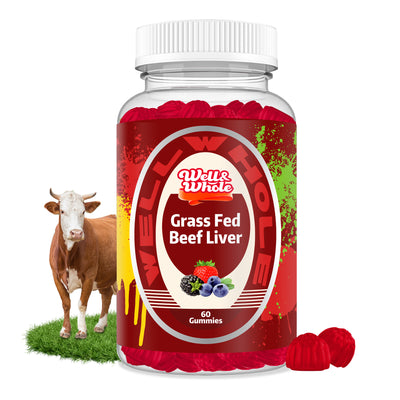
Where to begin? Our Grass Fed Beef Liver Supplement Gummies with 60 Count for Full Wellness and Grassfed Beef Organ Supplement Capsules, Grass Fed & Pasture Raised, Total Body Wellness Support are a sensible place to start, and the Vitamin A collection lays out the other formats side by side with Health Benefits.
These statements have not been evaluated by the Food and Drug Administration. This product is not intended to diagnose, treat, cure, or prevent any disease.